Advent Lesson Twelve: On the Way Home

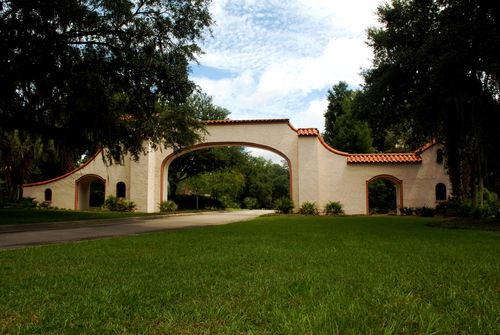
Entrance to the Los Robles Historic Neighborhood:  Built in 1921

Recently, I was driving my 2.10 year old grandson, Benjamin, from his home to mine, traveling along the same  route I have taken him 100 times.  On this particular day, he asked me:

“What is the name of this street?’

I replied, “Seventh Avenue.”

Benjamin: “Well, I call it ‘Home Street,’ because it leads to our home.”

By “our home,” Benjamin refers to the home of Stephen and me, his maternal grandparents, a place so familiar to him that he considers it to also be his home.”   In a similar way, he considers the home of his paternal grandparents to be his home.”  We are very blessed to live in the same town as they.

Benjamin was correct:  Seventh Avenue or “Home Street,”  a long, straight road,  is the final leg of the short trip from his home to mine.  It leads us to the Entrance [photo above] of our small historic neighborhood and then we are finally “home.”

“Out of the mouths of babes:”  Young children remind us that behind a familiar name or word lies a greater concept, ideal, or reality.

For instance, the ancient Greeks had a word for “purpose” and that word was “telos.”

“A telos (from the Greek τέλοϛ for “end”, “purpose”, or “goal”) is an end or purpose, in a fairly constrained sense used by philosophers such as Aristotle. It is the root of the term “teleology,” roughly the study of purposiveness, or the study of objects with a view to their aims, purposes, or intentions.”  [Wikipedia]

If we are going to be thoughtful and intentional about revisioning, restoring, and reclaiming The Season of Advent, we need to first discover the “telos:” the central purpose.  Then, we need to conform to that purpose, by examining ways in which we invest our “heart, soul, mind, and strength” during this Advent Season.

Activity without purpose is merely “spinning our wheels:”  This is why individuals experience the frustration of “spinning out of control” during The Season of Advent.  Without an end, aim, purpose, reason, intention, goal, or objective, how can we hope to communicate — through our lives, families, and homes — the hope and light of The Season of Advent to the weary and often dark world around us?

[An English Cottage: Not my home, but lovely and welcoming, is it not?]

Our neighborhood stands at the convergence of two main artery roads and a one-way street.  At the convergence, is a strange and confusing “Round-A-Bout.”  When we first bought our home, seven years ago, I missed the Entrance a few times.  I had to circle around, navigate one-way streets, and try the approach again.  It was very frustrating:  I could clearly see my destination yet I could not enter it.  I had to stop my vehicle and study a map in order to find the correct path to my own [new] home!

It is like that with The Season of Advent:  Before we approach it, we travelers must choose our path carefully, study our map, compass in hand, and write down the directions.

What is the “telos” of Advent?  Am I aligned with that purpose?  Am I investing my “heart, soul, strength, and mind” into that one central purpose?  

Am I reaching my destination? Or am I merely driving around in circles? 

One  purpose of The Season of Advent is to form, conform, and transform us  in Christian discipleship.  To whom or what am I conforming this Advent Season?

A careful, genuine, intentional, and faithful observation of The Season of Advent will lead us  “on the way  home.”

As a fellow-traveler, I have offered these  one dozen “Advent Lessons” to you, as a compass and map, as street lights and signposts, and, finally, as a lamp burning in the window, welcoming you home.

Leave a comment

Filed under Advent

Advent Lesson Eleven: A Peek Inside Our Home!

The Completed Advent Candle Wreath:

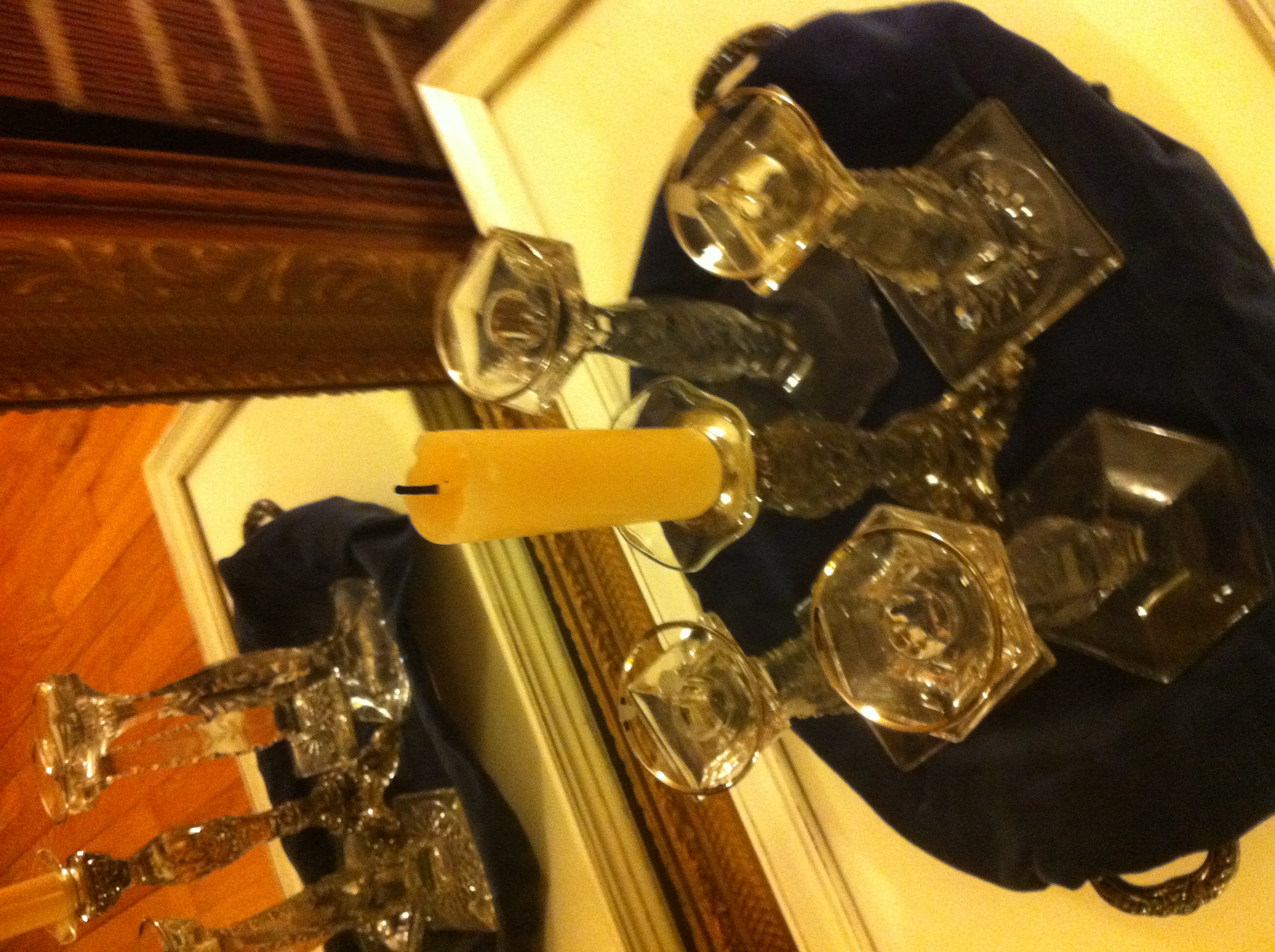
I used antiques: one antique mirror, one silver tray, and five candlesticks with bobeches.

I bought one 100% pure beeswax Advent Candle Kit from http://www.toadilyhandmade.com.

I purchased the ribbon from Cindy’s Chapeaux in Havana, FL.

I picked up [free] fresh evergreens from St. Paul’s United Methodist Church: Boy Scout Christmas Trees [Lake Ella].

http://www.Toadilyhandmade.com  Advent Candles:  

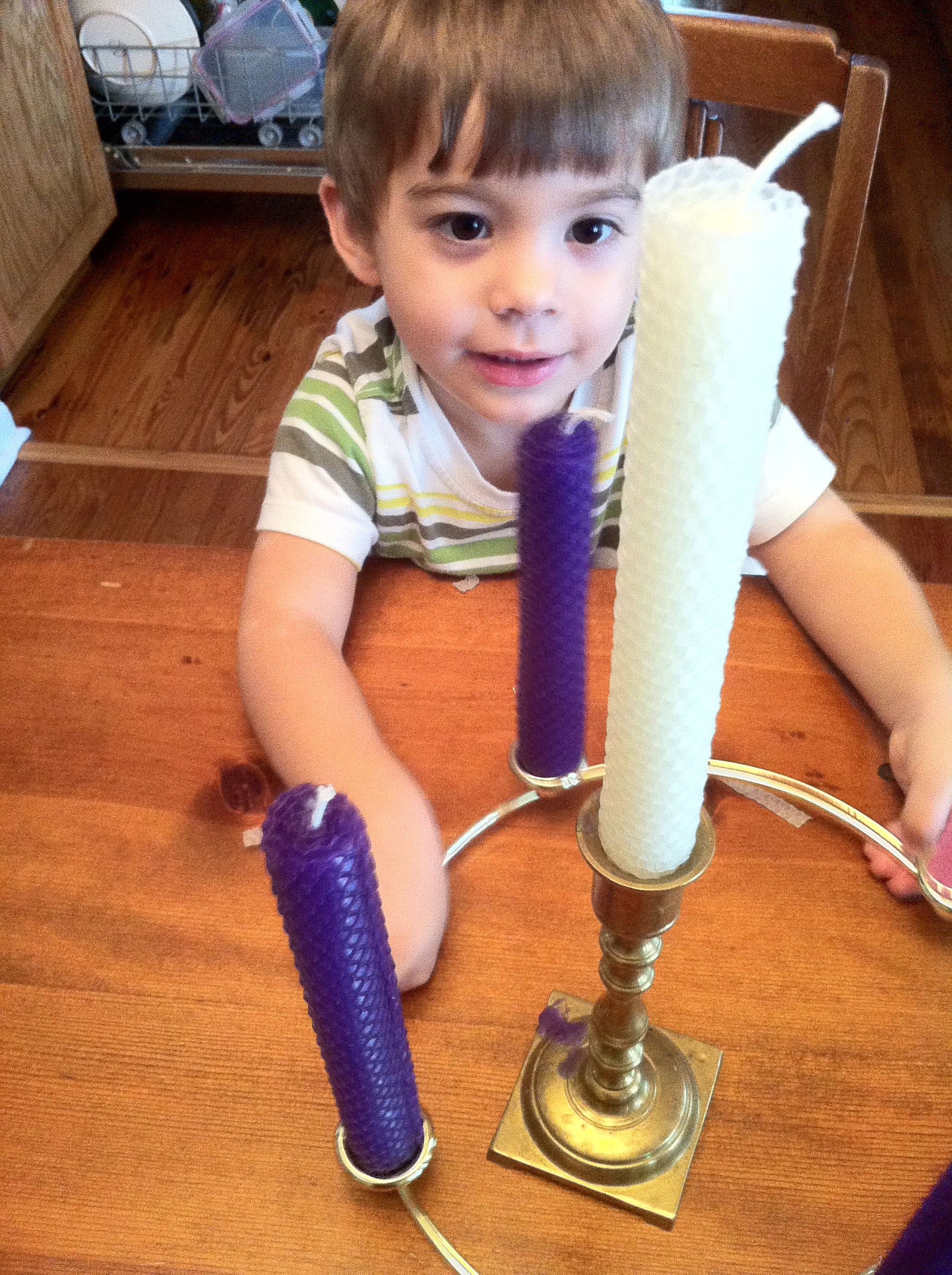
Benjamin, 2.10 years, rolling the Rose Candle.

I love the expression of accomplishment and wonder on Benjamin’s face,

after he completed the Advent Candles at his home:  “I did it myself!”

The Tree of Jesse

The Tree of Jesse:

One wrought-iron “Winter Tree Ornament Display Stand,” spray-painted “Hammered Black.”

Hand-made-by-local-artists:Sstained-glass and beveled-glass ornaments.  [Some are from Susan’s Stained Glass at The Cottage Shops at Lake Ella, Tallahassee, FL.]

Vintage velvet fabric.

A beautiful jewel box from Korea, from my friend Eun Kwak.

Inside the Jesse Tree Jewelry Box:  

A velvet pouch, containing a pewter ornament, depicting the Holy Family.

This ornament is hidden until Christmas Morning, when we will hang it on the Jesse Tree.

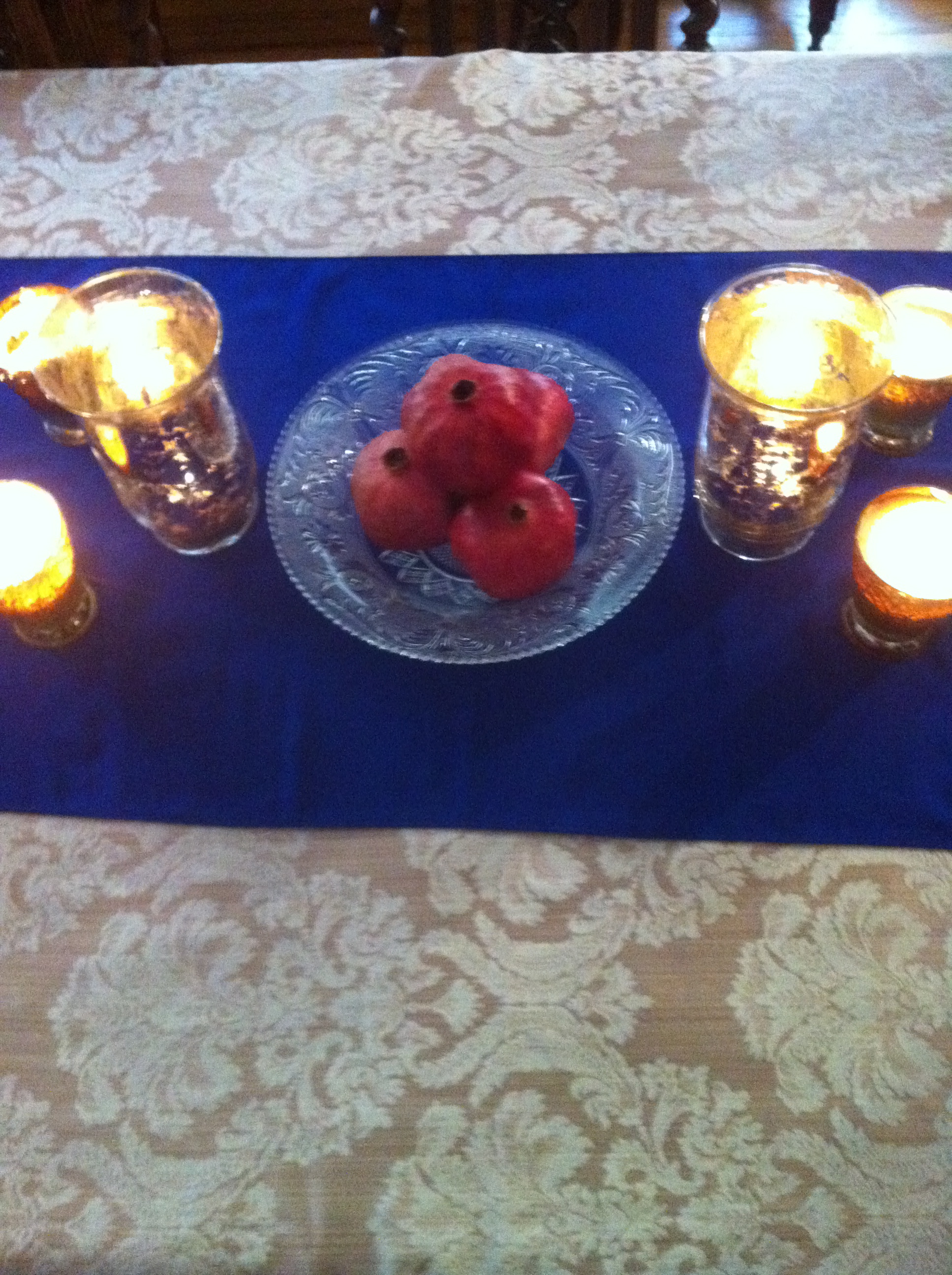
Our Dining Room Table:

Antique bowl with pomegranates.

Our Dining Room Table:

100% pure beeswax votives.

Royal blue hemmed fabric for table runner.

A Simple Glass Nativity Scene, Made in Germany

Illumined from behind, with a 100% pure beeswax votive.

A hemmed square of organdy fabric veils the Nativity Scene, until Christmas Morning.

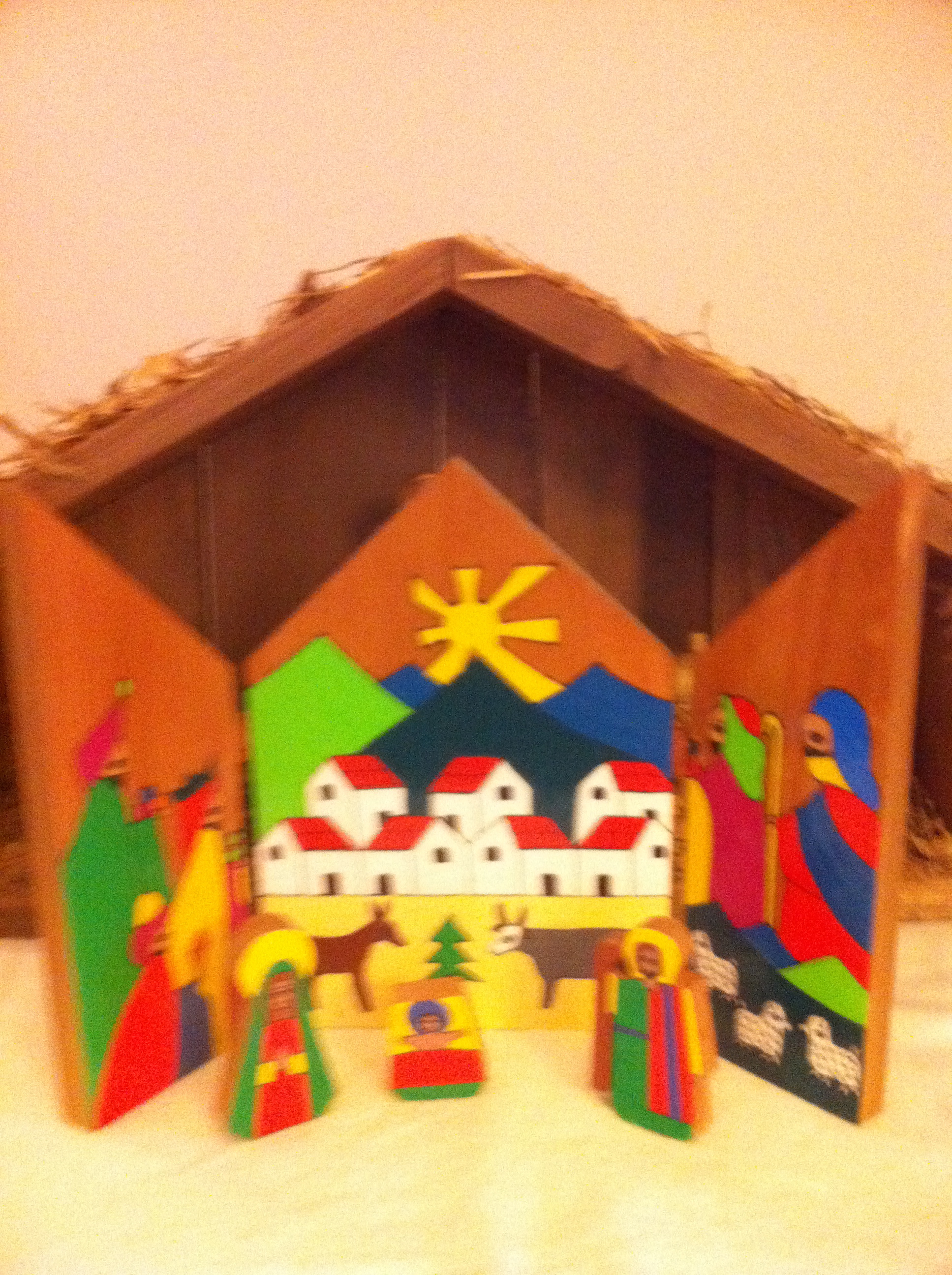
Nativity Scene

I bought this from Ten Thousand Villages, several years ago.

It is perfect for small children.

Inside the velvet pouch are wooden figures of the Holy Family.

We will add the Holy Family figures to the Nativity Scene, on Christmas Morning.

The Completed Nativity Scene with Holy Family Figures.

Nativity Scene:

A simple wooden stable and wooden image of the Holy Family

It would be easy to make the stable.

I bought the Holy Family wooden image at Ten Thousand Villages.

The Holy Family wooden image will stay hidden, inside an organdy pouch, until Christmas Morning.

A Simple Wooden Bell-Shaped Ornament,

with figures of Holy Family and sheep.

From Ten Thousand Villages.

Simple Ornament:  Angel

From Ten Thousand Villages.


An Olive Wood Ornament:  Dove

From Ten Thousand Villages.

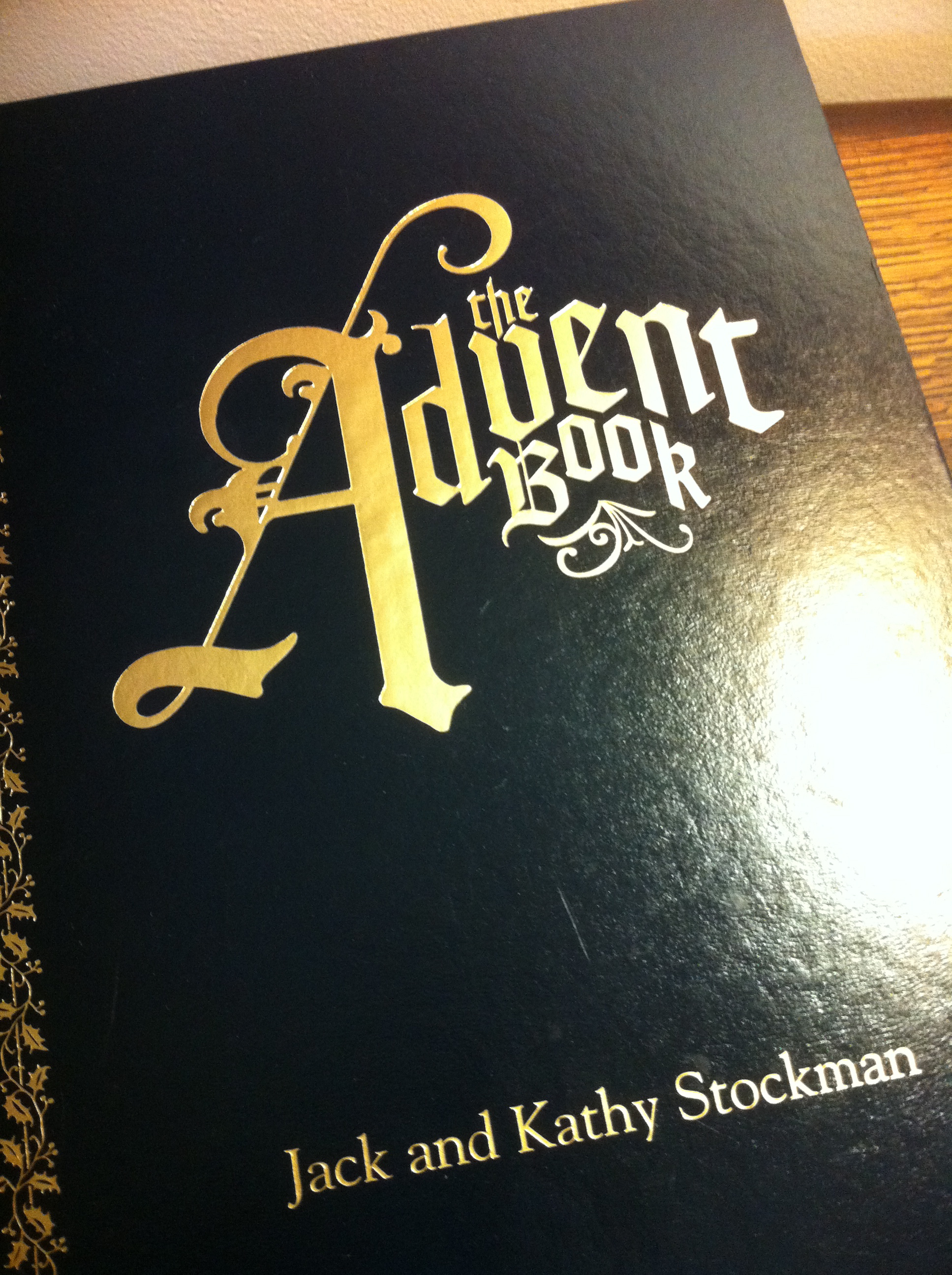
Advent Calendar Book:

I do not know if this book is in print anymore.

It is a very sturdy Calendar/Book, which you can use every year.

Day One [A] of Advent Book

Day One [B] of Advent Book

The Very First Christmas

This is a book from Hallmark, from my dear friend, Ida Jean Sapp.

It is perfect for grandparents:  Record the story onto a microchip and your grandchildren can hear your voice,

every time they turn the page!

This is a great book for families with children, godchildren, or grandchildren.

Leave a comment

Filed under Advent

Advent Lesson Ten: Messiah Sing Along!

Tallahassee Friends!

Here is a perfect way to reclaim, revision, and restore the Season of Advent!  Not in Tallahassee? Google “Messiah Sing” and your zip code to find a community-wide Messiah Sing.

Events > 23rd Annual Handel’s Messiah Sing-Along > Tallahassee, FL > Tallahassee Democrat.

Leave a comment

Filed under Advent

Advent Lesson Nine: “On the Shoulders of Giants”

The South Rose Window of the Cathedral Notre-Dame de Paris

[www.notredamedeparis.fr]


La claire-voie de la Rose Sud

[www.notredamedeparis.fr]

“Under the rosette, the heavenly court is represented by the sixteen prophets, portrayed under the large windows of the bay, which were painted in the 19th century by Alfred Gérente, under Viollet-le-Duc’s supervision. The architect drew inspiration from Chartres Cathedral, placing the four great prophets (Isaiah, Jeremiah, Ezekiel and Daniel) carrying the four evangelists (Matthew, Mark, Luke and John) on their shoulders, at the centre. This window echoes the reflections of Bertrand, Bishop of Chartres in the 13th century, on the connection between the Old and New Testaments:
‘We are all dwarves standing on the shoulders of giants. We see more than they do, not because our vision is clearer there or because we are taller, but because we are lifted up, due to their giant scale.’

[www.notredamedeparis.fr]

Margot’s Commentary:

In a previous “Advent Lesson,” I spoke about the wise and proper use of lenses.  Each of us uses his/her own lenses in order to view the world.  This is called a “worldview.”  Since it is impossible to view the world without lenses, it is imperative that we choose the lens that gives us the most clear view.  I spoke earlier about kaleidoscopes, magnifying glasses, and telescopes.  Among these, I suggested that the telescope was the wisest choice, in order to see further and more clearly.

We who desire fervently to reclaim, revision, and restore the Season of Advent have received a priceless unopened gift — an inheritance!  Receiving this inheritance is like opening the gift of a high-powered, finely engineered telescope.

“Wise Christians should always be historians in one sense.  They sit higher and can see further, more panoramically, if they enrich themselves from the past.  John of Salisbury [1115-1180] a medieval scholar, spoke of the jewels, the riches, the prestige of antiquity.  He was right.  The past has bequeathed to us its gems.  Note his wise words:

‘Our own generation enjoys the legacy bequeathed to it by that which preceded it.  We frequently know more, not because we have moved ahead by our own natural ability, but because we are supported by the [mental] strength of others, and possess riches that we have inherited from our forefathers.  Bernard of Chartres used to compare us to [puny] dwarves perched on the shoulders of giants.  He pointed out that we see more and farther than our predecessors, not because we have keener vision or greater height, but because we are lifted up and borne aloft on their gigantic stature.’

Our brothers and sisters from the past, indwelt by the same Spirit who indwells us, have left us a rich inheritance.  It’s locked away inside a treasure chest.  It’s layered in cobwebs.  It’s rusty and in some ways not very appealing.  But inside is the wealth John of Salisbury told us about:  diamonds, emeralds, gold sovereigns, and chains of Spanish silver.  If you have ever wanted to go on a treasure hunt, you’ve come to the right place.  We’ve already found the chest.  The hard, laborious work is done.  All we need do is dip our hands inside and let the riches run through our fingers.  Come along, and you’ll be sitting higher and further.”

[Resource for Margot’s Commentary:  Pocket History of the Church, D. Jeffrey Bingham, InterVarsity Press, 2002.]

Note from Margot:

Between now and Epiphany, I hope to share more about this inheritance and how opening this gift will help us to revision, reclaim, and restore the Season of Advent.

Can anyone explain the difference between the names “Bertrand” and “Bernard,” referring to the Bishop of Chartres?

1 Comment

Filed under Advent, Worldview

Advent Lesson Eight: The Tree of Jesse

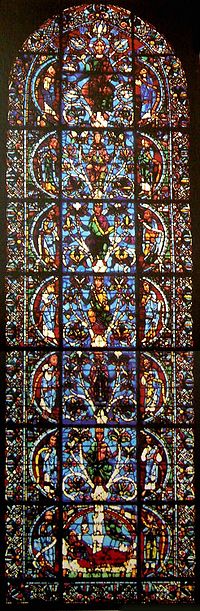
The oldest complete Jesse Tree window is in Chartres Cathedral, 1145.

“The Tree of Jesse is a depiction in art of the Ancestors of Christ, shown in a tree which rises from Jesse of Bethlehem, the father of King David; the original use of the family tree as a schematic representation of a genealogy. It originates in a passage in the Biblical Book of Isaiah which describes metaphorically the descent of the Messiah, and is accepted by Christians as referring to Jesus. The subject is often seen in Christian art, particularly in that of the Medieval period. The earliest example dates from the 11th century.

The passage in Isaiah, 11:1 is: “There shall come forth a shoot from the stump of Jesse, and a branch shall grow out of his roots.[1] In the Latin Vulgate Bible used in the Middle Ages this was: “et egredietur virga de radice Iesse et flos de radice eius ascendet ” or “.. a rod out of the root of Jesse, and a flower shall rise up…”.[2] Flos, pl floris is Latin for flower. Virga is a “green twig”, “rod” or “broom”, as well as a convenient near-pun with Virgo or Virgin, which undoubtedly influenced the development of the image. Thus Jesus is the Virga Jesse or “shoot of Jesse”.

In the New Testament the lineage of Jesus is traced by two of the Gospel writers, Matthew and Luke. Luke describes the “generations of Christ” in Chapter 3 of Luke’s Gospel, beginning with Jesus himself and tracing backwards through his “earthly father” Joseph all the way to Adam.

Matthew’s Gospel opens with the words: “The book of the genealogy of Jesus Christ, the son of David, the son of Abraham”.[3] With this beginning Matthew makes clear Jesus’ whole lineage: He is of God’s chosen people, by his descent from Abraham, and he is the “shoot of Jesse” by his descent from Jesse‘s son, King David.[4] The figures shown are drawn from the genealogies in the Gospels, usually showing only a selection.”  [Wikipedia]

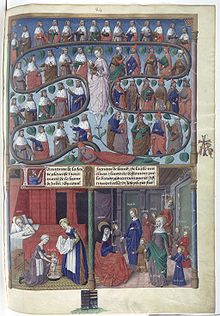
Miniature, Jacques de Besançon, Paris, c.1485. Showing 43 generations. Below, the birth and childhood of Mary.

To learn more about the history and art of The Tree of Jesse:  http://en.wikipedia.org/wiki/Tree_of_Jesse 

It is worth reading and contains dozens of art images.

“The secular Christmas Tree, and the Advent calendar, have been adapted in recent years by some modern Christians, who may use the term “Jesse Tree”, although the tree does not usually show Jesse or the Ancestors of Christ, and so may have little or no relation to the traditional Tree of Jesse. This form is a poster or a real tree in the church or home, which over the course of Advent is decorated with symbols to represent stories leading up to the Christmas story, for the benefit of children. The symbols are simple, for example a burning bush for Moses and a ram for Isaac.”  [Wikipedia]

This link describes how to use the Jesse Tree in your home:  http://www.crivoice.org/jesse.html

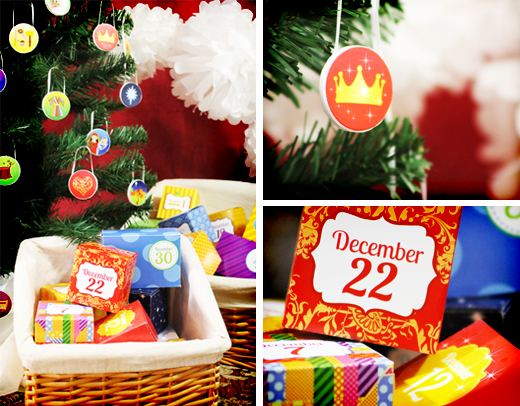
Here  is a great idea for families with children:  You can download a printable kit to make Jesse Tree ornaments.  Right now the kit is free!

http://www.printcandee.com/jessetreekit/

During the 27 days preceding Christmas (the 27 days being known as “Advent”, as it refers to the advent or “coming” of Jesus Christ), an ornament is hung on the tree and a verse or portion of Scripture is read each night.” [from link posted above]

For other ideas on how to create a Jesse Tree or buy a kit, Google it!  

3 Comments

Filed under Advent

Advent Lesson Seven: The Veiled Crux


Dear Family & Friends,

Recently, I posted the lyrics to the hymn, “Veni, Veni Emmanuel.”   It is one of my favorite hymns, not only for the achingly beautiful tune but also for the depth of meaning of the text.  For, if hymns are “theology set to music,” then we should consider only those hymns that are informed by rich, deep, solid, orthodox, classic, creedal, ancient Trinitarian theology.

Scripture must inform the hymns, certainly.  However, some hymns go a step further:  They encapsulate a view of Scripture that sees the “Big Picture:”  They carefully and faithfully encompass a composite view of a topic, skillfully pulling together essential Scriptures and subsuming them under the great themes of Scripture, from Genesis to Revelation.  [This is “systematic theology.”]

The hymn below, from a poem by Richard Wilbur, is a particularly fine example.

During Advent, read, study, meditate on the two hymns:  Veni, Veni Emmanuel and A Christmas Hymn.  Critique how the authors use the compositions to masterfully enlarge our view of Advent.  They each give us  “vision tools” to understand what I call the “Veiled Crux” of Advent.

We are too easily satisfied with a kaleidoscope, through which to view Advent:  lots of bright and shiny fragments of color collide, displaying a different pattern every time we shake and turn the cylinder.  Although the patterns are entertaining, we can see no further than the end of the cylinder.

These two hymns, instead, give us the clarity of a long-range telescope, through which to view the “Grand Drama of Redemption.”

Ancient navigators called the Southern Star the “Crux.”  With celestial navigation, travelers must focus on one bright star [either the Southern Star or the Northern Star] because they are unchanging–immovable.  I am attempting here, through this series of Advent Lessons, to offer us reliable tools with which to navigate Advent.

I cannot specify what decisions to make, as regards ordering personal time and space.  I can, however, challenge us “modern navigators” to consider the tools with which we have previously been viewing Advent.  Some of us have used a magnifying glass:  We have focused on the minute details of the Season of Advent, we are overwhelmed, and we have lost sight of the “Big Picture.”

It is time to use new tools to travel!  I advise the use of a Compass and a Map, with which to navigate.  Chart your course and do not deviate.  Do not get distracted by “bright and shiny things.”  Lift up your head and look up to the vast skies:  Locate the North Star, the Polar Star and travel under it’s authoritative guidance.  Do not lose sight of the “Big Picture.”

Here are some questions to ponder:

  • How do these hymns unveil the “Crux of Advent:”
  • What is the Crux [the focal point, the center, the most important element] of Advent?  
  • What significant historical events do these hymns review for us? 
  • Veni, Veni, Emmanuel:  What is the significance of Israel’s history of salvation? 
  • What does Wilbur mean:  “the worlds are reconciled?” 

Coram Deo,

Margot


A Christmas Hymn

Words:  Richard Wilbur [born 1921]

Music:  Andujar, David Hurd [born 1950]

And some of the Pharisees from among the multitude said unto him, “Master, rebuke the disciples.”

And he answered and said unto them, “I tell you that, if these should hold their peace, the stones would immediately cry out.”

~Luke19:39-40

A stable-lamp is lighted

Whose glow shall wake the sky;

The stars shall bend their voices,

And every stone shall cry.

And every stone shall cry,

And straw like gold shall shine;

A barn shall harbor heaven,

A stall become a shrine.

This child through David’s city

Shall ride in triumph by;

The palm shall strew its branches,

And every stone shall cry.

And every stone shall cry,

Though heavy, dull and dumb,

And lie within the roadway

To pave his kingdom come.

Yet he shall be forsaken,

And yielded up to die;

The sky shall groan and darken,

And every stone shall cry.

And every stone shall cry,

For stony hearts of men:

God’s blood upon the spearhead,

God’s love refused again.

But now, as at the ending,

The low is lifted high;

The stars shall bend their voices,

And every stone shall cry.

And every stone shall cry,

In praises of the Child

By whose descent among us

The worlds are reconciled.

[Richard Wilbur, born 1921, is an American poet and literary translator.  He was appointed the second Poet Laureate Consultant in Poetry to the Library of Congress in 1987.  He twice received the Pulitzer Prize for Poetry:  1957 and 1989.]

3 Comments

Filed under Advent

Advent Lesson Six: The Crux of Advent


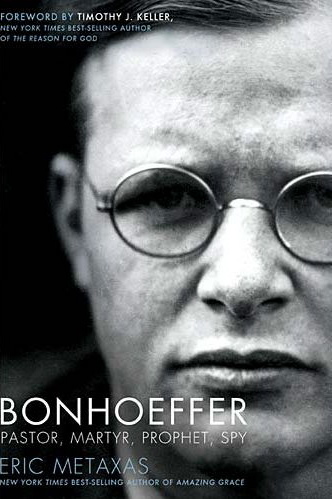
Excerpt from the book, Letters & Papers from Prison, by Dietrich Bonhoeffer:

[Tegel] 18 November 1943

Bonhoeffer writes this to Eberhard Bethge:

“. . .  Then comes Advent, with all its happy memories for us.  It was you who really first opened up to me the world of music-making that we have carried on during the weeks of Advent.  Life in a prison cell may well be compared to Advent:  one waits, hopes, does this, that, or the other — things that are really of no consequence — the door is shut and can be opened only from the outside!”

And in 1967, Maria von Wedemeyer-Weller wrote an Appendix to the reprinted edition of “Letters & Papers from Prison.”  Maria was engaged to be married to Bonhoeffer during the time of his imprisonment and his heroic death.

Under the heading, “Life in Prison,” she recalls this about Bonhoeffer:

“He lived by church holidays and by seasons, rather than by the calendar month and the dates on his letters were approximations at best.  He voiced his disappointment that he had not received a letter from me or anyone else expressly for Whit Sunday.  About Advent, he wrote:

‘A prison cell, in which one waits, hopes, does various unessential things, and is completely dependent on the fact that the door of freedom has to be opened from the outside, is not a bad picture of Advent.’ [21 November 1943]

Margot’s Commentary:

Is there a better description of what Advent is? Today, meditate upon this essential truth above, written by Bonhoeffer, theologian, Lutheran pastor, martyr and one of the most significant witnesses of the 20th century.  Also, read and meditate upon the lyrics of the Advent Hymn, Veni, Veni, Emmanuel, printed below.   Study the verses and, if possible, listen to a CD recording of this beautiful hymn.

Veni, Veni, Emmanuel

O come, O come, Emmanuel, and ransom captive Israel,

that mourns in lonely exile here, until the Son of God appear.

Refrain:
Rejoice! Rejoice!
Emmanuel shall come to thee, O Israel.

O come, thou Wisdom from on high, who orderest all things mightily;
to us the path of knowledge show, and teach us in her ways to go.

Refrain

O come, thou Rod of Jesse, free thine own from Satan’s tyranny;
from depths of hell thy people save, and give them victory over the grave.

Refrain


O come, thou Dayspring, come and cheer our spirits by thine advent here;
disperse the gloomy clouds of night, and death’s dark shadows put to flight. 

Refrain

O come, thou Key of David, come, and open wide our heavenly home;
make safe the way that leads on high, and close the path to misery.

Refrain

O come, O come, great Lord of might, who to thy tribes on Sinai’s height
in ancient times once gave the law in cloud and majesty and awe.

Refrain

O come, thou Root of Jesse’s tree, an ensign of thy people be;
before thee rulers silent fall; all peoples on thy mercy call.

Refrain

O come, Desire of nations, bind in one the hearts of all mankind;
bid thou our sad divisions cease, and be thyself our King of Peace.

Refrain

O come, O come, Emmanuel, and ransom captive Israel,
that mourns in lonely exile here until the Son of God appear.

Refrain


Words: Latin, twelfth century;
trans. John Mason Neale (1818-1866), 1851


Leave a comment

Filed under Advent

Advent Lesson Five: Margot’s Advent Wreath

Dear Family & Friends,

In Advent Lesson Four, we learned about the rich meaning of the Advent Wreath.  Here are photographs and Margot’s Easy Steps to Create an Advent Wreath.  I used a few of my cherished heirlooms and antiques.  I hope this lesson inspires you to use what you already have in your home!

Step One:  Candles

Purchase your Advent Candles ASAP, so that they will arrive by the First Sunday of Advent, which is November 27!  Here is the website:

http://www.toadilyhandmade.com 

You may choose either one Do-It-Yourself Kit [$30: enough to make three sets of five Advent Candles] OR one Already-Made Set [$18 for five Advent Candles].

Each set includes five candles, in three colors: Three Royal Blue OR  Three Royal Purple — plus One Pink plus One Ivory.  When you order, specify “Blue” or “Purple.”

These are 100% pure beeswax candles, which is very important, both for symbolic, aesthetic, and health reasons.  Trust me on this for now.

Step Two: Candlesticks

Search around your home for five complementary candlesticks.  As you see in the photographs, my Advent Wreath includes two sets of matching candlesticks plus one unique single candlestick in the center.  They are all heavy, clear, cut-glass antique candlesticks, circa 1900. You can mix and match candlesticks, in any combination of material [I like silver, pewter, or glass], height, style, and  vintage.

Step Three:  Container

Gather together the candlesticks inside a container — a tray or platter of some sort — any solid, sturdy material will do.  Choose a container that will allow enough room to position the evergreens.  I use a cherished silver serving tray that my mother gave me decades ago. However, I have not yet polished the tray.  So, for this “photo shoot,” I covered the tray with a midnight-blue piece of vintage velvet fabric.

Step Four: Bobeches

Purchase bobeches, which are round, clear-glass “collars,” which catch the candle drips and protect the surface under the candles.  An antique shop should have these.

Step Five:  Evergreens

Go to your locally-owned nursery and ask if you may gather a few evergreen branches that fall onto the ground, between the rows of Christmas trees for sale.  Now you have free evergreens with which to decorate your Advent Wreath!  Do not be fussy about the arrangement:  Trim off the thick, stiff part of the branches.  Overlap the remaining soft, pliable portions, secure them together with thin ribbon, and bend the finished length into a circle, securing the final shape with more ribbon. The color of ribbon should be ivory, blue, or purple.

Step Six:  Display

Decide where to display your Advent Wreath.  I chose the brick hearth:  the space in front of the fireplace, in my living room.  Propped against the front of the fireplace opening, I positioned an antique mirror.  The Advent Wreath sits on the silver tray, which sits upon an off-white painted-wood, over-sized serving tray [hand-made from wood salvaged from antique furniture]. I like the “drama” of the off-white painted-wood against the dark velvet against the clear glass candlesticks.  When the candles are lit, the tableau will reflect off the mirror and looks beautiful! You will have to use your imagination, as I have not yet obtained my Advent Candles, evergreens, or ribbon.

I would love to hear your ideas on creating your Advent Wreath.  After you create your Advent Wreath, you may rest assured that you have “decorated” your home in a meaningful and thoughtful manner.  For several years, I have not displayed any “decor” except my Advent Wreath and Creche.  [Coming up next:  The Creche or Nativity Scene.]
Remember:  The colors of Advent are [primarily] Royal Purple OR Royal Blue plus white or ivory.  I also use silver.
Coram Deo,
Margot

1 Comment

Filed under Advent

Advent Lesson Four: Watch for the Light

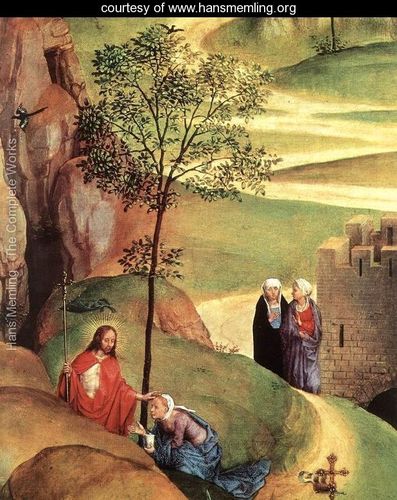
The Annunciation:  [hansmemling.org]

The Meaning of Advent and The Advent Wreath

By Fr. Dr. Michael Petty, St. Peter’s Anglican Church, Tallahassee, FL

“[The Season of Advent, within the Church Year,] consists of the four weeks before Christmas Day.  Advent is derived from the Latin word adventus, meaning “coming” or “arrival.” During this season, we have a dual focus in worship:  On the one hand, we anticipate the celebration of Christ’s historical advent or birth in Bethlehem. On the other hand, we anticipate Christ’s final advent, as the world’s Lord and Judge at the end of history. The celebration of Advent helps us to place ourselves within the context of God’s redemptive purposes: We live after the coming of Jesus Christ, as the Messiah promised to Israel, and before the coming of Jesus Christ to bring his work to its ultimate fulfillment.

This season is intended by the Church to help us keep a proper focus during what has become, in our culture, a frenzied time with a heavy commercial emphasis. We spend this season most fruitfully, not by counting down the days to December 25, but by preparing ourselves to celebrate the Incarnation of the Son of God and by amending our lives in the anticipation of his promised return. Advent is a season to slow down, to reflect and to meditate on the great mercies of God. To aid in this process, you may find it useful to read Scripture regularly during this season. Scripture readings for every day of the Advent Season can be found on page 937 and page 939 of The Book of Common Prayer.

The Advent Season comes to an end with the first Eucharist of Christmas, on Christmas Eve. This Eucharist ushers the Church into the Season of Christmas, which lasts until January 6, the Feast of the Epiphany (the Twelve Days of Christmas). Because we observe Christmas as a distinct season, you will notice that we do not make use of Christmas music during Advent.

Advent has been observed by the Church since the sixth century and, over time, many traditions have become associated with the season. One of these traditions is that of the Advent Wreath, a circle of greenery, with four blue candles on the circumference and a white candle in the center. The Advent wreath is a sign of hope; it is greenery displayed during the winter and candles lit, as the days grow shorter.

On each of the four Sundays of Advent a different candle is lit:

The first candle is the Patriarch’s Candle, reminding us of the Old Testament patriarchs who anticipated the fulfillment of God’s promises.

The second is the Prophet’s Candle, reminding us of the Old Testament prophets who foretold the Messiah’s birth.

The third is the John the Baptist Candle, reminding us of the prophet who proclaimed Christ’s Advent.

The fourth is the Virgin Mary Candle, reminding us of Mary’s faithfulness in responding to God’s call to be the Mother of the Messiah.

The final candle, the Christ Candle, is lit on Christmas Eve. As the winter darkness gathers, the light of the Advent Wreath increases and reminds us of the Light of God, shining in the darkness. The lighting of the Advent Wreath is an act of lived hope as the Church remembers Christ’s birth and anticipates his return in glory.”


1 Comment

Filed under Advent

Advent Lesson Three: Keeping Advent as a Counter-Cultural Practice

Keeping Advent as a Counter-Cultural Practice: [Excerpts]

by the Rev. Dr. Michael Petty

St. Peter’s Anglican Church

Tallahassee, Florida

“In the language of the secular world, the Holiday Season [is] marked by its central liturgical action — shopping.  Any serious Christian who has been in a mall at this time of the year knows the strangeness of this experience:  While Christmas Musak plays in the background, frantic [and often very un-merry] people go about the serious American pursuit of consumption.  This is an important clue to what has happened to our culture:  Christianity, real Christianity, has become a sort of background Muzak to what our culture regards as the real business of Christmas, the business of buying stuff.  It may be Jesus’ birthday, but the throne in the mall is occupied by Santa.

. . . the problem is that the way many Christians keep Christmas shows that it is the Church that has been secularized.  The worst thing about the way the Church keeps Christmas is that she has allowed her worship to be secularized and corrupted.  Many churches and many Christians have allowed Christmas to become the fulcrum of their worship life and, in so doing, have allowed their worship life to become secularized and distorted.  We easily forget that the center of Christian faith is not Christmas, but Easter; Christianity is centered in the Paschal Mystery of Jesus’ Death and Resurrection.  The Christian faith is centered not on a generalized feeling of holiday cheer and merry wishes, but around the Death and Resurrection of Jesus Christ. 

. . . The Gospel asserts that our salvation comes not from the cultivation of good will, but from Jesus’ Death on the Cross and His Resurrection to New Life.  When our worship life remains centered on Easter, we are able to see our identity as Christians truly:  we are not primarily consumers or even Americans, but we are people who were buried with Christ in baptism and were raised with Christ through faith in the power of God [Colossians 2:12].

The secular world may have secularized Christmas, but our calling as Christians is to keep our focus on the Good News of Jesus’ Death and Resurrection.  We can do this by keeping the Season of Advent.  While other people have embarked on a frenzy of buying and are trying to be cheerful for no other reason than that it is what you are supposed to do at this time of the year, we are invited to use this time as a period of reflection, meditation, worship and preparation.  During this season, we remind ourselves that the most important thing is not what we will get on December 25, but the Lord to whom we give ourselves in love and worship.  We should keep this season as a time of joyful expectation, not expectation of what will happen on December 25, but expectation of what will happen when Christ returns.  We need to remind our children [and ourselves] that joy is not in the empty boxes of December 25, but in the empty tomb of Easter.  By all means, celebrate Jesus’ birth.  But remember that, without Good Friday, there would be nothing to celebrate.”

Leave a comment

Filed under Advent