
Dear Readers,
“This hymn is one of the most beautiful and renowned in the repertory of Gregorian chant. St. Thomas Aquinas, the Italian scholar-priest, wrote the words in 1263 at the request of the Pope, to fit an earlier hymn tune.”
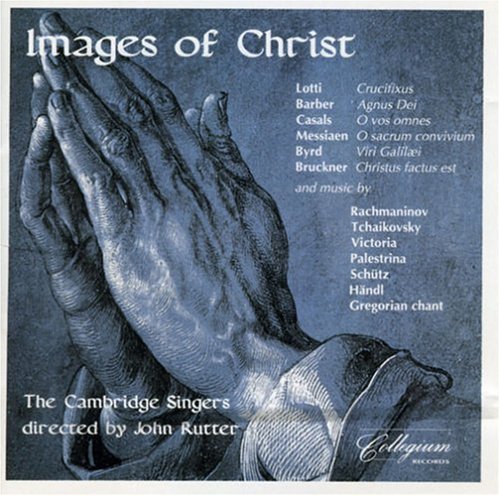
[Images of Christ, The Cambridge Singers, directed by John Rutter, Collegium Records.]
“The Eucharistic text of Pange lingua glorioso Corporis mysterium was written in 1263, by the Italian scholar-priest St. Thomas Aquinas at the request of the Pope to fit the melody of Pange lingua gloriosi proelium certaminis, Venantius Fortunatus’ famous sixth-century hymn in honor of the Cross. The melody was used by Holst in The Hymn of Jesus and by Charles Wood [to its orginal text] in his St. Mark Passion.”
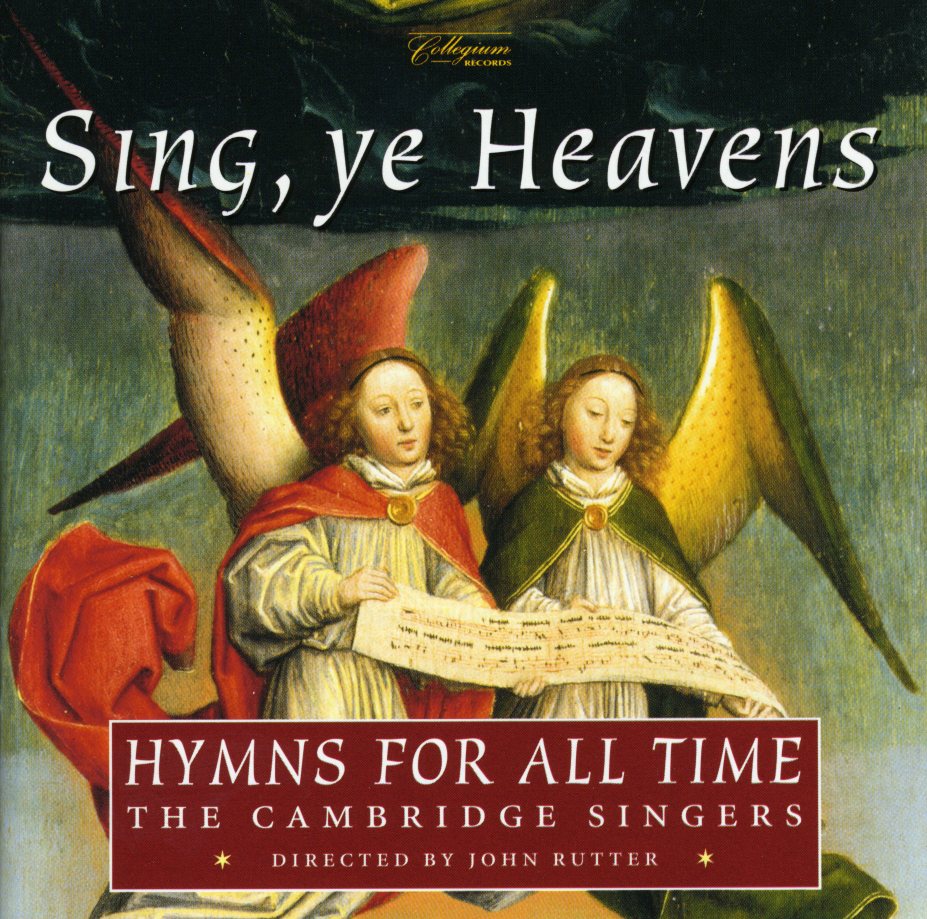
[Sing, Ye Heavens: Hymns for All Time, the Cambridge Singers, Directed by John Rutter, Collegium Records]
For more information: Pange Langua [1] ; Pange Langua [2]; Pange Langua [3]
“Written by St. Thomas Aquinas (1225-1274) for the Solemnity of Corpus Christi, this hymn is considered the most beautiful of Aquinas’ hymns and one of the great seven hymns of the Church. The rhythm of the Pange Lingua is said to have come down from a marching song of Caesar’s Legions: “Ecce, Caesar nunc triumphat qui subegit Gallias.” Besides the Solemnity of Corpus Christi, this hymn is also used on Holy Thursday. The last two stanzas make up the Tantum Ergo (Down in Adoration Falling) that is used at Benediction of the Blessed Sacrament.”
Latin text:
Pange lingua gloriosi Corporis mysterium, Sanguinsique pretiosi, Quem in mundi pretium Fructus ventris generosi Rex effudit gentium. Nobis datus, nobis natus Ex intacta Virgine, Et in mundo conversatus Sparso verbi semine, Sui moras incolatus Miro clausit ordine. In supremae nocte cenae Recumbens cum fratribus, Observata lege plene Cibis in legalibus, Cibum turbae duodenae Se dat suis manibus. Verbum caro, panem verum Verbo carnem efficit; Fitque sanguis Christi merum, Et si sensus deficit; Ad firmandum cor sincerum Sola fides sufficit. Tantum ergo Sacramentum Veneremur cernui, Et antiquum documentum Novo cedat ritui; Praestet fides supplementum Sensuum defectui. Genitori, Genitoque Laus et jubilatio Salus, honor, virtus quoque Sit et benedictio; Procedenti ab utroque Compar sit laudatio. Amen [St. Thomas Aquinas]English translation 1:
Of the glorious Body telling, O my tongue, its mysteries sing, And the Blood, all price excelling, Which the world’s eternal King, In a noble womb once dwelling, Shed for this world’s ransoming. Given for us, for us descending, Of a Virgin to proceed, Man with man in converse blending, Scattered he the Gospel seed, Till his sojourn drew to ending, Which he closed in wondrous deed. At the last great Supper lying, Circled by his brethren’s band, Meekly with the law complying, First he finished its command, Then, immortal Food supplying, Gave himself with his own hand. Word made Flesh, by word he maketh Very bread his flesh to be; Man in wine Christ’s Blood partaketh: And if senses fail to see, Faith alone the true heart waketh To behold the mystery. Therefore we, before him bending, This great Sacrament revere; Types and shadows have their ending, For the newer rite is here; Faith, our outward sense befriending, Makes the outward vision clear. Glory, let us give, and blessing To the Father and the Son; Honour, might, and praise addressing, While eternal ages run; Ever too his love confessing, Who, from both, with both is one. Amen. [Translation from J. M. Neale and others]From Wikipedia, the free encyclopedia:
Pange Lingua Gloriosi Corporis Mysterium is a hymn written by St Thomas Aquinas (1225–1274) for the Feast of Corpus Christi (now called the Solemnity of the Holy Body and Blood of Christ). It is also sung on Maundy Thursday, during the procession from the church to the place where the Blessed Sacrament is kept until Good Friday. The last two stanzas, called separately Tantum Ergo, are sung at Benediction of the Blessed Sacrament. The hymn expresses the doctrine of transubstantiation, in which, according to the Roman Catholic faith, the bread and wine are changed into the Body and Blood of Christ.
It is often sung in English as the hymn Of the Glorious Body Telling, to the same tune as the Latin.
The opening words recall another famous Latin sequence, from which this hymn is derived: Pange Lingua Gloriosi Proelium Certaminis by Venantius Fortunatus.
Music history
There are two plainchant settings of the Pange Lingua hymn. The better known is a Phrygian mode tune from the Roman liturgy, and the other is from the Mozarabic liturgy from Spain. The Roman tune was originally part of the Gallican Rite.
The Roman version of the Pange Lingua hymn was the basis for a famous composition by Renaissance composer Josquin des Prez, the Missa Pange lingua. An elaborate fantasy on the hymn, the mass is one of the composer’s last works and has been dated to the period from 1515 to 1521, since it was not included by Petrucci in his 1514 collection of Josquin’s masses, and was published posthumously. In its simplification, motivic unity and close attention to the text it has been compared to the late works of Beethoven, and many commentators consider it one of the high points of Renaissance polyphony.
Juan de Urrede, a Flemish composer active in Spain in the late fifteenth century, composed numerous settings of the Pange Lingua, most of them based on the original Mozarabic melody. One of his versions for four voices became one of the most popular pieces of the sixteenth century, and was the basis for dozens of keyboard works in addition to masses, many by Spanish composers.
Building on Josquin’s treatment of the hymn’s third line in the Kyrie of the Missa Pange Lingua, the “Do-Re-Fa-Mi-Re-Do”- theme became one of the most famous in music history, used to this day in even non-religious works such as Wii Sports Resort. Simon Lohet, Michelangelo Rossi, François Roberday, Johann Caspar Ferdinand Fischer, Johann Jakob Froberger,[2] Johann Kaspar Kerll, Johann Sebastian Bach, Johann Fux wrote fugues on it, and the latter’s extensive elaborations in the Gradus ad Parnassum made it known to every aspiring composer – among them Wolfgang Amadeus Mozart, whose Jupiter[3] theme borrows the first four notes.
The last two verses of Pange Lingua (Tantum Ergo) are often separated out. They mark the end of the procession of the monstrance in Holy Thursday liturgy. Various separate musical settings have been written for this, including one by Giovanni Pierluigi da Palestrina, one by Franz Schubert, one by Maurice Duruflé, and one by Charles-Marie Widor.
Franz Liszt‘s Night Procession from Two Episodes from Lenau’s Faust is largely a fantasy on the Pange Lingua melody.[4]
A setting of Pange Lingua, written by Ciaran McLoughlin and produced by Paul MacAree, appears on the Solas album Solas An Domhain.
Pange Lingua has been translated into many different languages for worship throughout the world. However, the Latin version remains the most popular. The Syriac translation of Pange Lingua was used as part of the rite of benediction in the Syro-Malabar Church of Kerala, India, until the 1970s.
Coram Deo,
Margot



 Margot’s Corner