Tag Archives: hymnody

Holy Week Hymnody: At the Cross of Jesus


stainedgl-altar

AT THE CROSS OF JESUS

A remarkable five-part hymn by Edward Monro: “The Story of the Cross”(1864).

[From Anthony Esolen, Touchstone Journal]:

The first part is The Question:


See Him in raiment rent,

With His blood dyed:

Women walk sorrowing

By His side.

Heavy that Cross to Him,

Weary the weight:

One who will help Him stands

At the gate.

Multitudes hurrying

Pass on the road:

Simon is sharing with

Him the load.

Who is this traveling

With the curst tree—

This weary prisoner—

Who is He?

The second part is The Answer:


Follow to Calvary,

Tread where He trod;

This is the Lord of life—

Son of God.

Is there no loveliness—

You who pass by—

In that lone Figure which

Marks the sky?

You who would love Him, stand,

Gaze at His face;

Tarry awhile in your

Worldly race.

As the swift moments fly

Through the blest week,

Jesus, in penitence,

Let us seek.


In the third part of the poem, we address the Lord personally:


On the Cross lifted up,

Thy face I scan,

Scarred by that agony—

Son of Man.

Thorns form Thy diadem,

Rough wood Thy throne,

To Thee Thy outstretched arms

Draw Thine own.

Nails hold Thy hands and feet,

While on Thy breast

Sinketh Thy bleeding head

Sore opprest.

Loud is Thy bitter cry,

Rending the night,

As to Thy darkened eyes

Fails the light.

Shadows of midnight fall,

Though it is day;

Friends and disciples stand

Far away.

Loud scoffs the dying thief,

Mocking Thy woe;

Can this my Savior be

Brought so low?

Yes, see the title clear,

Written above,

‘Jesus of Nazareth’—

Name of love!

What, O my Savior dear,

What didst Thou see,

That made Thee suffer and

Die for me?

In the fourth part the Lord responds:


Child of my grief and pain!

From realms above,

I came to lead thee to

Life and love.

For thee my blood I shed,

For thee I died;

Safe in thy faithfulness

Now abide.

I saw thee wandering,

Weak and at strife;

I am the Way for thee,

Truth and Life.

Follow my path of pain,

Tread where I trod:

This is the way of peace

Up to God.

So in the final part of the poem, the speaker replies to Jesus with eager love:


O I will follow Thee,

Star of my soul!

Through the great dark I press

To the goal.

Yea, let me know Thy grief,

Carry Thy cross,

Share in Thy sacrifice,

Gain Thy loss.

Daily I’ll prove my love

Through joy and woe;

Where Thy hands point the way,

There I go.

Lead me on year by year,

Safe to the end,

Jesus, my Lord, my Life,

King and Friend.

esolenanthony

Anthony Esolen is Professor of English at Providence College in Providence, Rhode Island, and the author of The Ironies of Faith (ISI Books), The Politically Incorrect Guide to Western Civilization (Regency), and Ten Ways to Destroy the Imagination of Your Child (ISI Books).  He has also translated Tasso’s Gerusalemme liberata (Johns Hopkins Press) and Dante’s The Divine Comedy (Random House). He is a senior editor of Touchstone Journal.
2 Comments

Filed under Holy Week, Hymns, Lent, Palm Sunday, Passiontide, theology and doxology

Hymnody: “Let All Mortal Flesh Keep Silence”


Dear Readers, 

The study of Theology always begins and ends with Doxology.  And a Hymn is Theology, set to music.

Study, memorize, and sing hymns that are rich in Theology:  hymns that are solid, historic, orthodox,  ancient, classical, and Trinitarian.

This is a delightful way to engage in both Theology and Doxology.

Below I have provided two versions of a theologically-rich hymn, “Let All Mortal Flesh Keep Silence.”


Let All Mortal Flesh Keep Silence

“This powerful Eucharistic hymn, so full of awe and mystery, is taken from one of the early liturgies of the Greek Orthodox Church.  The verses are based on a part of the Liturgy of St. James, which dates from the fourth century and is found in both Greek and Syriac .

The whole liturgy was first translated into English, by J. M. Neale and R. F. Littledale, and published in their Primitive Liturgies [1868-9].  Shortly after the books’ publication, the Reverend Gerard Moultrie [1829-85] versified a section entitled Prayer of the Cherubic Hymn, to form this hymn.  Moultrie was successively Chaplain of Shrewsbury School, Vicar of South Leigh, and Warden of St. James’ College, also in South Leigh.  He was responsible for several translations of hymns, as well as a number of his own compositions.

It is Moutlrie’s translation which appears [above] and which is found in most Roman Catholic, Anglican, and Presbyterian hymnals.”

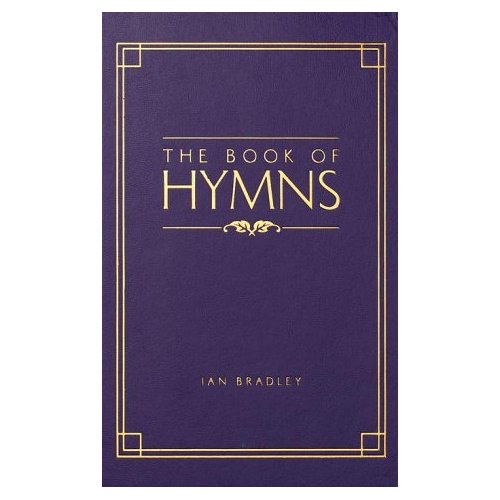
~~~From The Book of Hymns, Ian Bradley


Let All Mortal Flesh Keep Silence:  Version One

French Carol Melody, Picardy; Liturgy of St. James, Translated by G. Moutlrie

Let all mortal flesh keep silence,

And with fear and trembling stand;

Ponder nothing earthly-minded,

For with blessing in His hand,

Christ our God to earth descendeth,

Our full homage to demand.


King of kings, yet born of Mary,

As of old on earth He stood,

Lord of Lords, in human vesture –

In the Body and the Blood –

He will give to all the faithful

His own Self for heavenly food.


Rank on rank, the host of heaven

Spreads its vanguard on the way,

As the Light of Light descendeth,

From the realms of endless day,

That the powers of hell may vanish,

As the darkness clears away.


At His feet, the six-winged Seraph;

Cherubim with sleepless eye,

Veil their faces to the Presence,

As with ceaseless voice they cry,

“Alleluia!  Alleluia! Alleluia!  Lord most high!”


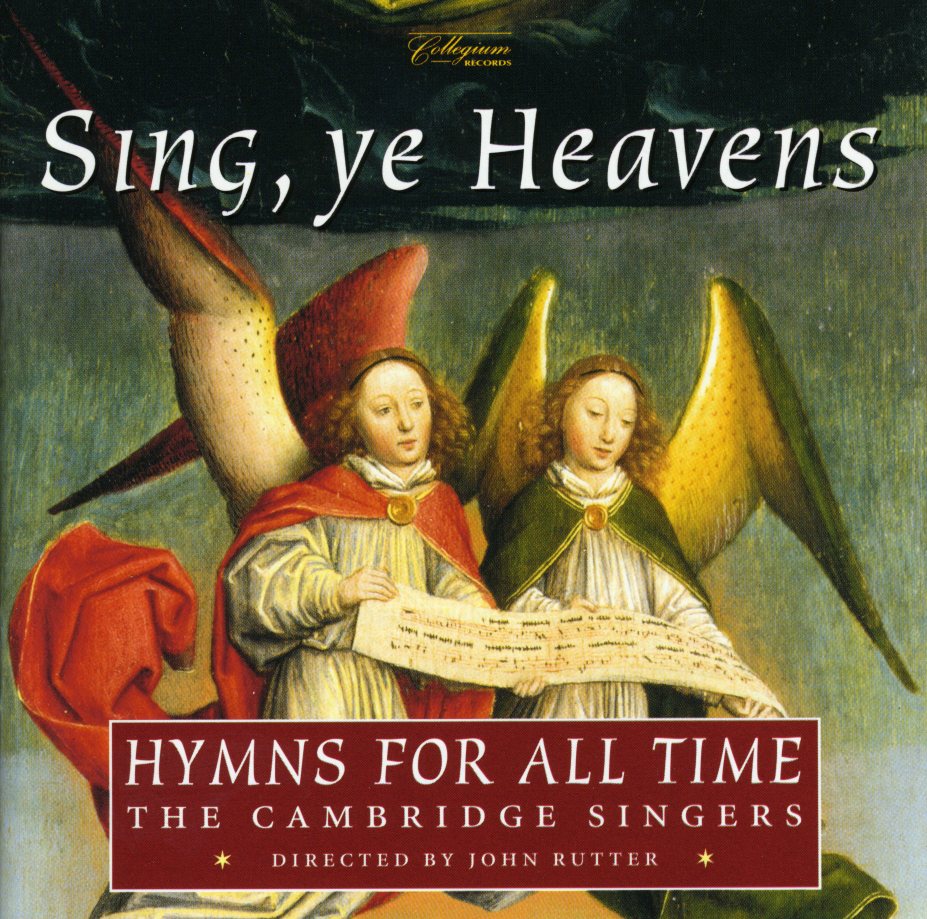
“The text of Let All Mortal Flesh Keep Silence is . . . taken from the fourth-century Orthodox Liturgy of St. James of Jerusalem; Gerard Moultrie’s verse translation was published in 1864, when there was renewed interest in early Christian rites, awakened, doubtless, by the Oxford Movement.  Vaughn Williams included it in The English Hymnal, set to the French carol melody Jésus Christ s’habille en pauvre, an unlikely, but inspired, union.”

~~~From CD and Notes:  Sing, Ye HeavensHymns for All Time:  The Cambridge Singers, Directed by John Rutter, Collegium Records


You can listen to the hymn here: Hymnody: “Let All Mortal Flesh Keep Silence”


Let All Mortal Flesh Keep Silence:  Version Two

Let all mortal flesh keep silence and stand with fear and trembling, and lift itself above all earthly thought.

For the King of kings and Lord of lords, Christ our God, cometh forth to be our oblation and to be given for Food to the faithful.

Before him come the choirs of angels with every principality and power; the Cherubim with many eyes, and winged Seraphim, who veil their faces as they shout exultingly the hymn:  Alleluia. 

From the Liturgy of St. James

~~~E. C. Bairstow, [1874-1946]

“Outwardly, Sir Edward Bairstow typified the English organist-composer of the early twentieth century:  conservative, craftsman-like, gifted with a natural feeling for choral writing, and discriminating in his choice of texts.  From 1913, until his death, he was organist of York Minster, for the spacious acoustic of which building Let All Mortal Flesh Keep Silence was doubtless conceived. 

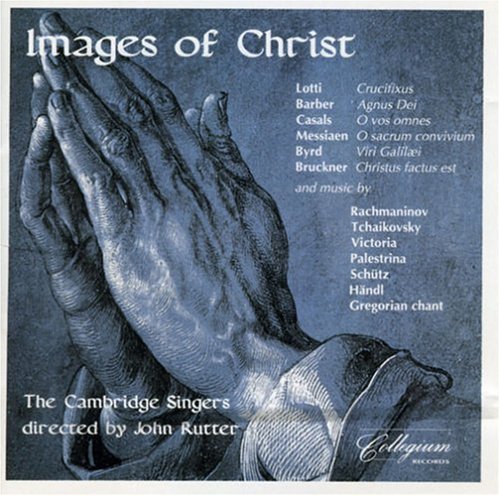
Yet this brief anthem, written in 1925, is filled with an awe-inspiring sense of mystery, majesty, and power that is anything but conventional, evoking the solemn liturgical music of Russia, rather than the aura of the English organ loft.  One wonders what Bairstow might have achieved if he had been free to devote himself more fully to composition.”

~~~From CD and Notes:  Images of Christ, The Cambridge Singers, Directed by John Rutter, Collegium Records

Coram Deo,

Margot

Leave a comment

Filed under Hymns