Category Archives: Hymns

Holy Week Hymnody: At the Cross of Jesus


stainedgl-altar

AT THE CROSS OF JESUS

A remarkable five-part hymn by Edward Monro: “The Story of the Cross”(1864).

[From Anthony Esolen, Touchstone Journal]:

The first part is The Question:


See Him in raiment rent,

With His blood dyed:

Women walk sorrowing

By His side.

Heavy that Cross to Him,

Weary the weight:

One who will help Him stands

At the gate.

Multitudes hurrying

Pass on the road:

Simon is sharing with

Him the load.

Who is this traveling

With the curst tree—

This weary prisoner—

Who is He?

The second part is The Answer:


Follow to Calvary,

Tread where He trod;

This is the Lord of life—

Son of God.

Is there no loveliness—

You who pass by—

In that lone Figure which

Marks the sky?

You who would love Him, stand,

Gaze at His face;

Tarry awhile in your

Worldly race.

As the swift moments fly

Through the blest week,

Jesus, in penitence,

Let us seek.


In the third part of the poem, we address the Lord personally:


On the Cross lifted up,

Thy face I scan,

Scarred by that agony—

Son of Man.

Thorns form Thy diadem,

Rough wood Thy throne,

To Thee Thy outstretched arms

Draw Thine own.

Nails hold Thy hands and feet,

While on Thy breast

Sinketh Thy bleeding head

Sore opprest.

Loud is Thy bitter cry,

Rending the night,

As to Thy darkened eyes

Fails the light.

Shadows of midnight fall,

Though it is day;

Friends and disciples stand

Far away.

Loud scoffs the dying thief,

Mocking Thy woe;

Can this my Savior be

Brought so low?

Yes, see the title clear,

Written above,

‘Jesus of Nazareth’—

Name of love!

What, O my Savior dear,

What didst Thou see,

That made Thee suffer and

Die for me?

In the fourth part the Lord responds:


Child of my grief and pain!

From realms above,

I came to lead thee to

Life and love.

For thee my blood I shed,

For thee I died;

Safe in thy faithfulness

Now abide.

I saw thee wandering,

Weak and at strife;

I am the Way for thee,

Truth and Life.

Follow my path of pain,

Tread where I trod:

This is the way of peace

Up to God.

So in the final part of the poem, the speaker replies to Jesus with eager love:


O I will follow Thee,

Star of my soul!

Through the great dark I press

To the goal.

Yea, let me know Thy grief,

Carry Thy cross,

Share in Thy sacrifice,

Gain Thy loss.

Daily I’ll prove my love

Through joy and woe;

Where Thy hands point the way,

There I go.

Lead me on year by year,

Safe to the end,

Jesus, my Lord, my Life,

King and Friend.

esolenanthony

Anthony Esolen is Professor of English at Providence College in Providence, Rhode Island, and the author of The Ironies of Faith (ISI Books), The Politically Incorrect Guide to Western Civilization (Regency), and Ten Ways to Destroy the Imagination of Your Child (ISI Books).  He has also translated Tasso’s Gerusalemme liberata (Johns Hopkins Press) and Dante’s The Divine Comedy (Random House). He is a senior editor of Touchstone Journal.

2 Comments

Filed under Holy Week, Hymns, Lent, Palm Sunday, Passiontide, theology and doxology

A Good Friday Meditation: O Sacred Head, Now Wounded

sacredhead

Dear Readers,

I encourage you to listen to the entire recording of J. S. Bach’s Matthew Passion.  

B000035QCS.01_SL75_

Bach’s St. Matthew Passion

Within the recording you will hear the tune of the hymn that we know as “O Sacred Head, Now Wounded.”  


O Sacred Head Now Wounded: Hymnal 1982

“O Sacred Head Now Wounded” Wikipedia

Text from Hymnal 1982:

1. O sacred head, sore wounded,
defiled and put to scorn;
O kingly head, surrounded
with mocking crown of thorn:
What sorrow mars thy grandeur?
Can death thy bloom deflower?
O countenance whose splendor
the hosts of heaven adore!

2. Thy beauty, long-desired,
hath vanished from our sight;
thy power is all expired,
and quenched the light of light.
Ah me! for whom thou diest,
hide not so far thy grace:
show me, O Love most highest,
the brightness of thy face.

3. In thy most bitter passion
my heart to share doth cry,
with thee for my salvation
upon the cross to die.
Ah, keep my heart thus moved
to stand thy cross beneath,
to mourn thee, well-beloved,
yet thank thee for thy death.

4. What language shall I borrow
to thank thee, dearest friend,
for this thy dying sorrow,
thy pity without end?
Oh, make me thine for ever!
and should I fainting be,
Lord, let me never,never,
outlive my love for thee.

5. My days are few, O fail not,
with thine immortal power,
to hold me that I quail not
in death’s most fearful hour;
that I may fight befriended,
and see in my last strife
to me thine arms extended
upon the cross of life.

Text Information
First Line: O sacred head, sore wounded
Author: Paul Gerhardt, 1607-1676
Translator (sts. 1-3, 5): Robert Seymour Bridges, 1844-1930
Translater (st. 4): James Waddell Alexander, 1804-1859
Publication Date: 1982
Meter: 76. 76. D
Language: English

Tune Information
Name: HERZLICH TUT MICH VERLANGEN (PASSION CHORALE)
Composer: Hans Leo Hassler, 1564-1612
Adapter and Harmonizer: Johann Sebastian Bach, 1685-1750
Meter: 76. 76. D
Key: a minor or modal

Lyrics (J.W. Alexander’s version, 1830)

O sacred Head, now wounded, with grief and shame weighed down,
Now scornfully surrounded with thorns, Thine only crown;
How pale Thou art with anguish, with sore abuse and scorn!
How does that visage languish, which once was bright as morn!

What Thou, my Lord, hast suffered, was all for sinners’ gain;
Mine, mine was the transgression, but Thine the deadly pain.
Lo, here I fall, my Savior! ’Tis I deserve Thy place;
Look on me with Thy favor, vouchsafe to me Thy grace.

Men mock and taunt and jeer Thee, Thou noble countenance,
Though mighty worlds shall fear Thee and flee before Thy glance.
How art thou pale with anguish, with sore abuse and scorn!
How doth Thy visage languish that once was bright as morn!

Now from Thy cheeks has vanished their color once so fair;
From Thy red lips is banished the splendor that was there.
Grim death, with cruel rigor, hath robbed Thee of Thy life;
Thus Thou hast lost Thy vigor, Thy strength in this sad strife.

My burden in Thy Passion, Lord, Thou hast borne for me,
For it was my transgression which brought this woe on Thee.
I cast me down before Thee, wrath were my rightful lot;
Have mercy, I implore Thee; Redeemer, spurn me not!

What language shall I borrow to thank Thee, dearest friend,
For this Thy dying sorrow, Thy pity without end?
O make me Thine forever, and should I fainting be,
Lord, let me never, never outlive my love to Thee.

My Shepherd, now receive me; my Guardian, own me Thine.
Great blessings Thou didst give me, O source of gifts divine.
Thy lips have often fed me with words of truth and love;
Thy Spirit oft hath led me to heavenly joys above.

Here I will stand beside Thee, from Thee I will not part;
O Savior, do not chide me! When breaks Thy loving heart,
When soul and body languish in death’s cold, cruel grasp,
Then, in Thy deepest anguish, Thee in mine arms I’ll clasp.

The joy can never be spoken, above all joys beside,
When in Thy body broken I thus with safety hide.
O Lord of Life, desiring Thy glory now to see,
Beside Thy cross expiring, I’d breathe my soul to Thee.

My Savior, be Thou near me when death is at my door;
Then let Thy presence cheer me, forsake me nevermore!
When soul and body languish, oh, leave me not alone,
But take away mine anguish by virtue of Thine own!

Be Thou my consolation, my shield when I must die;
Remind me of Thy passion when my last hour draws nigh.
Mine eyes shall then behold Thee, upon Thy cross shall dwell,
My heart by faith enfolds Thee. Who dieth thus dies well.

Leave a comment

Filed under Crucifixion, Good Friday, Hymns, Lent, Passiontide, theology and doxology

Hymnody: “Pange Lingua” [Gregorian Chant]


Dear Readers,

“This hymn is one of the most beautiful and renowned in the repertory of Gregorian chant.  St. Thomas Aquinas, the Italian scholar-priest, wrote the words in 1263 at the request of the Pope, to fit an earlier hymn tune.”

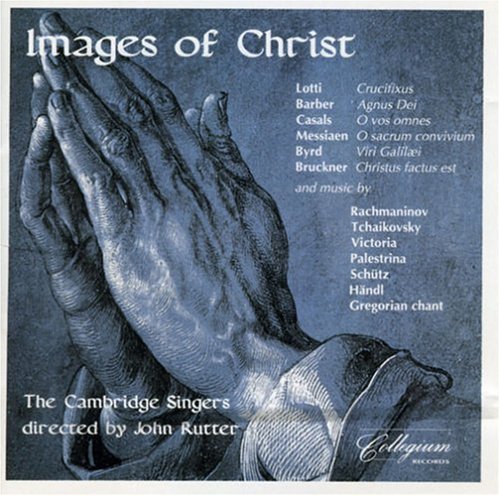
[Images of Christ, The Cambridge Singers, directed by John Rutter, Collegium Records.]

“The Eucharistic text of Pange lingua glorioso Corporis mysterium was written in 1263, by the Italian scholar-priest St. Thomas Aquinas at the request of the Pope to fit the melody of Pange lingua gloriosi proelium certaminis, Venantius Fortunatus’ famous sixth-century hymn in honor of the Cross.  The melody was used by Holst in The Hymn of Jesus and by Charles Wood [to its orginal text] in his St. Mark Passion.”

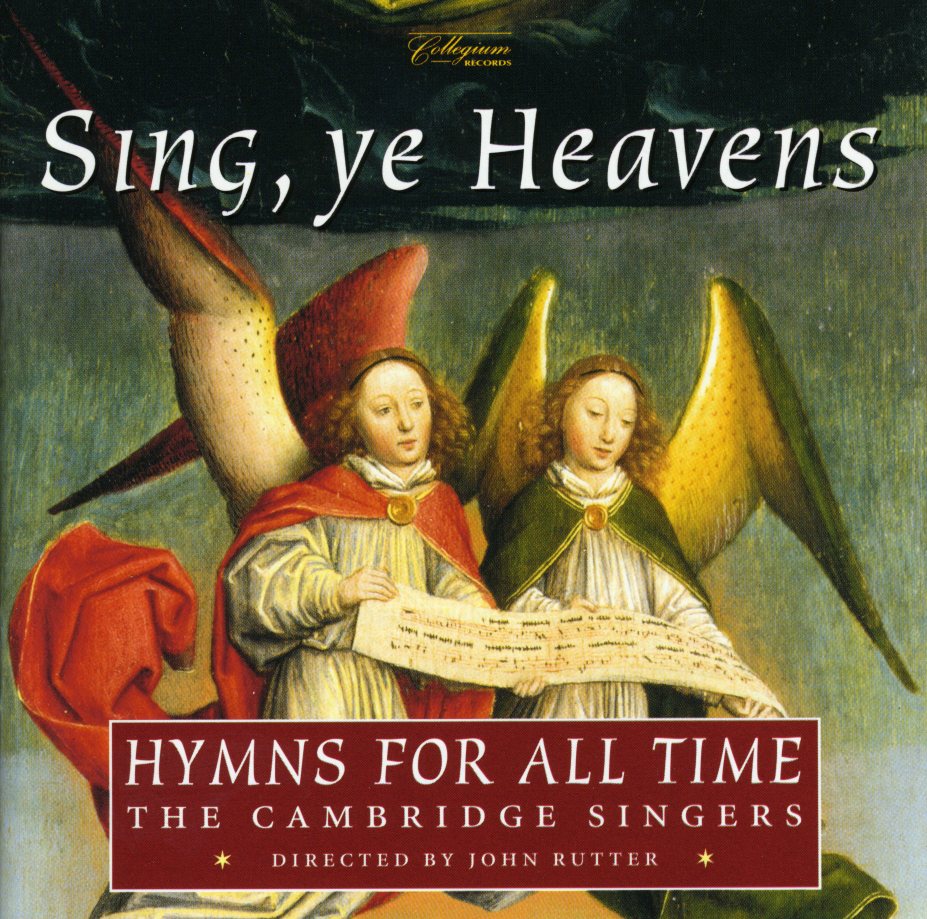
[Sing, Ye Heavens:  Hymns for All Time, the Cambridge Singers, Directed by John Rutter, Collegium Records]

For more information: Pange Langua [1] ; Pange Langua [2]; Pange Langua [3]

“Written by St. Thomas Aquinas (1225-1274) for the Solemnity of Corpus Christi, this hymn is considered the most beautiful of Aquinas’ hymns and one of the great seven hymns of the Church.  The rhythm of the Pange Lingua is said to have come down from a marching song of Caesar’s Legions: “Ecce, Caesar nunc triumphat qui subegit Gallias.”  Besides the Solemnity of Corpus Christi, this hymn is also used on Holy Thursday. The last two stanzas make up the Tantum Ergo (Down in Adoration Falling) that is used at Benediction of the Blessed Sacrament.”

[Pange Langua]

Latin text:

Pange lingua gloriosi
Corporis mysterium,
Sanguinsique pretiosi,
Quem in mundi pretium
Fructus ventris generosi
Rex effudit gentium.
 
Nobis datus, nobis natus
Ex intacta Virgine,
Et in mundo conversatus
Sparso verbi semine,
Sui moras incolatus
Miro clausit ordine.
 
In supremae nocte cenae
Recumbens cum fratribus,
Observata lege plene
Cibis in legalibus,
Cibum turbae duodenae
Se dat suis manibus.
 
Verbum caro, panem verum
Verbo carnem efficit;
Fitque sanguis Christi merum,
Et si sensus deficit;
Ad firmandum cor sincerum
Sola fides sufficit.
 
Tantum ergo Sacramentum
Veneremur cernui,
Et antiquum documentum
Novo cedat ritui; 
Praestet fides supplementum
Sensuum defectui.
 
Genitori, Genitoque
Laus et jubilatio
Salus, honor, virtus quoque
Sit et benedictio;
Procedenti ab utroque
Compar sit laudatio.
 Amen
[St. Thomas Aquinas]
 

 English translation 1:

Of the glorious Body telling,
O my tongue, its mysteries sing,
And the Blood, all price excelling,
Which the world’s eternal King,
In a noble womb once dwelling,
Shed for this world’s ransoming.
 
Given for us, for us descending,
Of a Virgin to proceed,
Man with man in converse blending,
Scattered he the Gospel seed,
Till his sojourn drew to ending,
Which he closed in wondrous deed.
 
At the last great Supper lying,
Circled by his brethren’s band,
Meekly with the law complying,
First he finished its command,
Then, immortal Food supplying,
Gave himself with his own hand.
 
Word made Flesh, by word he maketh
Very bread his flesh to be;
Man in wine Christ’s Blood partaketh:
And if senses fail to see,
Faith alone the true heart waketh
To behold the mystery.
 
Therefore we, before him bending,
This great Sacrament revere; 
Types and shadows have their ending,
For the newer rite is here;
Faith, our outward sense befriending,
Makes the outward vision clear.
 
Glory, let us give, and blessing
To the Father and the Son;
Honour, might, and praise addressing,
While eternal ages run;
Ever too his love confessing,
Who, from both, with both is one.  
Amen.
[Translation from J. M. Neale and others]
 

From Wikipedia, the free encyclopedia:

Pange Lingua Gloriosi Corporis Mysterium is a hymn written by St Thomas Aquinas (1225–1274) for the Feast of Corpus Christi  (now called the Solemnity of the Holy Body and Blood of Christ).  It is also sung on Maundy Thursday, during the procession from the church to the place where the Blessed Sacrament is kept until Good Friday.  The last two stanzas, called separately Tantum Ergo, are sung at Benediction of the Blessed Sacrament.  The hymn expresses the doctrine of transubstantiation, in which, according to the Roman Catholic faith, the bread and wine are changed into the Body and Blood of Christ.

It is often sung in English as the hymn Of the Glorious Body Telling, to the same tune as the Latin.

The opening words recall another famous Latin sequence, from which this hymn is derived: Pange Lingua Gloriosi Proelium Certaminis by Venantius Fortunatus.

Music history

There are two plainchant settings of the Pange Lingua hymn. The better known is a Phrygian mode tune from the Roman liturgy, and the other is from the Mozarabic liturgy from Spain. The Roman tune was originally part of the Gallican Rite.

The Roman version of the Pange Lingua hymn was the basis for a famous composition by Renaissance composer Josquin des Prez, the Missa Pange lingua.  An elaborate fantasy on the hymn, the mass is one of the composer’s last works and has been dated to the period from 1515 to 1521, since it was not included by Petrucci in his 1514 collection of Josquin’s masses, and was published posthumously.  In its simplification, motivic unity and close attention to the text it has been compared to the late works of Beethoven, and many commentators consider it one of the high points of Renaissance polyphony.

Juan de Urrede, a Flemish composer active in Spain in the late fifteenth century, composed numerous settings of the Pange Lingua, most of them based on the original Mozarabic melody.  One of his versions for four voices became one of the most popular pieces of the sixteenth century, and was the basis for dozens of keyboard works in addition to masses, many by Spanish composers.

Building on Josquin’s treatment of the hymn’s third line in the Kyrie of the Missa Pange Lingua, the “Do-Re-Fa-Mi-Re-Do”- theme became one of the most famous in music history, used to this day in even non-religious works such as Wii Sports ResortSimon LohetMichelangelo RossiFrançois RoberdayJohann Caspar Ferdinand FischerJohann Jakob Froberger,[2] Johann Kaspar KerllJohann Sebastian BachJohann Fux wrote fugues on it, and the latter’s extensive elaborations in the Gradus ad Parnassum made it known to every aspiring composer – among them Wolfgang Amadeus Mozart, whose Jupiter[3] theme borrows the first four notes.

The last two verses of Pange Lingua (Tantum Ergo) are often separated out.  They mark the end of the procession of the monstrance in Holy Thursday liturgy.  Various separate musical settings have been written for this, including one by Giovanni Pierluigi da Palestrina, one by Franz Schubert, one by Maurice Duruflé, and one by Charles-Marie Widor.

Franz Liszt‘s Night Procession from Two Episodes from Lenau’s Faust is largely a fantasy on the Pange Lingua melody.[4]

A setting of Pange Lingua, written by Ciaran McLoughlin and produced by Paul MacAree, appears on the Solas album Solas An Domhain.

Pange Lingua has been translated into many different languages for worship throughout the world.  However, the Latin version remains the most popular.  The Syriac translation of Pange Lingua was used as part of the rite of benediction in the Syro-Malabar Church of KeralaIndia, until the 1970s.

Coram Deo,

Margot

Leave a comment

Filed under Hymns

Hymnody: “Let All Mortal Flesh Keep Silence”


Dear Readers, 

The study of Theology always begins and ends with Doxology.  And a Hymn is Theology, set to music.

Study, memorize, and sing hymns that are rich in Theology:  hymns that are solid, historic, orthodox,  ancient, classical, and Trinitarian.

This is a delightful way to engage in both Theology and Doxology.

Below I have provided two versions of a theologically-rich hymn, “Let All Mortal Flesh Keep Silence.”


Let All Mortal Flesh Keep Silence

“This powerful Eucharistic hymn, so full of awe and mystery, is taken from one of the early liturgies of the Greek Orthodox Church.  The verses are based on a part of the Liturgy of St. James, which dates from the fourth century and is found in both Greek and Syriac .

The whole liturgy was first translated into English, by J. M. Neale and R. F. Littledale, and published in their Primitive Liturgies [1868-9].  Shortly after the books’ publication, the Reverend Gerard Moultrie [1829-85] versified a section entitled Prayer of the Cherubic Hymn, to form this hymn.  Moultrie was successively Chaplain of Shrewsbury School, Vicar of South Leigh, and Warden of St. James’ College, also in South Leigh.  He was responsible for several translations of hymns, as well as a number of his own compositions.

It is Moutlrie’s translation which appears [above] and which is found in most Roman Catholic, Anglican, and Presbyterian hymnals.”

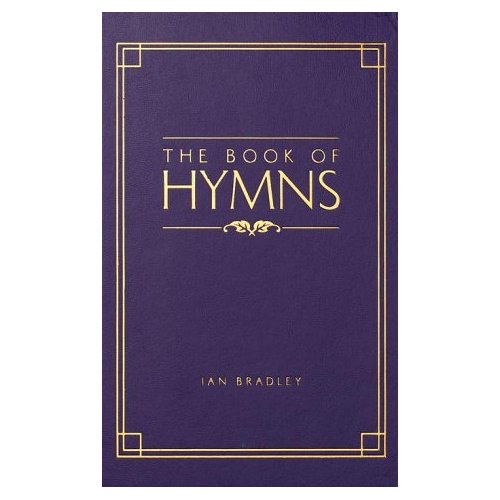
~~~From The Book of Hymns, Ian Bradley


Let All Mortal Flesh Keep Silence:  Version One

French Carol Melody, Picardy; Liturgy of St. James, Translated by G. Moutlrie

Let all mortal flesh keep silence,

And with fear and trembling stand;

Ponder nothing earthly-minded,

For with blessing in His hand,

Christ our God to earth descendeth,

Our full homage to demand.


King of kings, yet born of Mary,

As of old on earth He stood,

Lord of Lords, in human vesture –

In the Body and the Blood –

He will give to all the faithful

His own Self for heavenly food.


Rank on rank, the host of heaven

Spreads its vanguard on the way,

As the Light of Light descendeth,

From the realms of endless day,

That the powers of hell may vanish,

As the darkness clears away.


At His feet, the six-winged Seraph;

Cherubim with sleepless eye,

Veil their faces to the Presence,

As with ceaseless voice they cry,

“Alleluia!  Alleluia! Alleluia!  Lord most high!”


“The text of Let All Mortal Flesh Keep Silence is . . . taken from the fourth-century Orthodox Liturgy of St. James of Jerusalem; Gerard Moultrie’s verse translation was published in 1864, when there was renewed interest in early Christian rites, awakened, doubtless, by the Oxford Movement.  Vaughn Williams included it in The English Hymnal, set to the French carol melody Jésus Christ s’habille en pauvre, an unlikely, but inspired, union.”

~~~From CD and Notes:  Sing, Ye HeavensHymns for All Time:  The Cambridge Singers, Directed by John Rutter, Collegium Records


You can listen to the hymn here: Hymnody: “Let All Mortal Flesh Keep Silence”


Let All Mortal Flesh Keep Silence:  Version Two

Let all mortal flesh keep silence and stand with fear and trembling, and lift itself above all earthly thought.

For the King of kings and Lord of lords, Christ our God, cometh forth to be our oblation and to be given for Food to the faithful.

Before him come the choirs of angels with every principality and power; the Cherubim with many eyes, and winged Seraphim, who veil their faces as they shout exultingly the hymn:  Alleluia. 

From the Liturgy of St. James

~~~E. C. Bairstow, [1874-1946]

“Outwardly, Sir Edward Bairstow typified the English organist-composer of the early twentieth century:  conservative, craftsman-like, gifted with a natural feeling for choral writing, and discriminating in his choice of texts.  From 1913, until his death, he was organist of York Minster, for the spacious acoustic of which building Let All Mortal Flesh Keep Silence was doubtless conceived. 

Yet this brief anthem, written in 1925, is filled with an awe-inspiring sense of mystery, majesty, and power that is anything but conventional, evoking the solemn liturgical music of Russia, rather than the aura of the English organ loft.  One wonders what Bairstow might have achieved if he had been free to devote himself more fully to composition.”

~~~From CD and Notes:  Images of Christ, The Cambridge Singers, Directed by John Rutter, Collegium Records

Coram Deo,

Margot

Leave a comment

Filed under Hymns

“And Every Stone Shall Cry”

stained_glass_angel_image_yfly


Dear Readers,

In the Anglican Church, we sing Advent hymns, all during the Advent Season, the season of reflection, contemplation, longing, waiting, and watching.

Only on Christmas Eve do we begin to sing Christmas hymns and we continue to do so, until the Feast of the Epiphany on January 6.

One of the Christmas Eve hymns that we sing is variously known as:

“A Christmas Hymn” or

“And Every Stone Shall Cry” or

“A Stable Lamp Is Lighted”

This hymn appears on Page 104 of The Hymnal, 1982, Oxford Press.

The poet, Richard Wilbur, wrote the words to that hymn.

tumblr_m07po8uoYk1qe1uv8o1_1280

Richard Wilbur, born 1921, was an American poet and literary translator. He was appointed the second Poet Laureate Consultant in Poetry to the Library of Congress in 1987. He twice received the Pulitzer Prize for Poetry: 1957 and 1989. He died in 2017, aged 96.

~~~~~~

A Christmas Hymn

Words:  Richard Wilbur [born 1921]

And some of the Pharisees from among the multitude said unto him, “Master, rebuke the disciples.”

And he answered and said unto them, “I tell you that, if these should hold their peace, the stones would immediately cry out.”

~Luke19:39-40

remains_of_the_roman_road_at_egnazia

A stable lamp is lighted

Whose glow shall wake the sky;

The stars shall bend their voices,

And every stone shall cry.

And every stone shall cry,

And straw like gold shall shine;

A barn shall harbor heaven,

A stall become a shrine.

This child through David’s city

Shall ride in triumph by;

The palm shall strew its branches,

And every stone shall cry.

And every stone shall cry,

Though heavy, dull and dumb,

And lie within the roadway

To pave his kingdom come.

Yet he shall be forsaken,

And yielded up to die;

The sky shall groan and darken,

And every stone shall cry.

And every stone shall cry,

For stony hearts of men:

God’s blood upon the spearhead,

God’s love refused again.

But now, as at the ending,

The low is lifted high;

The stars shall bend their voices,

And every stone shall cry.

And every stone shall cry,

In praises of the Child

By whose descent among us

The worlds are reconciled.

 ~~~~

“All good theology begins and ends with doxology” and “[Good] hymns are [good] theology set to music.”  

This hymn,  A Christmas Hymn, is one of the finest examples of solid theology and doxology.

Listen to a choral recording of the hymn. There are three different links below. [I apologize for any advertisements via YouTube]:

A Stable Lamp Is Lighted

A Stable Lamp Is Lighted

A Stable Lamp Is Lighted

“A Stable Lamp Is Lighted”  by Richard Wilbur.  [The tune is  Andujar, by David Hurd, born 1950.]

Biographies:

Richard Wilbur [Wikipedia]

David Hurd [Wikipedia]

Mars Hill Audio Journal:

Click here to learn more, subscribe, and to search the Archives of  Mars Hill Audio Journal.  Click the link below to see a list of the Archives which feature Richard Wilbur:

Richard Wilbur: Mars Hill Audio Journal

Listen to the mellifluous voice of Richard Wilbur:

Click here and listen to Selection #67:  Richard Wilbur interview clip

Click here and listen to Selection #68:  Richard Wilbur reads “A Christmas Hymn”

Some Questions to Ponder:

Jeffrey Johnson, in “Harbors of Heaven” says about this hymn:  “I like the paradox in it, the hard-working biblical metaphors that carry meaning across the seasons and across the course of life.”  

  • With this quote in mind, study the paradoxes and the metaphors.  
  • What are the “seasons” and the “course of life,” to which Johnson refers?   
  • Should we relegate this hymn to one Season of the Liturgical Church Year? Why or why not?
  • How well has Wilbur conveyed the “Grand Narrative of Redemption,” within this hymn?
  • Which “two worlds” are reconciled?
  • How does this hymn enlarge your vision of the meaning of the Season of Advent and Christmastide? 
  • What does this poem mean to us, as we live between the First and Second Advent?
  • How effectively has Wilbur conveyed this theme:  “The Cross casts a shadow over the Incarnation?”
  • Among the three various titles of this hymn, which title best fits the hymn?

Coram Deo,

Margot

This choral CD includes the selection, “A Christmas Hymn:”


G-49074-2


Leave a comment

Filed under Hymns, theology and doxology