Simple Pleasures

il_fullxfull.298736263

Simple Pleasures:  A True Story

Well, here I was, finished with my Pilates Class and my Nature Walk.  Since I was already on the north part of town, I decided to drive on over to the Tallahassee Camera Center.  Only – I forget — now they call it the Tallahassee Image Center.   I needed to find replacement parts for a piece of equipment that I had stowed in the trunk of the car.

It was a cold morning so I was dressed in baggy sweatpants, a sweatshirt and athletic shoes.  [I gave a good sniff to make sure my shoes didn’t smell — dogs are allowed on that Nature Trail, you know!]  Of course, I had on no makeup and was rather disheveled from two hours of exercise.  And wouldn’t you just know it?  I had forgotten my hairbrush that day!  But, no problem — I just smoothed down the halo of “frizzies” with my hands and some saliva and gathered my hair into a ponytail.  [I always think you should be resourceful and try to look as youthful as possible.]

I arrived at the Image Center and grabbed the handle of the equipment case, hauled it into the store, and heaved it onto the top of the counter.  The young gal behind the counter blinked a few times at me and then her eyes rested on the case.  When I snapped open the case and removed the lid, she held her breath and her eyes opened wide in wonderment and awe, as if I had unveiled a mastodon fossil or the Shroud of Turin.

She was still dazed and astounded, even after I explained that it was only my father’s 1952 Bell & Howell slide projector.  I figured she was too young to appreciate such a fine piece of technology.  Sure enough, she declared that she had never seen anything like it before!  [That filled me with pride when I heard her say that.]

 

482183713_tp

I explained to her that, in the spring, my sisters and I, the Blair sisters, were going to use the projector to go through a thousand or so Blair Family slides.  We wanted to make sure that the projector was “running like a top.”  So, I asked her to plug it in and test it out.  But she vowed and declared that she was not sure how to go about it!  Seeing that she lacked confidence, I gave her a chance to figure it out herself.  I watched her fiddle and faddle for a few minutes and then I offered to help her.  Together, we figured out how to turn on the lamp and the fan.  Everything seemed to run fine.

However, the young gal still seemed quiet, shy, and kind of nervous.  I remembered how Dad & Mom always liked to chat with folks to help them relax.  I thought about how I could make a “connection.”  I wanted her to know that we – the Blair Family — were just “plain folks,” so that she would not be so intimidated.  After all, not all families think such a heap about passing on heirlooms in pristine condition.

$(KGrHqR,!nQE8Yt8y!m7BPLV1rDm3w~~60_3

So, I related to her a little slice of our family history:  . . . .

. . . In the 1960’s, on the weekends, we four kids gathered around the coffee table in the living room and watched the The Lawrence Welk Show, while Dad & Mom made home-made Chef Boyardee Pizza in the kitchen.  We kids hurried through supper, kitchen cleanup, and our baths.  We helped Dad set up the slide projector, remove the framed art from one wall, and hang an old sheet on that blank wall.  Then, we each grabbed a Nu-Grape Soda and an Eskimo Pie and settled in to watch the show.

For over an hour, Dad projected slides of family vacations, holidays, and special occasions, all in color and larger than life.  I tell you, when we saw the 1950’s images of our younger selves [say, on Christmas morning, with our “bed head” and our weird, nerdy eyeglasses] we laughed so hard that we snorted soda out of our noses and drooled and dribbled ice cream onto our clean pajamas.

gxmaslate60s03

[NOT my family!]


I confided to the young gal that my siblings and I intended to keep up the family tradition and provide that same kind of entertainment for our children and grandchildren.  I mean, why would children need a radio, a record player, or even a TV, when they could have that kind of family fun?

. . . As I related the story, the young gal blinked some more and was rendered speechless.  She was evidently mesmerized by my story and maybe a little envious, too.  She was obviously a stranger to the simple pleasures of family togetherness.  I felt sorry for her.

So, I decided to change the subject and asked:  Do you have any replacement parts for the projector? A lamp and a lens, maybe?   

That was when I thought I saw her eye twitch.  The poor child was slow to respond.  You know, I began to wonder if she was dim-witted!

So, I remembered to be kind and patient.  I prompted her to look behind the counter.  I encouraged her to check the pegs on the wall behind the counter, the shelves, and the storage room, too.  [I was kind of surprised that she had not thought of all the places to search.]

Now, do you know, that in that whole fancy store, there were no replacement parts for the “Bell & Howell TDC Headliner 303?”  This puzzled me because everybody knows that the Tallahassee Image Center is the oldest and best camera shop in town!

482183773_tp


Well, anyway, remembering my manners, I thanked the young gal for her help, as I clicked the lid onto the case.  At this point, she snapped out of her stupor.  I guess my warm friendliness had finally perked her up a little.  In fact, she sprang into action:  She raced me to the door, opened it up for me, and heartily wished me “good luck in finding the parts I needed.

I lugged the projector back to the trunk of my car.  I drove away and shook my head in wonderment at a world where you could not buy replacement parts locally for a perfectly good 1952 slide projector.  If that isn’t planned obsolescence, I don’t know what is!

~~~Margot Blair Payne

2 Comments

Filed under Childhood Memories, Family Togetherness, Simple Pleasures

Places of Enchantment

For Father’s Day, June 2010

Places of Enchantment:  A Tribute to Alton Bernard “Nobby” Blair

Born October 29, 1919 and Died February 21, 2006

A few months after my mother died, my father moved to Tallahassee and, for almost five months, he lived only one mile from our Payne home.  At first, I wondered how he and I would find “common ground” during our daily visits, for Dad was a “doer” and I was a “dreamer.”  He had been an athlete, a coach, an educator, and a military officer.  A handyman who could fix anything, he was a wood craftsman and built furniture and clocks for his family.  He even designed and built the interior of his retirement mountain home.  I, on the other hand, was often lost in the world of “arts and ideas.”

One autumn evening, I introduced Dad to the film, Cross Creek, based on the memoirs of Marjorie Kinnan Rawlings and her 25 years of community life in rural central Florida.  The film was enchanting:  it was beautiful, quiet, thoughtful, and lyrical.  At breakfast the next morning, he said, “I am still thinking about that film.”   He had never been a reader of literature, so I was amazed when he devoted two hours, every night, to reading the book, Cross Creek. It had captured his imagination, as it had always captured mine.

During those fall evenings, chapter-by-chapter, he and I enthused about Cross Creek:  We shared our favorite passages; critiqued the writing style; discussed the characters, the land and water, the woods and wildlife, the flora and fauna, the food and folkways.  After finishing the book, he ruefully told me that, to him, all other reading had become dull.  I quickly asked my sisters, Susan and Amy, to order other Rawlings book titles for Dad.  In astonishment, they asked each other, “Which Dad would that be?”

I was delighted, yet puzzled, by this new-found connection that Dad and I shared, until I pondered this quote by Rawlings:

“I do not understand how anyone can live without some small place of enchantment to turn to.”   

I then asked myself, “Who was it that first introduced you to places of enchantment?” . . . . .

. . . . . In the summers of the 1960’s, our West Coast Blair Family Retreat was to the campgrounds of Big Sur, California:  Together, we chose the best rustic campsite by the creek, set up the tent; read, napped, and gazed up at the sunlight, peeking through the majestic sequoias and redwoods; hiked up to the water falls and crossed moss-covered footbridges; fell asleep to the soothing sound of the bubbling creek; and woke up to the call of the song birds, in the morning.

As my younger brother, Michael, said, “Well, here we all are – out in the natures!”

In my memories of Big Sur, the moonlight shone on huge stepping-stones, as our family crossed the shallow creek, to gather with the other families, at the outdoor amphitheatre.  We huddled around the campfire, sipped hot cocoa, and waited for the park ranger to greet us:  “Howdy, Campers!”  He led us in rousing renditions of campfire songs; we sang with unabashed enthusiasm and learned all the hand-motions, too.

Even forty years later, my father still loved to sing those campfire songs with his family.  We sang them, every summer, at our East Coast Blair Family Retreat:  the North Carolina mountain home of my parents.  Dad and Susan created identical “Campfire Songbooks” for each member of the growing Blair Clan.  Ten years ago, in Blowing Rock, North Carolina, Michael led family and friends in singing campfire songs, after the celebration dinner that commemorated the 50th wedding anniversary of my parents.

We discovered that we could take those songs anywhere:  They were our connection to each other, to places of enchantment, and to all that was true, good, and pure about nature and family life. . . . .

. . . . . Back in Tallahassee, sitting with Dad, the daylight hours were shortening, as the autumn of 2005 faded into winter.  The Rawlings books arrived, which my sisters had ordered.  However, by then, Dad was too weak to read them, so, during the evenings, at his bedside, I read extracts to him.  With delight, I told him of this discovery:  “Mizz Rawlin’s” spent one fall season, in 1936, living and writing in a retreat cabin, in Banner Elk, NC.  I could imagine her, gazing out her cabin window, drawing inspiration from the same magnificent, panoramic view that would captivate my father, some 40 years later.  Dad would then introduce his family to this enchanted place and it would become our Blair Clan Reunion Retreat for the next 25 summers.

In the final weeks of his life, my father often reviewed his life in “daydreams.”  These were vivid, strong, and persistent memories; they represented events that had been very important to him.

One day, I asked him, “What are you day-dreaming about?”

He answered, “Big Sur.”  He spoke only in a whisper and his eyes were closed but he could smile and nod.

I told him, “I remember waking to the good aroma of your campfire coffee and breakfast in the mornings.”  He smiled.

I asked him, “Do you remember the morning when a blue jay zoomed down and snatched a hot blueberry pancake off a plate on the picnic table?”   He nodded.

I continued: “Do you remember what you said, as you scratched your head and watched the little thief fly away?”   He waited.

I reminded him, “You said, ‘That was either a very light pancake or a very strong bird!’”   

He smiled and the corners of his eyes wrinkled with delight, in the remembering.  He went back to sleep.

It was only Valentine’s Day but an early spring had arrived in Tallahassee:  The, azalea, dogwood, and redbud were blooming.  I was overjoyed when my father lived long enough to see a Carolina chickadee return, at last, to the window bird feeder.  Dad did not live long enough to return, one last time, to the mountains of North Carolina.  One week later, he was gone from the land and water he loved so well.  However, before his passing, he had imparted to his children and grandchildren a desire to turn — and return — to places of enchantment.  This legacy will be his strong connection to many generations.

Margot Blair Payne, Daughter, The First Week of Lent 2006, Tallahassee, FL

“ . . . If there be such a thing as [collective or instinctual] memory, the consciousness of land and water must lie deeper in the core of us than any knowledge of our fellow beings.  We were bred of earth before we were born of our mothers.  Once born, we can live without mother or father, or any other kin, or any friend, or any human love.  We cannot live without the earth or apart from it, and something is shriveled in a man’s heart when he turns away from it and concerns himself only with the affairs of men.”

“ . . . It seems to me that the earth may be borrowed but not bought.  It may be used but not owned.  It gives itself in response to love and tending, offers its seasonal flowering and fruiting.  But we are tenants and not possessors, lovers and not masters.  Cross Creek belongs to the wind and the rain, to the sun, and the seasons, to the cosmic secrecy of seed, and beyond all, to time.”

~~~All quotes are from Cross Creek, the memoirs of Marjorie Kinnan Rawlings, 1942, Scribner’s

Epilogue:  August 14, 2006

One week after the Memorial Service for my father, my husband, Stephen, and I returned to The Hiding Place Columbarium, a walled garden on the property of the Banner Elk Presbyterian Church.  My parents chose this garden as their final resting place:  Their cremains, each contained within an urn, are interred within two niches, side-by-side.  Brass plaques identify their names, dates of birth, and dates of death.

From the vantage point of the garden, Stephen and I turned around in a circle and surveyed the sweeping vista of the mountains:  The view beyond the Columbarium Garden Archway faced the majestic Grandfather Mountain.  The opposite view led to Beech Mountain, where my parents built their retirement home.  To the left of the archway, a short distance up the hill from the Columbarium Garden, stood the sturdy, stone church, over 150 years old, the denomination of my Scottish ancestors. Yet another direction revealed the road leading to The Grandfather Home for Children.  My parents had been enthusiastic supporters and promoters of this home, which gives hope, health, and healing to children from troubled homes.

By vehicle, we followed the road to the Grandfather Home for Children. On foot, we explored the property and found a bench and a commemorative marker, which the Marjorie Kinnan Rawlings Society had placed:

Marjorie Kinnan Rawlings ~ 1896-1953

Rawlings wrote the first draft of her Pulitzer-winning novel, The Yearling, in this location.  Her famous short story, A Mother in Mannville, featured a boy at Grandfather Home.  Both stories are popular MGM movies.

~~~~~~~~~~

[For more information:  Marjorie Rawlings In the Mountains:  The Story Behind A Mother in Mannville, Mary Dudley Gilmer, 2004.]

3 Comments

Filed under Tribute to My Father

Interiors

The Second Sunday of Pentecost

Dear Faithful Family & Friends,

First, an update:  I am doing very well!  Herceptin infusions continue, once every three weeks, without any noticeable side effects. I am going strong with swimming and water aerobics.  I have worked back up to swimming one mile per session [about 2-3 times per week].

On May 10, Daniel & Haley & Benjamin moved here from Waco, TX.  They lived with us for three weeks and are now settling into their first home, which is only six houses away from Garrett’s home [and only minutes away from our home]!

Second, family and friends often ask me, “Why/when did you become Anglican?” I wrote “Interiors” a couple of years ago, in order to provide a brief answer to that question.  I begin with a quote by C. S. Lewis.

Interiors

“I hope no reader will suppose that ‘mere’ Christianity is here put forward as an alternative to the creeds of the existing communions – as if a man could adopt it in preference to Congregationalism or Greek Orthodoxy or anything else.  It is more like a hall out of which doors open to several rooms.  If I can bring anyone into that hall I shall have done what I attempted.  But it is in the rooms, not in the hall, that there are fires and chairs and meals.  The hall is a place to wait in, a place from which to try the various doors, not a place to live in.  For that purpose the worst of the rooms [whichever that may be] is, I think, preferable.  It is true that some people may find they have to wait in the hall for a considerable time, while others feel certain almost at once which door they must knock at.  I do not know why there is this difference, but I am sure God keeps no one waiting unless He sees that is good for him to wait.  When you do get into your room you will find that the long wait has done you some kind of good which you would not have had otherwise.  But you must regard it as waiting, not as camping.  You must keep on praying for light:  and, of course, even in the hall, you must begin trying to obey the rules which are common to the whole house.  And above all, you must be asking which door is the true one, not which pleases you best by its paint and paneling.  In plain language, the question should never be, ‘Do I like that kind of service?’ but ‘Are these doctrines true:  Is holiness here?  Does my conscience move me toward this?  Is my reluctance to knock at this door due to my pride, or my mere taste, or my personal dislike of this particular door-keeper?’

When you have reached your own room, be kind to those who have chosen different doors and to those who are still in the hall.  If they are wrong they need your prayers all the more; and if they are your enemies, then you are under orders to pray for them.  That is one of the rules common to the whole house.”

~C. S. Lewis, excerpt from the book, Mere Christianity, 1952, Macmillan Publishing.


The above imagery by Lewis reminds me of my childhood discovery on a wintry day at the 1920 home of my grandmother:

In the center of the house was a fully-enclosed, dark, square hall.  Four doors, located north, south, east, and west, opened up from the hall into various rooms.  Also, the central stairway was located inside the hall.  I climbed the stairs and located two doors, one to either side of the landing.  I opened one of the doors, which revealed a guest room.  Inside the room, I opened an interior door, which led to a dark, small, musty clothes-closet.  I pushed aside the hanging clothes and discovered that – lo and behold!  A secret door was hidden at the back of the clothes-closet!  I opened this concealed door and stepped into a cavernous attic room, filled with sunlight.  I squinted my eyes, to adjust to the brightness.  I positioned a chair underneath a large window.  I climbed up and opened the window latch.  I stood on tip-toes to scan the wide, clear sky and to breathe the crisp, cold air.

“Not all who wander are lost.” [Tolkein] I was not lost but I was a wanderer for 25 years within the “hall” of contemporary evangelical churches, which endeavored to be inter-denominational or non-denominational.  I began to yearn for a more permanent residence:  one that embraced Community and Creed, Doxology and Theology, Faith and Reason.

One Christmas Eve, 2000, I tried the door leading to Anglicanism, where I found fires, chairs and meals:  Here was the warmth of community with believers, not merely contemporary and local, but also historical and global.  Here was the sturdy foundation of doctrine, based upon the Authority of Holy Scripture, assisted now by Faith, Reason and Tradition.  Here also was nourishment, not only from the reading and preaching of the Word, but also from the real and living Presence of Christ, in the Holy Eucharist.

Opening the door to Anglicanism revealed yet another door:  a portal to the creeds, prayers, and hymns of ancient and historic Christian faith.  My search had brought me full circle:  As a child, I attended liturgical worship services, which shaped me in ways that were subtle, yet strong and sure, for as N. T. Wright reminds us, “The Liturgy is a means of grace; it is God ministering to us.”

The Language of Liturgy slowly unveils to us the meaning of its metaphors.  The Words of Worship strengthen and sustain us; they form and transform us.  The Language and Words, vast and ageless, are filled with light and life.

~~~Margot Blair Payne, Advent 2007

2 Comments

Filed under Christmas Eve

The Mother I Never Knew

Mother’s Day 2010

Dear Faithful Family & Friends,

I wonder if you remember this custom, as I do, growing up in the 50’s and 60’s?  On Mother’s Day, girls and women wore a corsage to church:  a red carnation to honor a mother still living and a white carnation in memory of a mother no longer living.  The custom faded away before my mother died in June 2005.  So, here is my  “white corsage: ” a tribute to her.  To see photos of my mother, view the entry, “The Heroes Among Us:  First in a Series.”

The Mother I Never Knew:  A Tribute to Margaret Elizabeth “Peg” Van Hoy Blair

Born January 11, 1918 and Died June 20, 2005

Several years ago, my mother visited our Payne home in Tallahassee and recognized the cover illustration of a book on the coffee table.  She remarked, “Oh, I know a friend who is reading that same book, I Never Knew Jesus. We shared a chuckle about that, because the title of the book was, in fact, The Jesus I Never Knew.

During the long, sad months of my mother’s illness, in 2005, I began to think about The Mother I Never Knew. What portrait might emerge, if I discovered a perspective of my mother that I never knew or appreciated – until now?

In my search for clues, I reviewed the photographs of my mother.  The year before Mother’s illness, my sisters [Susan and Amy] and I gathered the generational family photographs and created heirloom albums for my parents.  I relished the figure of little Margaret, circa 1922, the beloved child, a preschooler:  She wore a simple, handmade dress, Buster Brown shoes, wrinkled little socks, a bowl-cut hairstyle, a gentle smile, and a mischievous glint in her eyes.  I turned the album page and gazed upon the likenesses of Alton and Margaret, the college sweethearts, circa 1940, on a Guilford College Choir Trip.  On the next page, I pored over impressions of Alton & Margaret at Reynolds Park, in Winston-Salem, NC, during the summer of 1941, when they won the Swing Dance Competition.  As a sweetheart, Margaret’s eyes were laughing, full of happiness and young love.  I examined reflections of Margaret, as a bright-eyed, young newlywed, in 1946, on a crisp, fall morning, ready to walk to work at The University of North Carolina at Chapel Hill, where Alton was in graduate school.  I turned the page and studied the countenance of Margaret, in 1948, as a young mother.  Naturally, her eyes looked a little tired.

Page after page, I scrutinized the images of my mother’s face, through the years and decades, births and birthdays, school days and graduations, vacations and camping trips, holidays and family reunions, marriages and anniversaries:  Mother’s eyes were proud because of our accomplishments, wistful as we left home; her eyes were sometimes tired and sad, as she faced the “challenges and changes” of life:  military transfers, empty nest, retirement, loss, sorrow, and grief.

I wondered now, as I examined the photographs:  Besides being “our Mom,” did Mother have dreams and hopes of her own, separate from us?  I never thought to ask her.  Dreams and hopes are fragile.  In a home like ours, with four, active children, she probably “kept her hopes and dreams in the back of her mind, the only safe place in the house.”*

I continued to rummage around, gleaning hints of The Mother I Never Knew: I scanned my mother’s books and retrieved her college Psychology textbook from 1970.  That year, I was eighteen years old and a senior in high school.  My mother was 52.  After a twenty-five year hiatus [while raising her four children] Mother intended to return to her vocation as a secondary English teacher.  In preparation, she took evening college courses during that academic year.  Every afternoon, I arrived home and greeted my mother.  Her eyes were deep in study and her mind was focused and sharp.  I was proud of my mother.

After I left home for college, Mother served [briefly] as a substitute teacher and [for several years] as a community volunteer but she never returned to a full-time teaching profession.  I was disappointed in that; I had always hoped she would have a life beyond being “just a mom.”  If she had any regrets, she never mentioned them.

As I perused my mother’s 1970 textbook, I realized that now, in 2005, I was 52 years of age – the same age as she, when she studied for that course.  I turned the pages of the textbook and read my mother’s notes and comments, in the margin of every page.  Her notes revealed to me her hopes and dreams:  to understand herself, her family, and her community; to fulfill her role in the world and to make her life significant.  At the age of 52, she had personal goals and aspirations – some achieved and some yet unfulfilled — just as I did now, at 52 years of age.

I mused on this and continued to explore, as I organized her belongings.  My mother had a habit of scattering her eyeglasses throughout the house so I gathered, washed, and polished each pair.  I gently placed them together in a box, hoping she would return home soon to reclaim them and resume reading, solving crossword puzzles, and writing [“scribbling”] letters to family and friends.

I chuckled to myself as I found a Mother’s Day gift I had given Mother the year before her illness.  It was a beaded eyeglass “necklace.” I had hoped that she would wear it daily and keep her eyeglasses always at hand.  With the gift, I had enclosed a note card with a brief message.  I found the eyeglass “necklace” in a drawer, where Mother kept gifts that were simply too cherished and valuable to actually use.  She had carefully preserved the note card, treasuring the words, as much as the gift.  I tucked both the “necklace” and the note card into the box, with the eyeglasses, closed the lid, and placed it on my mother’s dresser.  Sadly, Mother never returned home.

The week after my mother died, my sisters and I sorted through my mother’s belongings.  It was a bittersweet task.  As we did this, we remembered, discovered, and appreciated more insights about our mother.  Together, we reviewed the family tree, history, and stories.  We tenderly preserved the very best of my mother’s “vintage” clothing, hats, gloves, and jewelry, remembering anecdotes to share with our daughters.

Later, alone in my mother’s bedroom, I retrieved the box of my mother’s eyeglasses.  I opened the lid and smiled ruefully, as I absorbed the reality that Mother would never come home again to use and then to loose her eyeglasses.  I held the beaded eyeglass “necklace” in my hands and re-read my hand-written note card to her:

Mother’s Day 2004

Dear Mom, Thanks for always seeing me through the eyes of love.  Love, Margot.”

I had discovered the most important facet of The Mother I Never Knew:  For most of my adult life, I thought my mother lacked perception and careful observation.  I, who am quick to see faults and flaws, was impatient with my mother, who saw only the good in almost everyone.  I had often wondered why my mother did not look to the future and warn me about the various difficult “stages and phases” of life, as a wife and mother.

The truth seemed to be that she chose not to look too closely nor too far ahead.  She tried to enjoy every “stage and phase” and she met every “challenge and change” to the best of her ability, according to the resources that she possessed.  She expected and had every confidence that I would do the same.

The eyeglass “necklace” and note card, my Mother’s Day gift to her, was a reminder of her greatest gift to me:  She was “just a Mom” but she stubbornly looked past the reality of the imperfect person I always was, in order to see the potential of the person I could become.

I am glad that I was able to thank her, before she closed those eyes for the very last time.

Margot Blair Payne, Daughter; The Fourth Week of Pentecost, 2005; Tallahassee, FL

*Paraphrased quote is from the author, Erma Bombeck.


8 Comments

Filed under Uncategorized

The Three Treasures

Dear Faithful Family & Friends,

April 2009 – Apalachicola, FL

My sisters [above] and I refer to ourselves as “The Three Treasures.” I borrowed this phrase from an incident in the film, Sarah, Plain and Tall [or perhaps it was from the sequel, Skylark] in which Sarah travels back home to visit her unmarried aunts.  It was Sarah’s grandfather [the father of the aunts] who bestowed on his adult daughters the collective endearment, “My Unclaimed Treasures.” I always loved that term and, so, although each of us is married, I  told my sisters that we were “The Treasures.”

I am almost certain that my sisters, Susan and Amy, will forgive me for not asking permission to post the above photo when I tell you [and them] that this photo, from one year ago, represents one of the most pleasurable days in my life.  A year ago, my sisters traveled to my home for our annual Sister’s Reunion” and, from Tallahassee, we took a day trip to the charming and historic gulf port town of Apalachicola, FL, near St. George Island. We toured the historic buildings & homes, walked the cobblestone streets, poked around in the antique and gift shops, and enjoyed lunch at a sidewalk cafe.

The ironic thing about this day with my sisters is that I had just received a phone call from the diagnostic laboratory, reminding me that I was scheduled for a mammogram.  I quickly decided to reschedule that appointment for two weeks in the future.  I remember thinking, “I don’t have time for a mammogram now!  Ridiculous! My sisters are in town!” So, I rescheduled the test for May and the rest is history — at least, as it is recorded in this blog [see the first entry.]

Above you see me in a “before” photo, on a care-free day with my sisters, before I received the news that would alter my life.  When that word arrived, I was very glad that my sisters and I had enjoyed our care-free week.  I was fortunate that my “Treasures” would be there to support me throughout the long year, just as we had supported each other in the past. Sometimes we seem like “three peas in a pod;” sometimes our differences exasperate us.  Nevertheless, the essential fact is that we are there for each other, through all the “challenges and changes” of life and I often wonder, “Where would I be without my Treasures?”

So, here’s to you, my Treasures and Unsung Heroes,

Coram Deo,

Margot

Leave a comment

Filed under Uncategorized

All Is Well

The First Week of Eastertide

Dear Faithful Family & Friends,

I apologize for the long delay in updating my blog!  I am doing very well; in fact, since I wrote to you in March, I have been on two “real” trips and one “imaginary” trip.  More about that later!

I continue to receive Herceptin infusions, every three weeks.  I have had no side effects except a little blurry vision on the day of infusion.  I am sad to report that my  breast oncologist in Gainesville, Dr. Robert Carroll, closed his practice:  the insurance companies refused to reimburse him for the cost of the chemotherapy drugs.  I am grateful that Dr. Carroll and his team helped me get through the nightmare of chemotherapy but I am sad for the women in the future who will not benefit from his unique practice.

Dr. Mabry in Tallahassee is now my oncologist; Erin is his nurse and I have received expert care from the practice.

This will be short but, in my next update, I will provide photos and describe my travels.

Coram Deo,

Margot

10 Comments

Filed under Uncategorized

Margot’s Book Corner: Lent

The Second Week in Lent

Dear Faithful Family & Friends,

Ever since my friend, John Bowers, created this blog, I have thought about the title and photo he chose for me.  I determined that I would create a series for the blog, entitled Margo’s Book Corner. As the photo implies, I like old books: classic books that have stood the test of time.  I agree with Will Rogers who said, “Whenever a new book comes out, I read an old one.” The About section of this blog describes me as “appreciating all things ancient and sacred.” So, here is the first installment of Margot’s Book Corner and Lent is the first subject, which perfectly meshes my two interests:  old, classic books with ancient and sacred traditions.

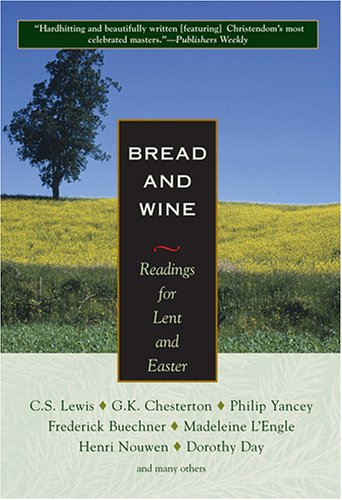
I am relatively new to Anglicanism and, so, I am trying to deepen my understanding of the meaning of Lent.  For the past few years, my Lenten reading has centered around the book, Bread and Wine:  Readings for Lent and Easter, Plough Publishing House, 2003.  It is a collection of 72 thoughtful and challenging essays, each written by a different author. The six sections of the book are entitled:  Invitation, Temptation, Passion, Crucifixion, Resurrection, and New Life. There are contributions from some my favorite non-living authors: Augustine, Barth, Bonhoeffer, Chambers, Chesterton, Donne, and Lewis; and from some of my favorite living authors:  Wendell Berry, Thomas Howard, Peter Kreeft, Alister McGrath, John Stott, and N. T. Wright.  [Proviso:  I cannot recommend all of the authors; I skip over the authors whom I do not appreciate.]

Here is a new book I am adding to my reading list for Lent.  I learned about it from the blog of my daughter, Haley.   Below she describes Signs of Life by Scott Hahn:

It’s divided into 40 small chapters, (Baptism, the Mass, Marriage, Confession, Pilgrimage, etc.) and so fits perfectly in the 40 days of Lent, if we read one chapter a day. Hahn explains that, in our Lenten sacrifice, be it food or otherwise, “We return it all to God for forty days, not because any of it is ‘bad,’ but because it is indeed very good. Only good things should be offered in sacrifice to God; only the best of the harvest could be offered as a tithe. We give them to God so that we learn not to put anything in God’s place in our lives.”

Isn’t that a great quote?  I have been thinking about this all week and I invite you to think about this, also:  What are the “good things” that we might offer in sacrifice to God during Lent?

~~~~~~~~~~~~~~~~~

[This past Sunday, we sang this beautiful anthem by Franz Peter Schubert:]

Jesus, Lamb of God:  have mercy on us.  Jesus, bearer of our sins: have mercy on us.  Jesus, Redeemer, Redeemer of the world:  Give us your peace, give us your peace.

Coram Deo,

Margot


Leave a comment

Filed under Uncategorized

My Funny Valentine

heart-roses1

Dear Readers:

Today is St. Valentine’s Day, a day fraught with the potential for disappointment and disillusionment.  And that is a real shame — because it is a contrived and artificial Special Occasion, seeming to bear little relationship to its origins.  My question is:  Who was St. Valentine, anyway?  

Here is the result of my pitiful and paltry research:

“Until the late fourteenth century, St. Valentine, who suffered martyrdom on February 14, was remembered as just another of the church’s many saints.  In the early 1400’s, Valentine began to be associated with romantic love and courtship; and eventually, he became the patron of lovers.  Today, Valentine’s Day is celebrated with the exchange of cards and candy among schoolmates, friends, and family.  Society appears to have little interest in remembering St. Valentine himself, preferring to maintain an emphasis on romantic love.” *

My husband, Stephen, a Ph. D. in Statistics, is a retired university professor, software developer, and classic INTP [Myers-Briggs Personality Type].  He sees absolutely no correlation between Hallmark and Romance.  So, in advance, I know that today there will be no greeting cards, candy, flowers, jewelry, or dining out.  The day will pass without notice.

However, do not feel sorry for me.  On the contrary:  Try not to be envious of me when I tell you that, only last week, I received this love-note:

You see, Stephen often gets up at “dark-thirty” in the morning and goes to work before I stumble into the kitchen.  Last week, he left the above “love-note” for me, attached to the espresso maker, where he was positive I would find it.  I put on my glasses and examined the note more closely.

Wait a minute,” says I, “isn’t that the same love-note he left for me last week?”  For I had saved that love-note and attached it, with a magnet, to the refrigerator, where the ever-efficient Dr. Payne had spied it and re-employed it.

I returned the note to the refrigerator and placed it on top of a gold-foil heart-shaped doily.

You can have your fancy Hallmark Valentine . . . . 

 . . . . I’ve got my recycled love-note.

~~~~~~~~~~~~~~~~~~~~~

*Quote is from All Through the Day, All Through the Year:  Family Prayers and Celebrations, by David Batchelder.

4 Comments

Filed under St. Valentine's Day, Valentine's Day

The Ongoing Battle

Dear Faithful Family & Friends,

It has been seven days since Herceptin #2 and I am continuing to feel extremely well.  I am very grateful and I thank you for your continued prayers!   I feel well enough to resume swimming in the outdoor, heated city pool. If only it were not so cold — snow is possible this week!  I am a bit wimpy at the moment but I promise to make up for that when the warm season begins.

Now, I know the question on everyone’s mind:   Is Margot’s hair growing? I am happy to report that it is!  The new growth is as fine and soft as the down of a gosling.  If I were a horse, you could name me “Diamond” because of the clear shape on the crown of my head.  Inside the diamond is the pure “salt” color.  Surrounding the diamond shape is the “salt & pepper” — with enough “pepper” to show a stark contrast to the “salt” in the diamond.  This is not a new development, however!

Oddly, I have settled into a strange malaise or ennui, after recovering from the ravages of chemotherapy.  On the one hand, I am elated to be finished with chemotherapy. In fact, Stephen & I are celebrating by going to Disney in two weeks!

On the other hand, it does not seem that very much is happening in the battle, since the ravages of Herceptin are undetectable to me. With chemotherapy, you have the formidable presence of a strong, fierce ally, in spite of the fact that you spend half the time fighting the side effects.

During the chemotherapy phase, you never forget that you are fighting against cancer.  However, at this stage, I have to remind myself that the battle is ongoing.  If even I need to remind myself, is it possible that the interest of my friends & family will wane, now that the drama of the surgery and chemotherapy is over?

Thanks for being with me thus far in the battle! I will continue this blog, updating about once every two weeks; I will write on a variety of topics.

ONE in EIGHT women will be diagnosed with breast cancer and it is my hope that this blog will help one of the women that you know and love.  Dear friends & family, do something loving for St. Valentine’s Day: Encourage the women [over 40] in your life to get regular mammograms!   It was this test that detected my tumor, while it was still Stage One.

By the way, you can subscribe to this blog so that you will automatically know when I update.  You can also subscribe by using a RSS reader.

Deus noster refugium. Psalm 46.1-2

God is our refuge and strength, a very present help in trouble.

Therefore we will not fear, though the earth be moved, and though the mountains be toppled into the depth of the sea.

Coram Deo,

Margot

P. S.  I finally wrote something in the “About” section.

My grandson, Benjamin, celebrated his first birthday yesterday!  For photos, see my daughter’s blog:  http://www.carrotsformichaelmas.wordpress.com.

11 Comments

Filed under Uncategorized

Family News and Photos!

The Season of Epiphany 2010

Dear Family & Friends,

This year, Garrett will start off our Payne Family News, in his own words:

“Garrett is still showing up for work at Marquis Software Development, Inc. where he has been doing so for almost five years now.

He went to Germany for a couple of weeks in July 2009.  He flew into Berlin and rented a car.  He and the car traveled at ridiculous rates of speed on the German Autobahn before safely arriving in Switzerland to attend a friend’s wedding in Herisau, CH.  After the wedding he toured Bavaria before returning to Berlin.  On the last night in Europe he saw the music group U2 at the Olympiastadion in Berlin (the venue for the 1936 World Olympics).

Garrett plays bass and sings in his friend’s music group, In Wrath.  The name is taken from the Biblical prayer of Habakkuk: ” . . . in wrath remember mercy.”  His friend “thought it sounded cool.”  The band went to Athens, GA in October to record an album at Chase Park Transduction Studios.  They recorded ten songs to analogue tape.  In Wrath plans on releasing the album this year on 12” vinyl and iTunes Music Store.

When he is not working or playing music, Garrett enjoys going to the local gun range and shooting ridiculous looking, high-caliber weapons.

Garrett realizes that his year, although great, will be overshadowed by his sister’s, with the birth of her and her husband’s firstborn.  Garrett promises to step up his game next year.”

[Garrett in Switzerland, Summer 2009].

[Margot resumes]:  On 02.08.09, Daniel & Haley, in Waco, TX, welcomed their first child, Benjamin Daniel Stewart.  Margot [“Marmee”] traveled to Waco and stayed for one week before and after the birth.  She served as “doula” in the birthing room and witnessed the birth of her first grandchild! “Grandaddy” Stephen and Uncle Garrett traveled to TX to meet Benjamin, as did Daniel’s family. Daniel, Haley, and Benjamin live in community with five other adults, in a rural setting, on Windover Farm. In addition to their jobs and studies, the adults have raised vegetables, chickens, and sheep.  The sounds of farm animals — including horses, cows, goats, dogs, and cats — are not only words on a page but are a daily reality in Benjamin’s universe.

Daniel, Haley, and Benjamin traveled to join the Blair Clan at the Annual Summer Reunion in Beech Mountain, NC and then to Tallahassee, to spend time with Daniel’s family.  Benjamin enjoyed his first Christmas in Tallahassee, with both the Payne & Stewart families.

Congratulations to Daniel, who graduated from Baylor University in December 2009!  Haley worked full-time at Baylor University last year but is now home full-time with Benjamin, while Daniel works at the Methodist Boys’ Home. Daniel, Haley, and Benjamin plan to move back home to Tallahassee this summer!

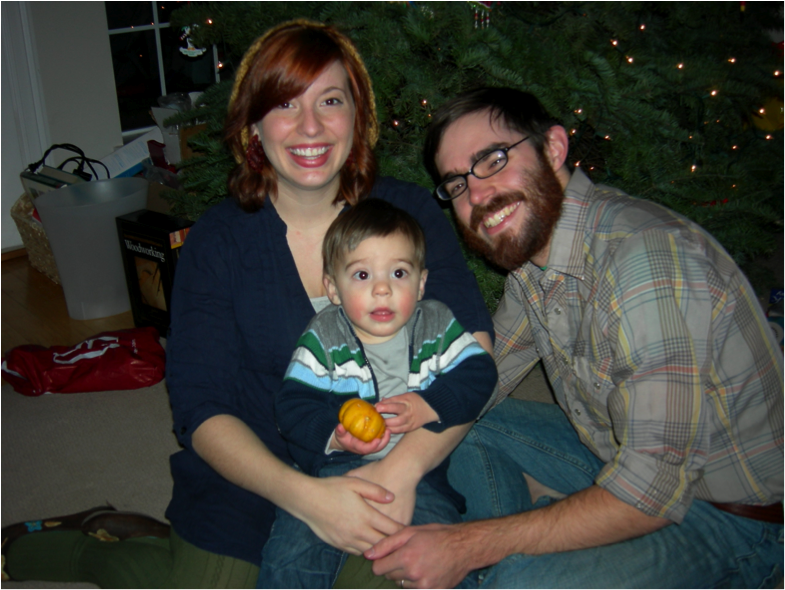
[Haley, Benjamin, and Daniel Stewart, December 2009.]

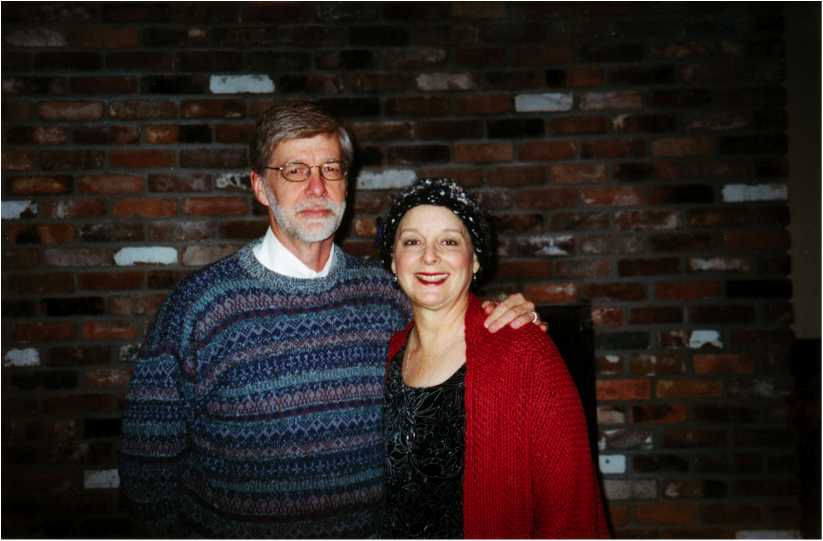
Stephen & Margot [photo below] heartily thank family and friends for prayer, words of encouragement, and gestures of kindness and generosity during the past seven months.  Many of you know that Margot was diagnosed with breast cancer in June 2009.  For details and updates, see Margot’s blog:

www.margopayne.wordpress.com.

In spite of the difficulties of last year, we have much to be thankful for!  The family members featured above represent some of our richest blessings; having all of them living in the same town is like a dream come true.  We are thankful also for 37 years of marriage, our extended family and friends, our neighbors, and our church family at St. Peter’s Anglican.

We always enjoy receiving Christmas cards, letters, and photographs from you.  This letter is our attempt to encourage future communiqués from you.  We cherish our friendship with each one of you, in spite of distance and time.

Coram Deo,

Stephen & Margot Payne

P.S. Yes, this is a new spelling for Margot.  You may read about the reason for this change, on Margot’s blog update entitled Vision.

6 Comments

Filed under Uncategorized