Exploring the Gospel of John: 6

EXPLORING THE GOSPEL OF JOHN

By the Rev. Dr. Michael Petty [Fr. Michael Petty]

St. Peter’s Anglican Church [2006]

Breaking Bread With Jesus

John 6:1-15

1. The scene now switches back to Galilee, from Jerusalem (which is the focus from 2:13-3:36 and 5: 1-47).  A large crowd is following Jesus “because they saw the signs he was doing among the sick” (6:2).  The only healing sign in Galilee mentioned, thus far, is the one in 4:46-54, the healing of an official’s son (designated as Jesus’ second sign, in 4:54).

The mention that the crowd is following because of signs hints at a lack of real faith (a hint confirmed later in 6:15).  In 2:24-25, however, we have already seen that “Jesus on his part did not entrust himself to them [those who believed in him because of the signs he was doing], because he knew all people and needed no one to bear witness about man, for he himself knew what was in man.”  It is clear that seeing signs does not necessarily translate into actual faith.

2. The mention of going up on “the mountain” (6:3) is important, in indicating the symbolic setting for what is to happen.  Going up to “the mountain” is precisely what Moses does in Exodus 19:3, to receive a revelation from God.  The mountain introduces the theme of revelation and the giving of the manna, which takes place in Exodus 16.  The discourse, which extends from 6:22-71, will take up these themes.  Here, the passage reveals Jesus to be the true bread of life, who fulfills and surpasses the manna given in the wilderness.  The temporal note “Now the Passover . . .was at hand” (6:4) brings this into sharper focus.

3. As is typical of John, the passage emphasizes the sovereignty of Jesus:

First, instead of waiting for the crowd to get hungry and then providing food, Jesus raises the issue even before it arrives.  Here, he plays the host and does not simply respond to a need (see Mark 8, for example).

Second, while Jesus asks Philip about food, 6:6 makes it clear that Jesus knows already what he is going to do.  It becomes clear that Philip is responding to Jesus simply on a human plane; for him, what Jesus asks is simply impossible, in that more than six months’ wages of an average person would make only a dent in solving the problem.  We are immediately reminded of Nicodemus’ protest that being born from above/again is impossible, because it means returning to the womb.

4. Likewise, Andrew responds on the merely human level; he has located some food  — but there is the dispiriting realization that “what are they among so many?” (6:9).  The mention of the two barley loaves may be a reference to 2 Kings 4:38-44, where Elisha feeds one hundred men with twenty barley loaves and some grain.

Andrew’s objection echoes that of Elisha’s servant: “How can I set this before a hundred men?”   The food that Jesus has available is more scarce than what Elisha had and the number of people he must feed is far greater.  Just as we will learn that Jesus is greater than Moses, we now learn that Jesus is greater than Elisha.  The point of these comparisons is not merely to show that Jesus is better than what [who] preceded him but to emphasize the surpassing work of God, which is now taking place — the same theme contained in within the story of the wedding in Cana (2:1-12).

5.  Jesus’ actions with the bread are significant:  (1) Jesus “took the loaves” (2) gave thanks (the Greek verb is eucharisteo) and (3) “distributed them.”  These actions replicate almost exactly Jesus’ actions in the Upper Room which, according to Luke 22:17 were “he took bread, and when he had given thanks [a form of eucharisteo], he broke it and gave it to them.” 

It seems almost certain that Jesus’ actions here are seen as “eucharistic” in nature and, although John offers no actual account of the Last Supper, he is certainly aware of it.   If we put all the pieces of the puzzle together, it seems that John portrays this action as a kind of new Passover — there is the “Passover, the feast of the Jews” (6:4) and there is Jesus’ new Passover.   John further emphasizes Jesus’ role in this feeding because, unlike Mark 8, it is Jesus who distributes the food that he has blessed — not the disciples (6:11).  This emphasizes the point that what is given comes from Jesus and further parallels the accounts of the Last Supper, where the bread and cup are given to the disciples — by Jesus himself.

6.  Paralleling the wedding at Cana episode, the emphasis falls on the theme of abundance.  Even after five thousand men (compare that to Elisha’s one hundred!) have “eaten their fill” (6:12), there is still plenty left over.  The number of baskets filled with leftovers is significant — twelve.

Later on in this chapter (6:67, 70, 71) Jesus will emphasize the fact that there are twelve disciples.  This is not just an unimportant symbolic detail but is a reminder that Jesus’ mission is not just about bringing individuals to the Truth or performing signs to attract a following.  Jesus understands himself to be about the work of reconstituting Israel and this is important because it means that, while there will be a Church of Gentiles, it cannot merely be a Gentile Church, a community which has no connection to Israel.

7.  The response of the crowd now justifies the suspicions hinted at earlier.  It sees in Jesus “the Prophet who is to come” (6:14), a possible reference to Deuteronomy 18:15.  If this is so, the crowd may be thinking of Jesus as a kind of prophet-king and this is the light in which some Jewish traditions viewed Moses.  But it clearly misunderstands Jesus’ mission and identity.  1.49 refers to Jesus as a “king” but it is clear that the crowd is thinking of installing Jesus as king through insurrection — as if his kingship depended upon popular support and was simply an alternative to the rule of Herod Antipas.  This is not to say that Jesus’ kingship is a merely “spiritual” reality but it is to say that “the consent of the governed”  does not determine his kingship – nor is it simply an alternative to other rules.

John 6:16-21

1.  We need to read this episode along with the preceding one, in order to make proper sense.  This is to say that it is an extension of the previous episode — not an independent one. The whole scene is somewhat enigmatic.  The passage does not tell us why the disciples departed without Jesus nor how they expected Jesus to come to them, while they were on the Sea of Galilee.  And while the sea is rough, there is no indication that the disciples are in danger or that they need to be rescued  (as is suggested in a parallel account, in Matthew 14:24).

2. Looking beyond all this, it is clear that this episode has a very definite function, one which is made clear, in Jesus’ response to the disciples in 6:20 which, translated literally, reads “I am; do not be afraid.”  The “I am” is, of course, the way in which God identifies himself in the Old Testament (Exodus 3:14; Isaiah 41:4; 43:10, 25; 45:18; 46:4; 48:12; 51:12).  The image of sovereignty over nature strengthens the connection between Jesus and God’s self-identification.

3. We now know why the effort to make Jesus king was wrong and what the feeding of the five thousand reveals:  Jesus acts as one who has the power of God at his disposal.  In the case of Moses and Elisha, God assists his servants with signs of divine power while, in the case of Jesus, there is no assistance at all, since in him, the Father (the sovereign Creator) is acting personally.

John 6:22-59

1. 6:22-24 provides a transition from the feeding of the five thousand and Jesus’ walk upon the Sea of Galilee to the next stage of the action.  This section recalls the feeding and emphasizes its Eucharistic dimension, by reminding us that the feeding took place “after the Lord had given thanks” (6:23) — making use of the Greek verb eucharisto once again.  This section also emphasizes that only one boat was available to Jesus and his disciples and that it is known that Jesus did not get into the boat with them — underlining the mysterious nature of how Jesus got to the other side.

2. 6:25-29:  The crowd goes in search of Jesus for the wrong reason.  6:25 signals this, when the crowd strangely asks Jesus when he came to Capernaum — not how.  This alerts us to the fact that there is a significant gap between Jesus and the crowd.  Jesus himself makes this clear, when he identifies the reason why the crowd has followed him — it seeks him because he provided food — not because it has understood the sign (note the omission of the role of the fish in the feeding).

Jesus attempts to move this exchange to another plane, with the paradoxical admonition  “Do not labor for the food that perishes [the bread of the sign] but for the food that endures to eternal life [Jesus himself] which the Son of Man will give to you” (6:27).

[Jesus is not telling them to work for anything at all because the real food is not something other than Jesus himself and this food only comes as a gift from God.]  The crowd does not understand this because it asks, “What must we do, to be doing the works of God?” (6:28).  “Doing the works of God” was a way of speaking about being faithful to Torah.  The question being asked, according to Jesus, is:  What does one need to do, in order to be faithful to God?  Astoundingly, Jesus makes it clear, in 6:29, that having faith in him is what being faithful to God is all about.  This is to say that Jesus understands that faith in himself is being faithful to Torah.

3.  6:30-40:  The questions the crowd asks, in 6:30, at first sounds strange.  We have to remember back to 6:14, where the crowd identifies Jesus as the new Moses (“the Prophet”).  Seen in this light, the question seems to be that of what sign Jesus has performed, to show that he is greater than Moses.  Exodus understands that signs and wonders have vindicated Moses’ office.  The crowd, naturally, sees one of the greatest of these signs as the manna (literally in Hebrew “what is it?”).  The question here seems to be “Can you outdo the giving of manna?”

This is exactly the question that Jesus wants the followers to ask.   Jews generally saw manna, not simply as the “bread” supplied by God in the wilderness, but also as Torah.  By identifying himself as “manna,” Jesus will emphasize that he both fulfills and surpasses Torah.

On the way to this point, Jesus makes a clarification:  it was not Moses that gave the manna but God.  In the Moses scenario, the manna comes to Israel through Moses’ intercession.  In Jesus’ scenario, God is the giver and Jesus himself is the gift.  Jesus makes it clear that he is not simply talking about performing a sign but about God [himself] directly giving a gift.  It becomes clear that manna here is not referring to a thing:  “For the bread of God is he who comes down from heaven and gives life to the world” (6:33).

The crowd has not yet caught up to Jesus (no surprise here!) and seems to think that what Jesus is offering is simply an endless supply of manna.  (We remember that the manna stopped when Israel crossed into the Promised Land).  Jesus now makes an unambiguous declaration, which is the center of this whole chapter:  “I AM the bread of life, whoever comes to me shall not hunger and whoever believes in me shall never thirst” (6:35).

According to Deuteronomy 8:3, God gave the manna as an object lesson: it made clear that “man does not live by bread alone, but man lives by every word that comes from the mouth of the Lord.”   Here, the manna is God’s life-giving revelation.  In John 6, that life-giving revelation is Jesus himself.

What Jesus says here is amazingly similar to Sirach 24:19-22:  “Come to me, you who desire me, and eat your fill of my produce . . . Those who eat me will hunger for more, and those who drink me will thirst for more.”  In this text, the speaker is Wisdom.  Clearly, Jesus now surpasses what was given through Wisdom.  Two very important things about God’s life-giving revelation in Jesus are immediately made clear:

First, the reception of this revelation is not something which takes place by chance since, not only does it have its source in God, but also the reception of it is, finally, due to God’s work:  “All that the Father gives me will come to me . . . ” (6:37).

Second, the form of this revelation and its consequences are simply spiritual but physical as well.  It is the Father’s will that “everyone who looks on the Son of Man and believes in him should have eternal life.”   Here, “eternal life” means being raised up (resurrected) “on the last day” (6:40).  In Jesus, revelation has a physical quality (humans can look upon it, as in 1 John 1:1) and it leads to the resurrection of the body.

4. 6:41-59: Echoing Exodus 16:2, 7-9, 12, in the Greek Old Testament, the crowd now “murmurs” about Jesus, just as it had done about Moses.  Notice that John partially identifies the crowd as “the Jews,” John’s code phrase for those who reject Jesus.  The reason for the murmuring is stated in 6:42 and appears, on the surface, to be genealogical in nature — Jesus’ parents are known and this knowledge does not seem to fit with the claim that Jesus “came down from heaven.”  The real issue, however, is theological:  John asserts that the human element of Jesus (having human parents) fits with his divine element, being the Word of God; this is the meaning of the initial assertion that the “Word became flesh and dwelt among us” (1:14).

A merely earthly perspective on Jesus will always result in the wrong conclusions.  In 6:43-46, Jesus replies but, typically, does not directly address the objection.  With respect to Jesus, what is truly important and saving is not what humans conclude about him, on their own, but what the Father brings about in them.

An adequate view of Jesus (belief) requires the initiative of God.  Quoting Isaiah 54:13, Jesus restates his point:  “And they will all be taught by God.”   The crucial statement comes in 6:47-51.  This section draws together 6:27, 32, and 35 into a synthesis of amazing concreteness.  The statements “whoever believes in me has eternal life” (6:47) and “I am the bread of life . . . If anyone eats this bread he will live forever” (6:48, 51) are parallel and mutually reinforcing statements.

Jesus identifies himself as the “living bread,” as manna, wisdom, and revelation from God.  These two statements make it clear how to appropriate the manna/wisdom/revelation, which is Jesus.  Jesus identifies belief as essential and makes it clear that it is not simply a human capacity or a mental act.  To believe in Jesus is not merely to entertain ideas about Jesus, which one understands to be true.  To believe in Jesus means that God has brought a person to Christ and has placed that person in a living relationship with him, such that God gives Christ  (the life-giving manna/wisdom/revelation) to the believer.  The ultimate consequence of belief is not enlightenment, but resurrection, to share eternal fellowship with God.

In 6:52-59, the parallel mode of receiving Jesus is made clear, though it is first introduced in 6:51:  “And the bread that I give for the life of the world is my flesh [sarx].”  This is surprising because we might expect that Jesus would say that the bread he will give is his body (soma).  Sarx is much more physical than soma and this seems to focus attention on the physical, concrete nature of Jesus in his incarnation, death and bodily resurrection. The bread Jesus gives for the life of the world is not a concept or a disembodied wisdom but himself, in his own incarnate, crucified. and risen reality.  6:53 is very close to the eucharistic language of Matthew 26:26,28:  “Take, eat; this is my body [soma=”self”] . . . Drink of it [the cup], all of you, for this is my blood of the covenant which is poured out for many . . .”

Clearly, this is not meant in a cannibalistic sense, as if life was to be had from eating pieces of Jesus or drinking his actual blood.  (It is interesting to note, however, that the Romans did understand the early Christians to be cannibals, because they spoke in this way.)  Rather, the emphasis seems to be on the fact that the sacramental meal is a means, through which the living Jesus makes available his saving benefits.  The passage does not nake explicit the means by which “eating” mediates eternal life, access to Jesus, but it is possible that something along the lines of 1 Corinthians 10:14-16, where “eating” and “drinking” grant a “participation” (10:16) or koinonia in Christ is in view.  Whatever the means, the meal seems to be connected to Jesus, in the sense that both are physical realities (meal and Christ’ sarx) and the meal symbolically parallels Jesus’ incarnation (sarx), death (in the bread as broken and the cup as poured) and resurrection (celebrated, not in Jesus’ absence, but in his presence).

Questions for Reflection:

(1)  By speaking about Jesus as manna, wisdom, and revelation, John helps us to think concretely about Jesus as the bread of life.  In what other specific ways could we think about this?

(2)  By speaking of bread, the basic food staple of the day, John clearly states the utter dependence of Christians upon Christ.  In what ways does living in a society of abundance hinder this sense of dependence?

John 6:60-71

1. In the previous section (6:22-59) the crowd is identified as “the Jews” (6:41), that is, as those who explicitly oppose Jesus.  This group finds the whole bread of life discourse unbelievable because it understands Jesus only within a human framework (6:41-42, 52).  In this section, the audience is narrowed down, from a group distinct from the crowd and designated as “many of his disciples” (6:60) to the smaller group designated as “the Twelve” (6:67).

2.  The “hard saying” in 6:60 probably refers back to 6:53-56, in which Jesus’ sacrificial death is made unavoidably explicit.  This appears to be too much for those disciples who had accepted Jesus as the Messiah but who now find the notion of his sacrificial death as beyond belief.  We are presented with two different responses to Jesus — both of which are inadequate.  The crowd is unable to get beyond bread and, thus, revealed to be earthly-minded.  The larger group of disciples is able to get beyond bread, to Messiah-ship, but is unable to take the Cross — and the eating and the drinking — which are the visible connections to it.

3.  The question in 6:62 is a little difficult, in Greek, but seems to mean something like “Would you not be even more offended were you to see the Son of Man ascending to return to the Father?”   It is one thing to accept Jesus as the Messiah (within the confines of this term’s Jewish meaning) and quite another to arrive at explicit Christian faith that Jesus is the incarnate Word, who returns to the Father, through his death and resurrection.

4.  The statement in 6:63 sounds a bit odd, given what has come before it, with the emphasis on Jesus’ flesh:  “It is the Spirit who gives life; the flesh is of no avail.”  In what has come before, flesh (sarx) has a positive meaning, referring to Jesus’ incarnation and crucifixion.  Now, the meaning has shifted to the negative:  “flesh ” as that dimension of creation alienated from God.  To use a Pauline phrase, the unbelief of the larger group of disciples is due to the fact that they are “in the flesh” (see Romans 7:5, for example); their own perceptions bind them in state, in which they remain, and hostility to God marks this state.   There is a great irony here.  The flesh of Jesus (understood as his death and resurrection) avails much while “the flesh” (understood as a merely human attitude to Jesus) avails nothing.

5.  6:64-65 shows that none of this is a surprise to Jesus.  He is neither shocked nor disappointed; the fact that some of his disciples do not really believe in him does not send him into a state of doubt about his own mission.  It is important to notice that the conviction that Jesus is Messiah is not counted as “belief” by Jesus in 6:64.  These disciples (who are not really disciples) are not given “partial credit” for thinking Jesus the Messiah; they fall into the same category as the crowd designated as “the Jews.”  The reason for this is made clear in 6:65.   All real faith has its mysterious origin in God.   Faith is a relationship of “abiding in” (6:56) and it is granted by God; it has not been granted to this group of disciples.

6.  All of this produces a crisis in Jesus’ ministry (the Greek meaning of the word, “crisis,”  iss a moment of decision).  Some of the faux disciples “turned back and no longer walked with him” (6:66).  Note that no mention is made of Jesus earnestly pleading for them to come back and think things over.

7.  6.67 makes is clear that the disciples have reached a moment of decision:  “Do you want to go away as well?”   What Peter says here is the equivalent of his confession in Mark 8:29.  Peter acknowledges the truth of what Jesus has been saying in this chapter.  Peter, speaking on behalf of true faith, acknowledges that the option of “going away” simply does not exist — he recognizes Jesus as the unique source of the “words of eternal life.”  Once again, as 6:70 indicates, Jesus is not surprised.  After losing many disciples, Jesus does not greet Peter’s confession with relief.  Peter is not congratulated on his loyalty or on remaining one of the faithful few; Jesus knows about Peter because he chose him.  Jesus does not make clear his reasons for choosing “a devil” (6:70).   The passage makes clear that Jesus does not see Judas as a huge disappointment (“Oh, he had so much potential!”).  This introduces an important theme of John’s account of Jesus’ arrest, crucifixion and death.  Jesus does not appear to be a victim, in any way, nor an idealist, which a corrupt system has over-taken.  Jesus faces betrayal, arrest, and death with a sense of equanimity, not because he has no feelings but because he has long ago embraced the Father’s mission.

Questions for Reflection

(1)   Jesus makes it clear that “the flesh” (a merely human attitude) is a huge obstacle to faith. What are so me of the manifestations of “the flesh” that you see in your own life?

(2)   Does the idea of faith finally being a gift of God seem frightening or comforting (or both)?  What would you say to an atheist or agnostic friend who had read this passage?

(3) Could the idea of faith being a gift of God lead to irresponsibility (“I don’t believe because God has not given me the gift”)?
Leave a comment

Filed under Interpretation of Scripture, The Gospel of John

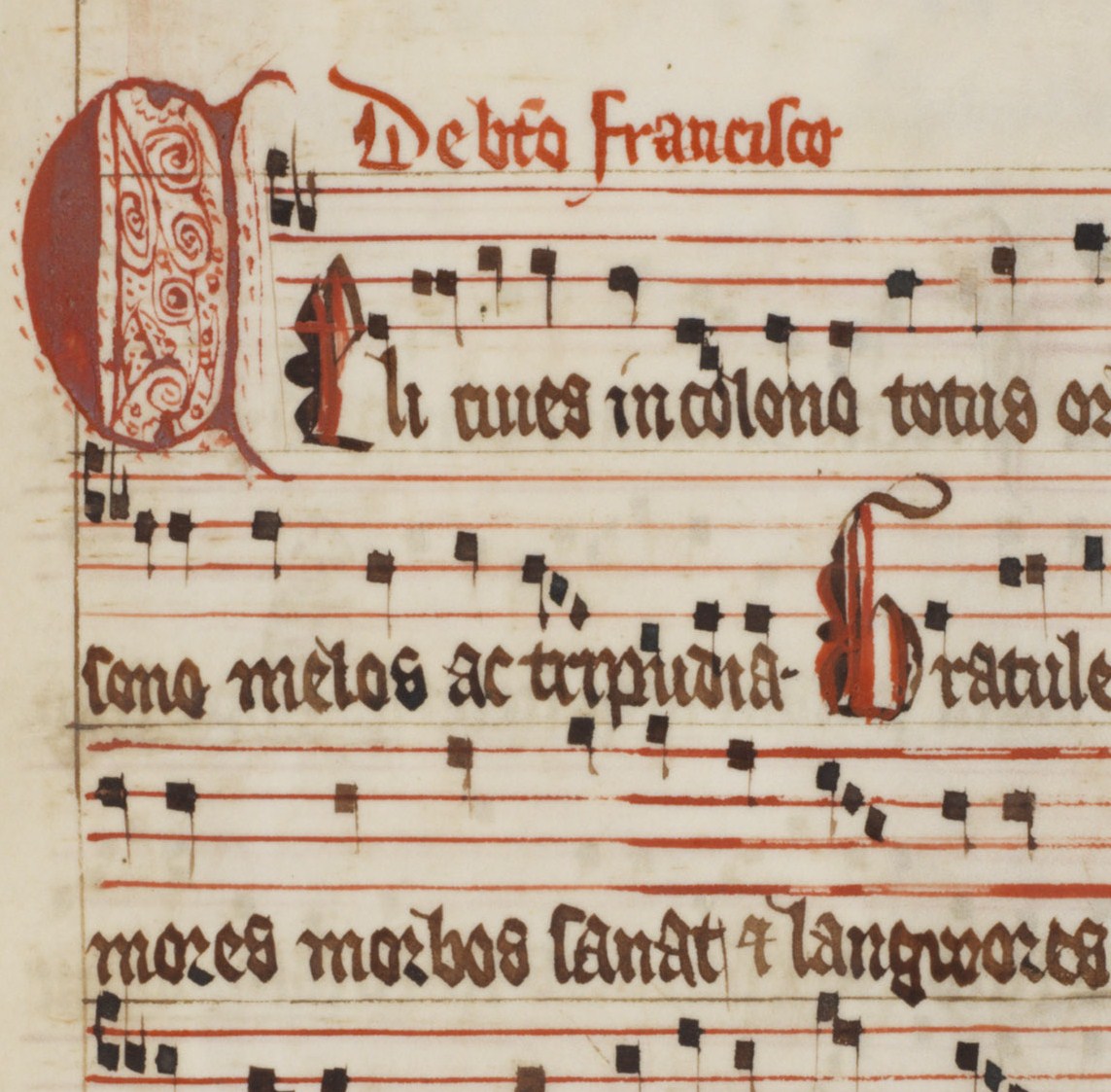
Hymnody: “Pange Lingua” [Gregorian Chant]


Dear Readers,

“This hymn is one of the most beautiful and renowned in the repertory of Gregorian chant.  St. Thomas Aquinas, the Italian scholar-priest, wrote the words in 1263 at the request of the Pope, to fit an earlier hymn tune.”

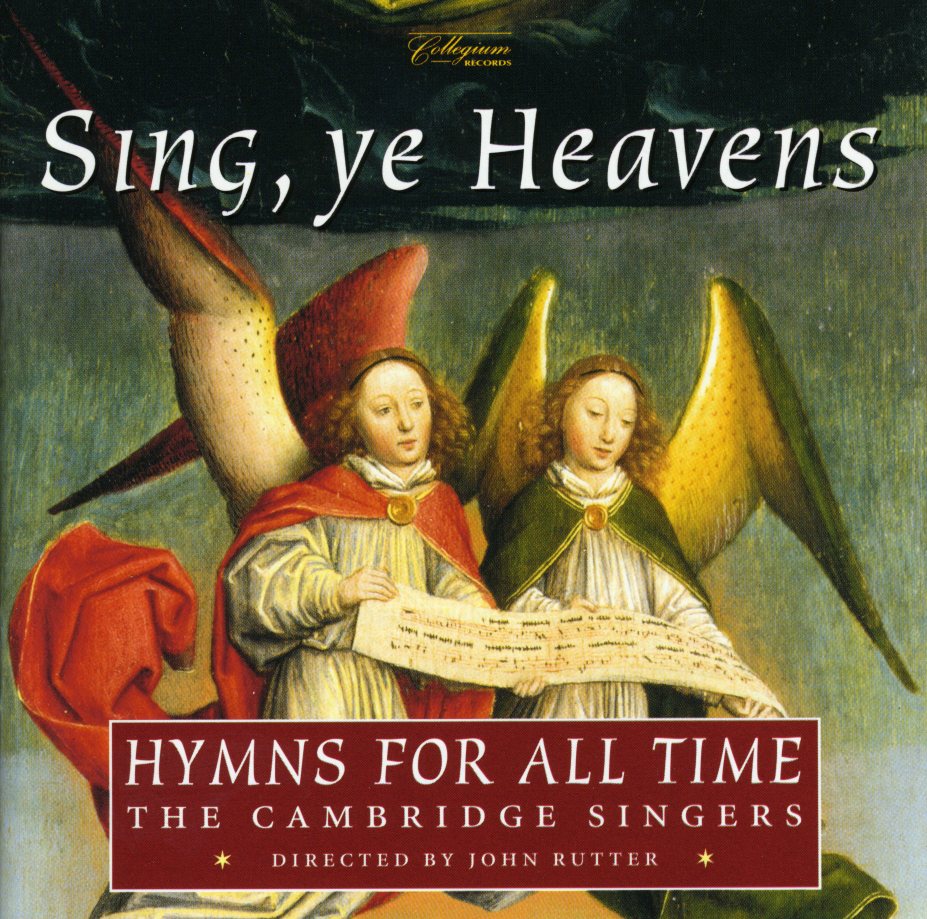
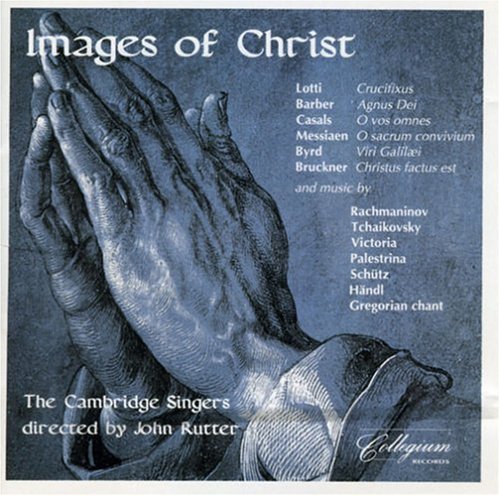
[Images of Christ, The Cambridge Singers, directed by John Rutter, Collegium Records.]

“The Eucharistic text of Pange lingua glorioso Corporis mysterium was written in 1263, by the Italian scholar-priest St. Thomas Aquinas at the request of the Pope to fit the melody of Pange lingua gloriosi proelium certaminis, Venantius Fortunatus’ famous sixth-century hymn in honor of the Cross.  The melody was used by Holst in The Hymn of Jesus and by Charles Wood [to its orginal text] in his St. Mark Passion.”

[Sing, Ye Heavens:  Hymns for All Time, the Cambridge Singers, Directed by John Rutter, Collegium Records]

For more information: Pange Langua [1] ; Pange Langua [2]; Pange Langua [3]

“Written by St. Thomas Aquinas (1225-1274) for the Solemnity of Corpus Christi, this hymn is considered the most beautiful of Aquinas’ hymns and one of the great seven hymns of the Church.  The rhythm of the Pange Lingua is said to have come down from a marching song of Caesar’s Legions: “Ecce, Caesar nunc triumphat qui subegit Gallias.”  Besides the Solemnity of Corpus Christi, this hymn is also used on Holy Thursday. The last two stanzas make up the Tantum Ergo (Down in Adoration Falling) that is used at Benediction of the Blessed Sacrament.”

[Pange Langua]

Latin text:

Pange lingua gloriosi
Corporis mysterium,
Sanguinsique pretiosi,
Quem in mundi pretium
Fructus ventris generosi
Rex effudit gentium.
 
Nobis datus, nobis natus
Ex intacta Virgine,
Et in mundo conversatus
Sparso verbi semine,
Sui moras incolatus
Miro clausit ordine.
 
In supremae nocte cenae
Recumbens cum fratribus,
Observata lege plene
Cibis in legalibus,
Cibum turbae duodenae
Se dat suis manibus.
 
Verbum caro, panem verum
Verbo carnem efficit;
Fitque sanguis Christi merum,
Et si sensus deficit;
Ad firmandum cor sincerum
Sola fides sufficit.
 
Tantum ergo Sacramentum
Veneremur cernui,
Et antiquum documentum
Novo cedat ritui; 
Praestet fides supplementum
Sensuum defectui.
 
Genitori, Genitoque
Laus et jubilatio
Salus, honor, virtus quoque
Sit et benedictio;
Procedenti ab utroque
Compar sit laudatio.
 Amen
[St. Thomas Aquinas]
 

 English translation 1:

Of the glorious Body telling,
O my tongue, its mysteries sing,
And the Blood, all price excelling,
Which the world’s eternal King,
In a noble womb once dwelling,
Shed for this world’s ransoming.
 
Given for us, for us descending,
Of a Virgin to proceed,
Man with man in converse blending,
Scattered he the Gospel seed,
Till his sojourn drew to ending,
Which he closed in wondrous deed.
 
At the last great Supper lying,
Circled by his brethren’s band,
Meekly with the law complying,
First he finished its command,
Then, immortal Food supplying,
Gave himself with his own hand.
 
Word made Flesh, by word he maketh
Very bread his flesh to be;
Man in wine Christ’s Blood partaketh:
And if senses fail to see,
Faith alone the true heart waketh
To behold the mystery.
 
Therefore we, before him bending,
This great Sacrament revere; 
Types and shadows have their ending,
For the newer rite is here;
Faith, our outward sense befriending,
Makes the outward vision clear.
 
Glory, let us give, and blessing
To the Father and the Son;
Honour, might, and praise addressing,
While eternal ages run;
Ever too his love confessing,
Who, from both, with both is one.  
Amen.
[Translation from J. M. Neale and others]
 

From Wikipedia, the free encyclopedia:

Pange Lingua Gloriosi Corporis Mysterium is a hymn written by St Thomas Aquinas (1225–1274) for the Feast of Corpus Christi  (now called the Solemnity of the Holy Body and Blood of Christ).  It is also sung on Maundy Thursday, during the procession from the church to the place where the Blessed Sacrament is kept until Good Friday.  The last two stanzas, called separately Tantum Ergo, are sung at Benediction of the Blessed Sacrament.  The hymn expresses the doctrine of transubstantiation, in which, according to the Roman Catholic faith, the bread and wine are changed into the Body and Blood of Christ.

It is often sung in English as the hymn Of the Glorious Body Telling, to the same tune as the Latin.

The opening words recall another famous Latin sequence, from which this hymn is derived: Pange Lingua Gloriosi Proelium Certaminis by Venantius Fortunatus.

Music history

There are two plainchant settings of the Pange Lingua hymn. The better known is a Phrygian mode tune from the Roman liturgy, and the other is from the Mozarabic liturgy from Spain. The Roman tune was originally part of the Gallican Rite.

The Roman version of the Pange Lingua hymn was the basis for a famous composition by Renaissance composer Josquin des Prez, the Missa Pange lingua.  An elaborate fantasy on the hymn, the mass is one of the composer’s last works and has been dated to the period from 1515 to 1521, since it was not included by Petrucci in his 1514 collection of Josquin’s masses, and was published posthumously.  In its simplification, motivic unity and close attention to the text it has been compared to the late works of Beethoven, and many commentators consider it one of the high points of Renaissance polyphony.

Juan de Urrede, a Flemish composer active in Spain in the late fifteenth century, composed numerous settings of the Pange Lingua, most of them based on the original Mozarabic melody.  One of his versions for four voices became one of the most popular pieces of the sixteenth century, and was the basis for dozens of keyboard works in addition to masses, many by Spanish composers.

Building on Josquin’s treatment of the hymn’s third line in the Kyrie of the Missa Pange Lingua, the “Do-Re-Fa-Mi-Re-Do”- theme became one of the most famous in music history, used to this day in even non-religious works such as Wii Sports ResortSimon LohetMichelangelo RossiFrançois RoberdayJohann Caspar Ferdinand FischerJohann Jakob Froberger,[2] Johann Kaspar KerllJohann Sebastian BachJohann Fux wrote fugues on it, and the latter’s extensive elaborations in the Gradus ad Parnassum made it known to every aspiring composer – among them Wolfgang Amadeus Mozart, whose Jupiter[3] theme borrows the first four notes.

The last two verses of Pange Lingua (Tantum Ergo) are often separated out.  They mark the end of the procession of the monstrance in Holy Thursday liturgy.  Various separate musical settings have been written for this, including one by Giovanni Pierluigi da Palestrina, one by Franz Schubert, one by Maurice Duruflé, and one by Charles-Marie Widor.

Franz Liszt‘s Night Procession from Two Episodes from Lenau’s Faust is largely a fantasy on the Pange Lingua melody.[4]

A setting of Pange Lingua, written by Ciaran McLoughlin and produced by Paul MacAree, appears on the Solas album Solas An Domhain.

Pange Lingua has been translated into many different languages for worship throughout the world.  However, the Latin version remains the most popular.  The Syriac translation of Pange Lingua was used as part of the rite of benediction in the Syro-Malabar Church of KeralaIndia, until the 1970s.

Coram Deo,

Margot

Leave a comment

Filed under Hymns

How My Garden Grows: Seven

parterreBirdsEyeView_a

A “Bird’s Eye View:”

Designing the Horizontal Spaces of  Your Garden

Dear Readers,

To read or review the previous posts in this series, click here:  How My Garden Grows: One.

Each post, One through Six, will provide a link for the next post.


Margot’s Get-Real Guide:

Space:

Identify the horizontal space:  Do you wish to create a border, bed, island, or garden path?

Speak Compass:

Toward which direction does this space face?

Sun exposure requirements will determine your plant choice.

Soften:

Choose plants that will soften the angular architectural features.

Standing Feature:

Consider one standing “feature” in each large bed, border, or island.

Ex:  a fountain, a stone statue, a bird bath, a bird feeder, a fogger/mister, an obelisk, or a tutor.

Space:

Within the design, plan open spaces, for these purposes:

  • Walkways [“allees”] for trimming/pruning.
  • Access to water spigots/hose, fountains, bird baths, bird feeders, utilities. etc.
  • “Growing and breathing space” between plants and buildings or between plants and fences or walls.
  • Foot-paths, stepping-stones, etc.

Study Notes:

Research, using The Southern Living Garden Book:

Which “care-free” and “bullet-proof” plants are best-suited for the space?

Spine:

For beauty and low-maintenance all year round, perennial evergreens should form the “spine” or “backbone” of your garden spaces.

Ground Covers range in height,  from 6 inches to 4 feet, so you have a great variety of sizes from which to choose.

Systemize:

From your Study Notes, create a Table or Chart, listing each “care-free” and “bullet-proof” plant.

Include these categories:

  • Formal name, informal name
  • Requirements for light exposure:  Su=Sun; Sh=Shade; P=Part; Lt=Light; F=Full
  • Requirements for: soil, moisture, fertilizer
  • Size:  height, width, “OC,” which means “off-center” or “space between plants”

Use this Table/Chart, to revise the Sketch of your garden design.

Keep the Chart:   At the end of the season, add notes:  What worked?  What did not?

Sketch:

Draw a rough sketch of the horizontal space.  Indicate approximate sizes of each section.

Refer to your Study Notes and add your favorite plants to the design.

Stature & Size:

Height, Width, Depth

Do not line up your plants like little soldiers!

Within the space, mix up the height, width, and depth.

Surface Texture:

Provide contrast between/among the plants.

Consider the shape of the plant [macro] or the texture of the leaf [micro].

Shades, Hue, Color:

Break out your color pencils, crayons, or water-colors, as you design your Sketch.

I do not like a strict color scheme:  I have a Georgia red-brick house but I use a “Crayola” color palette.

Consider the color of the bloom, foliage, stem, bark, etc.

An all-white night-blooming garden is fabulous, with a view from a porch or window.

Snow Drift:

Imagine a snowdrift, on a slope, with soft curves of snow, covering the earth.

This is the soft, organic look you want.  Avoid sharp edges.

For perennial evergreen ground cover:   Plant three different plants in three large “drifts,” of roughly the same size, with the central drift slightly larger.

Shapes:

The “Paisley” shape is one of the most pleasing designs to the human eye.

In your composition, employ the “paisley” shape:  Use a different plant for each paisley shape.

Interconnect and overlap the shapes, as above drawing illustrates.

Stagger:

Within each paisley shape [above], stagger the plants, with an odd number of the same plant.

 Select:

Take your Sketch and your Table/Chart to the Nursery.

Select your favorite “bullet-proof” and “care-free” plants.

Choose an odd number of each type of  favorite plants:  1, 3, 5, etc.

Maintenance:

Shear or Prune?

Most perennial evergreen ground covers do not require maintenance.

For those plants that require maintenance:

Consult the Southern Living Garden Book and choose the appropriate method:

Prune from the inside:  encourage a natural, soft shape;  allow air to circulate; eliminate weak stems and branches.

Shear according to the natural design shape; plants should look lush and full.

 Plan Your Future Design:

Gradually eliminate turf and replace with beds, borders, islands, and garden paths.


Coram Deo,

Margot


Leave a comment

Filed under Gardens, Healing Gardens

Exploring the Gospel of John: 4

EXPLORING THE GOSPEL OF JOHN

By the Rev. Dr. Michael Petty [Fr. Michael Petty]

St. Peter’s Anglican Church

2006

A Conversation at a Well

John 4:1-43

1.  4:1-6:  The introduction to this episode gives hints to the reader that he/she should understand it, in the light of Genesis 1-67 (where Abraham’s servant, Eliezer, comes to a well, in search of a wife for Isaac); Genesis 29:1-14 (where Jacob encounters Rachel, at a well); and Exodus 2:15-22 (where Moses meets his future wife, Zipporah).

The key theme, in each one of these texts, is betrothal.  We have already seen that the marriage symbolism plays an important role in this Gospel.  It does so in 2:1-12 and in 2:29.  John the Baptism refers to Jesus as the “bridegroom” of the bride.  The reader should understand this, in the light of the Old Testament and the consistent portrayal of God’s relationship with Israel being nuptial, with God as the groom and Israel as the bride (Isaiah 62:4-5; Hosea 2:2-23; Ezekiel 16).  In this episode, we have Jesus in God’s place, as the groom and the Samaritan woman (representing her people) in the place of the bride.  Jesus is the bridegroom.

There is no geographical necessity, when traveling from Judea to Galilee, to pass through Samaria. The idea that Jesus “had to pass through Samaria” (4:4) is theological; this is part of his mission from God.  The “sixth hour” (4:6) is probably noon.

2.  4:7-26:  Jesus initiates the conversation with the Samaritan woman, who is surprised at a two-fold breach of propriety.  First, men and women who were unrelated or unknown to each other did not speak in public. Second, Jesus proposes to drink water from something touched by a Samaritan – an extreme breach of purity, from the Jewish point of view.  The Samaritans were the descendants of the northern tribes of Israel (Ephraim and Manasseh, mainly), which the Assyrians had conquered in 723 BC and into which non-Jewish people had mixed.   Jews regarded Samaritans as worse than Gentiles because they claimed to be part of the covenant people but were of mixed ancestry.  In 128 BC, Jews destroyed the Samaritan temple on Mt. Gerazim and hostility continued.

Jesus’ request for water allows him to begin to focus on what this woman really needs to hear.  (Jesus followed the same strategy with Nicodemus.)  If the woman knew the “gift of God” (4:10) she would be the one asking Jesus for a drink because he has living water.  In Greek, the phrase, “living water” and “running water” are the same and Jesus plays upon this.  Just as he uses the word, “anothen” (again, from above) to move Nicodemus from physical birth to birth from God, so Jesus attempts to move the woman from water in a well to the living water, given by God himself.  The symbolism of water is important:  In the case of Nicodemus, it meant the cleansing of the Spirit (after Ezekiel 36:25-27).

Water is also associated with wisdom.  In Sirach 15:3, Wisdom, portrayed as a woman, “will feed him with the bread of understanding and give him the water of wisdom to drink.”  This Gospel uses both the themes of God’s wisdom, Incarnate in Jesus, as bread and water [note John 6).  The important thing to note is that the Old Testament does not portray wisdom as an abstract quality but as a person:  in the Septuagint, as sophia or Lady Wisdom.  This personalism continues in the Gospel of John, with Jesus as the wisdom of God.

Like Nicodemus, the woman initially responds to Jesus simply on the human level:  Jesus has nothing with which to draw water.  Where does he get this “living water”?  Her question, in 4:12, which she intends as a mild criticism (“And just who do you think you are?”) opens the way to the heart of the matter:  “Are you greater than our father Jacob?”  Still building upon the running/living water parallel, Jesus attempts to get the woman to make the conceptual shift that she needs to make (remember that Nicodemus never quite made the necessary shift:  “(How can these things be?”):  Jesus is not speaking of physical water but of “eternal life” (4:14).  In Sirach 24:21 (paralleling 15:3), Wisdom says that “those who eat me will hunger for more and those who drink me will thirst for more.”  Jesus clearly surpasses sophia – drinking from him is the end of thirst.  The woman’s response, in 4:15, reflects both a lack of understanding and an openness to receive what Jesus offers.

4:16-18 introduces the issue of the woman’s marital status, which the reader should understand on two levels:  First, it is clear that her [culture] regards as morally suspect – this explains her presence at the well at noon, a time at which no other people are present.  This fact marks her as something of an outcast (the exact opposite of Nicodemus’ social status).  Second, after Hosea 2, the woman’s domestic situation is symbolic of unfaithfulness.  Marital infidelity is one of the Old Testament’s most powerful metaphors for idolatry and unfaithfulness.  The woman’s domestic situation represents the spiritual situation of the Samaritans.

In 4:19, the woman takes a major step toward recognizing Jesus’ identity.  Believing him to be a prophet, she raises what, for her, is the central religious question:  Who is right:  Jews or Samaritans?  Which one of the two rival temples (Gerazim, Zion) is the proper one?  Jesus’ answer is a bit surprising:  The time is now here when geography does not determine the true worship of God – in a sense, asking which temple is the right one is asking the wrong question.  True worship is a matter of a relationship to God, made possible by the Spirit and by the Son (“in truth”).  Real worship is not a matter of location but is a matter which the Son and the Spirit mediates.  But in saying that neither temple is the right one, Jesus is no way diminishes the salvation-historical role of Zion because “salvation is from the Jews” (4:22).  [In short, Jesus announces that the eschatological hour has now come, when temples on a specific mountain can be left behind.] (Remember 2:13-22).

Now comes the moment of revelation: The woman has moved from seeing Jesus as an odd Jew with pretensions (“Are you greater than our father Jacob?”) to seeing him as a prophet (4:19) and then to seeing him as something a bit more than a prophet.  She says that the Messiah will come to straighten out these issues and this provides Jesus with a moment of self-revelation:  “I who speak to you am he” (4:24).  The Greek [phrase] reproduces the affirmation of Exodus 3:14 (God’s self-revelation to Moses) so Jesus’ response to the woman is “I AM the Messiah.”

3. 4:27-30:  Something important has happened.  The story of Nicodemus ended with incomprehension but the woman here leaves the well without her water jar (4:28) and returns to Sychar to witness: “Can this be the Christ?”  The woman’s witness sends others out to meet Jesus.

4. 4:31-38:  With the woman gone and the disciples having returned, the focus now shifts:  The woman’s failure to understand Jesus is now put into some perspective, by the failure of the disciples to understand Jesus’ use of food:  “My food is to do the will of him who sent me and to accomplish his work” (4:34).  Talk of food leads to the harvest (from which the food comes) and this allows Jesus to make another point:  the eschatological harvest is here.  [The Son has sown this harvest and the disciples and those who followed will reap the harvest.]

5. 4:39-42: Despite her dubious past and religious status, the woman at the well has brought to Jesus a harvest. She has become a catalyst for the Samaritan to receive Jesus.

Leave a comment

Filed under Interpretation of Scripture, The Gospel of John

Exploring the Gospel of John: 2

EXPLORING THE GOSPEL OF JOHN

By the Rev. Dr. Michael Petty [Fr. Michael Petty]

St. Peter’s Anglican Church

2006

John 2:1-12

A Wedding, As Sign and Glory

1. In John 1:43-51, Nathanael is amazed at Jesus’ knowledge of him:  knowledge that he interprets to be supernatural (1:49).  Jesus tells him,  “You will see greater things than these” (1:50) [and it appears that what happens here is intended.]

2. The time reference in 2:1 (“On the third day”) is a bit vague -–third day counting from when?  This could be a reference to Exodus 19:11, where God comes down on Mt. Sinai on “the third day” and reveals his glory.  In this Gospel, Jesus’ actions are often presented as being parallel to significant Old Testament events.  In light of 2:11, the connection with Exodus 19:11 seems to fit since, in Exodus 19, God reveals himself for the first time to his liberated people and, in 2.11, Jesus performs his first sign for his disciples.

3. The context of this first sign is important – a wedding.  The opportunity for the sign comes at a moment of crisis:  the wedding guests have exhausted the supply of wine.  Weddings were not simply private affairs but often involved an entire village and could last for several days.  Running out of wine would have exposed the groom to a loss of honor and this was a very serious matter, in a culture bound together by reciprocal obligations.   What for us might be a failure of planning would be, for this culture, a shaming of the guests, bringing dishonor upon the host.  This is no mere faux pax.

4. The text does not tell us why Jesus’ mother (this Gospel does not mention her name) brings this to the attention of Jesus.  Does she have some responsibility at the wedding or does she believe that he is capable of resolving the crisis?  Her instructions to the servants in 2:5 are open to either — or both — possibilities.  Certainly, her command shows her to be a model of belief – she trustfully places everything under her Son’s authority.

5. We are surprised at Jesus’ brusque response to Mary in 2:4.   It is not disrespectful but it is distancing and the phrase, “My hour has not yet come” explains the distance.  In this Gospel, Jesus’ “hour” is his glorification, which takes place in his Crucifixion and Resurrection (7:30; 8:20; 12:27-28; 13:1; 16:32; 17:1).   The point is that the heavenly Father dictates Jesus’ actions  — not human requests (not even the request of his mother).   As in the case of Lazarus’ illness and death in John 11, Jesus responds to situations but he responds in his own terms.  Mary’s instructions to the servants seem to indicate that she does not expect to control her Son.

6. Jesus says, in 2:4, that his “hour” has not yet come — yet in 2:7, he takes action to solve the wine dilemma.  Has something changed?  Has Jesus’ “hour” now come?  We should probably see Jesus’ actions, not as a delayed response to Mary’s request, but as a proleptic manifestation of his “hour”– here, the “hour” is prefigured.

7. The number and purpose of the water jars in 2:6 is significant:  Six is a number indicating insufficiency or incompleteness (thus, in Genesis 1, Creation takes place over seven days).  The jars hold water for the various rites of purification.  The fact that these jars are filled with water and then transformed into wine clearly carries with it both the notion of abundance and the notion of the transformation of the old.  Jesus will bring in abundance what the Jewish rites of purification now only hint at.  In the Old Testament, the abundance of wine (always associated with God’s goodness and generosity in Judaism) is associated with the Messianic time (Amos 9:13-14; Isaiah 25:6; Jeremiah 31:12: Joel 3:18).  This is a sign in advance of what Jesus “hour” will bring about, the abundant cleansing and restoration, which is the time of the Messiah, the pouring out of God’s generous gifts.   The theme of Jesus replacing various Jewish institutions and feasts is a significant one in this Gospel.  In 2:13-22, for example, we see how Jesus fulfills and replaces the Temple.  For John, Jesus gathers together all the various threads of Judaism into a unity and brings them to their fulfillment.

8.  One can read, on several levels, the response of the steward of the feast, to the miraculous wine in 2:10 (as one can read a great deal of this Gospel on several levels).  At one level, the text makes clear that Jesus had not only saved the bridegroom’s honor but has actually enhanced it.  The best wine is served at this wedding at a time when – how shall we say it? – the faculties of the guests are impaired. What generosity!  The best has come last!  On another level, this underscores the sequence of salvation:  The best has not come first (Moses) but has been saved for the end (Jesus).  Much of the Gospel of John is devoted to getting this sequence right.

9. The context of this sign is rich with symbolism -– a wedding.  The wedding is a favored image, describing Israel’s eschatological fulfillment.  One day, God will rejoice over Israel, as a bridegroom rejoices over his bride (Isaiah 62:4-5).  Jesus also uses the image of a wedding feast to depict the coming of the Messiah in Matthew 8:11, Matthew 22:1-14 and Luke 22:16-18.  Note the same imagery in Revelation 19, where we find the wedding feast of the Lamb.

10. This was the first of Jesus’ signs.  This is this Gospel’s technical term for Jesus’ deeds.  Not coincidently, the Gospel uses the same Greek word as the  Septuagint uses in Exodus 4:8, to designate the three actions that God authorizes Moses to perform, to convince Israel of his role.  The purpose of these signs is authorize or confirm belief in Moses’ vocation.

11. Jesus will perform six other signs in this gospel (making a perfect series of seven).  But these signs do not compel belief on the part of those who witness them.  This becomes clear in John 11, after Jesus raises Lazarus from the dead.  In John 11:45-53, some of the witnesses of this sign inform the authorities in Jerusalem.  Neither the witnesses nor the authorities appear to doubt what Jesus has done — but this only has the effect of moving them to plot Jesus’ death.  Signs apparently have three possible effects, all of which John portrays:   Signs can deepen belief (as they do here), they can be met with indifference or unbelief (as in 7:1-5), or they can arouse opposition.

12. Two texts from Luke provide some illumination to this passage.  In Luke 5:34, when asked why John’s disciples fast but his do not, Jesus says, “Can you make wedding guests fast while the bridegroom is with them?”  The bridegroom at the eschatological wedding is the Messiah and can one be expected to fast, when God’s salvation is being realized, in one’s presence?   In Luke 5:36-39, Jesus tells a parable about how new wine cannot be poured into old wine skins.  While some will not recognize it (5:39), the new wine surpasses the old -– the best has been kept until the last.

13. The meaning of this incident is not hidden but is rather made explicit in 2:11:  “This, the first of his signs, Jesus did at Cana in Galilee, and manifested his glory.”   The glory of Jesus is the glory of the Incarnate Word (1:14), a glory now glimpsed by the abundant replacement of water for purification by eschatological wine.  In a real sense, Jesus not only fulfills Old Testament expectations but also surpasses them.

John 2:13-22

“The Temple of His Body”

1. “The Passover of the Jews” (2:13) is [intended] not as a snipe at “the Jews” but has the function of distancing the reader of the Gospel from Passover, a feast that this Gospel understands Jesus to have fulfilled (see 19:31-37).

2. This event is recorded in all four gospels (Mark 11:15-17; Matthew 21:12-13; Luke 19:45-46).  John is unique in placing this event at the beginning of Jesus’ ministry rather than at the end, and his account is more detailed than those of the other three gospels.

3. One of our most significant decisions, with regard to this passage, is that of determining [toward] what Jesus’ actions in the Temple are aimed.  The presence of animals and birds in the Temple precincts was necessary, in order to fulfill the sacrifices appointed in Leviticus 1-8.   The presence of the money-changers was, likewise, necessary, in that the Temple precincts did not allow Roman coinage, which bore the image of the emperor, since the Jews understood it to violate the prohibition [against] making idols.  The money changers were a necessary presence, if Jews were to be able to buy sacrificial animals and to pay the Temple tax levied on all adult male Jews.  In light of these facts, it is difficult to see Jesus’ actions as aiming at a “cleansing of the Temple” from “commercial abuse.”

4. Jesus’ actions in the Temple appear to be “sign act,” a symbolic action familiar to the Old Testament prophets.  An example is Jeremiah 19 where, in order to announce God’s coming judgment on Israel, Jeremiah takes an earthenware jar and smashes it in public.  The smashing of the jar is a sign act, which promises what it enacts.  By interrupting the sale of sacrificial animals, Jesus is symbolically bringing the Temple’s existence to a halt and announcing its coming destruction/replacement.

5. What Jesus says in 2:16 echoes Zechariah 14:21:  “And there shall no longer be a trader in the house of the Lord of hosts on that day.”   In Zechariah 14, what is announced is a new order in which “the Lord will be king over all the earth” (14:9) and even Gentiles will go up to Jerusalem “to worship the King, the Lord of hosts” (14:17).  In this radically transformed situation, “every pot in Jerusalem and Judah shall be holy to the Lord of hosts” (14:21).  The traders in the Temple will no longer be necessary — because God’s presence in Jerusalem will be such as to render everything holy and so inaugurate a new pattern of worship.  As becomes clear, Jesus’ Death and Resurrection establishes this new order of worship.

6. 2:17 informs us that the disciples “remembered” this connection  [to] Psalm 69:9.  The remembering here, as 2:22 makes clear, occurs after Jesus’ Resurrection.  This is to say that the Resurrection renders the memory of the disciples into a coherent whole:  in the light of the resurrection, their memory of Jesus’ actions took on a new significance.  Psalm 69:9 (which John converts from the past to the future tense) identifies Jesus, not merely as one who detested the Temple and its sacrifices, but as one who saw their replacement/fulfillment by a new temple and a new sacrifice.  It is zeal for God’s real temple that will cause his death.

7. In 2:18, “the Jews” (which refers to the chief priests who have charge of the Temple) demand a sign, which will show that Jesus is authorized to do what he has done.  2:20 indicates that “the Jews” understand Jesus to be making a literal claim about the Temple as a building.  This is part of a pattern, in which someone understands Jesus in a literal/worldly way and so misunderstands his meaning completely (see 3:1-15).  Jesus is not talking about the Temple as a building but rather a temple of an entirely different order:  the Temple of his Crucified and Risen Body.  The presence of God will no longer be found in the Temple for, as Zechariah 14 clearly sees, this presence will come in a new way.  The notion of Jesus’ Crucified and Risen Body as the Temple of God has a deep impact on New Testament writings (1 Corinthians 3:16-17; 2 Corinthians 6:16; Ephesians 2:20-22; 1 Peter 2:4-5).

8. We see an indication of what this theology looks like as Hebrews 8-9 develops it.  Here, Jesus recapitulates, fulfills, and transcends the core of Judaism as Temple, sacrifice, and priesthood.  The point to grasp, about both John and Hebrews, is that we can understand Jesus only within the matrix of the Old Testament narrative.  John and Hebrews understand that Jesus transcends the core of Judaism [Temple, sacrifice, and priesthood] not because they are Jewish but, rather, Jesus transcends them God intended them to have a provisional value (note especially Hebrews 9:23-28).

9. To say that Christ’s Risen Body replaces the Temple is to say several things:  Just as Israel understood the Temple to be the locus of God’s presence in the world (not in the sense that God was confined to it but that, by covenant, God caused his Name to dwell there), so now the body of the risen Christ becomes the locus of God’s presence.  This is why there is no ‘promised land’ in the new covenant:  God’s temple is now co-extensive with creation (note Revelation 21:22-27).  This notion of Christ as the new Temple also serves as the foundation of Christian holiness.  If the Christian life is life “in Christ,” this means that we live all of life within the Temple and that there is no sacred/secular distinction (note Romans 12:1-2).  Thinking along these lines causes a radical re-thinking of the significance of human life, as becomes clear in 1 Corinthians 6:12-20.

Leave a comment

Filed under Interpretation of Scripture, The Gospel of John

Exploring the Gospel of John: 3

EXPLORING THE GOSPEL OF JOHN

By the Rev. Dr. Michael Petty [Fr. Michael Petty]

St. Peter’s Anglican Church

2006

[Exploring the Gospel of John: 4]

John 3:1-21

A Conversation at Night

1. Initially, two things about this episode are worth noting: The first is that Nicodemus’ question provokes an extended discourse from Jesus, one during which Nicodemus seems to drop out of sight (around verse 13).  This odd feature may be due to the way in which Jesus is consistently portrayed in John:  On one hand, Jesus enters into a conversation with Nicodemus and yet, on the other hand, Jesus does not simply answer questions addressed to him; he exercises a kind of sovereignty, possessing the freedom to say what he thinks needs to be said.  Second, we do not know how this encounter turned out – things are left unresolved.  Nicodemus is mentioned again in 7:50, where he counsels leniency toward Jesus on the part of the Sanhedrin.  Later, in 19:38-42 Nicodemus reappears to assist in the preparation of Jesus’ body for burial.  These actions indicate the he remained sympathetic to Jesus but we do not know much beyond this.  This episode conveys an important truth: There were influential Jews who were in sympathy with Jesus and his ministry, even if they found parts of his message baffling.

2. The fact that Nicodemus comes to Jesus at night indicates awareness that open association with him by a man of Nicodemus’ standing could have negative consequences.  It is sometimes suggested that the fact that Nicodemus comes to Jesus under cover of darkness is symbolic of his own spiritual darkness.  This, while possible, seems a bit extreme. Nicodemus is being discrete.

3. In 3:2, Nicodemus makes a confession about Jesus’ identity:  “Rabbi, we know that you are a teacher come from God, for no one can do these signs that you do unless God is with him.” For Nicodemus, this is a tremendous admission, one made on the basis on 2:1-12 and 2:13-22.  And yet, readers of this gospel know that it is not enough.  Nicodemus is “on his way to Jesus” but has clearly not arrived yet.  For him, Jesus is a rabbi “come from God,” that is, sent and inspired by God.  Nicodemus clearly does not mean, “come from God,” in the sense of 1:14 or 3:17. Important as this confession is, it only approaches the truth.  Even if Nicodemus is placing Jesus in the same category as Moses (which, in light of Exodus 3:12, he seems to be) he is far from the mark.

4. Jesus’ response to Nicodemus is similar to his response to Mary in 2:4. It is, perhaps, even more icy.  Jesus seems to take no pleasure in this highly complimentary statement from an important and informed person (a Pharisee).  But Jesus is not being aloof or cold; he knows who he is and he wishes to bring Nicodemus to the truth. In John, Jesus seems to be impervious to both flattery and contempt (note Jesus’ response to Pilate in 19:11).

5. Jesus speak precisely the truth which he believes Nicodemus needs to hear, jarring as it is: “Truly, truly, I say to you, unless one is born again he cannot see the kingdom of God “ (3:3).  This saying is quite close to Luke 18:17:  “Truly, I say to you, whoever does not receive the kingdom of God like a child shall not enter it.”  The two sayings would have struck a first-century audience as equally odd, given the low status of children.  The saying seems to be deliberately ambiguous, in that Jesus wants to draw on the dual meaning of the Greek word anothen, which can mean either “from above” or “again.”  Of course, this is a direct reference to 1:12-13, where the Word grants birth from God, which is a birth “from above” (because from God).  Nicodemus clearly interprets Jesus to be saying, “born again,” which he understands literally.  In John, people who understand Jesus literally only reveal their lack of comprehension.  This is particularly significant here because we are dealing with a learned person. This has nothing to do (it should be noted) with the literal interpretation of Scripture.  Those who understand Jesus literally reveal that they are still on an earthly plane.

6. In 3:5-6 Jesus changes his terminology and we move from being born from above/again in order to “see the kingdom of God,” to being born of water and the Spirit, so as to “enter the kingdom of God.”  This provides some clarification:   It certainly corrects Nicodemus’ mistaken impression that Jesus wants him to go back into the womb and re-emerge.  It is now clear that Jesus is talking about a rebirth effected by the Spirit and that rebirth is from above because the power, which effects it, is from God.  In line with the Old Testament, “water and the Spirit” should not be seen as two separable things but as functional equivalents.  This is certainly the case in Ezekiel 36: 25-27:  “I will sprinkle clean water on you, and you shall be clean from all your uncleanness, and from all your idols I will cleanse you. And I will give you a new heart, and a new spirit I will put within you…And I will put my Spirit within you, and cause you to walk in my statutes . . . ”  Here, the cleansing by water and the giving of God’s Spirit refer to the one purifying action of God.  While there are nuances which can be traced, the point is quite clear:  One can only enter the kingdom of God by being purified by God.

7. The distinction drawn by v.6 between that which is born of flesh and that which is born of Spirit is not a distinction between the “material” and the “spiritual,” as if these were opposites.  The contrast, rather, is between that which is simply human (that which is flesh and no more) and that which has been effected by God (through his Spirit).  Entrance into the kingdom of God is not something and cannot be something that is effected by human efforts and agency.

8. This birth has a mysterious quality about it – it is real but that does not make it fully comprehensible.  Drawing upon the fact that the Greek word pneuma can mean both wind and spirit, Jesus makes it clear that there is an analogous relationship between wind and Spirit.  The wind’s origin and destiny are both mysterious but this does not mean that the wind is unreal.  The same is true of the Spirit, whose origin in God and whose work in human beings is not open to full analysis but who is not any less real for this fact.

9. Nicodemus’ second response to Jesus represents no real advance over his first one.  First he wondered how one could return to the womb and now, after Jesus has clarified what “birth” means, he can only ask “How can these things be?” (3:9).  His progress is all the less impressive because Jesus has already answered the question:  These things can be because they are brought about by God.  Jesus returns to Nicodemus’ original compliment in 3:2 and uses it to underline the depth of Nicodemus’ lack of comprehension:  “Are you a teacher of Israel and yet do not understand these things?” (3:10).

10. The purpose of this question is to point to an irony.  Nicodemus is a “teacher of Israel” and yet he seems to be unaware of this central aspect of the doctrine of God – the work of the Spirit and the Spirit’s relation to the kingdom of God.  This is all the more strange, in light of the reference to Ezekiel 36.  This gets at a key theological issue in John.  Nicodemus the Pharisee is criticized here, not for being Jewish, but for being unaware of something presented in Israel’s scriptures and for being unaware of a central fact about Israel’s God.  If Nicodemus has fumbled the analogies of birth and wind (“earthly things”) how can Jesus possibly take him to the knowledge of God (“heavenly things”)?

11. 3:13 is key to the theology of John.  The faith of John’s community is based on the most reliable witness of all:  God himself.  The claim of this gospel is that Jesus is uniquely qualified to be God’s witness and this is because he is from God:  “No one has ever seen God: the only God, who is at the Father’s side, he has made him known” (1:18). The only one who can truly make God known is the one who knows God face to face and this one is the Son.  Nicodemus has acknowledged that Jesus is a “teacher come from God” (3:2) and now Jesus clarifies and corrects this inadequate confession.  He has “descended” from heaven (the very presence of God) to enter the world.  Jesus’ ascent to heaven is not the elevation of a very righteous person to be with God but is his return to his origin. This only emphasizes how far a sympathetic and learned man like Nicodemus has yet to go before he arrives at the truth know by John’s community. Though the distance is great, there is hope because the Holy Spirit bridges the distance between the ascended Son and the world.

12. To explain the saving role played by the Son, there is a reference to in 3:14 to Numbers 21:9.  As the people of Israel travel through the wilderness they complain of the lack of food and water.  As punishment, God sends serpents to afflict them.  After intercession by Moses, God tells him to make a bronze serpent and to attach it to a pole.  When the bronze serpent is “lifted up” and gazed upon, those who see it are healed.  The Son’s being “lifted up” on the cross has an analogous function.  For John, Jesus’ being “lifted up” is a moment of glory — not of shame or defeat.

13. 3:16-21 is a theological reflection on the mission of the Son, which further develops the theme of what it means that Jesus the Son is “sent” from God.  The principle that Jesus reveals God has already been introduced (3:13).  Now it is deepened in 3:16.  The Son reveals the Father’s love for his alienated creation and, in fact, is the Father’s love.  This is an exact parallel to Romans 5:6-11.  The Son is the Father’s authorized agent of judgment, where “judgment” is understood in its Old Testament sense, of both the establishment of the conditions of salvation and the removal of the resistance against God.   The Son’s primary mission is to establish the conditions of salvation and this is what the discussion of being born anothen (3:3) and the lifting up of the bronze serpent (3:14) is driving at.  But the rejection of the Son has consequences — in that those who believe in the Son (and thus accept the conditions of salvation which he brings) are “not condemned” (3:18) but those who reject the Son are “condemned already” (3:18).  To not accept the first part of the Son’s mission is to place oneself in resistance against God and thus to face the second part of the Son’s mission.  God’s judgment is not based on arbitrary criteria but on whether a person has welcomed his own saving work in the Son and the Spirit.  To reject this is, by definition, to reject God’s salvation and to come under judgment.  As 3:19-21 makes clear, with respect to God’s own work in the Son and the Spirit, there is no room for neutrality; one either enters the light or draws back from it into darkness.

Leave a comment

Filed under Interpretation of Scripture, The Gospel of John

Hymnody: “Let All Mortal Flesh Keep Silence”


Dear Readers, 

The study of Theology always begins and ends with Doxology.  And a Hymn is Theology, set to music.

Study, memorize, and sing hymns that are rich in Theology:  hymns that are solid, historic, orthodox,  ancient, classical, and Trinitarian.

This is a delightful way to engage in both Theology and Doxology.

Below I have provided two versions of a theologically-rich hymn, “Let All Mortal Flesh Keep Silence.”


Let All Mortal Flesh Keep Silence

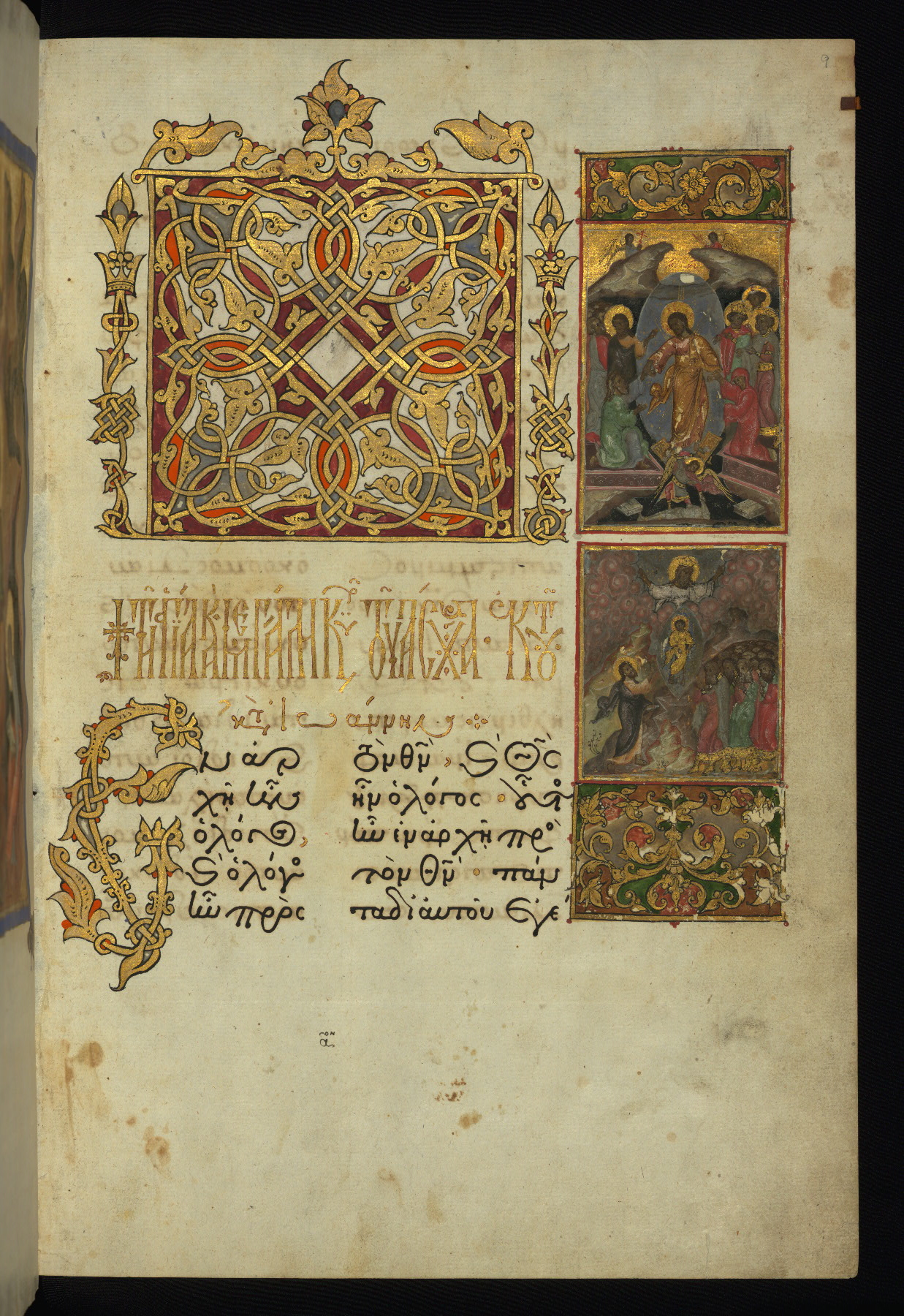
“This powerful Eucharistic hymn, so full of awe and mystery, is taken from one of the early liturgies of the Greek Orthodox Church.  The verses are based on a part of the Liturgy of St. James, which dates from the fourth century and is found in both Greek and Syriac .

The whole liturgy was first translated into English, by J. M. Neale and R. F. Littledale, and published in their Primitive Liturgies [1868-9].  Shortly after the books’ publication, the Reverend Gerard Moultrie [1829-85] versified a section entitled Prayer of the Cherubic Hymn, to form this hymn.  Moultrie was successively Chaplain of Shrewsbury School, Vicar of South Leigh, and Warden of St. James’ College, also in South Leigh.  He was responsible for several translations of hymns, as well as a number of his own compositions.

It is Moutlrie’s translation which appears [above] and which is found in most Roman Catholic, Anglican, and Presbyterian hymnals.”

~~~From The Book of Hymns, Ian Bradley


Let All Mortal Flesh Keep Silence:  Version One

French Carol Melody, Picardy; Liturgy of St. James, Translated by G. Moutlrie

Let all mortal flesh keep silence,

And with fear and trembling stand;

Ponder nothing earthly-minded,

For with blessing in His hand,

Christ our God to earth descendeth,

Our full homage to demand.


King of kings, yet born of Mary,

As of old on earth He stood,

Lord of Lords, in human vesture –

In the Body and the Blood –

He will give to all the faithful

His own Self for heavenly food.


Rank on rank, the host of heaven

Spreads its vanguard on the way,

As the Light of Light descendeth,

From the realms of endless day,

That the powers of hell may vanish,

As the darkness clears away.


At His feet, the six-winged Seraph;

Cherubim with sleepless eye,

Veil their faces to the Presence,

As with ceaseless voice they cry,

“Alleluia!  Alleluia! Alleluia!  Lord most high!”


“The text of Let All Mortal Flesh Keep Silence is . . . taken from the fourth-century Orthodox Liturgy of St. James of Jerusalem; Gerard Moultrie’s verse translation was published in 1864, when there was renewed interest in early Christian rites, awakened, doubtless, by the Oxford Movement.  Vaughn Williams included it in The English Hymnal, set to the French carol melody Jésus Christ s’habille en pauvre, an unlikely, but inspired, union.”

~~~From CD and Notes:  Sing, Ye HeavensHymns for All Time:  The Cambridge Singers, Directed by John Rutter, Collegium Records


You can listen to the hymn here: Hymnody: “Let All Mortal Flesh Keep Silence”


Let All Mortal Flesh Keep Silence:  Version Two

Let all mortal flesh keep silence and stand with fear and trembling, and lift itself above all earthly thought.

For the King of kings and Lord of lords, Christ our God, cometh forth to be our oblation and to be given for Food to the faithful.

Before him come the choirs of angels with every principality and power; the Cherubim with many eyes, and winged Seraphim, who veil their faces as they shout exultingly the hymn:  Alleluia. 

From the Liturgy of St. James

~~~E. C. Bairstow, [1874-1946]

“Outwardly, Sir Edward Bairstow typified the English organist-composer of the early twentieth century:  conservative, craftsman-like, gifted with a natural feeling for choral writing, and discriminating in his choice of texts.  From 1913, until his death, he was organist of York Minster, for the spacious acoustic of which building Let All Mortal Flesh Keep Silence was doubtless conceived. 

Yet this brief anthem, written in 1925, is filled with an awe-inspiring sense of mystery, majesty, and power that is anything but conventional, evoking the solemn liturgical music of Russia, rather than the aura of the English organ loft.  One wonders what Bairstow might have achieved if he had been free to devote himself more fully to composition.”

~~~From CD and Notes:  Images of Christ, The Cambridge Singers, Directed by John Rutter, Collegium Records

Coram Deo,

Margot

Leave a comment

Filed under Hymns

Piercing The Veil: The Search for Meaning

The Search for Meaning:  Interpreting Scripture

Introduction:

From Detectives of Significance:  Sherlock Holmes, Umberto Eco, and the Search for Meaning, by Dr. Louis Markos,  Touchstone Journal, Sept/Oct 2012 issue:

The key thinkers of the Middle Ages valued stability and tradition in their daily lives, but that did not prevent them from setting forth on spiritual, philosophical, and aesthetic quests.

Like the Romantics after them, the Medievals sought to pierce the veil, to discover what lay behind the words, ideas, and images that made up their daily lives . . .

. . . . And that takes us back to the medieval ‘obsession’ with reading poetry in general, and the Bible, in particular, in terms of two or three or four levels of meaning.

 Such a system of reading seems forced and unnatural to us, a mere exercise in obfuscation, but it was not so to them.

 “Interpreting poetry allegorically,” argues Eco, “did not mean  imposing upon it some kind of arid and artificial system.  It meant seeking in it what was felt to be the highest possible pleasure, the pleasure of a revelation ‘per speculum in aenigmate.’ “

Eco borrow the phrase the Latin phrase from 1 Corinthians 13.12:

 ‘For now we see through a glass darkly, but then face to face:  now I know in part, but then shall I know even as also I am known.’

Perhaps no verse in the Bible better explains the impetus behind the medieval quest for higher truths and essenses.  What waits for us on the other side is not just answers, but also Meaning, Purpose, and Presence.

Patristic and Medieval Interpretation of the Four Senses:

From Holy Men and Women of the Middle Ages and Beyond, by Pope Benedict 16, 2012, Ignatius Press, page 31:
  1. Literal or Historical

  2. Allegorical or Christological

  3. Tropological or Moral

  4. Anagogical

The Four Layers of Meaning:  Interpreting Scripture

The Senses of Scripture:

According to an ancient tradition, one can distinguish between two senses of Scripture:  the literal and the spiritual, the latter being subdivided into the allegorical, moral, and anagogical senses.  The profound concordance of the four senses guarantees in all its richness to the living reading of Scripture in the Church.”  [Catholic Catechism, 115]

“A medieval couplet summarizes the significance of the four senses:

‘The Letter speaks of deeds;  Allegory to faith;

The Moral how to act;  Anagogy our destiny.’ ”  [Catholic Catechsim, 117]

Terms and Definitions are from InterVarsity Press Handbook of Theological Terms, unless otherwise noted.

Note:  OT=Old Testament; NT=New Testament

Letter or Literal Sense [Historical]:

The meaning conveyed by the words of Scripture and discovered by exegesis,  following the rules of sound interpretation:  “All other senses of Sacred Scripture are based on the literal.”  [Catholic Catechism: 115]

A strict adherence to the exact word or meaning, either in interpretation or translation, of the Biblical text. 

Attempts to understand the author’s intent by pursuing the most plain, obvious meaning of the text, as judged by the interpreter. 

In translation, the attempt is made to convey with utmost accuracy, through the words of another language, the actual meaning of the biblical text.


Spiritual Sense:  [Allegorical or Christological or Typological]:

Spiritual

An interest or concern for matters of the “spirit,” in contrast to the mere interest and focus on the material.  Christian spirituality, as expressed through participation in certain Christian practices, such as Bible study, prayer, worship, and so forth.

Allegory:

We can aquire a more profound understanding of events by recognizing their significance in Christ; thus the crossing of the Red Sea is a sign or type of Christ’s victory and also of Christian Baptism.  [Catholic Catechism, 117]

Expression, by means of symbolic fictional figures and actions, of truths or generalizations about human existence; a symbolic representation. [Webster’s].

 A story in which the details correspond to or reveal a “hidden,” “higher,” or “deeper” meaning. 

Method of biblical interpretation [which] assumes that biblical stories should be interpreted by seeking the “spiritual” meaning to which the literal sense points.

Christology:

Christology is the study devoted to answering two questions:  Who is Jesus? [the question of his identity] and What is the nature and significance of what Jesus accomplished in the Incarnation? [the question of his work].

Typology:

Differing from a symbol or an allegory, a typology is a representation of an actual, historical reference.  According to Christian exegesis, biblical typology deals with the parallels between actual, historical [usually OT] figures or events in salvation history and their later, analogous fulfillment.  Often NT events and figures are typologically understood and interpreted according to an OT pattern [e.g., Creation and New Creation, Adam and Christ, the Exodus and NT concepts of Salvation.]  On this basis, typology became one of the four prevalent ways [together with the literal, the analogical, and the spiritual] of interpreting Scripture in the Middle Ages.

Moral Sense: [Tropological or Ethical]:

The events reported in Scripture ought to lead us to act justly.  As St. Paul says, they were written “for our instruction.” [Catholic Catechism, 117]

The area of philosophical and theological inquiry into what constitutes right and wrong, that is, morality, as well as what is the good and the good life.  Ethics seeks to provide insight, principles, or even a system or guidance in the quest of the good life or in acting rightly, in either general or specific situations of life. 

Broadly speaking, ethical systems are either deontological [seeking to guide behavior through establishment or discovery of what is intrinsically right and wrong] or teleological [seeking to guide behavior through an understanding of the outcomes or ends that ethical decisions and behavior bring about.]

Anagogical Sense:

Anagog:

[Greek: anagoge, “leading”].  We can view realities and events in terms of eternal signficiance, leading us toward our true homeland:  thus the Church on earth is a sign of the heavenly Jerusalem.  [Catholic Catechism, 117]

Greek:  a “climb” or “ascent” upward.  “Leading above” when by a visible act an invisible is declared.  A method of interpretation of literal statements or events, especially Scripture.  [Wikipedia]

Interpretation of a word, passage, or text, that finds beyond the literal, allegorical, and moral sense, a fourth and ultimate spiritual or mystic sense. [Webster’s]

Orients a person toward eternal life. [Holy Men and Women of the Middle Ages and Beyond, by Pope Benedict 16, 2012, Ignatius Press.]

Interpreting Scripture: Other Terms & Definitions:

Terms and Definitions are from InterVarsity Press Handbook of Theological Terms, unless otherwise noted.

 Analogy of Faith:

 A principle of interpretation that suggests that clearer passages of Scripture should be used to interpret more obscure or difficult passages. 

 For Augustine, the analogy of faith requires that Scripture never be interpreted in such way that it violates the church’s summary of Christian faith [i.e., The Apostle’s Creed]. 

For Luther, Christ is the analogy of faith, so that Scripture needs always to be interpreted as testifying to Christ.

For Calvin, the analogy of faith assumes that, because the Spirit oversaw its writing, Scripture and the Spirit together interpret other parts of Scripture.

Exegesis, Eisegesis:

Literally, “drawing meaning out of” and “reading meaning into,” respectively. 

 Exegesis is the process of seeking to understand what a text means or communicates on its own. 

Eisegesis is generally a derogatory term, used to designate the practice of imposing a preconceived or foreign meaning onto a text, even if that meaning could not have been originally intended at the time of its writing.

Hermeneutics:

The discipline that studies the principles and theories of how texts ought to be interpreted, particularly Sacred texts, such as the Scriptures. 

Hermeneutics also concerns itself with understanding the unique roles and relationships between the author, the text, and the original or subsequent readers.

[Note:  For emphasis, I added italics, bold-face, and other formatting. MBP]


Leave a comment

Filed under Four Levels of Meaning, Interpretation of Scripture, Words & Language

Exploring the Gospel of John: 1

EXPLORING THE GOSPEL OF JOHN

By the Rev. Dr. Michael Petty [Fr. Michael Petty]

St. Peter’s Anglican Church

2006

John 1:1-18

The Prologue to the Gospel

I.  What is a Gospel?

In including four gospels into the canon of Scripture, the Church made a significant decision:  that no one gospel [by itself] could be taken to provide an adequate portrait of Jesus.  One of the earliest Christian theologians, Irenaeus of Lyon, spoke not of four gospels but of a fourfold gospel, the one gospel presented by the fourfold witness of Matthew, Mark, Luke, and John.

The early Church was not at all embarrassed by the fact that the gospels were all slightly different.  The gospels seem to have followed the pattern of ancient biography, the purpose of which was not to present a complete account of the subject’s life, arranging details in chronological order, but to provide an account of the subject’s character and significance.  A major element in this effort was the portrayal of the subject’s death.  Note that John 1:19-12:50 is an account of Jesus’ public ministry, sketched in terms of significant events, and John 13:1-19:42 is an extended account of Jesus’ death.  For John, Jesus is revealed through the signs he performs in the first section and in the way he dies in the second section.  The Prologue to the gospel (1:1-18) is the interpretive key to the whole work.

II. John 1:1-5

1. While Mark begins his account of Jesus with his baptism and while Matthew and Luke begin their accounts with Jesus’ birth, John begins his account of Jesus with the very life of God before Creation.   The reason for this is that Jesus’ relationship to God is one of his primary themes.  The gospels are never concerned with simply providing information about Jesus but they are always concerned with Christologywith understanding who Jesus is as both a person and as one in whom God acts.

2. John’s gospel begins in the very same way that the Septuagint (the Greek translation of the Old Testament) version of Genesis 1:1 begins.   A. Lincoln offers this translation of John 1:1:  “In the beginning was the Word, and the Word was at God’s side, and what God was, the Word was.”   Right from the start, we are given what John considers to be the most important fact about the story of Jesus:  The story of Jesus did not begin in first century Palestine but actually had no beginning at all because he was eternally present with God.  This gospel is going to recount the intersection of time and eternity, human history and the eternal God.

3. “Word  in 1:1 is the English rendering of the Greek word “logos,” a very rich word.   As Word, logos is not simply a conveyor of information but has to do with self-expression.  The Word is God’s own self-expression. While God and his self-expression are distinct, they are not separable.  The basis of John’s Christology is that God expresses himself in the person [of] Jesus.

4.  Two things are in the background here:

One is the fact that, in Genesis 1, God, through speaking, creates realities into existence;  God’s speaking does not merely convey information but actually effects things.  Creation is a Word-formed reality.

Another thing is the role of Wisdom in Proverbs 8, which also is before Creation and is with God.  For the Old Testament, Word (as in Psalm 33:6 and Isaiah 55:11) expresses God’s immanence in Creation, without compromising his transcendence. In Psalm 119: 93, 109, God’s life-giving Word and Wisdom can be identified with Torah, meaning that God’s Torah, given to Israel, was a source of both life and wisdom.  By speaking of Jesus as the Logos, John makes it clear that what is given in Jesus far surpasses what has been given in Torah.  It is not merely that Jesus simply fulfills Scripture (Torah) or completes it but that he surpasses it.

5. The point being made here is not that the Christian revelation is “better” that Judaism.  The purpose of John’s Gospel is not to compare two distinct “religions” called Judaism and Christianity, with a view to showing the superiority of Christianity but to make the case that faith in Jesus as the Word of God is the only true response to Israel’s God, open to both Jews and Gentiles.  Contrary to recent opinion, John is neither anti-Semitic nor anti-Jewish.

6. The relation of the Logos to the created order is both simple and complex:  simple in the sense that “all things were made through him” (1:3) but complex in the sense that the human response to the Word is not uniform (as in 1:9-12).  Colossians 1:15-17 provides a helpful point of comparison:  This gets at the mystery of the person of Jesus, who is both a human being and God’s own self-expression, who gives form and sustenance to the created order.  On one hand, all of creation has a relationship to the Word through its very being; on the other hand, human beings are invited into a relationship to the Word in the person of Jesus through belief.   As 1:4 indicates, the Word is both the source of life (zôe) and light.  God creates through his [Word] and gives revelation through his Word.  Already, we have established the theology, which later Church Councils will have to work out:  that of how the Word is both identified with God and distinct from him.

III: John 1:6-8

1. We abruptly leave eternity to enter into the realm of time and history, so that the coming of the Word can be related to the witness of John (this gospel does not refer to John as “the Baptist”).  Notice that the work of John the forerunner (distinct from the author of the gospel) has its origin in God, as does the work of the Word.

2. Notice that in 1:7 that John “came as a witness, to bear witness.”   Here, we have two of the most important words in this gospel:  witness (marturàia) and bearing witness (marturein).   The noun form is used 14 times in this gospel and the verbal form occurs 33 times.   The purpose of John’s witness is clearly indicated in 1:7.

3. The meaning of witness and bearing witness have a strong meaning in this gospel.  What is envisioned is not simply oral testimony but the totality of one’s life.  It also has a forensic meaning, as in giving testimony in a court.

IV. John 1:9-14

 1. While John the forerunner was to bear witness to the light, Jesus is the light.  The point being made here is that the light Jesus brings is not simply some bit of “religious” knowledge, which is quite nice but which one could do very well without.  The enlightenment brought by the Word is the light of the Truth, the Truth about God, the Truth about human beings, and the Truth about the world.   The Word does not add a bit of religious varnish to a world that is already just fine but, rather, the Word enters into a dark and dying world into order to give light and life.

2. It is worth noting that enlightenment becomes a word for baptism within the New Testament (Ephesians 1:18; Hebrews 10:32) and the writings of the early Church fathers.

3. One type of response to this enlightenment is ironic in 1:10-11.  While the world came into being through the Word and is what it is because of him, it did not know him.  While the Word came to his own people, those most prepared for his coming, they did not recognize him.  This emphasizes the depth of the human predicament:  human beings no longer know who they really are nor do they understand the world for what it really is.

4. 1:12-13 shows another type of response, the response of John’s church.  The Word comes not merely to grant some type of generic enlightenment but to authorize the creation of a new people of God, a people who are children of God, by themselves being reborn.  Being a child of God is not simply a matter of birth (being born into the right people) but a matter of rebirth.   Just as the Word comes from God, so must the rebirth of God’s people.  Note that the problem with Jews, from the standpoint of this gospel, is not that they are Jews (this would be anti-Semitism or anti-Judaism) but the problem is that they have refused what the God of Israel wishes for them.

V. John 1:14-18

 1. In this section, we have the confession of John’s community about the Word.  It begins with the shocking affirmation that “the Word became flesh and dwelt among us (1:14).”   Here we are at the heart of the mystery of Christ who is God’s Word en-fleshed.   In order to begin to understand the mystery of Christ, we have to understand that he is the embodiment of God’s self-expression.  Notice that two seemingly different things come together here:  God’s self-expression and the created order.   In affirming the Incarnation (the en-fleshment of the Word), John affirms that God and creation are not simply opposites.

2. The Word “dwelt among us” (1:14).  This is related to the Old Testament notion of God dwelling among his people, particularly in the tabernacle or Temple (see especially Exodus 40).  It was this dwelling of God that made the Jerusalem Temple so important, in that it was a sacramental sign that God was present to his chosen people.  John holds that Jesus replaces the Temple as God’s place of dwelling.

3. As the new Tabernacle, Jesus the Incarnate Word also reveals God’s glory:  God’s splendor or radiance.  In Exodus 40, it is the glory of God that descends into the tabernacle and dwells.  Glory can also refer to God’s reputation — the weight of God’s name.  In John, it is precisely Jesus’ death [which] reveals the glory of God.  God is glorious, in revealing himself and, in his faithfulness, manifested in his action in Christ.

4. The glory of the Son is that of a Father’s only son (1:14).  In this culture, honor was tied to heredity and a person’s status was tied to that of his father.  The only son in a family had a place of unique honor.  The Son is affirmed to have a unique status because of his unique relationship to his unique Father.

5.  “And from his fullness we have all received, grace upon grace” (1:16):  This statement is looking forward to v.17 and, thus, means that Christ adds to, completes, and surpasses the grace given in the Mosaic Covenant.   The point is not that Jesus and Moses are in competition and that we now have to choose sides nor that “good Jesus” has come to replace “bad Moses” but that what happens in Jesus encompasses Moses but [also] surpasses him.  This, of course, would be the dividing line between Judaism and Christianity.

6. 1:18 refers back to Exodus 33:12-34:9 and the well-known fact that Moses did not see God on Mt. Sinai.  According to Exodus 33:20, it is impossible for human beings to behold God.  And yet, this is precisely what the Son does, by virtue of his very being. The Son is “at the Father’s side”  (or “in the Father’s lap”) and so his vision of God is not an event but part of his very being.  Because the Son knows the Father intimately, he, and he alone, can make him known.  In the Son, we have real revelation, that is God making God known.

Reflection:

The Prologue to John helps us to get a proper sense of perspective, by placing both Jesus and the Church in the larger context of God’s relationship to his creation.  If Jesus is seen simply as a historical figure, questions about why he should be the only way to God immediately pop up and are finally impossible to answer.  When Jesus’ unique relationship with God is set aside, it becomes impossible to justify Christian faith in him other than on the basis of personal preference.  It is only when we make the connection between the historical figure of Jesus and the Son of God, the connection made by the Incarnation, that Jesus as God’s way to God becomes justifiable.

The Christian claim is both radically specific and cosmic at the same time:  It is radically specific in that it insists that God’s Word became Incarnate in a specific, historical person and that this was a unique event.  The salvation of the world does, in a sense, depend upon a Jewish prophet and upon the Israel that gave him birth.

This insistence that an equal opportunity for salvation does not present itself in Buddha or Mohamed is not the result of Christian “intolerance” or “exclusivism” but is the consequence of the way God has acted in his Son.  At the same time, we have to remember that Jesus is not simply a historical figure, knowledge of whom is only available in Scripture or the Church since, as the Word, he is the one through whom the world was created and is the one in whom it is sustained.

The witness of the Church plays an important role but this role presupposes Jesus’ relationship to the whole created order.  This means that the Gospel is not an “inside” story which Christians tell to themselves or a “religion” for those “who like that sort of thing.”  It is, rather, a matter of declaring to the world the truth about itself, a truth which it does not yet know and against which it often unknowingly reacts.  In light of the Prologue, we can see that much of the animus against Christianity is rooted in either the sting that it inflicts, by telling the truth, or the unfaithful way in which some Christians have carried out their task, either being slothful or overzealous.  We can and should do nothing about the former; we are duty-bound to correct the latter.

John 1:19-34

The Testimony of John the Baptist

John 1:19-28

 1.  The atmosphere in this scene anticipates the atmosphere that will surround the whole of Jesus’ public ministry:  that of hostility and interrogation.   John 1:19-34 is about John’s marturía or testimony, where this word has a forensic meaning.   “The Jews” have sent priests and Levites to investigate John’s ministry of baptism (1:25), since they are the experts in purity regulations and baptism had to do with purity.  “The Jews” is used by this gospel to designate a very specific group:  those Jewish officials who oppose Jesus.

2. John is asked about his identity (1:19).  Several things need to be kept in mind, in this respect:

First, we are told that John’s ministry took place in Bethany across the Jordan.  Bethany here is not the Bethany of Mary and Martha, near Jerusalem.  By placing himself across the Jordan, John was signaling some kind of Messianic activity, by suggesting that he was gathering people to be led by the Messiah, across the Jordan into the Promised Land, as Joshua had done but, in this case, what was being symbolized was the creation of a new Israel.

Second, there was no standard Jewish expectation of a Messiah in the first century.  Some Jews (the Sadducees) expected no Messiah at all while others (the Essenes) expected three:  a prophet, a priest and a king.

Third, baptizing Jews was an eschatological action, suggesting some final action on the part of God.

3.  John’s testimony begins with three denials:

(1)  John denies being the Messiah very firmly in 1:20.  “Christ” is simply the Greek version of the Hebrew “Messiah” and becomes the central designation for Jesus.

(2)  John denies being Elijah.  In 2 Kings 2:11, Elijah was taken up into heaven, without dying, and this created, with the help of Malachi 4:5, the popular expectation that Elijah would precede the Messiah.  This denial is in some tension with Mark (1:2) and Matthew (6:14), who do identify John with Elijah. For theological reasons, John pushes the Elijah theme aside, to focus on John solely as one who bears witness to Jesus.

(3)  John denies being the prophet. The prophet here is the one which Jewish interpretation took to be foretold in Deuteronomy 18:15-18, a prophet like Moses.

4.  John’s testimony is not simply one of denial.  In 1:23, he identifies himself with the voice of Isaiah 40:3.  John’s ministry is nothing like that suggested by his interrogators but something far more humble:  that of preparing Israel for God’s intervention.  But this leads to another question:  If John is not the Messiah, Elijah, or the prophet, why is he baptizing?   The question here is not simply one of motive but of authority.  The point of 1:26-27 is to show the subordination of John to Jesus.

The question of why John is baptizing is answered by making it clear that it is simply preliminary — that John is not even worthy to perform for the “one you do not know” (1:26) a function performed by a slave.  The preliminary and subordinate nature of John’s baptism is portrayed in Acts 19:1-6, where there is a distinct separation between “John’s baptism” and baptism “in the name of the Lord Jesus Christ.”

John 1:29-34

 1.   Having been rather tight-lipped about himself, John now has much to say about Jesus.  This, of course, fits the pattern of John as a figure who only makes sense in relation to Jesus and is not an independent object of attention (note 3:30).

2.  John’s positive testimony begins with the affirmation that Jesus is “the Lamb of God who takes away the sin of the world” (1:29).  What does this affirmation mean?  One possible meaning is that Jesus is being identified with the apocalyptic lamb portrayed in inter-testamental Jewish literature, where the lamb is a conquering figure who destroys evil.  This would certainly make sense in light of Revelation 7:17 and in light of John 3:8, where the Son reveals himself to destroy the works of the devil.  Clearly, John’s reference to “lamb” is not intended to designate Jesus as “mild.”

Another possibility is that John is referring to the Suffering Servant Song of Isaiah 52:13-53:12.  This figure’s suffering purifies many (53:6, 11-12) and is described as being like a lamb (53:7).

Another possibility is that John is thinking of the Passover lamb.  This makes sense, in that John alone tells us that Jesus was on the Cross, while the Passover lambs were being slaughtered (19:4).  Of course, all of these images could be intended, putting them into the service of describing Jesus’ definitive role in God’s salvation.

3.  1:30-33 again clearly subordinates John.  While Jesus follows John in the flow of temporal events, this in no way indicates theological priority because, in the sense made clear in 1:1, Jesus is John’s predecessor.  In 1:31-32, we return to the theme of John’s baptism and two important things are made clear:

First, John does not recognize Jesus, until Jesus’ baptism, and only does so because he is told by God to watch for a specific sign.  Notice that this gospel does not actually recount Jesus’ baptism by John but refers to it obliquely (the scene John mentions seems to be Jesus’ baptism, as recounted in Matthew 3:13-17, Mark 1:9-11, and Luke 3:21-22).   Also important to notice is that, in this gospel, the baptism of John is not actually described as being for repentance but rather for the purpose of revealing Jesus to Israel (1:31).

These two things are not in conflict, but by describing John’s baptism in this way, it is made clear that John’s activity has no validity apart from Jesus.

4. In 1:32-33, we are also given an important insight into Jesus’ relation to the Spirit.  In both verses, the Spirit descends upon Jesus and also remains on him.  This sets Jesus’ relation to the Spirit apart from those of other figures who were given the Spirit but upon whom the Spirit did not remain.   It is Jesus’ possession of the Spirit that gives his baptism its unique character (1:33) and enables Jesus to speak of sending the Spirit (16:7).  John 1:32-33 is intimately connected with John 20:22.

5. The scene ends with John summarizing his witness to Jesus:   Jesus is the Son of God.  As Psalm 2:7 indicates, referring to someone as “God’s son” does not necessarily imply that they are divine:  In the case of Psalm 2, the king of Israel is “God’s son.”  But, in light of what John has said about Jesus in 1:29-34, the term takes on a different meaning:  Jesus is the Lamb of God (in several senses), he precedes John in a theological / ontological sense, and he is the one upon whom the Spirit remains.  These affirmations fill out what is meant by “Son of God” in this gospel:  One whose actions are definitive, not simply because he acts on behalf of God (an important claim by itself) but because his actions are also the actions of God.  In this brief scene, we have a summary of this gospel’s Christology.

Reflection:

This account of John’s witness (which will be continued in 3:12-36) provides us with a model for our own witness.  John’s witness is powerful for several reasons:

First, John clearly shifts attention away from himself to Jesus.  His witness is his witness but he is not the principal subject but points beyond himself.

Second, John focuses on conveying a truthful and understandable account of who Jesus is.  The success of a witness depends less on the persuasive abilities of the witness than on the Truth it conveys.  John appears less concerned with getting people to “appreciate” him than with telling the truth he knows.

Third, John appears ready to be questioned and disputed (as he clearly is in 1:19-28) without being discouraged.  “Who Jesus is,” he realizes, is not obvious or a simple truth of common sense:  (If this were the case, no witnesses would be needed!).

Finally, John is able to realize that there is a witness that is greater than his own, a witness which makes his own witness fruitful and this is, of course, the witness of God himself to himself.   It is helpful to see the witness of John as manifesting the ideal balance of characteristics:  It is spirited but does not presume to pound the truth into someone’s mind.  It is convinced but realizes that success does not belong to it.  It is concerned to convey the truth but knows that this truth stands beyond itself.

Leave a comment

Filed under The Gospel of John, theology and doxology

John for Everyone: Syllabus


St. Peter’s Anglican Church [SPAC]
Adult Formation – Wednesday Evening Academy
Fall Semester 2012:  09.12.12 – 12.12.12

Class:  John for Everyone:  Part One & Two

Read:  The Pause That Refreshes
Time:   6.15 pm -7.30 pm
Location:  SPAC Parish House
Leader:  Margot Payne:  marmeepayne@gmail.com   www.margopayne.wordpress.com
 

The Pact:  Present, Prepare, Participate:

I agree to faithfully and diligently [when it is within my power:]
·      Be present and on time every week for class.
·      Prepare for class.
·      Participate in class discussion.
Bring: Bible, John for Everyone, pencil/pen, notebook, clipboard.
Recommended:  Book of Common Prayer 1979 and  Anglican Hymnal 1982.

The Purpose: [Quote from: “The Challenge of Jesus,” by N. T. Wright]

” ‘The Challenge of Jesus’  poses a double-edged challenge:
·      To grow in our understanding of the historical Jesus within the Palestinian world of the first century and
·      To follow Jesus more faithfully into the postmodern world of the twenty-first century.”

 The Presentation:

  • Ancient: Psalms, Hymns, Prayers, Compline, Vespers
  • Sources:  Book of Common Prayer 1979 and Anglican Hymnbook 1982

Resources: Optional

  • The Gospel of John [Wiki]
  • Jewish Holidays [Wiki]
  • Origins:  CNS Documentary Services:  ISSN 0093-609X, “Fides et Ratio,”  John Paul II Encyclical [Brief Synthesis is on the last page].  Email:  CNS@nccbuscc.org, $5 pre-paid.
  • Harper Collins Concise Atlas of the Bible, ISBN 0-06-251499-7, Times Books, London, 1991.
  • Pocket Dictionary of Theological Terms, ISBN 0-8308-1449-3, Grenz, Gunetzki, Nordling, InterVaristy Press, 1999.
  • Music CD:  Compline:  The Shadows of Thy Wing, The Christ Church Choir, Giovanni Pierluigi da Palestrina, Gloria Dei Cantores, 1999, Paraclete Press.

Fall Semester 2012:

09.12.12 Week One:

  • Logistics:  Supper, Books, Contact Info
  • Paradigms & Parameters
  • Worldviews: All Kinds of Lenses! [Box]
  • Hymn:  Immortal, Invisible

Reading Assignment: Due 09.19.12:

Blog entries [see above website]:

09.19.12  Week Two:

Reading Assignments:  Due 09.25.12:  John for Everyone:  Introduction and John 1.
Blog entries:
Reading Assignments:  Due 10.03.12
  • John for Everyone:  John 2.
  • Hymn:  Let All Mortal Flesh Keep Silence
  • Recommended but not required:  Exploring the Gospel of John: 2
     

    10.03.12  — Week Four:

    Reading Assignments:  Due 10.10.12

    Hymn:  Let All Mortal Flesh Keep Silence

  • John for Everyone:  John 3.
  • Recommended but not required:  Exploring the Gospel of John: 3
  •  

    10.10.12 — Week Five:

Reading Assignments:  Due 10.17.12

10.17.12 — Week Six:

Reading Assignments:  Due 10.24.12: [Week Seven]

We will not meet on 10.31.12

Reading Assignments:  Due 11.07.12: [Week Eight]
Reading Assignments:  Due 11.14.12: [Week Nine]
  • John for Everyone:  John 6:  Pages 81-92 in the Commentary.  Read cross-references.
    John for Everyone:  John 7:  Pages 92-99 in the Commentary.  Read cross-references.
  • Hymnody:  “Pange Lingua” [Gregorian Chant]  See: Pange Langua
  • Recommended but not required: Exploring the Gospel of John: 7

    We will not meet on Wednesday, 11.21.12, which is the day before Thanksgiving.

    Reading Assignments:  Due 11.28.12: [Week Ten]

    • John for Everyone:  John 7  in N. T. Wright Commentary.  Read cross-references.
    • Hymnody:  “Pange Lingua” [Gregorian Chant]  See: Pange Langua
    • Recommended but not required: Exploring the Gospel of John: 7

Reading Assignments:  Due 12.05.12: [Week Eleven]

Reading Assignments:  Due 12.12.12: [Week Twelve]

12.12.12 is our last meeting for the Fall Semester.  We meet again on January 16, 2013, after Epiphany.  Check the SPAC website for details.

The Seven Signs of the Gospel of John:

[Seven days – one week of Creation]:

Jesus transforms the water into wine, at the wedding at Cana:  2.1-11

Jesus heals the royal official’s son, in Capernaum:  4.46-54

Jesus heals the paralytic, at the Bethesda pool:  5.1-18

Jesus walks on water, in the Sea of Galilee:

Jesus feeds the 5,000:  6.16-24

Jesus heals the man, who had been blind from birth:  9.1-7

Jesus raises Lazarus from the dead:  11.1-45

[The eighth day – the beginning of the New Creation]:

The Resurrection of Jesus

Coming Up in the Liturgical Calendar:

The First Day of Advent:  12.02.12

Lessons & Carols:  Details:  www.saint-peters.net

Messiah Sing!  Community Sing-A-Long.  Faith Presbyterian Church, 12.06.12, 7.30 pm.

Christmas Eve Worship Service:  December 24, 2012.  Details:  www.saint-peters.net

Christmas Day Worship Service:  December 25, 2012.  Details:  www.saint-peters.net

The Twelve Days of Christmas/Christmastide/Twelvetide:  December 25, 2012 through January 5, 2013:

Twelfth Night/Eve of the Feast of the Epiphany:  January 5, 2013 [Supper at Payne Home, 6.00 PM]

The Feast of the Epiphany:  January 6, 2013

Spring Semester:  Part Two

Coming Up in the Liturgical Calendar:  For details, see http://www.saint-peters.net

Wednesday, 02.13.13:  Ash Wednesday Liturgies:  12.10 pm, 7.00 pm:  NO WED. EVENING CLASSES.

Fridays: 02.18.13 through 03.18.13:  Stations of the Cross:  5.30 pm

Sunday, 03.24.13:  Palm Sunday Liturgy

NO WED. EVENING CLASSES DURING HOLY WEEK [03.27.13]

Thursday, 03.28.13:  Maundy Thursday Liturgy

Friday, 03.29.13:  Good Friday Liturgy

Saturday, 03.30.13:  Easter Vigil, 8.30 pm

Sunday, 03.31.13:  Easter Day/Resurrection Sunday

Sunday, 05.19.13:  Feast of Pentecost

Reading Assignment, due on 01.16.13:

Reading Assignment, due on 01.23.13:

  • John for Everyone:  John 11 in N. T. Wright Commentary.  Read cross-references. 
  • Jot down questions, as you read.  Bring at least one question to the Bible Study.
  • Recommended but not required:   Exploring the Gospel of John: 11.

Reading Assignment, due on 01.30.13:

Reading Assignment, due on 02.06.13:

Post-Discussion Notes:

The Greatest Commandments:

Deuteronomy 6.4-5 contains the “Great Shema,” which means “Hear, O Israel:” 

4   “Hear, O Israel: The Lord our God, the Lord is one.

5    You shall love the Lord your God with all your heart and with all your soul and with all your might.” 

 Leviticus 19.17-18: [ESV]

17    “You shall not hate your brother in your heart, but you shall reason frankly with your neighbor, lest you incur sin because of him.

18    You shall not take vengeance or bear a grudge against the sons of your own people, but you shall love your neighbor as yourself: I am the LORD.”

The Clothing of Humility, Servanthood, Suffering:

Philippians 1:27-2:11 [NASB]

27  Only conduct yourselves in a manner worthy of the gospel of Christ, so that whether I come and see you or remain absent, I will hear of you that you are standing firm in one spirit, with one mind striving together for the faith of the gospel;  28  in no way alarmed by your opponents—which is a sign of destruction for them, but of salvation for you, and that too, from God. 29  For to you it has been granted for Christ’s sake, not only to believe in Him, but also to suffer for His sake, 30 experiencing the same conflict which you saw in me, and now hear to be in me.
1  Therefore, if there is any encouragement in Christ, if there is any consolation of love, if there is any fellowship of the Spirit, if any affection and compassion,  2  make my joy complete by being of the same mind, maintaining the same love, united in spirit, intent on one purpose.  3  Do nothing from selfishness or empty conceit, but with humility of mind regard one another as more important than yourselves;  do not merely look out for your own personal interests, but also for the interests of others.  Have this attitude in yourselves which was also in Christ Jesus,  who, although He existed in the form of God, did not regard equality with God a thing to be grasped,  7  but emptied Himself, taking the form of a bond-servant, and being made in the likeness of men.  Being found in appearance as a man, He humbled Himself by becoming obedient to the point of death, even death on a cross.   9  For this reason also, God highly exalted Him, and bestowed on Him the name which is above every name,  10 so that at the name of Jesus every knee will bow, of those who are in heaven and on earth and under the earth, 11 and that every tongue will confess that Jesus Christ is Lord, to the glory of God the Father.  
Mark 10:42-45 [NASB]
42 Calling them to Himself, Jesus said to them, “You know that those who are recognized as rulers of the Gentiles lord it over them; and their great men exercise authority over them. 
43 But it is not this way among you, but whoever wishes to become great among you shall be your servant;  44 and whoever wishes to be first among you shall be slave of all.  45 For even the Son of Man did not come to be served, but to serve, and to give His life a ransom for many.”

1 Peter 5:5-8 [NASB]:

5  You younger men, likewise, be subject to your elders; and all of you, clothe yourselves with humility toward one another, for God is opposed to the proud, but gives grace to the humble.   6  Therefore, humble yourselves under the mighty hand of God, that He may exalt you at the proper time,  7  casting all your anxiety on Him, because He cares for you. Be of sober spirit, be on the alert.  Your adversary, the devil, prowls around like a roaring lion, seeking someone to devour.
Quote:  “Everyone wants to be considered to be a servant but no one wants to be treated as one.”
We will not meet on 02.13.13 [Ash Wednesday]

Reading Assignment, due on 02.20.13:

Reading Assignment, due on 02.27.13:

Reading Assignment, due 03.o6.13:

Reading Assignment, due 03.13.13:

    • John for Everyone:  John 19 in N. T. Wright Commentary. Read cross-references.   
    • Jot down questions, as you read.  Bring at least one question to the Bible Study.

Reading Assignment, due 03.20.13:

John for Everyone:  John 20 in N. T. Wright Commentary.  Read cross-references.

Jot down questions, as you read.  Bring at least one question to the Bible Study.

Holy Week Hymnody: The Cross of Jesus

We will NOT meet during Holy Week, 03.27.13.

Reading Assignment, due 04.03.13:

John for Everyone:  John 12 in  N. T. Wright Commentary.  Read cross-references.

Jot down questions, as you read.  Bring at least one question to the Bible Study.

On Wednesday, 04.10.13:  6.15 pm to 8.45 pm:

Frances Prevatt has invited us to her home, to view the DVD film, “The Gospel of John,” narrated by Christopher Plummer.

Before the film begins, we will enjoy a simple supper of pizza and salad.


Leave a comment

Filed under The Gospel of John