

On Love:
Love is not so much a matter of romance as it is a matter of anxious concern for the wellbeing of one’s companion.
If you don’t love another living soul, then you’ll never be disappointed.
On Life:
But life is a battle: may we all be enabled to fight it well!
I try to avoid looking forward or backward and try to keep looking upward.
Better to try all things and find all empty, than to try nothing and leave your life a blank.
On Happiness and Cheerfulness:
There is no happiness like that of being loved by your fellow creatures and feeling that your presence is an addition to their comfort.
Cheerfulness, it would appear, is a matter which depends fully as much on the state of things within, as on the state of things without and around us.
On Friendship:
If we would build on a sure foundation in friendship, we must love friends for their sake, rather than for our own.
Friendship, however, is a plant which cannot be forced — true friendship is not a gourd, springing up in a night and withering in a day.
On Forgiveness:
Life appears to me too short to be spent in nursing animosity or registering wrongs.
On Courage:
I remembered that the real world was wide and that a varied field of hopes and fears,
of sensations and excitements,
awaited those who had the courage to go forth into its expanse,
to seek real knowledge of life, amidst its perils.
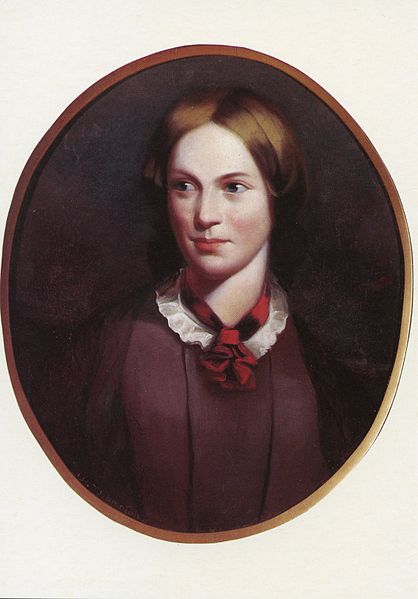
“Currer Bell” was the nom de plume — not the nickname — of the British author, Charlotte Bronte.
Charlotte Brontë (21 April 1816 – 31 March 1855)
was an English novelist and poet, the eldest of the three Brontë sisters who survived into adulthood, whose novels are English literature standards.
Margot’s Commentary:
Charlotte Bronte was an extraordinary woman of her time: She published her book, Jane Eyre, under the pen name of “Mr. Currer Bell,” because of prejudice against woman authors. Her two sisters also adopted nom de plumes: Ann was “Acton Bell” and Emily was “Ellis Bell.”
Here is a question for you: How would you describe the heroine of the book, Jane Eyre, in twenty-five words or less? Here is my attempt:
“Jane is bravely willing to suffer any loss in life, in order to retain her integrity, honor, self-respect and independent spirit.”
Jane is a unique woman of virtue, substance, depth, wisdom, intelligence, honesty, dignity, and imagination. She understands and demonstrates, through her life, one of those most essential and vital truths about authentic, solid, and everlasting love between a man and a woman: With clarity and without sentiment, she understands that love must be built upon a foundation of mutual respect and trust between two equals.
Read the book, Jane Eyre, and read a biography on the author. Discover the points at which their lives intersect. Discover why Jane Eyre is one of my favorite novels and why Charlotte Bronte is one of my favorite authors.


 Margot’s Corner