Tag Archives: places of enchantment

A Letter from Japan, 1957

Dear Readers,

Please read Summers of Contentment: Part 4, before you read this entry:

Last month, when I visited the NC Blair Family Retreat, I brought home an archival box, labeled, “Japan: 1957.”  Inside the box, in chronological order, are the letters which my father sent back home to my mother in the U. S.  My father wrote frequent letters, during his one-year tour of duty, as the U. S. Air Force commander of a radar base, in the mountains of Hokkaido, Japan.

Yesterday, my husband read aloud to me from the letters this simple sentence, written to my mother:

“Your mention of singing songs in the car made me reminisce — what wonderful, but simple fun we had together riding nowhere in particular and singing out nothing but happiness.”

Read Places of Enchantment, my tribute to my father, which highlights the simple pleasures of family singing, camping, and campfire songs.

Coram Deo,

Margot

Leave a comment

Filed under Family Togetherness, Simple Pleasures

Portals Into Places of Enchantment: Two

Dear Readers,

Now I come to the second of the  beloved books that will never leave my library:

In a previous entry, I said that some books were Portals Into Places of Enchantment.  Click the link to read the first installment in this series.  To read more about Places of Enchantment, click this link.

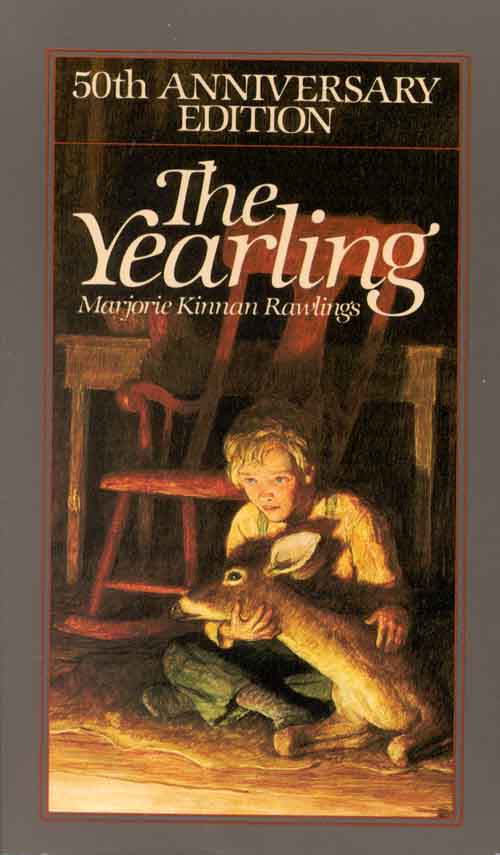
The first “portal” I described is an early edition of Cross Creek, a gift from my son.  The second one is a hardback edition of The Yearling, with illustrations by Wyeth.

In her book of memoirs, Cross Creek, Marjorie Kinnan Rawlings describes herself as an excellent and discriminating — yet vain — cook.  She declares that she would squander her very last dollar to buy Jersey cream and butter.

For my part, I would invest my last dollar to rescue her Pulitzer-Prize winning book, The Yearling, from the dusty recesses of the Young Reader Section of book stores and libraries.

It is true that the protagonist of the book is a boy of twelve but it does not follow that the primary audience of the book should be of the same age.

To fully appreciate the novel, you must first experience a great deal of life:  an impossible feat for a Young Reader.  Only an adult is seasoned enough by life to appreciate the depth and richness of the wisdom which flows through the narrative.

I first read The Yearling as a young mother and I have read it now, as  a [young] grandmother:  Every time I read the book, its lessons becomes more essential to me.

In fact, this novel is the best book on parenting and grandparenting that you will ever read.  Yes, a woman who bore no children wrote the best parenting book.  Yet, sadly, you will never find this book on a list entitled, “How to Parent.”  [But I intend to remedy that oversight, also.]
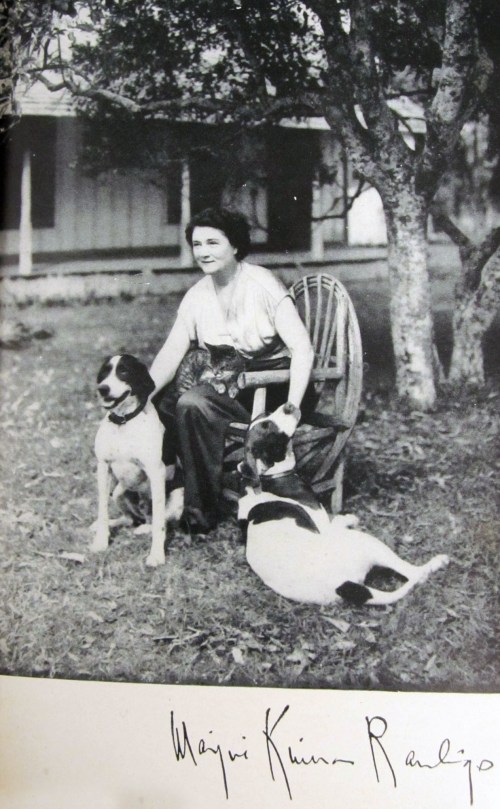
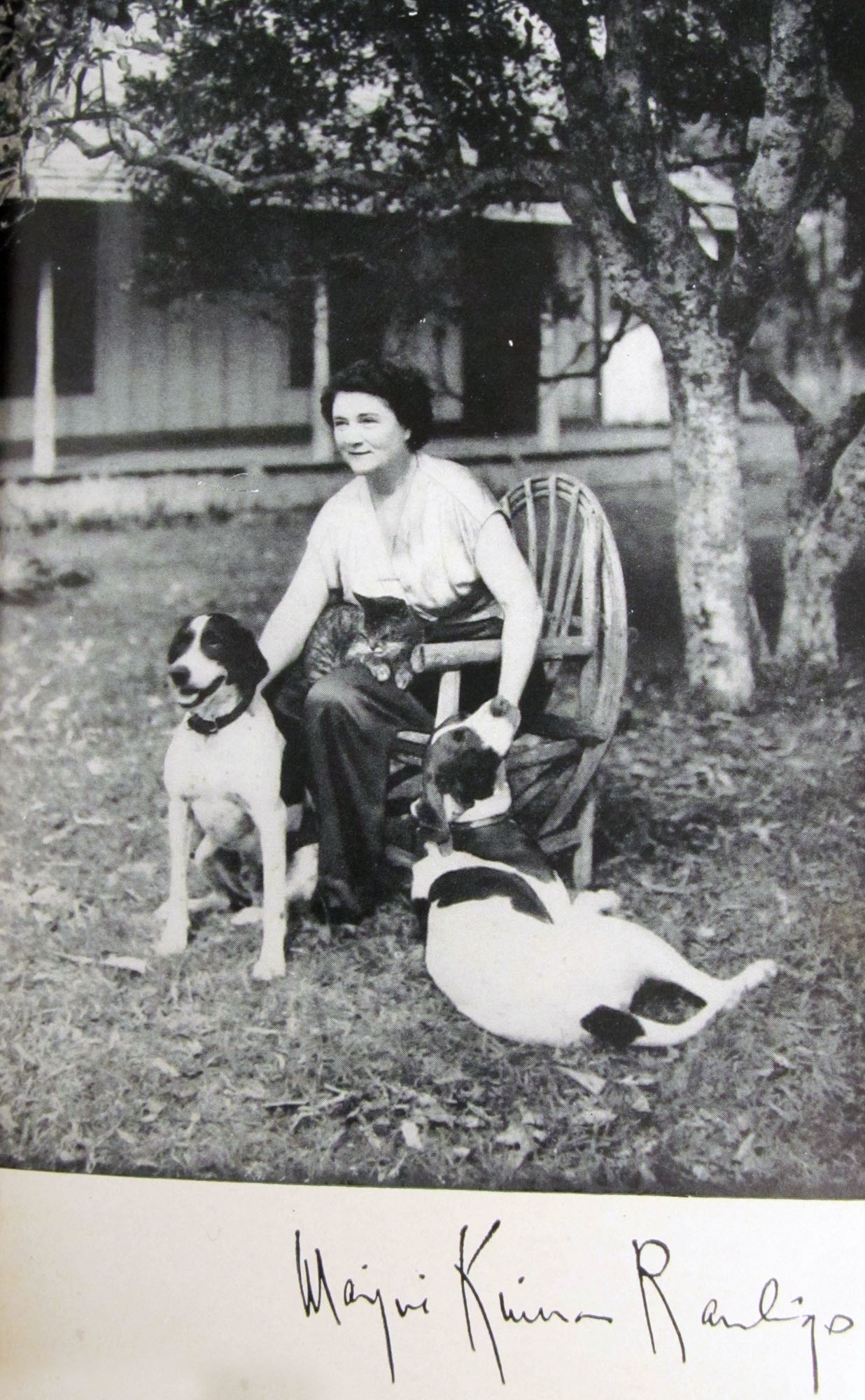
Marjorie Kinnan Rawlings at her home and farm in Cross Creek, Florida

Thirty-five years ago, I visited the hamlet, Cross Creek, near Micanopy, Florida, where Marjorie Kinnan Rawlings wrote the book, The Yearling.  I confess that I did not read her book until almost five years later.

I thought it odd that, when I finished the novel, I wept.  I am not a sentimental person [and neither was Rawlings].  Yet, I am astounded by genuine beauty, goodness, and truth:  themes that Rawlings,  a master story-teller and wordsmith, brings to life with brilliance.

Evidently, the weeping is not a rare response to the reading of this book.  To the other readers who wept upon finishing this enchanting book, I assure you:  I am a kindred spirit.

I wept not because I was sad.  Please understand, however, that the novel, mirroring life, contains tragic events.  No, I wept because the novel was so beautifully written.  It was painful to awake from and leave the enchanting world that Marjorie Kinnan Rawlings had created.

And yet something else made me weep:  Although Rawlings had been dead for decades before I read the book, I recognized in her a kinship and I deeply regretted not knowing her in real life.

The enchanting world she creates is not a romantic, escapist world.  Rawlings casts a non-sentimental view at the hard lives which her characters lead.  She was part of that world and her own life, invested in that rural hamlet of Cross Creek,  echoed the lives of her characters.

It is difficult to describe the novel as fiction:  The characters she draws are intimately familiar to her.  They are composites of “real life” children and adults that she knew in her 25 years of community living in Cross Creek.

She was never an impartial observer:  She was absorbed into the agrarian life, struggling, with her neighbors,  to wrest a living from the land and water surrounding Cross Creek.   And she was not always a famous author:  For decades, she depended upon the successes of her orange orchard and upon the produce of her farm.  A failed crop spelled disaster to each of those in the community.

If you are curious enough to enter the world of The Yearling, you must conform to its rhythm and cadence.  The book will absorb you and demand that you quiet your mind.   As you enter the portal, time will slow down.  The themes and metaphors will ebb and flow like the spring-fed rivers of North Florida.  The images evoked by the words and phrases are as crystal-clear as the springs.  It is an enchanting and quiet world and, for a time, the only sound you will hear will be those of the water birds, winging above those springs.
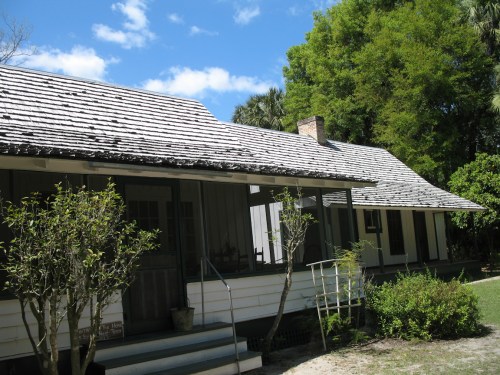
Marjorie Kinnan Rawlings Home and Museum:  Cross Creek, FL

I fully intend, someday soon,  to return to Cross Creek,  Florida, to pay homage to the woman who wrote this masterpiece.

By the way, the illustrious Max Perkins was Rawlings’ editor and you may want to read a delightful book, based upon the volume of correspondence between the editor and the writer:  “Max and Marjorie.”  It is out of print but I ordered a used hardback. Sorry;  I cannot let you borrow it.  You will have to order your own.

Coram Deo,

Margot

Leave a comment

Filed under Books

Portals Into Places of Enchantment

Dear Readers,

I must confess that I do not like to lend books, especially my hardcover books.  I will sometimes lend paper back copies.  As everyone knows, to lend a book is to prepare to say “Goodbye” forever to that “dear old friend.”

And I need a lot of “dear old friends” because I enjoy reading and writing on a wide variety of topics.  I want all my “dear old friends” to be within arms’ length.

Some books are so dear that they will never leave my library:

Cross Creek, by Marjorie Kinnan Rawlings, is one of these.

I told my grandson this week  that, if you have books, you will always have a friend and you will never be lonely.  Later, I thought to myself that, beyond friendship, certain books are portals into “places of enchantment:”  Cross Creek is a fine example.

Enchantment, chant, cantor, canticle, chanticleer:  some of my favorite words!  Each of these words share a Latin root word: “cantere,” which means to “to sing.”  Enchant means “to chant [sing] a spell over”  or  “to delight to a high degree,” or “to impart a magical quality or effect.”

I have previously written about Places of Enchantment.  Click the link and you can read about how one  lyrical book forged a special relationship between my father and me.

Marjorie Kinnan Rawlings

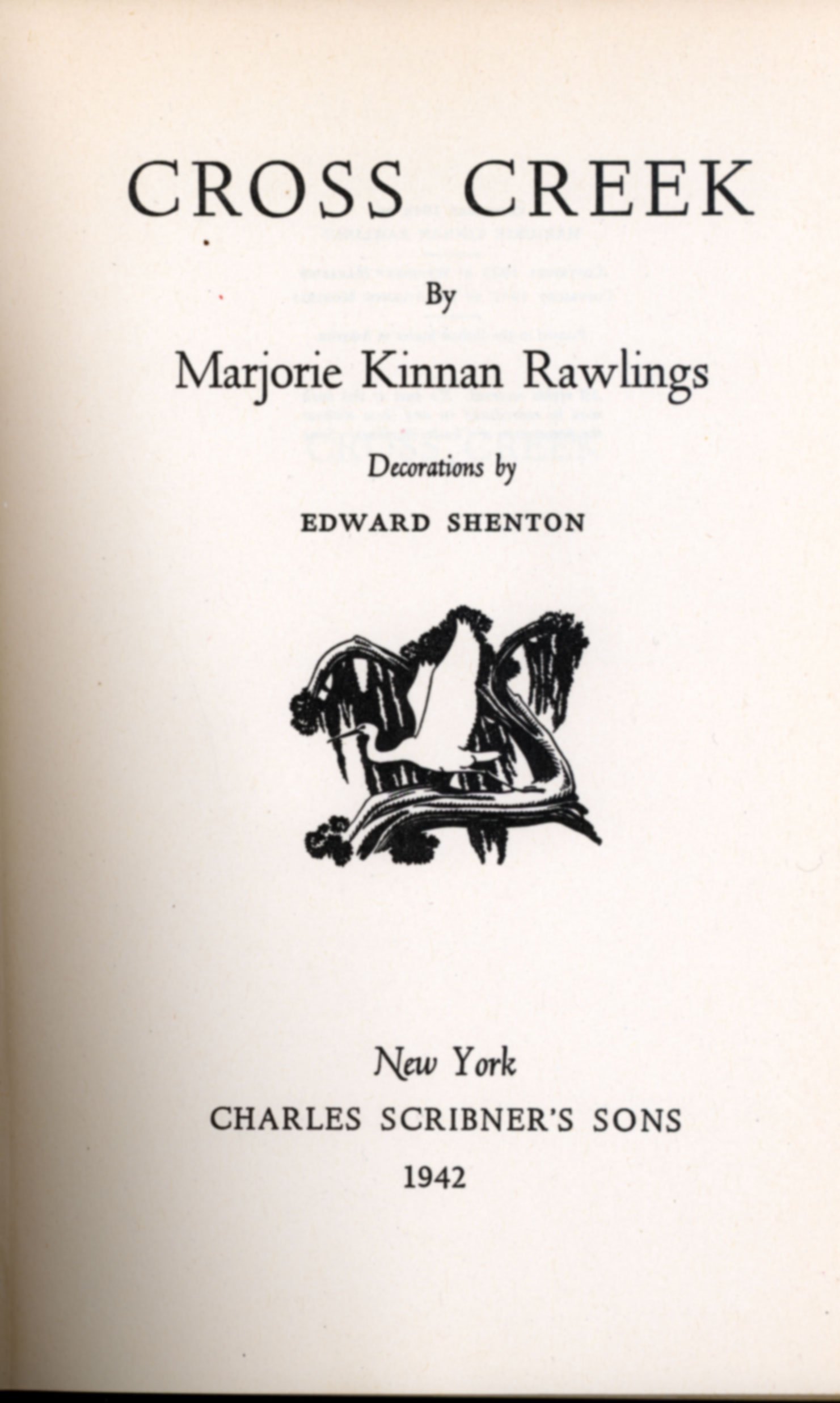
In 1996, my son, Garrett, surprised me with the gift of a hardback copy of the 1942 Edition.

Ten years later, in 2006, I gave my father a paper back copy of the book.

And the rest, as they say, “is history” or, in our case, it became “family history.”


The illustrations [“decorations”] by Edward Shenton, perfectly capture the enchanted quality of  Cross Creek, Florida — the setting for the book:

In case you did not read the link above, here are some quotes from the book.  I hope they capture your imagination and entice you to read this delightful book about an enchanting place.

“I do not understand how anyone can live without some small place of enchantment to turn to.”

“ . . . If there be such a thing as [collective or instinctual] memory, the consciousness of land and water must lie deeper in the core of us than any knowledge of our fellow beings.  We were bred of earth before we were born of our mothers.  Once born, we can live without mother or father, or any other kin, or any friend, or any human love.  We cannot live without the earth or apart from it, and something is shriveled in a man’s heart when he turns away from it and concerns himself only with the affairs of men.”

 “ . . . It seems to me that the earth may be borrowed but not bought.  It may be used but not owned.  It gives itself in response to love and tending, offers its seasonal flowering and fruiting.  But we are tenants and not possessors, lovers and not masters.  Cross Creek belongs to the wind and the rain, to the sun, and the seasons, to the cosmic secrecy of seed, and beyond all, to time.”

~~~All quotes are from Cross Creek, the memoirs of Marjorie Kinnan Rawlings, 1942, Scribner’s


Leave a comment

Filed under Books

How My Garden Grows: One

My Front-Porch Garden:

From front to back and from short to tall:

foliage of “Lamb’s Ear,” yellow blooms of Rudbeckia “Herbstonne,” “Indigo Spires Sage” — all under a bower of Crape Myrtles [Natchez].

Dear Readers,

[Note: After you read this entry, click How My Garden Grows: Part Two.]

I have previously written about Places of Enchantment.  Creating a garden, small or large, is like creating a place of enchantment.

At first, I began gardening for my enjoyment and exercise.  Over the years, however, I turned to the garden — for solace, beauty, and quiet — during various difficult stages of my life:  the empty nest, the topsy-turvy chaos of restoring a 65-year old home, the death of my parents, and my bout with breast cancer.

Immersing myself in the pursuit of gardening is, in itself, a healing process:  I receive, from the bounty of Creation, the warmth of the sun, the cool refreshment of the nourishing water, the touch and smell of the earth, the fragrance and color of the blooms, the various shades of the foliage, and the sound of birdsong.  I choose to think of nothing, except the task at hand, while I suspend worries and anxieties for a few hours of welcome respite.

However, I am a very practical gardener:  I have developed “Margot’s Get-Real Gardening Tips” that I will share with you so that you may spend more time delighting in — and less time toiling in — your garden.

In the near future, I will share these tips.  Here are some photos from my gardens, to inspire you.

Proviso:  My “Garden Tips” are for the Southern gardener:  specifically, North West Florida!  Over the years, I have battled the heat and humidity and have, finally, submitted to it — and I know the best plants to withstand our Southern climate.  

My Front Porch Containers:  mostly annuals.

My two sisters, Susan and Amy, designed these lovely combinations.

Container Pot of either Portulaca or Purslane:  A truly “bullet-proof” bloom for the summer.

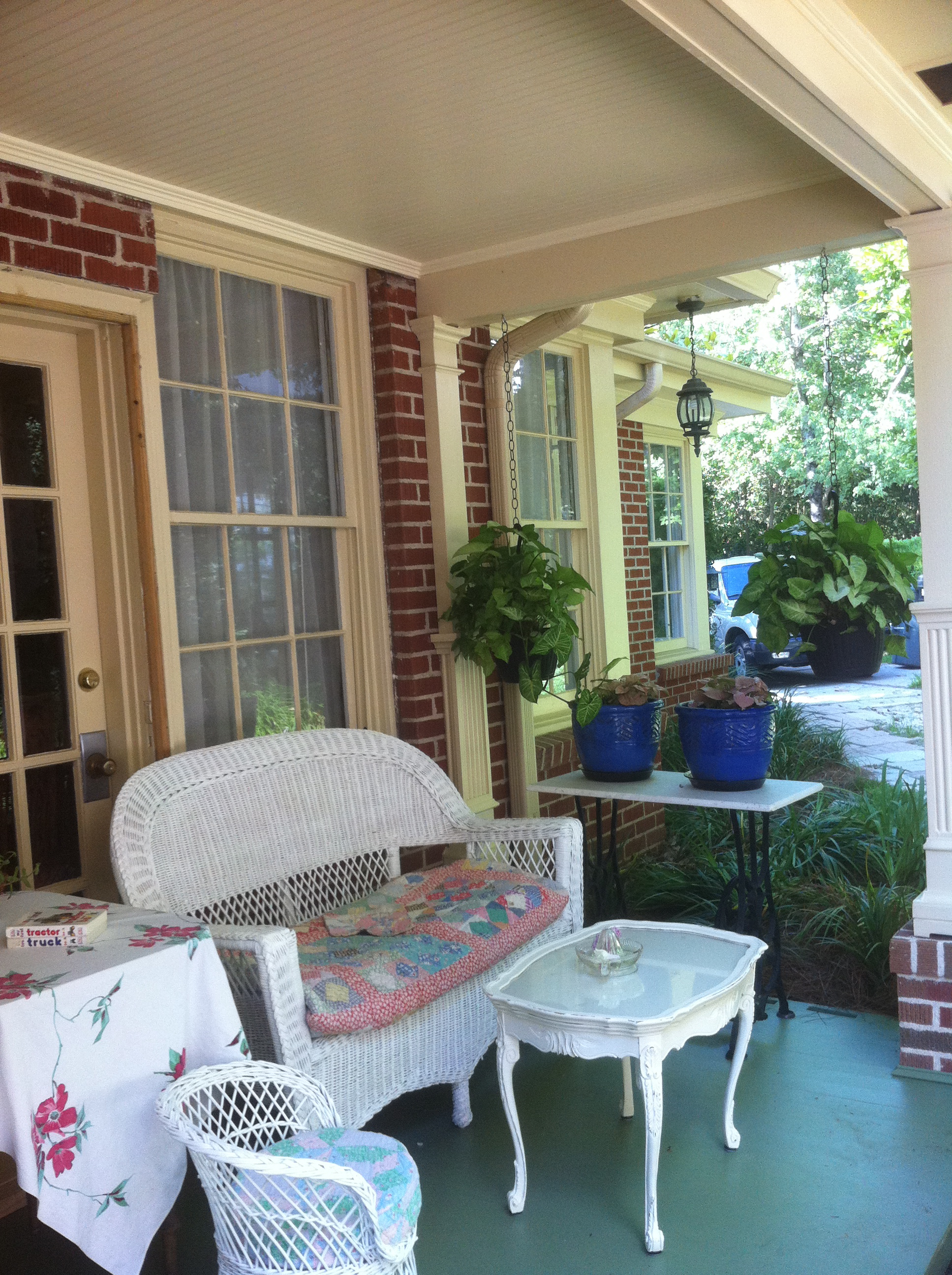
My Kitchen Porch:  A shady respite.

Front Porch Container

Another View of My Front Porch Garden:  from left to right:

blooms and buds of “Purple Coneflower,” “Indigo Sage,” “Lily of the Nile” — all under the shade of Crape Myrtle [Natchez]

Amaryllis [from bulb]

Coram Deo,

Margot

3 Comments

Filed under Gardens