Tag Archives: The Cost of Discipleship

Portrait of A Tree


Crape/Crepe Myrtle [Lagerstroemia]

” ‘Natchez ‘ Crepe Myrtles grow 20′-30’ high in the South.   The foliage becomes a reddish-orange in fall.   The bark peels off attractively, rather like that of birches, adding winter interest.   Natchez Crepe Myrtles bear white blooms.   As with most crepe myrtle, the flowers are the main selling point.   They not only grow in striking clusters, but put on a display that lasts longer than that for most plants (mid-summer to fall).   The blooms yield to fruits that are brownish and persist through winter.” [Wikipedia]

Dear Readers,

Recently, I was looking out the window at my Crape [Crepe] Myrtle trees:  I chose the “Natchez”  variety — but not for the profusion of ornamental and transient white flowers.  No, I chose it for one striking and enduring characteristic:  the beauty of the emerging “inner” bark.

It is fascinating to observe the process:  Over time, the rough, ugly, greyish, thin, “outer” bark will peel and slough off, to reveal the smooth, satiny, cinnamon-color “inner” bark:

The vigorous and healthy growth of the tree provides the vitality and energy to burst through the containment of the outer bark.

The portrait of this tree reminds me of the dynamics of a forty-year process:  

Forty-two years ago, in May of 1970, I attended a Protestant Youth of the Chapel Retreat.  I was 18 years old and my only motivation for attending the retreat was to spend time with my high school boyfriend.

In those days, weekend retreats were very simple.  They were intentional “retreats” from the world and provided hours of silence.  As I recall, the retreat followed this daily pattern:

~~~

Breakfast

Silence

Morning Prayer

Keynote Speaker

Lunch

Canoe on the Lake or Hike a Nature Trail

Silence:  Rest,  Read, and Bible Study

Supper

Keynote Speaker

Vespers by the Lake

Silence

Curfew

Lights Out

Silence

~~~

The Keynote Speakers were two handsome, athletic young men, who were volunteer staff with a university campus ministry.

The theme for the speakers’ lectures that weekend was, “My Heart: Christ’s Home,”  based upon a simple little booklet, written by Robert Boyd Munger.

InterVarsity Christian Fellowship USA

Robert Boyd Munger

I assure you that I did not, before the retreat, possess a yearning to offer hospitality to Christ — no, not even admittance to a tiny, dark, recessed corner of my autonomous life.

For I was a busy high school student:  Endless activity filled my days, evenings, and weekends.  And then there were also my studies, which I must cram within the frenetic schedule.  Contemplation and meditation were completely absent from my life.

But the weekend retreat and the hours of silence provided for me an opportunity to stop, think, and ponder.

I was not yet a student of theology.  If I had been, I might have snorted in derision at the simple content of the booklet, My Heart – Christ’s Home.  

It measures merely 3 1/2″ x 5″  and contains only 25 pages of text.  Page 3 introduces the theme:

“That God may grant you to be strengthened with might, through his Spirit in the inner man, and that Christ may dwell in your hearts through faith.” [Ephesians 3.16-17]

or

“That Christ may settle down and be at home in your hearts by faith.”  [Weymouth translation]

The keynote speakers offered each of us a copy of the little booklet, which contained eight tiny chapters.  Over the weekend, I read the booklet, as a novitiate might pore over a prayer-book.  The reading filled up the moments of silence, as I meditated upon the weighty message of this simple book.

On the last evening of the retreat, I perfectly remember that we, the high school students, were encircled around a camp fire.  We sat on the benches of the amphitheatre, in front of the lake.

The two speakers, standing in front of us, concluded their talks and asked us, “Are you ready to ask  Christ to ‘settle down and be at home in your hearts by faith?'”  

In silence, we departed and returned to our cabins, in time for curfew.  The counselors extinguished the lights and all was silent.  With a flashlight, under my blanket, I re-read the booklet.

And then I made a very reckless decision:  I followed the instructions, contained within the booklet:  I “transferred the title-deed of my home:”

I signed the title-deed of my life over, as it were, to Christ, and placed my life under his ownership and control.

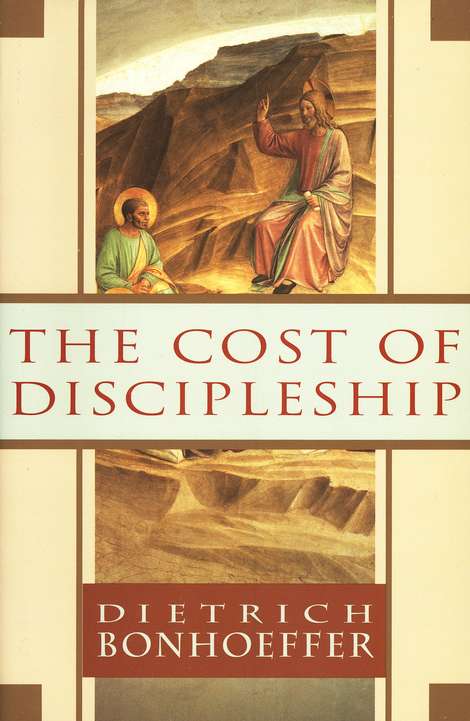
If I had carefully counted the Cost of Discipleship, as the author Dietrich Bonhoeffer implores us, I might not have made such a life-altering decision.
It was, I admit, a rash thing to do.

And I do think that, at the time, someone might have warned me about the long-term consequences.

The portrait of the tree represents those consequences:

Over forty years’ time, the presence of the Living Christ has eclipsed my life.

How did I ever hope to think, forty years ago, that I could safely contain the Lord of the Universe, within the confines of my life?

For, even heaven cannot contain him!

This is my fair warning to those contemplating such a serious decision:  Count the cost of discipleship.

Take heed — for Christ will burst through the confines of your life.

The thin veneer of your life will peel, slough off, and float down to the ground.  Doubtless, you will not enjoy the process, for it is painful.

The life of Christ, mighty, majestic, and powerful, will not conform to the contours of your life.  Your life must conform to his life.

But the process, as painful as it may be, will also startle you with its ultimate beauty:

Forty years from now, you may survey the life-less and superfluous outer bark and think to yourself,

“Oh, yes, this process was indeed necessary.  He has increased and I have decreased.”  

Then you will realize that the transfer has become a transplant:

Christ, The Great Physician, has removed your heart of stone and has given you a heart of flesh.

It is a mystery beyond my telling.

Coram Deo,

Margot

P. S. 

Yes, I married Stephen Payne, my high school sweetheart.

Give-Away!

I have four extra copies of the booklet, “My Heart – Christ’s Home.”   If you want a copy, free of charge:

Step One:  Include a Reply/Comment below — I will reserve a copy for the first four persons who respond.

Step Two:  Contact me at my email address [marmeepayne@gmail.com] and include your  name and snail-mail address.

Or, if you want to order the booklet:  

ISBN 0-87784-075-X

Revised Edition, 1986, by InterVarsity Christian Fellowship USA

http://www.ivpress.com

InterVarsity Press

POB 1400

Downer’s Grove, Illinois 60515

3 Comments

Filed under discipleship, The Cost of Discipleship

Lent Made Easy!

The Third Week of Lent

Dear Family & Friends,

Click on this link:  Lent Made Easy [or read the news item, at the end of this entry.]

I read the news item and reflected upon some of my Lenten readings.  I asked myself, “How would Dietrich Bonhoeffer respond to this news item?”

Bonhoeffer’s words are as timely now as they were in 1937, the year he published his book, “The Cost of Discipleship.”  Here is an excerpt:

Costly Grace by Dietrich Bonhoeffer

Cheap grace is the deadly enemy of our Church. We are fighting today for costly grace. 

Cheap grace means grace sold on the market like cheapjack’s wares.  The sacraments, the forgiveness of sin, and the consolations of religion are thrown away at cut prices.   Grace is represented as the Church’s inexhaustible treasury, from which she showers blessings with generous hands, without asking questions or fixing limits.   Grace without price; grace without cost!   The essence of grace, we suppose, is that the account has been paid in advance; and, because it has been paid, everything can be had for nothing.   Since the cost was infinite, the possibilities of using and spending it are infinite.  What would grace be if it were not cheap? 

Cheap grace means grace as a doctrine, a principle, a system.   It means forgiveness of sins proclaimed as a general truth, the love of God taught as the Christian “conception” of God.   An intellectual assent to that idea is held to be of itself sufficient to secure remission of sins.   The Church which holds the correct doctrine of grace has, it is supposed, ipso facto a part in that grace.   In such a Church the world finds a cheap covering for its sins; no contrition is required, still less any real desire to be delivered from sin.   Cheap grace therefore amounts to a denial of the living Word of God, in fact, a denial of the Incarnation of the Word of God. 

Cheap grace means the justification of sin without the justification of the sinner.   Grace alone does everything, they say, and so everything can remain as it was before.  “All for sin could not atone.”   The world goes on in the same old way, and we are still sinners “even in the best life,” as Luther said.  Well, then let the Christian live like the rest of the world, let him model himself on the world’s standards in every sphere of life, and not presumptuously aspire to live a different life under grace from his old life under sin.  That is what we mean by cheap grace, the grace which amounts to the justification of sin without the justification of the repentant sinner who departs from sin and from whom sin departs.  Cheap grace is not the kind of forgiveness of sin which frees us from the toils of sin.  Cheap grace is the grace we bestow on ourselves. 

Cheap grace is the preaching of forgiveness without requiring repentance, baptism without church discipline, Communion without confession, absolution without personal confession.   Cheap grace is grace without discipleship, grace without the Cross, grace without Jesus Christ, living and incarnate. 

Costly grace is the treasure hidden in the field; for the sake of it a man will gladly go and sell all that he has.   It is the pearl of great price to buy which the merchant will sell all his goods.   It is the kingly rule of Christ, for whose sake a man will pluck out the eye which causes him to stumble, it is the call of Jesus Christ at which the disciple leaves his nets and follows Him. 

Costly grace is the Gospel which must be sought again and again, the gift which must be asked for, the door at which a man must knock. 

Such grace is costly because it calls us to follow, and it is grace because it calls us to follow Jesus Christ.   It is costly because it costs a man his life, and it is grace because it gives a man the only true life.   It is costly because it condemns sin, and grace because it justifies the sinner.   Above all, it is costly because it costs God the life of His Son: “ye were bought at a price,” and what has cost God much cannot be cheap for us.   Above all, it is grace because God did not reckon His Son too dear a price to pay for our life, but deliver Him up for us.   Costly grace is the Incarnation of God. 

Costly grace is the sanctuary of God; it has to be protected from the world, and not thrown to the dogs.   It is therefore the living word, the Word of God, which He speaks as it pleases Him.   Costly grace confronts us as a gracious call to follow Jesus, it comes as a word of forgiveness to the broken spirit and the contrite heart.   Grace is costly because it compels a man to submit to the yoke of Christ and follow Him; it is grace because Jesus says: “My yoke is easy and My burden light.” 

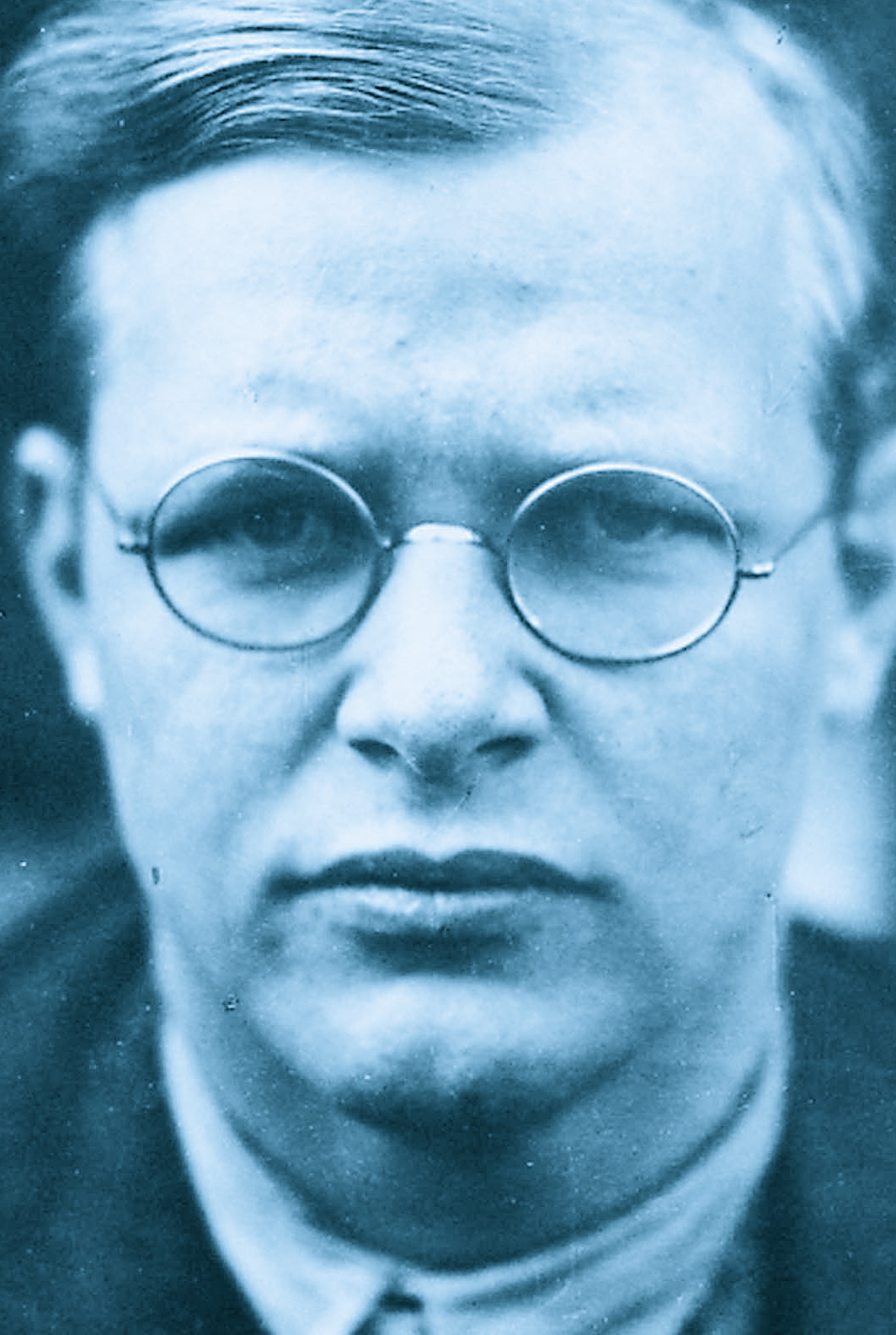
Dietrich Bonhoeffer, February 4, 1906 – April 9, 1945, was a German Lutheran pastor, theologian and martyr.   He was also a participant in the German resistance movement against Nazism and a founding member of the Confessing Church.   His involvement in plans by members of the Abwehr (the German Military Intelligence Office) to assassinate Adolf Hitler resulted in his arrest in April 1943 and his subsequent execution by hanging in April 1945, 23 days before the Nazis’ surrender.   His view of Christianity’s role in the secular world has become very influential.

***********

msnbc.com news services:  updated 2/22/2012 8:40:20 AM ET

In an effort to reach parishioners too busy to sit through an Ash Wednesday service, some ministers are bringing the ashes to them.

In Ohio, a church is offering a drive-thru Ash Wednesday blessing for parishioners.  The Rev. Patricia Anderson Cook of Mt. Healthy United Methodist Church in suburban Cincinnati plans to provide the service Wednesday evening in the church’s parking lot.

“Some people are very busy, and some people get a little intimidated walking into a church, this is for them,” Cook told the Cincinnati Inquirer.

In Montclair, N.J., two Episcopalian ministers offered “ashes to go” for commuters at a local train station.   That effort is part of a national campaign.

“More and more, people’s schedules keep them from attending church, especially those who commute into NYC, so we are taking the ashes to them,” Rev. Andrew Butler said.

Ash Wednesday marks the beginning of the Christian season of Lent, which concludes after 40 days with the celebration of Easter.

In addition to ashes, Cook, the suburban Cincinnati minister, will provide a church brochure and a Lenten booklet.

“It’s a drive-thru,” she said. “Not a drive-by.”

 Copyright 2012 The Associated Press. All rights reserved. This material may not be published, broadcast, rewritten or redistributed.


Leave a comment

Filed under Lent