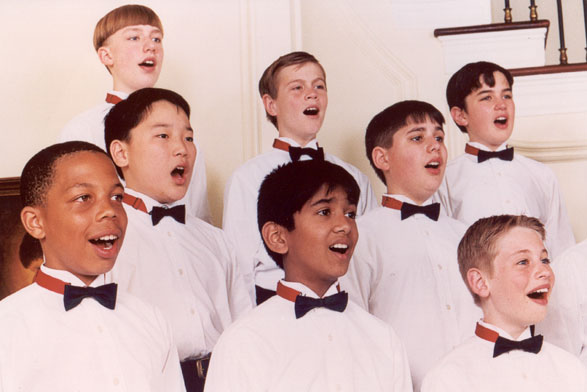
An Invitation to a Concert: The American Boy Choir

The American Boy Choir

Tuesday, February 28, 2012 at 7:00 p.m.


St. Peter’s Anglican Church

901 Thomasville Road – Tallahassee, FL 32303

For tickets, contact chris@saint-peters.net.

www.saint-peters.net

The American Boychoir is regarded as the United States’ premier concert boys’ choir.  Under the leadership of Fernando Malvar-Ruiz, the Litton-Lodal Music Director, The American Boychoir continues to dazzle audiences with its unique blend of musical sophistication, effervescent spirit, and ensemble virtuosity.  Boys in grades four through eight, reflecting the ethnic, religious, and cultural diversity of the United States, come from across the country and around the world, to pursue a rigorous musical and academic curriculum at the school.  The American Boychoir School, the only non-sectarian boys’ choir school in the nation, was founded in Columbus, Ohio, in 1937, and has been located in Princeton, New Jersey, since 1950.

Maintaining an active national and international touring schedule, the Boychoir performs with world-class ensembles, including the Boston Symphony Orchestra, the Philadelphia Orchestra, and the New York Philharmonic. The Boychoir regularly appears, as featured artists, with James Levine at the Tanglewood Music Festival and has performed with the internationally renowned soprano Jessye Norman, prominent jazz musician Wynton Marsalis, pop diva Beyoncé, and at Carnegie Hall with Sir Paul McCartney.

Often called upon for boy soloists, members of The American Boychoir have performed with the Baltimore Symphony Orchestra, the Berkshire Music Festival, and the Virginia Symphony Orchestra.

The American Boychoir has been extensively recorded on its own label, Albemarle Records, and broadcast on radio and television, with over forty-five commercial recordings.

The programs offered by The American Boychoir School are made possible, in part, through a grant by the New Jersey State Council on the Arts/Department of State, a partner agency of the National Endowment for the Arts.  Additional funding has been provided by the New Jersey Cultural Trust.

Leave a comment

Filed under Concert

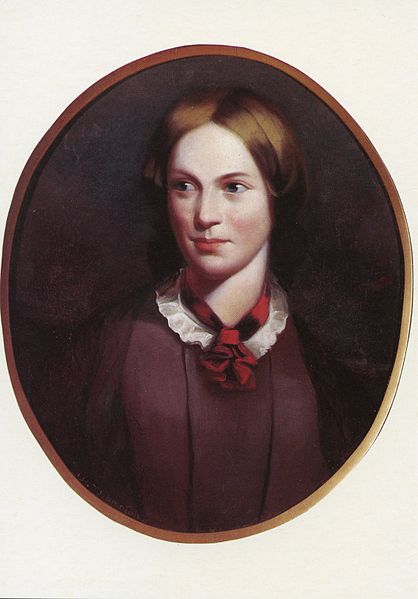
A Valentine from “Currer”

On Love:

Love is not so much a matter of romance as it is a matter of anxious concern for the wellbeing of one’s companion.

If you don’t love another living soul, then you’ll never be disappointed.

On Life:

But life is a battle: may we all be enabled to fight it well!

I try to avoid looking forward or backward and try to keep looking upward.

Better to try all things and find all empty, than to try nothing and leave your life a blank.

On Happiness and Cheerfulness:

There is no happiness like that of being loved by your fellow creatures and feeling that your presence is an addition to their comfort.

Cheerfulness, it would appear, is a matter which depends fully as much on the state of things within, as on the state of things without and around us.

On Friendship:

If we would build on a sure foundation in friendship, we must love friends for their sake, rather than for our own.

Friendship, however, is a plant which cannot be forced — true friendship is not a gourd, springing up in a night and withering in a day.

On Forgiveness:

Life appears to me too short to be spent in nursing animosity or registering wrongs.

On Courage:

I remembered that the real world was wide and that a varied field of hopes and fears,

of sensations and excitements, 

awaited those who had the courage to go forth into its expanse,

to seek real knowledge of life, amidst its perils.

“Currer Bell” was the nom de plume — not the nickname — of the British author, Charlotte Bronte.  

Charlotte Brontë (21 April 1816 – 31 March 1855)

was an English novelist and poet, the eldest of the three Brontë sisters who survived into adulthood, whose novels are English literature standards.

Margot’s Commentary:

Charlotte Bronte was an extraordinary woman of her time:  She published her book, Jane Eyre, under the pen name of “Mr. Currer Bell,” because of prejudice against woman authors.  Her two sisters also adopted nom de plumes:  Ann was “Acton Bell” and Emily was “Ellis Bell.”

Here is a question for you:  How would you describe the heroine of the book, Jane Eyre, in twenty-five words or less?  Here is my attempt:

“Jane is bravely willing to suffer any loss in life, in order to retain her integrity, honor, self-respect and independent spirit.”

Jane is a unique woman of virtue, substance, depth, wisdom,  intelligence, honesty, dignity, and imagination.  She understands and demonstrates, through her life, one of those most essential and vital truths about authentic, solid, and everlasting love between a man and a woman:  With clarity and without sentiment, she understands that love must be built upon a foundation of  mutual respect and trust between two equals.

Read the book, Jane Eyre, and read a biography on the author.  Discover the points at which their lives intersect.  Discover why Jane Eyre is one of my favorite novels and why Charlotte Bronte is one of my favorite authors.

1 Comment

Filed under Valentine's Day

A Valentine from “Will”

For Sunday Morning:

It is rather busy around our home on Sunday morning so I am posting this “Valentine” on Saturday night . . .

It will be easy for you to guess the full name of this famous British author, whose family gave him the nickname of “Will.”   He wrote 154 Love Sonnets, each of which would be perfect as the “sentiment” inside of a Hallmark card.  However, I only chose one for today.  Below the sonnet, I have included some keys to interpretation.

If you saw the film, “Sense & Sensibility,” with Emma Thompson, this sonnet will be very familiar to you.   Before the film [1994] I had never heard the poem:  When I heard Marianne [Kate Winslet] recite the sonnet, at the word, “bark,” the image of a dog floated before my eyes.  I hope at least one of my readers will assure me that I am not alone in this . . .

Sonnet 116:

Let me not to the marriage of true minds


Admit impediments. Love is not love


Which alters when it alteration finds,

Or bends with the remover to remove.

O no, it is an ever-fixèd mark


That looks on tempests and is never shaken;

It is the star to every wand’ring bark,

Whose worth’s unknown, although his height be taken.

Love’s not Time’s fool, though rosy lips and cheeks


Within his bending sickle’s compass come.

Love alters not with his brief hours and weeks,

But bears it out ev’n to the edge of doom.

If this be error and upon me proved,

I never writ, nor no man ever loved.

~~~~~~~~~~~~

Here are some clues to the interpretation of this sonnet, from The Top 500 Poems, Edited by William Harmon, Columbia Anthology:

“Shakespeare’s Julius Caesar claims to be as ‘constant as the northern star’ – that is, the Pole Star that seems not to move, while all other stars revolve around it and which can still be used in informal navigation.  Ink has been spilt over the reading of Line 8, which probably refers to the star [whose elevation or celestial altitude can be known by instruments] but may refer to the bark [ship].”

William Shakespeare (baptized 26 April 1564; died 23 April 1616) was an English poet and playwright, widely regarded as the greatest writer in the English language and the world’s pre-eminent dramatist.  He is often called England’s national poet and the “Bard of Avon.”  His surviving works, including some collaborations, consist of about 38 plays, 154 sonnets, two long narrative poems, and several other poems. His plays have been translated into every major living language and are performed more often than those of any other playwright. [Wikipedia]


Leave a comment

Filed under Valentine's Day

A Valentine from “Boz”

A loving heart is the truest wisdom.

Have a heart that never hardens, a temper that never tires, and a touch that never hurts.

To conceal anything, from those to whom I am attached, is not in my nature.  I can never close my lips, where I have opened my heart.

 Whatever I have tried to do in life, I have tried, with all my heart, to do it well.  Whatever I have devoted myself to, I have devoted myself completely.   In great aims and in small, I have always thoroughly been in earnest.

A silent look of affection and regard, when all other eyes are turned coldly away — the consciousness that we possess the sympathy and affection of one being, when all others have deserted us — is a hold, a stay, a comfort, in the deepest affliction, which no wealth could purchase or power bestow.


Charles John Huffam Dickens [7 February 1812 — 9 June 1870] was an English novelist, generally considered the greatest of the Victorian period.  Dickens enjoyed a wider popularity and fame than had any previous author during his lifetime and he remains popular, having been responsible for some of English literature’s most iconic novels and characters.  [Wikipedia]

Here are two slightly different explanations for the “Boz” nickname of Charles Dickens:

In December 1833, Charles Dickens’ first literary effort was published.  It was a sketch or essay entitled, ‘A Dinner at Poplar Walk.’  Other sketches soon followed.

Dickens wanted a memorable way of identifying the sketches as his.  He finally picked a nickname for himself.  One of his favorite characters in Goldsmith’s ‘Vicar of Wakefield’ was called Moses.  Moses became ‘Boses,’ which became ‘Boz.’  In 1836, a collection of the essays, entitled  ‘Sketches by Boz,’ was published and was a great success.  [www.perryweb.com]

Dickens said:  ” ‘Boz‘ was the nickname of a pet child, a younger brother, whom I had dubbed Moses, in honour of Goldsmith’s ‘Vicar of Wakefield,’ which, being pronounced ‘Bozes,’ got shortened into ‘Boz.’ “

The real name of the brother was Augustus.  Dickens’ own son was christened Charles Culliford Boz Dickens.

Dickens used a pen name for his first stories because he was, at the time, a serious political columnist, and the lightweight sketches and stories he first published might have damaged his credibility.”   [www.Wiki.answers.com]

Notes from Margot:

I assume that ‘Boz’ rhymes with ‘nose.’ 

For more information about Charles Dickens and other famous authors and their works of literature, see: www.AuthorsInk.com.  The creator of the blog, Dr. Elliot Engel, is entertaining AND scholarly.  Order books and CD’s, containing the lectures of Dr. Engel.

2 Comments

Filed under Valentine's Day

A Valentine from “Gil”

On Love:

Why be something to everybody when you can be everything to somebody?

Life exists for the love of music or beautiful things.

The way to love anything is to realize that it might be lost.

To love means loving the unlovable – or it is no virtue at all.

Forgiveness, Faith, and Hope:

To forgive means pardoning the unpardonable.

Faith means believing the unbelievable.

Hope means hoping when everything seems hopeless.

On Charity and Hope: 

Charity is the power of defending that which we know to be indefensible.

Hope is the power of being cheerful in circumstances which we know to be desperate.

It is true that there is a state of hope which belongs to bright prospects and the morning; but that is not the virtue of hope.

The virtue of hope exists only in earthquake and eclipse.

It is true that there is a thing crudely called charity, which means charity to the deserving poor; but charity to the deserving is not charity at all, but justice.

It is the undeserving who require it and the ideal either does not exist at all or exists wholly for them.

For practical purposes, it is at the hopeless moment that we require the hopeful man and the virtue either does not exist at all or begins to exist at that moment.

Exactly at the instant when hope ceases to be reasonable it begins to be useful.

Gilbert Keith Chesterton (29 May 187414 June 1936) was a British writer whose prolific and diverse output included works of philosophy, ontology, poetry, play writing, journalism, public lecturing and debating, literary and art criticism, biography, Christian apologetics, and fiction, including fantasy and detective fiction. He has been called the “prince of paradox.” [Wikipedia]

Note:  I do not know the preferred nickname for G. K. Chesterton but I hope he does not mind that I gave him one.   I thought “Gil” fitted him better than did “Bertie.”  I hope you agree.  [MBP]

2 Comments

Filed under Valentine's Day

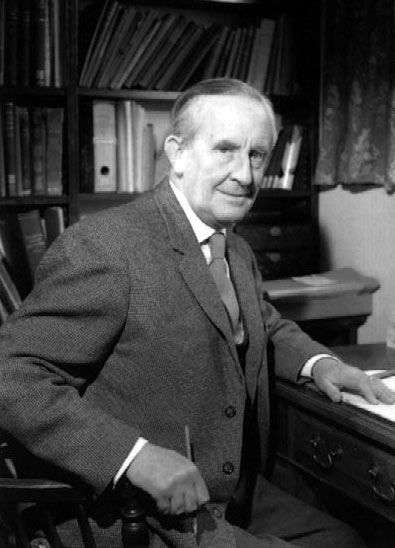
Two Valentines from “Tollers”


“Nearly all marriages, even happy ones, are mistakes:

in the sense that almost certainly

(in a more perfect world,

or even with a little more care in this very imperfect one)

both partners might be found more suitable mates.

But the real soul-mate is the one you are actually married to.”

~~J. R. R. Tolkein, “Tollers,”

from a letter to his son, Michael Tolkien, March 1941.


And here is an excerpt from a letter, written by J. R. R .Tolkien to his son, Christopher Tolkien.  In the letter, the father explains to the son why he wishes to include the name “Luthien” on the tombstone of his wife, Edith:

“She was (and knew she was) my Luthien.  I will say no more now.  

But I should like ere long to have a long talk with you.

For if, as seems probable, I shall never write any ordered biography — it is against my nature, which expresses itself about things deepest felt in the tales and myths — someone close in heart to me should know something  about things that records do not record:

The dreadful sufferings of our childhoods,  from which we rescued one another, but could not wholly heal wounds that later often proved disabling;  the sufferings that we endured after our love began — all of which (over and above personal weaknesses) might help to make pardonable, or understandable, the lapses and darknesses which at times marred our lives — and to explain how these never touched our depths nor dimmed the memories of our youthful love.

For ever (especially when alone) we still met in the woodland glade and went hand in hand many times to escape the shadow of imminent death before our last parting.”

John Ronald Reuel Tolkien,  [3 January 1892 — 2 September 1973]

He was an English writer, poet, philologist, and university professor, best known as the author of the classic high fantasy works The HobbitThe Lord of the Rings, and The Silmarillion.

P. S.

My son-in-law, Daniel, was born on Tolkien’s birth day, 01.03.1985.

My Professor and I were married on the exact day and year of Tolkien’s death:  09.02.1973.


1 Comment

Filed under Valentine's Day

A Valentine from “Jack”

What if Hallmark commissioned famous British authors to write the “sentiment” inside Valentine’s Day greeting cards?


We will start with this quote, from Clive Staples Lewis, called “Jack” by his friends and family:

“To love at all is to be vulnerable.

Love anything and your heart will be wrung and possibly broken.  

If you want to make sure of keeping it intact you must give it to no one, not even an animal.

Wrap it carefully ’round with hobbies and little luxuries; avoid all entanglements.

Lock it up safe in the casket or coffin of your selfishness.

But in that casket, safe, dark, motionless, airless, it will change.

It will not be broken; it will become unbreakable, impenetrable, irredeemable.

To love is to be vulnerable.” 

~~C. S. Lewis, The Four Loves

Leave a comment

Filed under Valentine's Day

Revision: “About Margot”

February 2012

Dear Friends & Family,

In 1952, my parents bestowed upon me the birth name, “Margo,” but decades later, I changed the spelling to “Margot:”  For the complete story, read the entry, Vision. 

I am a wife, mother, mother-in-law, grandmother, sister, aunt, and friend.  I am also a “breast cancer patient,” a connection to one out of every eight women.  In  June 2014, I received the designation, “breast cancer survivor.”

Stephen and I have been married since 1973.  It has been 40 wonderful years – but please — do not bother to ask me, for I never speak about those other years. 

My Professor, also known as Mr. Romance, does not conform to the “Hallmark” calendar — but he brings me surprise gifts, compliments, and breakfast in bed.

I humor My Professor by pretending to play the role of “Eliza Doolittle” to his “Henry Higgins.”  However, in truth, he performs “Rumpole” to my “Hilda” [“She Who Must Be Obeyed”].

Our two greatest gifts have been our children:  A son, Garrett [born 1979] and a daughter, Haley [born 1985].  In spite of our best efforts to “shake them off,” including moving away from their childhood home, they still managed to find our “empty nest.”

Garrett married the lovely Diana in 2018. They live and work in Tallahassee. We enjoy dining and attending cultural events. We also enjoy spending summer and winter vacations together.


Uncle Garrett and niece, Lucy, on her day of birth in 2011.


Haley, Daniel, and Benjamin:  Christmas Day 2010

Haley married Daniel in 2006 and they are parents to Benjamin [born in 2009], Lucy [born in 2011], Gwen [born in 2013], and Hildie [born in 2018].  I assure you that My Professor and I are not like those other “annoying grandparents.”  We are, in fact, quite worse.  From time to time, I will annoy my readers, by posting photographs and quotes about my grandchildren.

“Marmeee” with Benjamin [at one-week old] in 2009.

“Marmee” with Lucy, on her Baptismal Day, November 2011.

“Marmee” with Benjamin and Lucy:  Thanksgiving Day 2011.

“Marmee” with Lucy on Thanksgiving Day 2011.

I have never successfully constructed a garment, created a prize-winning recipe, or designed a room in our home.  However, I do construct, create, and design with words.  I speak and write the Queen’s English but I am quite willing to employ the King’s, if necessary.

I enjoy all things classical, ancient, and sacred:  spaces, gardens, architecture, music, books, art, and liturgy.  “Dr. Adventure” and I relish the challenge of staying awake until nine o’clock every evening, while we read the works of British authors:  among these are C. S. Lewis, J. R. R. Tolkien, Charles Dickens, Charlotte Bronte, and Jane Austen. We are collecting a library of British authors and BBC “Masterpiece Theatre” films.

You might say that My Professor and I are true Anglophiles:  We even went so far as to join St. Peter’s Anglican Cathedral in Tallahassee!

For fitness, we swim laps.  I swim faster than my husband to ensure that he will, after all these years, continue to chase after me.  We also do strength training together. I practice Tai Chi and drink Chai Tea. My indoor interests include calligraphy, reading, writing memoirs, and recording family histories.  However, I complete my domestic chores before pursuing other more stimulating hobbies.  Always.  Of course.  

[Revised 12.2018]

1 Comment

Filed under About Margot

Hide and Seek

Dear Readers,

I have previously written about Simple Pleasures:  Some of my fondest childhood memories include playing games with my siblings, cousins, and friends.  Borrowing a page from  Anne of Green Gables, we played outdoor games for hours:  “Hide & Seek,”  “Tag,”  “Sack Races,”  “Rover, Rover,” etc.

One day, I grew up and became “too old” for such games but I hope to watch my grandchildren play these games.

Like Rachel Lynde, from  Anne of Green Gables, “I am known as a woman who speaks her mind.”

So, brace yourself:

I’ve been dismayed about a phrase that I frequently hear: “God showed up.”  

If you use that phrase, please do not assume I am talking about you, personally.  I have heard this phrase from various sources, for several years.

I have been searching for a response to that phrase and here it is:

“If it is I who determines where God is to be found, then I shall always find a God who corresponds to me in some way, who is obliging, who is connected with my own nature.  

But if God determines where he is to be found, then it will be in a place which is not immediately pleasing to my nature and which is not at all congenial to me.  

This place is the Cross of Christ.  And whoever would find him must go to the foot of the Cross, as the Sermon on the Mount commands.  

This is not according to our nature at all; it is entirely contrary to it.  But this is the message of the Bible, not only in the New, but also in the Old Testament . . . “

~Dietrich Bonhoeffer, from Bonhoeffer:  Pastor, Martyr, Prophet, Spy, by Eric Metaxas

Dear friends, let us grow up and leave behind childish thinking and speaking, such as “God showed up.”

For, who are we to determine and declare this?

The Holy Trinity is indeed omnipresent!  He searches for us before we ever begin to search for Him.  He found us when we were lost.

Our immortal God is invisible.  Yet, our wise God is unceasingly at work in His creation.  Let us sing this hymn [below] and praise His Name!

Coram Deo,

Margot

Immortal, Invisible, God Only Wise

Immortal, invisible, God only wise,
In light inaccessible hid from our eyes,
Most blessed, most glorious, the Ancient of Days,
Almighty, victorious, thy great name we praise!

Unresting, unhasting, and silent as light,
Nor wanting, nor wasting, thou rulest in might;
Thy justice like mountains high soaring above
Thy clouds which are fountains of goodness and love.

To all life thou givest to both great and small;
In all life thou livest, the true life of all;
We blossom and flourish as leaves on the tree,
And wither and perish but nought changeth thee.

Great Father of glory, pure Father of light,
Thine angels adore thee, all veiling their sight;
All laud we would render: O help us to see
‘Tis only the splendour of light hideth thee.


3 Comments

Filed under theology and doxology

Groucho and I


I agree with Groucho Marx’s philosophy:

“I don’t want to belong to any club that will accept me as a member.”

I have never been a member of a club or sorority.  My image has never graced the Society Page.  No sports team, small or large, from elementary through high school, has ever accepted me as a player.

However, for half a century, I have had one persistent goal:  to be an excellent swimmer.

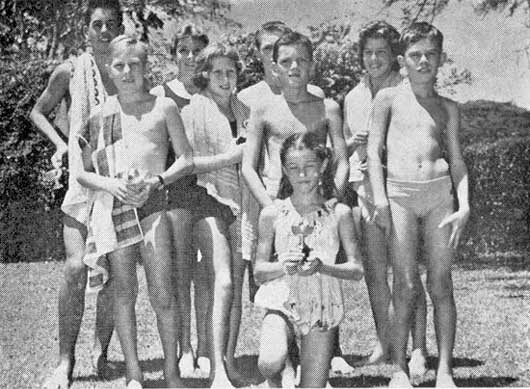
My quest began on a summer morning, in 1962, when I was ten years of age:  It was the final day of swim lessons and it was my turn to demonstrate one lap of “free style” to the other students and to the instructor.

I was never afraid of the water and I never worried about appearing foolish, either.  I confidently “gave it my all” and churned through the water.  I assumed that I appeared competent — although, of course, I could not see myself.  When I finished my lap, I popped my head up and was surprised to hear and see . . . that the other students were . . . . laughing . . . hysterically . . . at  . . . me.

I joined in the laughter.  What else could I do?

I was dismayed and disappointed but I was not destroyed.  On that summer morning, I resolutely determined that becoming an excellent swimmer would be my life goal.  I would never again give any person an opportunity to laugh at me  . . .

. . .  about swimming, anyway . . .

Over the years, I took adult swim lessons from FSU Swim Team Coaches and private lessons from members of the FSU Swim Team.  There were many interruptions during those years.  However, about five years ago, I was accepted onto the Masters Swim Team:  I did not compete but I received excellent training and I relished the camaraderie.

I told you all of this so that you might have reason to exult with me:

I am now a Bona Fide Member of the Florida State University [FSU] Leach Recreation Center!  

Thanks to My Professor, our vehicle has a Faculty “Clicker & Sticker,”  which allows access to the gated Faculty Parking Lot, right next to Leach.

Also, thanks to My Professor, I have an FSU Identification Card, which allows me access into Leach.

AND I have my own locker in the Women’s Faculty & Staff Locker Room.  

I am almost 60 and I have achieved the goal:  I am not a fast swimmer but I am a competent, long-distance one.

My Professor usually finishes his laps before I complete mine, so sometimes he climbs the stairs to the “balcony” and watches me.  He assures me that I appear “masterful, elegant, and proficient.”  

These days, I rarely think about that morning, fifty summers ago.  No doubt, my fellow swim lesson buddies are now enjoying their Golden Years, as I am.  I wish them well and hope that they are healthy and fit.  I do not resent their past immaturity in the least.  On the contrary, I am grateful to them:  They were the catalyst — the jump start — for my quest to earn swimming success and fitness.

Those unaware young students gave me another opportunity, for which I say “Thanks:”  They gave me my first practice at learning to laugh at myself.  Laughter may not improve the unfortunate events in my life but laughter, the “good medicine, ” certainly makes them more bearable.

And my hearty thanks to you, Mr. Groucho Marx:

“I, not events, have the power to make me happy or unhappy today.  I can choose which it shall be.  Yesterday is dead, tomorrow hasn’t arrived yet.  I have just one day, today, and I’m going to be happy in it.”

“Getting older is no problem. You just have to live long enough.”

[Quotes by Groucho Marx]


1 Comment

Filed under Fitness