Holy Week Hymnody: At the Cross of Jesus


stainedgl-altar

AT THE CROSS OF JESUS

A remarkable five-part hymn by Edward Monro: “The Story of the Cross”(1864).

[From Anthony Esolen, Touchstone Journal]:

The first part is The Question:


See Him in raiment rent,

With His blood dyed:

Women walk sorrowing

By His side.

Heavy that Cross to Him,

Weary the weight:

One who will help Him stands

At the gate.

Multitudes hurrying

Pass on the road:

Simon is sharing with

Him the load.

Who is this traveling

With the curst tree—

This weary prisoner—

Who is He?

The second part is The Answer:


Follow to Calvary,

Tread where He trod;

This is the Lord of life—

Son of God.

Is there no loveliness—

You who pass by—

In that lone Figure which

Marks the sky?

You who would love Him, stand,

Gaze at His face;

Tarry awhile in your

Worldly race.

As the swift moments fly

Through the blest week,

Jesus, in penitence,

Let us seek.


In the third part of the poem, we address the Lord personally:


On the Cross lifted up,

Thy face I scan,

Scarred by that agony—

Son of Man.

Thorns form Thy diadem,

Rough wood Thy throne,

To Thee Thy outstretched arms

Draw Thine own.

Nails hold Thy hands and feet,

While on Thy breast

Sinketh Thy bleeding head

Sore opprest.

Loud is Thy bitter cry,

Rending the night,

As to Thy darkened eyes

Fails the light.

Shadows of midnight fall,

Though it is day;

Friends and disciples stand

Far away.

Loud scoffs the dying thief,

Mocking Thy woe;

Can this my Savior be

Brought so low?

Yes, see the title clear,

Written above,

‘Jesus of Nazareth’—

Name of love!

What, O my Savior dear,

What didst Thou see,

That made Thee suffer and

Die for me?

In the fourth part the Lord responds:


Child of my grief and pain!

From realms above,

I came to lead thee to

Life and love.

For thee my blood I shed,

For thee I died;

Safe in thy faithfulness

Now abide.

I saw thee wandering,

Weak and at strife;

I am the Way for thee,

Truth and Life.

Follow my path of pain,

Tread where I trod:

This is the way of peace

Up to God.

So in the final part of the poem, the speaker replies to Jesus with eager love:


O I will follow Thee,

Star of my soul!

Through the great dark I press

To the goal.

Yea, let me know Thy grief,

Carry Thy cross,

Share in Thy sacrifice,

Gain Thy loss.

Daily I’ll prove my love

Through joy and woe;

Where Thy hands point the way,

There I go.

Lead me on year by year,

Safe to the end,

Jesus, my Lord, my Life,

King and Friend.

esolenanthony

Anthony Esolen is Professor of English at Providence College in Providence, Rhode Island, and the author of The Ironies of Faith (ISI Books), The Politically Incorrect Guide to Western Civilization (Regency), and Ten Ways to Destroy the Imagination of Your Child (ISI Books).  He has also translated Tasso’s Gerusalemme liberata (Johns Hopkins Press) and Dante’s The Divine Comedy (Random House). He is a senior editor of Touchstone Journal.

2 Comments

Filed under Holy Week, Hymns, Lent, Palm Sunday, Passiontide, theology and doxology

What Is the Gospel?

stainedgl-altar

Dear Readers,

For your Lenten meditation, I offer a clear, concise, yet deeply theological sermon on “What Is the Gospel?” by Fr. Eric Dudley.

Coram Deo,

Margot


FrDudley2011

Fr. Eric Dudley is a native of South Carolina, has been married to Belinda for twenty-five years, and together they have three children: Katharine, Christopher, and Margaret.

Fr. Dudley received his B.A. from Wofford College in South Carolina, an M.Div. from Vanderbilt University, an S.T.M. from Yale University, and is in the process of a D.Min. from the University of the South.

Having served parishes in upstate South Carolina for nine years, he came to Florida in 1995 as rector of St. John’s Episcopal Church.  In October of 2005, Fr. Dudley left the Episcopal Church to create St. Peter’s Anglican Church.

Fr. Dudley enjoys reading (especially Church history, biographies, and the novels of Trollope, Maugham, and P. D. James), gardening, biking, playing cards, and time with his family.

Leave a comment

Filed under Interpretation of Scripture, Lent, Passiontide, theology and doxology

A Valentine from “Victor”

French Valentine Postcard2

Dear Readers,

Last year, I posted a series of “Valentines” from British authors.  This year, I am reading the masterpiece, Les Miserables, and I share these quotes from the book:

You may read about Victor Hugo, by clicking the link below.

Coram Deo,

Margot

images-2

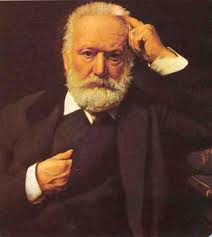
Victor Hugo biography: Wikipedia

  • “You can give without loving, but you can never love without giving.  The great acts of love are done by those who are habitually performing small acts of kindness.  We pardon to the extent that we love.  Love is knowing that even when you are alone, you will never be lonely again and great happiness of life is the conviction that we are loved.  Loved for ourselves and even loved in spite of ourselves.” 


  • “To love or have loved is all-sufficing. We must not ask for more.  No other pearl is to be found in the shadow folds of  life.  To love is an accomplishment.” 


  • “He said to himself that he really had not suffered enough to deserve such radiant happiness, and he thanked God, in the depths of his soul, for having permitted that he, a miserable man, should be so loved by this innocent being.”  [Jean Valjean about Cossette]


  • “Love partakes of the soul itself.  It is of the same nature. Like it, it is a divine spark.  Like it, it is incorruptible, indivisible, imperishable; it is the point of fire which is within us, which is immortal and infinite, which nothing can limit and nothing can extinguish.” 


  • “What a grand thing it is to be loved!  What a far grander thing it is to love!  The heart becomes heroic, by dint of passion.” 


  • “The soul falls into contemplation before this sanctuary, where the celebration of love is held.”


  • “I encountered in the street a penniless young man who was in love.  His hat was old and his jacket worn, with holes at the elbows; water soaked through his shoes, but starlight flooded through his soul.”


  • “You look at a star for two reasons, because it is luminous, and because it is impenetrable. You have beside you a sweeter radiance and a greater mystery, woman.” 


Leave a comment

Filed under Marriage & Wedding, St. Valentine's Day, Valentine's Day

A Good Friday Meditation: O Sacred Head, Now Wounded

sacredhead

Dear Readers,

I encourage you to listen to the entire recording of J. S. Bach’s Matthew Passion.  

B000035QCS.01_SL75_

Bach’s St. Matthew Passion

Within the recording you will hear the tune of the hymn that we know as “O Sacred Head, Now Wounded.”  


O Sacred Head Now Wounded: Hymnal 1982

“O Sacred Head Now Wounded” Wikipedia

Text from Hymnal 1982:

1. O sacred head, sore wounded,
defiled and put to scorn;
O kingly head, surrounded
with mocking crown of thorn:
What sorrow mars thy grandeur?
Can death thy bloom deflower?
O countenance whose splendor
the hosts of heaven adore!

2. Thy beauty, long-desired,
hath vanished from our sight;
thy power is all expired,
and quenched the light of light.
Ah me! for whom thou diest,
hide not so far thy grace:
show me, O Love most highest,
the brightness of thy face.

3. In thy most bitter passion
my heart to share doth cry,
with thee for my salvation
upon the cross to die.
Ah, keep my heart thus moved
to stand thy cross beneath,
to mourn thee, well-beloved,
yet thank thee for thy death.

4. What language shall I borrow
to thank thee, dearest friend,
for this thy dying sorrow,
thy pity without end?
Oh, make me thine for ever!
and should I fainting be,
Lord, let me never,never,
outlive my love for thee.

5. My days are few, O fail not,
with thine immortal power,
to hold me that I quail not
in death’s most fearful hour;
that I may fight befriended,
and see in my last strife
to me thine arms extended
upon the cross of life.

Text Information
First Line: O sacred head, sore wounded
Author: Paul Gerhardt, 1607-1676
Translator (sts. 1-3, 5): Robert Seymour Bridges, 1844-1930
Translater (st. 4): James Waddell Alexander, 1804-1859
Publication Date: 1982
Meter: 76. 76. D
Language: English

Tune Information
Name: HERZLICH TUT MICH VERLANGEN (PASSION CHORALE)
Composer: Hans Leo Hassler, 1564-1612
Adapter and Harmonizer: Johann Sebastian Bach, 1685-1750
Meter: 76. 76. D
Key: a minor or modal

Lyrics (J.W. Alexander’s version, 1830)

O sacred Head, now wounded, with grief and shame weighed down,
Now scornfully surrounded with thorns, Thine only crown;
How pale Thou art with anguish, with sore abuse and scorn!
How does that visage languish, which once was bright as morn!

What Thou, my Lord, hast suffered, was all for sinners’ gain;
Mine, mine was the transgression, but Thine the deadly pain.
Lo, here I fall, my Savior! ’Tis I deserve Thy place;
Look on me with Thy favor, vouchsafe to me Thy grace.

Men mock and taunt and jeer Thee, Thou noble countenance,
Though mighty worlds shall fear Thee and flee before Thy glance.
How art thou pale with anguish, with sore abuse and scorn!
How doth Thy visage languish that once was bright as morn!

Now from Thy cheeks has vanished their color once so fair;
From Thy red lips is banished the splendor that was there.
Grim death, with cruel rigor, hath robbed Thee of Thy life;
Thus Thou hast lost Thy vigor, Thy strength in this sad strife.

My burden in Thy Passion, Lord, Thou hast borne for me,
For it was my transgression which brought this woe on Thee.
I cast me down before Thee, wrath were my rightful lot;
Have mercy, I implore Thee; Redeemer, spurn me not!

What language shall I borrow to thank Thee, dearest friend,
For this Thy dying sorrow, Thy pity without end?
O make me Thine forever, and should I fainting be,
Lord, let me never, never outlive my love to Thee.

My Shepherd, now receive me; my Guardian, own me Thine.
Great blessings Thou didst give me, O source of gifts divine.
Thy lips have often fed me with words of truth and love;
Thy Spirit oft hath led me to heavenly joys above.

Here I will stand beside Thee, from Thee I will not part;
O Savior, do not chide me! When breaks Thy loving heart,
When soul and body languish in death’s cold, cruel grasp,
Then, in Thy deepest anguish, Thee in mine arms I’ll clasp.

The joy can never be spoken, above all joys beside,
When in Thy body broken I thus with safety hide.
O Lord of Life, desiring Thy glory now to see,
Beside Thy cross expiring, I’d breathe my soul to Thee.

My Savior, be Thou near me when death is at my door;
Then let Thy presence cheer me, forsake me nevermore!
When soul and body languish, oh, leave me not alone,
But take away mine anguish by virtue of Thine own!

Be Thou my consolation, my shield when I must die;
Remind me of Thy passion when my last hour draws nigh.
Mine eyes shall then behold Thee, upon Thy cross shall dwell,
My heart by faith enfolds Thee. Who dieth thus dies well.

Leave a comment

Filed under Crucifixion, Good Friday, Hymns, Lent, Passiontide, theology and doxology

Exploring the Gospel of John: 16

EXPLORING THE GOSPEL OF JOHN

By the Rev. Dr. Michael Petty [Fr. Michael Petty]

St. Peter’s Anglican Church [2006]

Note:  This entry completes the series.  There are no notes for the remainder of the Gospel of John.

“Farewell . . . For Now” (IV)

John 16:4b-33

  1.  16:4b-15:

This section returns to two previous themes:  Jesus’ return to the Father (13:1) and the coming of the Holy Spirit (14:15-17, 25-26; 15:26-27).  The phrase, “these things,” of 16:4b, seems to refer to the warning about persecution and about the role of the Spirit. “This hour” brings an imperative to instruct the disciples.  Jesus acknowledges the impact that “this hour” has had on the disciples; sorrow fills them  (16:6).  Yet, he also reminds them that it is to their advantage that he is going away:  His departure is not a tragic accident but is part of the plan of God.  Jesus has gone to prepare a place for the disciples and promises that they will be with him (14:1-4).  He tells them that his work of revealing the Father will continue in them (14:12-14) and that he and the Father will come to dwell with them (14:15-21).

Jesus now makes very explicit the fact that the coming of the Spirit will be another fruit of his “departure.” (Note 14:18.)   In the references to the Holy Spirit thus far, it is clear that the Spirit will enable the disciples to carry on Jesus’ witness.  As the Greek name for the Holy Spirit, paraklatos, suggests, however, the nature of this witness is both positive and negative.   Just as Jesus’ witness has had an accusatory dimension, so will that of the paraklatos.  Because of the Holy Spirit, the witness of the disciples will have a prosecuting dimension:  They will be pointing out what is wrong with the world.  The language here is juridical in nature.  The Spirit will secure convictions against the world on three counts:

First, the Spirit will convict the world sin — the sin of unbelief.

Second, the Spirit will convict the world for the wrong judgment it made about Jesus.  The Holy Spirit will make it clear that the world’s verdict on Jesus was wrong and that God has reversed the verdict.

Third, the Spirit will convict the world because He will convict the ruler of the world.  (Note 12:31 and 16:11.)  The witness of the Spirit results in a reversal of values and undermines the world’s basic assumptions.  But this witness of the Spirit, against the world, is ultimately for the world, as the Spirit-nourished witness of the disciples anticipates the final judgment.

16:12-15 returns to the theme of the Spirit’s work.   Because the disciples cannot receive all that Jesus wishes to impart to them, the Spirit will come to “guide you into all the truth” (16:13).  Here, the word “truth” is not an idea or a set of ideas but is Jesus himself (14:6).  Like Jesus, the Spirit will not speak on his own authority but on that of the Father and, just as Jesus has glorified the Father, so the Spirit will glorify Jesus.   Once again, it is clear that the Spirit does not impart random and independent revelations but gives to the disciples what Jesus has given to him (16:15).

(2) 16: 16-24:

This section continues the theme that emphasizes Jesus’ going away as a good thing but without reference to the Holy Spirit.   Jesus’ going to the Father (16:17) means that his disciples will not see him for a time but then, later, they will see him.  The disciples will see him after the resurrection and this will have a decisive effect upon them.  It is clear that the disciples themselves have not grasped this important point (16:17).  Having failed to grasp this point, they are also unable to understand the promise that Jesus leaves with them:  “your sorrow will turn into joy” (16:20).  The resurrection will bring about a great reversal.  The metaphor in 16:21 is important and Isaiah 26:16-21; 66:7-17 provides the metaphor:  It describes the travail of Israel which, when Israel passes through it, leads to salvation.  In contrast to the present moment, there will come a time, after the resurrection, in which the burden of the lack of understanding of the disciples will lift (16:23):  They will understand the reversal that God has brought about and what it means for Jesus to return to the Father.   And because of their intimate relationship with Jesus, the Father will grant to the disciples his assistance, in carrying on Jesus’ witness (16:23).

(3) 16:25-33:

16:25  probably refers back to texts like 14:25-26 and, thus, to the work of the Spirit.   After the passing of  “this hour,” the Spirit will interpret for the disciples what has happened and what these events mean.  A summary of this interpretation follows, in 16:26-28:  The clear implication is that this Gospel is the fruit of the interpretive work of the Spirit:  It was imperative  for the Spirit to undertake this work before the writing of this text.  (Note 20:31.)  The understanding to come stands in stark contrast with current incomprehension, as 16:29-30 expresses.  As Jesus’ question in 16:31 implies, the disciples do not yet really believe and will manifest this unbelief, when they scatter and  when they “will leave me alone.”  In fleeing from arrest, in abandoning Jesus, the disciples do not show that they have lost their faith — for they do not yet actually possess it:  This faith comes later.  Even in his state of abandonment, however, Jesus is not alone, “for the Father is with me” (16:32).  The final statement of this whole discourse in 16:33 summarizes the whole in that, ironically, Jesus’ departure will be the foundation of the disciples’ peace — a peace that is not merely a subjective feeling.  It is precisely Jesus’ victory, his return to the Father, which establishes the victory of God.  The disciples, through the Spirit, will know that Jesus has overcome the world and this reality will be the foundation of an eschatological peace — a peace that will be present, even in the midst of persecution.

Questions for Reflection

(1) In what ways does the Holy Spirit bear witness to Jesus today? How do we discern this witness?

(2) In what ways does Jesus’ victory over the world give us peace? What are some ways in which we can live more fully into this peace?

Leave a comment

Filed under discipleship, Interpretation of Scripture, The Gospel of John, theology and doxology

Exploring the Gospel of John: 15

EXPLORING THE GOSPEL OF JOHN

By the Rev. Dr. Michael Petty [Fr. Michael Petty]

St. Peter’s Anglican Church [2006]

Farewell . . . For Now (III)

John 15:1-27

(1) 15:1-17:

(a) 15:1-11:

Jesus identifies himself as the vine and the Father as the vinedresser.  This identification draws upon an important image from the Old Testament:  the image of Israel as God’s vineyard or God’s vine (Isaiah 5:1-7; 27:2-6; Psalm 80:8-19; Jeremiah 2:21; 6:9; 8:13; 12.10).  Identifying Israel as the vineyard or vine automatically identifies God as the vineyard owner or the one who cultivates the vines.  By so identifying himself, Jesus makes it clear that he is the true representative of Israel.  This identification also means that it is Jesus who establishes the connection between the vine’s branches (Jesus’ disciples) and the vinedresser (God).

15:2 introduces two important themes, with respect to God’s relation to his people:

The first theme is judgment upon the vine branches that bear no fruit: fruitfulness is clearly a criterion of God’s judgment, in that God expects his people to bear fruit.

The second follows on the first:  God not only removes the unfruitful branches but he also prunes the fruitful branches to make them even more fruitful; the importance of fruitfulness is again emphasized.  “Already you are clean because of the word I have spoken to you” (15:3).  The theme of being clean first appeared in 13:10, where Jesus pronounces that the disciples are clean (with the exception of Judas).  What Jesus seems to mean is that his teaching has cleansed the disciples and has placed them in a relationship with him, so as to enable them to bear fruit.  There is no question here of the disciples having some kind of “independence” from Jesus, as if their cleansing was a one-time event, which then enabled them to do things on their own.  The language of “abiding” completely undercuts all thought of independence and demands fruitfulness.  “As the branch cannot bear fruit by itself unless it abides in the vine, neither can you unless you abide in me.” (15:4)

What the language offers here is something of an equation, which offends modern ears:  complete dependence upon Jesus = fruitfulness.  It is important to notice that the vine / vinedresser imagery is a perfect way of restating the theme of Chapter 14:  that Jesus’ work of bearing witness to the Father will continue in the disciples.  The “work” of the vine is carried out in its branches, the bearing of “fruit” (grapes).  Lest there be any doubt about this, we have the blunt admonition that “apart from me you can do nothing” (15:5).  The theme of judgment on unfruitful branches, first hinted at in 15:2, returns in a way that is unmistakable, in 15:6.  This imagery, too, has its source in the Old Testament (note particularly Ezekiel 15).

15:7 returns to the theme of prayer, which 14.3 first introduced, but makes more clear the link between obedience and answered prayer:  “If you abide in me . . .” clearly refers to obedience to Jesus’ teaching, as 15.10 makes clear.   Note the balance between “keeping my commandments” and “abiding in my love” and Jesus’ keeping of his Father’s commandments and abiding in his Father’s love.  The point is that if Jesus had not been obedient to the Father’s mission and had, finally, avoided the cross, there would be no grounds to say that the Son loves the Father.   Likewise, obedience to the Son is the emblem of abiding in his love.  The mission of the disciples and the mission of Jesus parallel each other, in that the fruitfulness of the disciples’ mission glorifies the Father, just as the fruitfulness of Jesus’ mission does the same thing (15:8).  But this obedience and fruitfulness is not a joyless burden — because Jesus will bring to the disciples the same love that he has from his Father (15:9).  It is precisely by “abiding” in the vine that the disciples will experience a joy that is “full” (15:11).

(b) 15:12-17:

15:12 essentially repeats 13:34.  Once again, the readers understand that central characteristic of the Church is the willingness of Jesus’ followers to embody the self-sacrificial love of Jesus.  Their love is rooted in his.  The richness of Jesus’ love, mentioned in 15:13, is explicated in 15:15.  While Jesus is their superior, he has made the disciples into his friends; they are no longer simply servants who follow instructions simply because they come from the superior.  Rather than simply following instructions, the disciples are to know what Jesus’ intentions are.  Jesus has not kept aside some “secret knowledge” for himself that he is keeping from the disciples but “all that I have heard from my Father I have made known to you” (15:15).  15:16 emphasizes the experience of Israel:  that it is God who calls the disciples; it is God’s prior action which creates Israel and then the Church, neither of which is a volunteer organization.  While God calls the disciples to bear fruit, their fruit bearing is dependant upon their continuing relationship to Jesus and upon the fact that it is his intention and purpose: what is involved here is more than human religiosity and effectiveness.

(2) 15:18-16:4:

The “world” which hates Jesus is not simply everything around us.  John uses “world” (kosmos) in a very strict sense to mean “those structures and orders of creation that are opposed to God.”   Another sign of the disciples’ conformity to Jesus’ mission (in addition to self sacrificial love) is the response of the world’s hatred.  The theme of calling re-emerges here (see 15:16):  “If you were of the world, the world would love you as its own; but because you are not of the world, but I chose you out of the world, therefore the world hates you” (15:19).  Notice that this calls for a shift in thinking.  When they experience the ill-will of the world, the disciples are not to wonder about their “effectiveness” but to be aware that this is a sign of their conformity to Jesus’ mission.  The disciples must live in a situation in which the response to their word is just as mixed as the response to Jesus’ word.  The disciples (10:20) should expect both persecution and obedience. The disciples will face opposition but they will not take it personally, since they will face opposition for the very same reason that Jesus faced opposition: “because they do not know him who sent me.” (15:20)

Because the disciples carry on Jesus’ mission, with Jesus in their midst, the rejection of them is a rejection of the one who sent them:  “whoever receives the one I send receives me, and whoever receives me, receives the one who sent me” (13:20).  The same principle applies to rejection: “Whoever hates me hates my Father also” (15:23).  15:24 represents the negative aspect of Jesus’ ministry.  He has come primarily to do the Father’s works but for those who reject what he does, judgment has occurred because to reject the one sent by the Father is to reject the Father and, thus, to hate him.  Jesus’ witness makes sin impossible to cover up or ignore.

The phrase “they hated me without cause” (15:25) is from the Greek version of Psalms 35:19 and 69:4.  The purpose of this citation is to show that the rejection of Jesus is part of the will of the Father, though this in no way diminishes the culpability of those who reject him.  We should not view the human rejection of Jesus as indicating the divine rejection of Jesus — only that such a rejection by Israel was foreseen.

In 15:26-27, we return to the theme of the Holy Spirit, already mentioned in 14:15-17, 25-26.  Once again, the Spirit is connected to the witness of the Church.  In accord with Deuteronomy 17:6, which requires two witnesses to establish something, there will be two witnesses to Jesus: the disciples and the Spirit.  It is the Spirit who enables the Church to bear a fruitful witness, even with the hatred of the world directed against it.

The final sub-section of this section, 16:1-4, makes it clear why the disciples are being told all this.  This discourse is aimed at preparing the disciples so that, in the fact of persecution and hostility, they will not fall away into apostasy.

Questions for Reflection

(1)  Are Christians persecuted in any way in our culture?  Have you ever had to deal with persecution?

(2)  In what ways can we manifest joy, even in the midst of difficulty?

Leave a comment

Filed under discipleship, Interpretation of Scripture, The Gospel of John, theology and doxology

Exploring the Gospel of John: 14

EXPLORING THE GOSPEL OF JOHN

By the Rev. Dr. Michael Petty [Fr. Michael Petty]

St. Peter’s Anglican Church [2006]

EXPLORING THE GOSPEL OF JOHN

Farewell . . . For Now (II)

John 14:1-31

1.  Readers will find the heart of Jesus’ “Farewell Discourse” (13:31-16:33) in 14:28, which states:  “If you loved me, you would have rejoiced, because I am going to the Father.”  The subject is Jesus’ future and his future secures the future of the disciples.  Because Jesus’ future is completely secure, so is that of the disciples.  Three successive questions, each from a different disciple, punctuate this section of the discourse.   Each of the three questions provides Jesus with the opportunity to develop the theme of why his physical departure is a good thing.

2.  14:1-7: 14:1 sets the theme for this section:  “Do not let your hearts be troubled” and “Believe in God; believe also in me” are directly related.   Belief in God is also belief in Jesus and this belief makes it possible for the disciples to face “this hour” untroubled.  Jesus’ departure is good because this means that he has prepared a way to “my Father’s house” (14:2), a phrase that refers to the afterlife.  Jesus is departing to return to God and this return prepares a way for his followers.  Note that Jesus has answered Peter’s question of 13:36.  Jesus’ coming again and taking the disciples to himself (14:3) is apocalyptic language (see I Thessalonians 4:15-17) and refers not to the immediate consequences of Jesus’ death but to the ultimate consequences.   Jesus gives to the disciples the assurance that, although he is physically departing, he will come to them and gather them to himself.  Thomas’ question about the way to the Father allows Jesus to make an important declaration: “I am the way, and the truth, and the life” (14:6).  The immediate context of this claim is Jewish convictions about Torah being the way to God (cf. Psalm 119:30). The force of this declaration is that Jesus is God’s way to himself, since the Son is the Father’s own Word, revelation, and life giving power.   The Son does not merely communicate accurate information about the Father but grants the power, to those who believe in him, to become children of God (1:12).  The claim, which the Son makes, that he is the only way to the Father, is not an arbitrary one.  He bases it upon the very identity of the Son.  To know the Son is to know the Father (14:7) because the Son shares all that the Father is and knows him completely.

3.  14:8-14:  Phillip’s request, to “show us the Father” (14:8) allows Jesus to again emphasize an important point:  “Whoever has seen me has seen the Father” (14:9) makes the nature of the Son’s mission clear: The Son introduces people to genuine knowledge of the Father and a living relationship with him.  Through his signs and, finally, through his death and resurrection, the Son reveals the Father’s glory and character.  In the Son, the Father displays himself.   The life of the Son is perfectly transparent to the Father, making it clear that “I am in the Father and the Father is in me” (14:10) and that “the Father who dwells in me does his works” (14:10).  God gives this revelation – not for the purpose of allowing people to enter into a state of private religious bliss or enlightenment — but to put them into the Father’s service.  Jesus’ “departure” will enable Jesus’ mission of bearing witness to the Father to continue through the disciples: “ . . . whoever believes in me will also do the works I do; and greater works than these ill he do, because I am going to the Father” (14:12).  The works of the disciples will be “greater” — not in the sense of being more important or astounding — but in the sense of [a greater] extent (in the sense of Acts 1:8).  The ministry that Jesus undertook, of revealing the Father, will not come to an end with his death or resurrection.   It is in this light that we need to read 14:13-14.  Jesus is not promising to grant the disciples their every wish.   The promise of answered prayer presupposes that disciples are being incorporated into Jesus’ mission, in the same way in which he was – completely and self-sacrificially.   It will be the Church’s life of prayer, emphasizing her complete dependence upon the Son, that will sustain the Church in her mission of carrying out Jesus’ mission.  Here, we get the basic understanding of what the Church is, in terms of her fundamental reality:  a community united to Christ and in Christ, sent and sustained to continue the witness of Jesus — a witness to the world and against the world.

4. 14:15-31: This section introduces the crucial subject of the Holy Spirit.  Note that 14:15 connects love with obedience:  Love, here, is not a sentiment but an act of obedient service.  The “commandments” in view are to wash one another’s feet (13:14-15) and to believe in Jesus (14:1).

There can be no claim to love Jesus, apart from obedience.  It is important to notice that Jesus identifies the Holy Spirit in 14:16 as “another paraklatos.”  This implies that we are to also consider Jesus to be a paraklatos, an Advocate or Helper (in the sense that the Old Testament refers to God as the helper of Israel).  Jesus’ role has been to bear witness for God and to bear witness against the world.

It is through the Holy Spirit in the Church that this witness will continue.  14:16-17 and 14:25-26 make it clear that the Church is a creation of the Trinity, created by the Father in the Son and through the Holy Spirit and indwelt by the Trinity; through the Spirit, the Father and the Son come to indwell the Church (14:23).  While the Spirit is clearly distinct from the Son, his principle ministry is to bear witness to the Son, “to teach you all things and bring to your remembrance all that I have said to you” (14:26). What seems to be ruled out here is the notion that the Spirit will make available “new revelations” which go beyond what the Son has disclosed or revealed.   If the Father bears witness to himself, in the person of the Son, then the Father bears witness to his own witness to himself in the person of the Spirit.  By referring to both the Son and the Spirit, using the term paraklatos, this draws our attention to two distinct ways in which God accomplishes his one work.   It is precisely the presence of the Spirit, who will grant peace to the Church.  This peace is not like the world’s peace, given conditionally and as the product of compromise, but the Spirit gives peace completely and unconditionally and we acquire [receive] it, not by getting things, but by complete self-surrender to Jesus’ mission.   It is Jesus’ own peace, which is not peace in the absence of difficulty, but peace in the very presence of difficulty, suffering, and anguish.  While the ultimate consequence of Jesus’ departure will be that the disciples (and those who follow them) enter into eternal fellowship with God, the immediate consequence will be that they will see him and know that he will not leave them.  (14:18-19).

Questions for Reflection

(1) Why does it seem that we misunderstand the Holy Spirit?  How does this section of John correct misunderstandings or deepen your understanding of the Spirit?

Leave a comment

Filed under discipleship, Interpretation of Scripture, The Gospel of John, theology and doxology

What Is the Eucharist?

5bb-institution-of-the-eucharist


Ash Wednesday, February 13, 2013

At St. Peter’s Anglican Church Tallahassee:
The penitential service of Lent begins on Ash Wednesday, February 13, and encompasses the forty days before Easter [March 31.]

Ash Wednesday Services with the Imposition of Ashes will be held at 12:10 and 7:00 pm on the 13th.  There will be no Wednesday night dinner or classes that evening.

 Dear Readers: 

Here is a Lenten meditation, in the form of a sermon, by the Rev. Dr. Michael Petty.

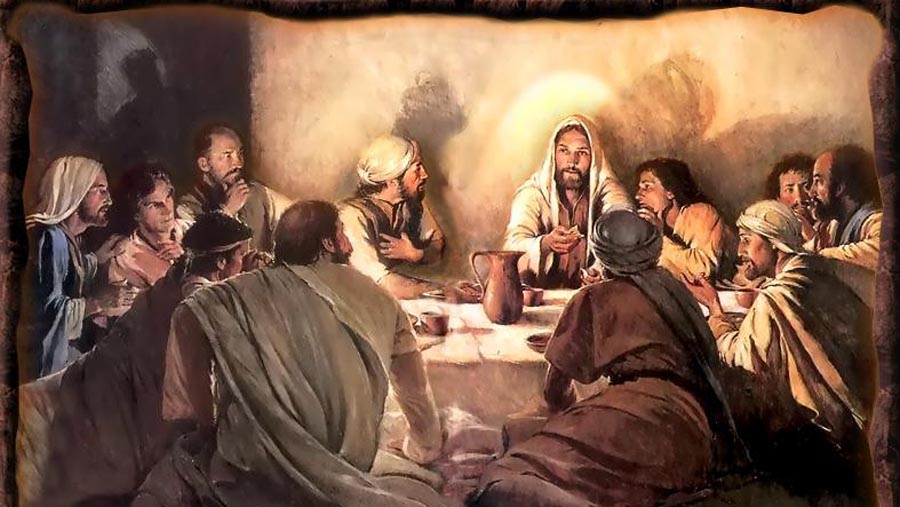
This sermon is a concise yet deeply theological reflection on the meaning of the Last Supper and the Eucharist.

Click here: “What Is the Eucharist?”  to listen to the sermon.

Or, click here:  

.

Coram Deo,

Margot

The text is Luke 22.14-23: [English Standard Version]

14 And when the hour came, he reclined at table, and the apostles with him.

15 And he said to them, “I have earnestly desired to eat this Passover with you before I suffer. 

16 For I tell you I will not eat it until it is fulfilled in the kingdom of God.” 

17 And he took a cup, and when he had given thanks he said, “Take this, and divide it among yourselves. 

18 For I tell you that from now on I will not drink of the fruit of the vine until the kingdom of God comes.” 

19 And he took bread, and when he had given thanks, he broke it and gave it to them, saying, “This is my body, which is given for you. Do this in remembrance of me.”

 20 And likewise the cup after they had eaten, saying, “This cup that is poured out for you is the new covenant in my blood.

 21 But behold, the hand of him who betrays me is with me on the table. 

22 For the Son of Man goes as it has been determined, but woe to that man by whom he is betrayed!”

23 And they began to question one another, which of them it could be who was going to do this.

FrPetty2011

The Rev. Dr. Michael Petty
St. Peter’s Anglican Church [www.saint-peters.net]
Fr. Michael Petty is a native of West Virginia and grew up in Houston.  He was educated at Austin College (B.A.) and Vanderbilt University (M.Div., M.A., Ph.D.)
During his over twenty years of ordained ministry, he has served a large suburban congregation, a campus ministry at a medical school, and a hospital chaplaincy.
He has served as Associate Rector for Adult Education,  since St. Peter’s was founded in 2005.
In addition to pastoral ministry, Fr. Petty has served as an adjunct faculty member at the Perkins School of Theology (Southern Methodist University), Nashotah House Theological Seminary and the Center for Biblical Studies in Tallahassee.
He is the author of  A Faith That Loves the Earth: The Ecological Theology of Karl Rahner, published by the University Press of America.
He is married to Sara Clausen and they have a son, Graham.

Leave a comment

Filed under Communion, Eucharist, Lent, Liturgy, theology and doxology

Hymnody: Vexilla Regis [Gregorian Chant]

Vexilla Regis


Hymnody:  The Season of Passiontide and Easter:

Vexilla Regis [Gregorian Chant]

Vexilla Regis has always been one of the most renowned of early hymns, its imperial imagery a vivid reminder of the Christianizing of the Roman empire [a vexilla is the banner at the head of a Roman legion.]  Reputedly, this hymn was written in 569 to welcome a procession bringing a fragment of the ‘true Cross’ to the convent of Poitiers.”

From:  Sing, Ye Heavens:  Hymns for All Time, The Cambridge Singers, Directed by John Rutter, Collegium Records, 2000.

Click here to read more about this hymn:  Vexilla Regis

Click here to listen to the Cambridge Singers:  


Latin:

Vexilla Regis prodeunt:

Fulget crucis mysterium,

Quo carne carnis Conditor

Suspensus est patibulo.


Impleta sunt quae concinit

David fidelis carmine,

Dicendo nationibus

Regnavit a lingo Deus.


Arbor decora et fulgida

Ornata Regis purpura,

Electa digno stipite

Tam sancta membra tangere.


O crux ave, spes unica

Hoc Passionis tempore,

Auge piis justiciam

Reisque dona veniam.


Te summa Deus Trinitas

Collaudet omnis spiritus:

Quos per crucis mysterium

Salvas, rege per saecula.  Amen.


[Venantius Fortunatus]

English:


The royal banners forward go;

The Cross shines forth in mystic glow;

Where he in flesh, our flesh who made,

Our sentence bore, our ransom paid.


Fulfilled in all that David told

In true prophetic song of old;

Amidst the nations, God, saith he,

Hath reigned and triumphed from the tree.


O Tree of beauty, Tree of light!

O Tree with royal purple dight!

Elect on whose triumphal breast

Those holy limbs should find their rest.


O Cross, our own reliance, hail!

So may the power with us avail

To give new virtue to the saint,

And pardon to the penitent.


To thee, eternal Three in One,

Let homage meet by all be done;

Whom by the Cross thou dost restore,

Preserve and govern evermore.  Amen.


[Translation by J. M. Neale]

Leave a comment

Filed under Uncategorized

Exploring the Gospel of John: 13

EXPLORING THE GOSPEL OF JOHN

By the Rev. Dr. Michael Petty [Fr. Michael Petty]

St. Peter’s Anglican Church [2006]

New words:  Click here for definitions:  prolepsisforeshadowingprolepsis

“Farewell . . . For Now” (I)

John 13:1-38

I. Setting an Example: 13:1-20

1.  The purpose of John 13-16 is to prepare the disciples for Jesus’ departure and the aftermath of this departure. As becomes clear, as the discourse moves along, Jesus’ departure is not a departure at all — but is a radicalization of his presence.

2.  It is clear that Jesus knows his destiny — that “his hour had come” (13:1; 12:23).  For Jesus, the crucifixion will mean not simply death but [will mean] a return to the Father.  His death on the cross consummates his obedience to the Father and his love for the world.   Jesus will now demonstrate proleptically the meaning of his death — the fact that “he loved them to the end” (13:1).

3.  The cause of Jesus’ departure is twofold:  Ultimately, its cause is the will of the Father and the concurring will of the Son.  Proximately, it is the devices of the devil (13:2), worked out in human instruments (Judas).  13:3 is the interpretive key to understanding the washing of the disciples’ feet:  This verse makes Jesus’ identity clear:  he is from God and is returning to God and God has placed all things into Jesus’ hands.  Jesus is, if fact, the Father’s personal action in human history:  The One who created water is going to [now] wash the disciples’ feet.

4.  The washing of the disciples’ feet is not simply an act of humility or an attempt of Jesus to identify with the “common man.”  Jesus removes all his clothing, except for a loincloth, which foreshadows the removal of his clothes, for the purpose of flogging and crucifixion.  (The Romans usually crucified their victims naked).  Foot washing was an act of hospitality in the ancient world:  it was a task given to slaves or to servants of the lowest standing.  It was the iconic form of menial service because it involved not only the washing of dirt from the feet of guests but also [involved] the washing of human and animal excrement, which found its way into the streets and sewers – [those two things being “pretty much” the same things.]

In this case, foot washing is an enacted parable of the Cross — a parable which Philippians 2:6-11 describes.

5.  Peter, who speaks for all the disciples, finds Jesus’ intentions incomprehensible.  For Peter (13:6) those in positions of superiority, like Jesus, do not wash feet:  “Lord” and “washing feet” do not belong in the same sentence.  Jesus makes it clear (13:7) that Peter cannot now understand the meaning of Jesus’ actions but such an understanding will come only “afterward.”  Peter’s refusal for Jesus to wash his feet (13:8) constitutes a clear rebuke to Jesus but Jesus responds:  “If I do not wash you, you have no share in me” (13:8).  “Share” here seems to mean “inheritance” or “participation.”  The refusal of the foot washing means a refusal of Jesus himself.  Accepting the foot washing is acceptance of the reversal of values it implies and such a reversal is necessary, in order to understand and accept Jesus’ death and its consequences.  Accepting this reversal is also necessary, in order to carry on Jesus’ mission in the world.

6.  In 13:12-14, Jesus provides an interpretation of his own acts:  Jesus underlines the incongruity between his status as Lord and his action of foot washing — that the Lord should engage in menial service.  Jesus says that this same pattern of action is to be the hallmark of the Church.  He calls upon the disciples to serve one another — reminding them that any relinquishment of status that they may have to make pales, in comparison, to the relinquishment of status that Jesus makes.

7.  13:15-17 makes it clear that Jesus has not merely commanded the washing of feet but [has commanded] also the imitation of the pattern that he himself has set (13:15).  The pattern of service that Jesus has set presupposes a radical inversion of values — an inversion that the disciples will have to accept and practice.  What Jesus has in mind is not simply the one act of foot washing but an entire set of practices which reflect his own pattern:  “If you know these things, blessed are you if you do them” (13:17).   [Of course, Jesus has to qualify what he says, in order to account for Judas.]   In 13:18, Jesus quotes Psalm 41:9, to make the point that the betrayal of a close friend (one with whom one has broken bread) is a great cruelty.  One of his own, not the Sanhedrin, will betray Jesus.

8.  13:20 looks forward to the disciples’ mission, which is, of course, what the discourse about foot washing has been all about.  Just as Jesus has been sent from the Father and to receive him is to receive the Father, since “I and the Father are one” (10:30), so to receive the disciples is to receive Jesus himself and the Father.  This emphasizes the fact that the disciples (and the community gathered around them) are not simply independent agents but, are, rather, themselves an extension of Jesus’ mission.

II. Betrayal, Commandment and Denial: 13:21-38

1.  13:21-30:  The theme of Jesus’ sovereignty continues in this section:  he knows that an intimate is going to betray him and this fact further prevents people from seeing Jesus as a victim — an innocent man which an evil world has overtaken.  Significantly, the foreknowledge of betrayal does not render it easy to accept, as 13:21 makes clear.  Here, the text considers seriously the matter of Jesus’ humanity and his divinity.  All through the next several chapters, Jesus is simultaneously inside and outside the developing narrative -– he is both the one who has written the narrative and [he is also] one of the characters in the drama.  Just as the crucifixion of Jesus is not simply about the fate of an individual, so Judas’ decision to betray Jesus is not simply about an individual decision but is something larger: “Satan entered into him” (13:27; cf. 13:2).  Jesus’ death is not simply a function of the Sanhedrin’s desire to retain power or of Pilate’s desire to maintain Roman rule.  Notice that Jesus knows what Judas is about to do and does not attempt to dissuade him from doing it (13:27).  It is appropriate that Judas goes out into the night (13:30), to carry out his decision.

2.  13:31-38:  This section is the beginning of what we know as Jesus’ “Farewell Discourse,” because, in it, Jesus prepares the disciples for his departure.  The striking of the first note is the most important one:  Jesus’ crucifixion will not be a humiliation or a defeat but [will be] a glorification.  Emphasizing the reciprocal relationship between Father and Son, the Father will glorify the Son in his death and the Son will also glorify the Father.  The reputation and honor of God and that of the Son are finally inseparable.  The “new commandment” (13:34) is not actually “new” but is a re-phrasing of Leviticus 19:18 and Jesus presents this as his final wish for the Church.  The type of love that Jesus will demonstrate in his death will be the hallmark of Christian behavior.  Observers will recognize the community of Jesus by the quality of its life — as a continuous corporate image of Jesus.  Jesus emphasizes twice (13:33, 36) that his disciples cannot follow him.  This is because of the unique work he has to do and the unique destination he has:  he is going to the cross and to the Father and only after this has happened will it be possible to follow him:  “but you will follow afterward” (13:36).

Questions for Reflection

(1)  The washing of the disciples’ feet is an enacted parable of love, which is at the center of John’s understanding of God, Christ, and the Church.  Unfortunately, the Church has, in many ways, surrendered this understanding of love, in order to embrace a modern, individualistic, and therapeutic one — an understanding in which “love” means the non-judgmental acceptance of other people.  How can we recover the meaning of “love,” which Jesus demonstrates in this scene and which he enacted on the Cross?  Note Philippians 1:27-2:11.

Leave a comment

Filed under discipleship, Interpretation of Scripture, The Gospel of John, theology and doxology