Portrait of A Tree


Crape/Crepe Myrtle [Lagerstroemia]

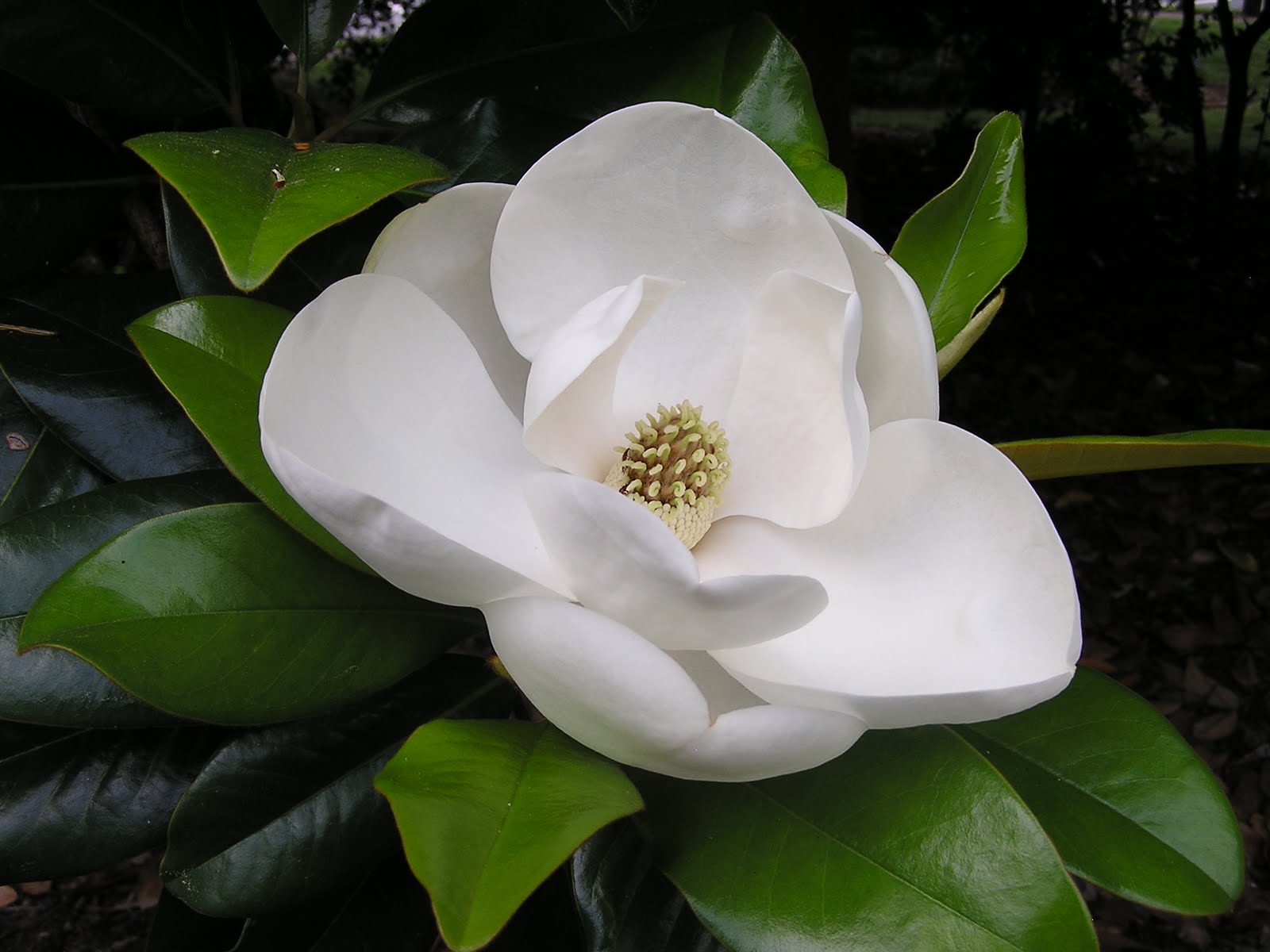
” ‘Natchez ‘ Crepe Myrtles grow 20′-30’ high in the South.   The foliage becomes a reddish-orange in fall.   The bark peels off attractively, rather like that of birches, adding winter interest.   Natchez Crepe Myrtles bear white blooms.   As with most crepe myrtle, the flowers are the main selling point.   They not only grow in striking clusters, but put on a display that lasts longer than that for most plants (mid-summer to fall).   The blooms yield to fruits that are brownish and persist through winter.” [Wikipedia]

Dear Readers,

Recently, I was looking out the window at my Crape [Crepe] Myrtle trees:  I chose the “Natchez”  variety — but not for the profusion of ornamental and transient white flowers.  No, I chose it for one striking and enduring characteristic:  the beauty of the emerging “inner” bark.

It is fascinating to observe the process:  Over time, the rough, ugly, greyish, thin, “outer” bark will peel and slough off, to reveal the smooth, satiny, cinnamon-color “inner” bark:

The vigorous and healthy growth of the tree provides the vitality and energy to burst through the containment of the outer bark.

The portrait of this tree reminds me of the dynamics of a forty-year process:  

Forty-two years ago, in May of 1970, I attended a Protestant Youth of the Chapel Retreat.  I was 18 years old and my only motivation for attending the retreat was to spend time with my high school boyfriend.

In those days, weekend retreats were very simple.  They were intentional “retreats” from the world and provided hours of silence.  As I recall, the retreat followed this daily pattern:

~~~

Breakfast

Silence

Morning Prayer

Keynote Speaker

Lunch

Canoe on the Lake or Hike a Nature Trail

Silence:  Rest,  Read, and Bible Study

Supper

Keynote Speaker

Vespers by the Lake

Silence

Curfew

Lights Out

Silence

~~~

The Keynote Speakers were two handsome, athletic young men, who were volunteer staff with a university campus ministry.

The theme for the speakers’ lectures that weekend was, “My Heart: Christ’s Home,”  based upon a simple little booklet, written by Robert Boyd Munger.

InterVarsity Christian Fellowship USA

Robert Boyd Munger

I assure you that I did not, before the retreat, possess a yearning to offer hospitality to Christ — no, not even admittance to a tiny, dark, recessed corner of my autonomous life.

For I was a busy high school student:  Endless activity filled my days, evenings, and weekends.  And then there were also my studies, which I must cram within the frenetic schedule.  Contemplation and meditation were completely absent from my life.

But the weekend retreat and the hours of silence provided for me an opportunity to stop, think, and ponder.

I was not yet a student of theology.  If I had been, I might have snorted in derision at the simple content of the booklet, My Heart – Christ’s Home.  

It measures merely 3 1/2″ x 5″  and contains only 25 pages of text.  Page 3 introduces the theme:

“That God may grant you to be strengthened with might, through his Spirit in the inner man, and that Christ may dwell in your hearts through faith.” [Ephesians 3.16-17]

or

“That Christ may settle down and be at home in your hearts by faith.”  [Weymouth translation]

The keynote speakers offered each of us a copy of the little booklet, which contained eight tiny chapters.  Over the weekend, I read the booklet, as a novitiate might pore over a prayer-book.  The reading filled up the moments of silence, as I meditated upon the weighty message of this simple book.

On the last evening of the retreat, I perfectly remember that we, the high school students, were encircled around a camp fire.  We sat on the benches of the amphitheatre, in front of the lake.

The two speakers, standing in front of us, concluded their talks and asked us, “Are you ready to ask  Christ to ‘settle down and be at home in your hearts by faith?'”  

In silence, we departed and returned to our cabins, in time for curfew.  The counselors extinguished the lights and all was silent.  With a flashlight, under my blanket, I re-read the booklet.

And then I made a very reckless decision:  I followed the instructions, contained within the booklet:  I “transferred the title-deed of my home:”

I signed the title-deed of my life over, as it were, to Christ, and placed my life under his ownership and control.

If I had carefully counted the Cost of Discipleship, as the author Dietrich Bonhoeffer implores us, I might not have made such a life-altering decision.
It was, I admit, a rash thing to do.

And I do think that, at the time, someone might have warned me about the long-term consequences.

The portrait of the tree represents those consequences:

Over forty years’ time, the presence of the Living Christ has eclipsed my life.

How did I ever hope to think, forty years ago, that I could safely contain the Lord of the Universe, within the confines of my life?

For, even heaven cannot contain him!

This is my fair warning to those contemplating such a serious decision:  Count the cost of discipleship.

Take heed — for Christ will burst through the confines of your life.

The thin veneer of your life will peel, slough off, and float down to the ground.  Doubtless, you will not enjoy the process, for it is painful.

The life of Christ, mighty, majestic, and powerful, will not conform to the contours of your life.  Your life must conform to his life.

But the process, as painful as it may be, will also startle you with its ultimate beauty:

Forty years from now, you may survey the life-less and superfluous outer bark and think to yourself,

“Oh, yes, this process was indeed necessary.  He has increased and I have decreased.”  

Then you will realize that the transfer has become a transplant:

Christ, The Great Physician, has removed your heart of stone and has given you a heart of flesh.

It is a mystery beyond my telling.

Coram Deo,

Margot

P. S. 

Yes, I married Stephen Payne, my high school sweetheart.

Give-Away!

I have four extra copies of the booklet, “My Heart – Christ’s Home.”   If you want a copy, free of charge:

Step One:  Include a Reply/Comment below — I will reserve a copy for the first four persons who respond.

Step Two:  Contact me at my email address [marmeepayne@gmail.com] and include your  name and snail-mail address.

Or, if you want to order the booklet:  

ISBN 0-87784-075-X

Revised Edition, 1986, by InterVarsity Christian Fellowship USA

http://www.ivpress.com

InterVarsity Press

POB 1400

Downer’s Grove, Illinois 60515

3 Comments

Filed under discipleship, The Cost of Discipleship

Out of the Mouths of Babes: 1

Benjamin and Lucy:  Christmas Day 2011

Dear Readers,

After I wrote this blog entry:  Magnolia Blossoms, Canopy Roads, and Spanish Moss: Part 1, my  dear friend, Carole, came over to my home to visit.  She and I share the joy of grand-mothering Benjamin and Lucy.  In the midst of our conversations, I said, “Have Mercy!” — one of my favorite expressions.

Now, as you know, “Little pitchers have big ears:”  

Benjamin overheard our conversation.  My brief phrase evidently sounded familiar to him.  He looked up at me, with his soft, liquid, brown eyes and was silent for just a second.   Then, with complete sincerity and reverence, he said slowly, softly, and distinctly: “Lord, in your mercy, hear our prayer.” 

Carole and I silently looked down at Benjamin and then to each other.  Our three-year old grandson had just admonished me.

~~~~

That prayer of unison response, “Lord, in your mercy, hear our prayer,”  is part of the Liturgy of the Historic and Ancient Church.

Benjamin recognized the prayer —  from participating in the Catholic Liturgy with his family.

Every Sunday morning in the Sanctuary, in the Anglican Tradition, the congregation kneels and we prepare to enter into “Common Prayer.” 

It is a holy moment, as we prepare to “lift our voices, with angels, and with archangels, and with all the company of heaven . . .  ”  

And in that moment, heaven and earth will intersect.

This is the moment during which I am the most grateful for the Liturgy, meaning, “the work of the people.”  

Our collective prayers, beautifully and masterfully composed long ago, are borne aloft, as the incense is borne aloft, offering a pleasing aroma to the Trinity.

The global and historical prayers will sweep over the sacred space and enfold my small voice, as a mighty, crashing wave of the vast ocean might gather up a piece of sea glass.

[Form IV: Book of Common Prayer, page 388]:

Let us pray for the church and for the world.  Grant, Almighty God, that all who confess your name may be united in your truth, live together in your love, and reveal your glory in the world.

Lord, in your mercy, hear our prayer.

Guide the people of this land, and of all the nations, in the ways of justice and peace; that we may honor one another and serve the common good.

Lord, in your mercy, hear our prayer.

Give us all a reverence for the earth as your own creation, that we may use its resources rightly, in the service of others, and to your honor and glory.

Lord, in your mercy, hear our prayer.

Bless all whose lives are closely linked with ours, and grant that we may serve Christ in them, and love one another as he loves us.

Lord, in your mercy, hear our prayer.

 Comfort and heal all those who suffer in body, mind, or spirit; give them courage and hope in their troubles, and bring them the joy of your salvation.

Lord, in your mercy, hear our prayer.

 We commend to your mercy all who have died, that your will for them may be fulfilled; and we pray that we may share with all your saints in your eternal kingdom.

Lord, in your mercy, hear our prayer.

 ~~~~~

“And a little child will lead them . . . “

Benjamin does not realize that he has exposed the thoughtless attitude of my mind, by noticing and commenting upon my careless speech.

He has no idea that he is challenging me to faithfully apply the truth that I so fervently desire to impart to him, that of The Great Shema of the Hebrew Scriptures:  

Deuteronomy 6:4-9

New American Standard Bible (NASB)

“ Hear, O Israel! The Lord is our God, the Lord is one!  You shall love the Lord your God with all your heart and with all your soul and with all your might.  These words, which I am commanding you today, shall be on your heart.  You shall teach them diligently to your sons and shall talk of them when you sit in your house and when you walk by the way and when you lie down and when you rise up.  You shall bind them as a sign on your hand and they shall be as  frontals on your forehead.  You shall write them on the doorposts of your house and on your gates.
~~~~

Benjamin reminds me:  I can never impart that which I do not first possess.

“The mouth speaks from that which fills the heart:”  

So, it is fruitless to ask Benjamin to ignore my words, for my words surely reflect the condition of my innermost being.

My grandchildren, so eager to learn, watching and listening so closely, will be a constant motivation for me to model for them a life of integrity.

I am grateful for their assistance, as I resist complacency in “the long obedience in the same direction.”

And now, “Let the words of my mouth and the meditation of my heart be acceptable in Your sight, O Lord, my rock and Redeemer.”  Amen, amen.

Coram Deo,

Margot


Leave a comment

Filed under Language, Liturgy

Summers of Contentment: Part 3

Dear Readers,

‘Tis the Season . . . for Family Togetherness:  Every summer, three generations of the Blair Clan travel to the Family Reunion in the North Carolina Mountains, to enjoy a week or two of  Simple Pleasures.

Sadly, new technology has now all but eclipsed Family Togetherness.  Today, the design of personal electronics allows each traveler [except the driver] to retreat into his or her own personal bubble or sphere, wholly unconnected to the other travelers, with whom he or she happens to share space.

But I was lucky:  The six members of the original Blair family, from 1952-1962, experienced uninterrupted Family Togetherness, before this new wave of technology.  If you were born after, say, 1980, you are indeed unfortunate:  You cannot imagine the fun and creativity that you missed.  So, I will describe it:

Our green Buick, a behemoth, had neither power steering  nor automatic seat/window adjustments.  It had no air conditioning but, then again, neither did our two-story apartment at Randolph Air Force Base, near San Antonio.   My mother was heavily pregnant with me, when my parents moved to Texas, in the summer of 1952.  My mother took a shower every time she climbed the stairs, which was several times per day.

We received a military transfer to California in the summer of 1958.  We planned to travel in the Buick across the desert, which would be an unbearable challenge.  So, my father bought a motorized device, no bigger than a bread box.  It sat on the floor board, at my mother’s feet, and bounced ice cubes around the interior of the box.  Then, it fanned the cooled air into the interior of the car.

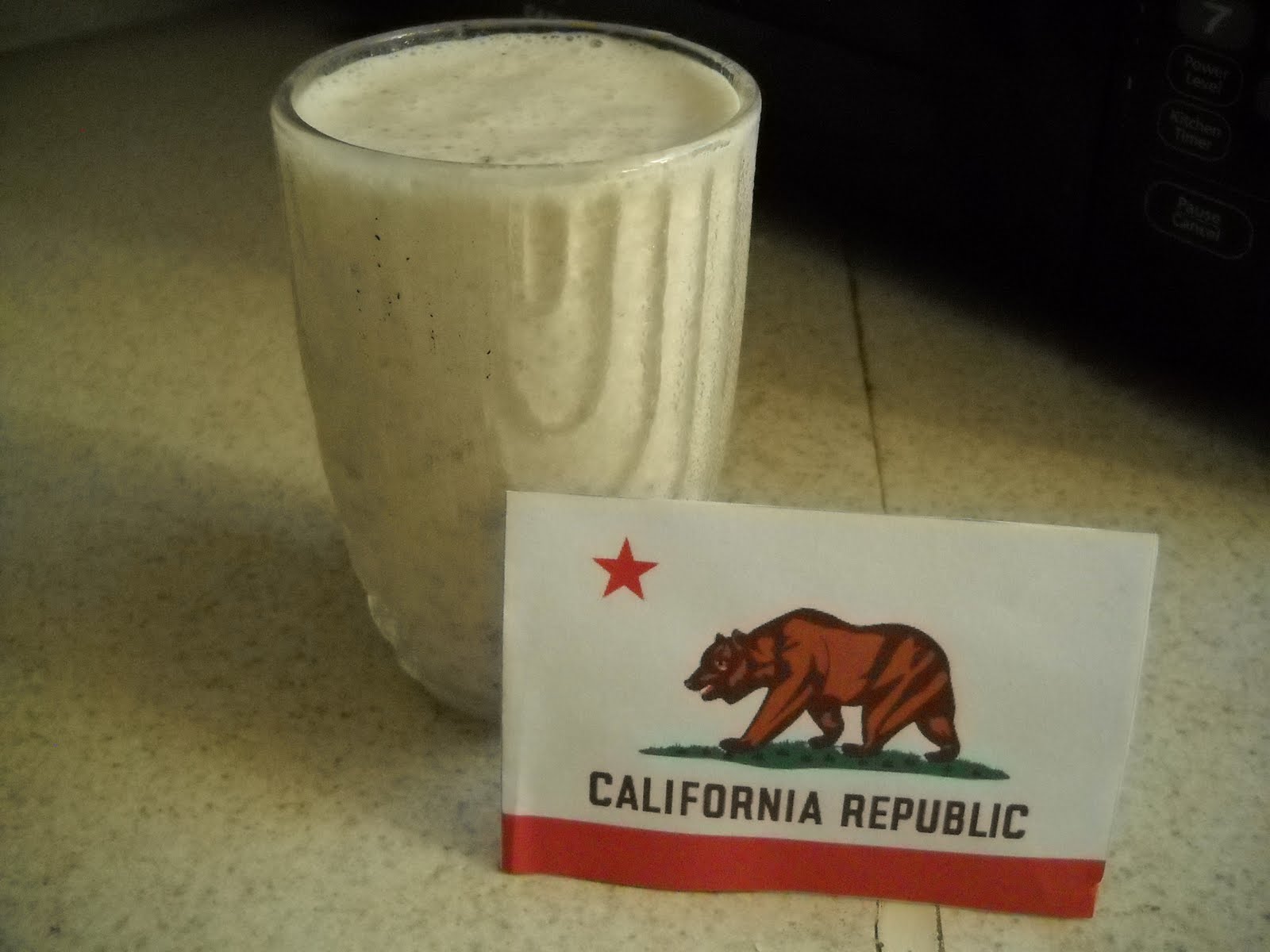
As soon as we passed across the interminable desert, my father stopped and bought everyone a Date Milkshake, at the first oasis.  You never tasted anything so delicious, cold, and refreshing in your entire life.

The Buick had no seat belts, which made it difficult for each siblings to mark off his or her “territory.”  There were neither infant safety seats nor booster seats but this deficit allowed the older siblings to pass the baby to the front seat, where my mother would feed and console him or her.   Then, she would pass the baby back to us, until we grew tired of him or her.  And back and forth and so on.

The back seat of the Buick folded all the way down.  Upon this flat surface,  my father placed a sheet of plywood, which butted up against the front seat.  This enlarged space provided a “sleeping berth.”  You see, my parents sometimes traveled at night:  I might go to sleep in my bunk bed in San Antonio but wake up to see the sun rise in El Paso.  Disoriented, I would have no memory of my dad having carried me, wrapped in a blanket, out to the car, in the middle of the night.

After waking up, we siblings threw street clothes over our pajamas and stumbled out of the “sleeping berth” to have breakfast.  My dad’s quest was to find the best locally-owned “Mom & Pop” restaurant, where we heartily ate a Farmhouse Breakfast.  My parents were frugal and we would not eat a meal again until supper. [Although we would have a snack and beverage.]

The boredom of four siblings, cooped up in a car for 10 or more hours, took its toll.  Sometimes, an older sibling read aloud to the younger ones:

Or, the older sibs read silently, while the younger children took naps.

[Image Credit:  Lovely Books blog]

However, we could read only for a short while before nausea set in.

We played card games with the younger children:

Or, we passed around the View Master and re-lived our travels, from the Grand Canyon, the Petrified Forest, Disneyland, and Knott’s Berry Farm:

We took turns drawing on the Etch-A-Sketch:

Or, we played with Wooly Willy or Hair-Do Harriet.

My grandmother taught us older children how to make Button and String Whirlygigs.  This fascinated the younger children:

By mid-afternoon, we had exhausted all means of entertaining ourselves and we become punchy:  We giggled over the silliest things.  My mother turned her neck and head around toward the back seat and warned, “Stop that snickering!”

Yet we snickered even more.  My dad fumed silently as he drove, irritated by the volume of noise from the backseat.  My mother gave repeated warnings.  When  he could bear it no longer, my dad pulled over at the next safe place and stopped the car.  That was all.  He said not a word nor did he turn his head around, in our direction.  We were all shamed into silence and dozed until supper time.

After a sit-down supper in a family restaurant, we climbed back into the car.  As the sun went down, my dad and mom led us in singing.  And this was the best part of the entire day . . .

[To be continued]

2 Comments

Filed under Summer Vacations, Travel

The Egg and I: “The Dirty Dozen and the Clean Fifteen”

Dear Readers,

I try to buy local, in season “organic” produce, whenever possible.  However, use this handy guide, when your only choice is “conventional” produce.

The Dirty Dozen:  Buy organic!

apples

celery

strawberries

peaches

spinach

nectarines

grapes

bell peppers

potatoes

blueberries

lettuce

kale/collard greens

The Clean Fifteen:  The Lowest in Pesticides:

onions

sweet corn

pineapple

avocado

asparagus

sweet peas

mangoes

eggplants

cantaloupe

kiwi

cabbage

watermelon

sweet potatoes

grapefruit

mushrooms

For more information and recipes about local, in season, organic produce:

This “12 and 15” list is courtesy of:

Verity Health Center

6668 Thomasville Road, Suite 14

Tallahassee, FL  32312

http://www.verityhealthcenter.com

850.320.6158

Leave a comment

Filed under Nutrition

How My Garden Grows: Five

Dear Readers,

[After you read this entry, click: How My Garden Grows: Six.]

This is Part Five of a series on Margot’s Get-Real Guide to Gardening in North West Florida.   

THE VERTICAL SPACES OF YOUR GARDEN: [Continued]

I said previously, “When designing your gardens, think of a lofty and enchanting dwelling space, containing five stories or levels.”

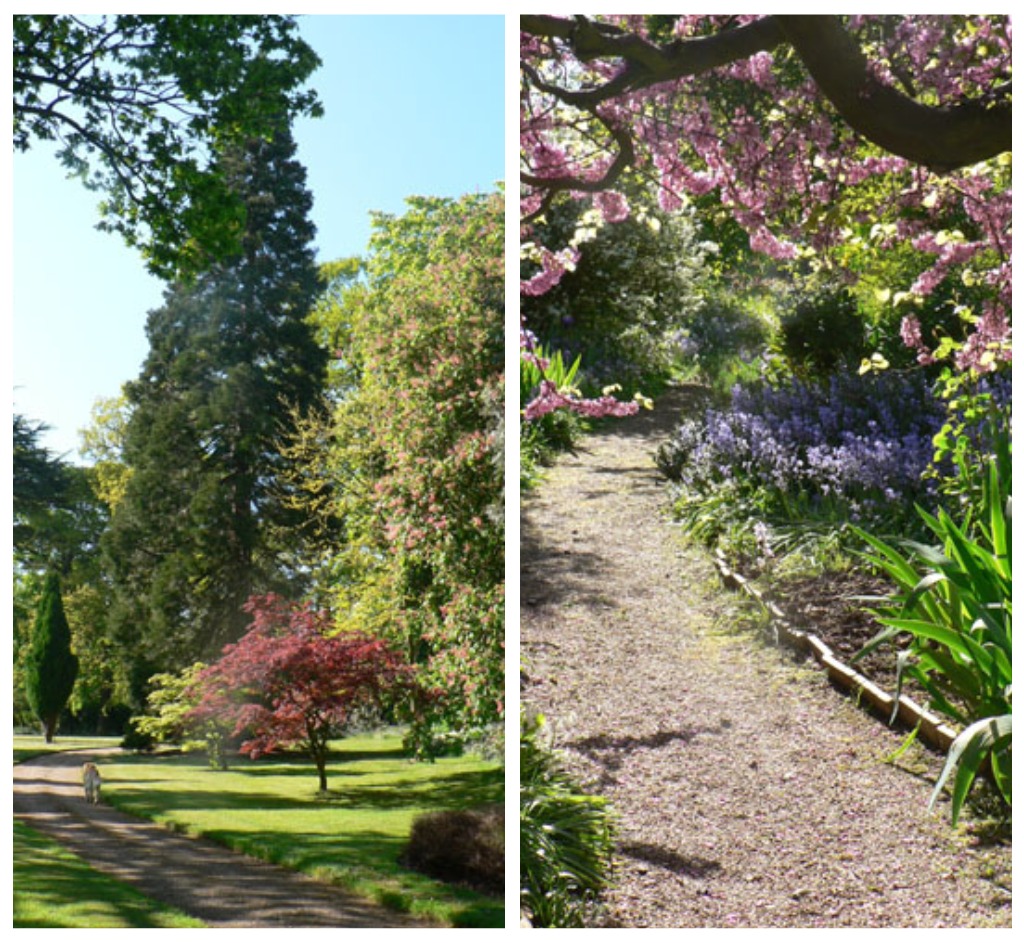
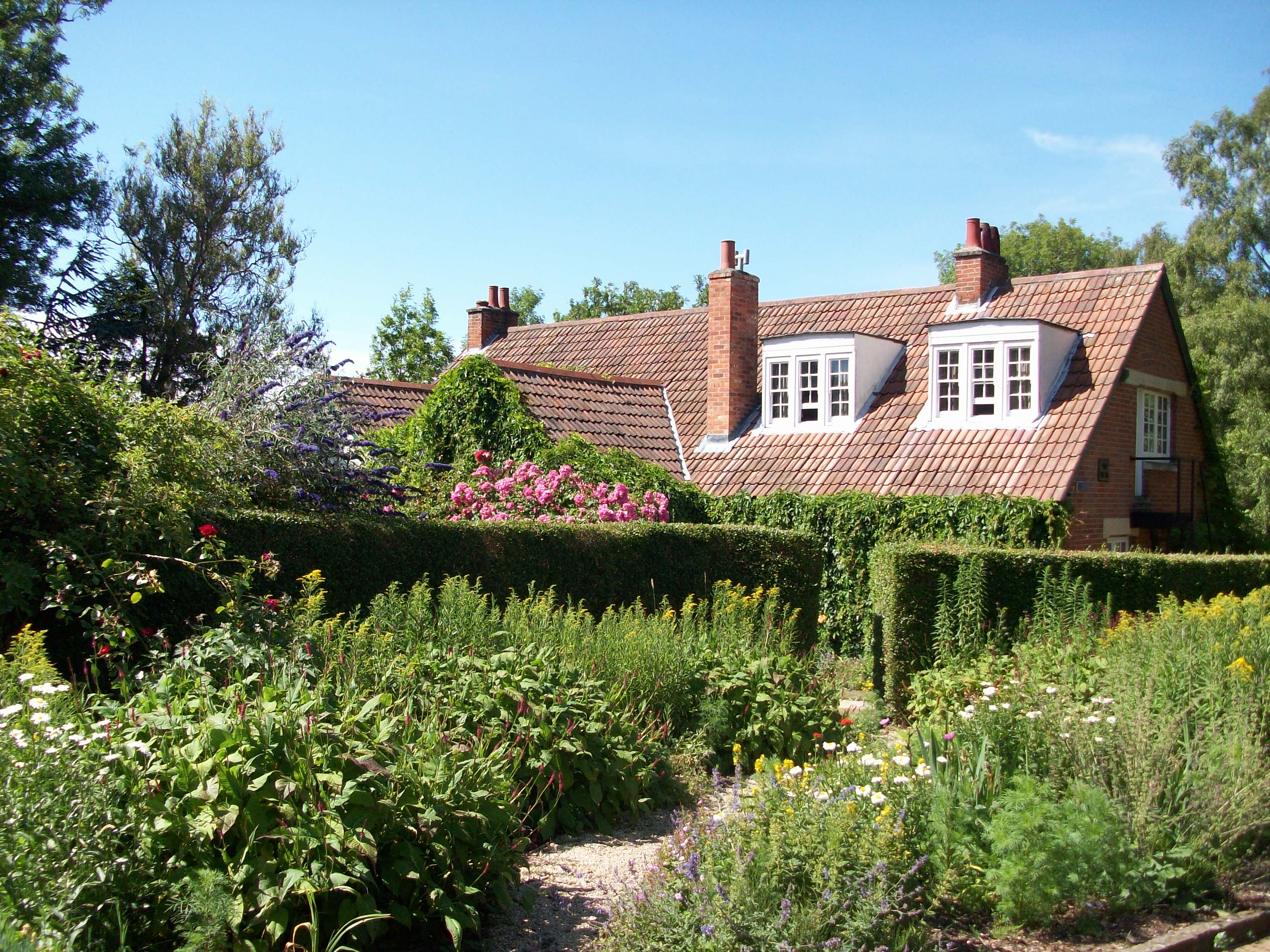
Notice the enchantment of the visually captivating assortment of vertical levels or stories of the gardens, in the photos above and below.

I draw inspiration from enchanting English country gardens, especially the gardens of British authors of classic literature:

Northmoor Road:  Home of J. R. R. Tolkien, Oxford.

The Kilns:  Home and Garden of C. S. Lewis, Oxford

Hilltop Farm:  Home of Beatrix Potter

However, before you get “carried away,” by English Gardens, please remember:  this is Garden Design in North West Florida!

Previously, I described Stories or Levels Five through Three, in descending order.

Today, we begin with Story or Level Two.

However, first, I will offer some Terms & Definitions:

Annuals bloom for only one season.  You must re-plant them every year.

Perennials re-emerge, every spring, after lying dormant all winter.

Tender perennials may not re-emerge, after a hard frost during the winter.

Each perennial has its own life-cycle:  Usually, they  thrive for three to fifteen years, after which you may have to re-plant.

Evergreens: the foliage stays green all year.

Perennial Evergreens:  the foliage stays green all year AND it provides seasonal blooms and interest.

A Note on Evergreens and Evergreen Perennials:

To me, there is nothing more depressing than walking out to my garden, in the winter, to view vast blank spaces where plants hide dormant.

So, I plant plenty of evergreens and evergreen perennials:  They provide the “canvas” upon which I “paint,” when I add the color of annuals and perennials.

 The Second Story:  THE FOIL
In literature, the foil is:
“One that by contrast underscores or enhances the distinctive characteristics of another:  ‘I am resolved my husband shall not be a rival, but a foil to me’ (Charlotte Brontë).
“. . . a character that has traits which are opposite from one of the main characters, in order to highlight various features of that main character’s personality.”  [wiki answers]

Every garden needs a FOIL:
These plants, usually a hedge, form a “backdrop” for the plants in front of the foil.   These foil plants, attractive in their own right, contrast with those plants placed in front of the foil.  The contrast  is very visually pleasing.
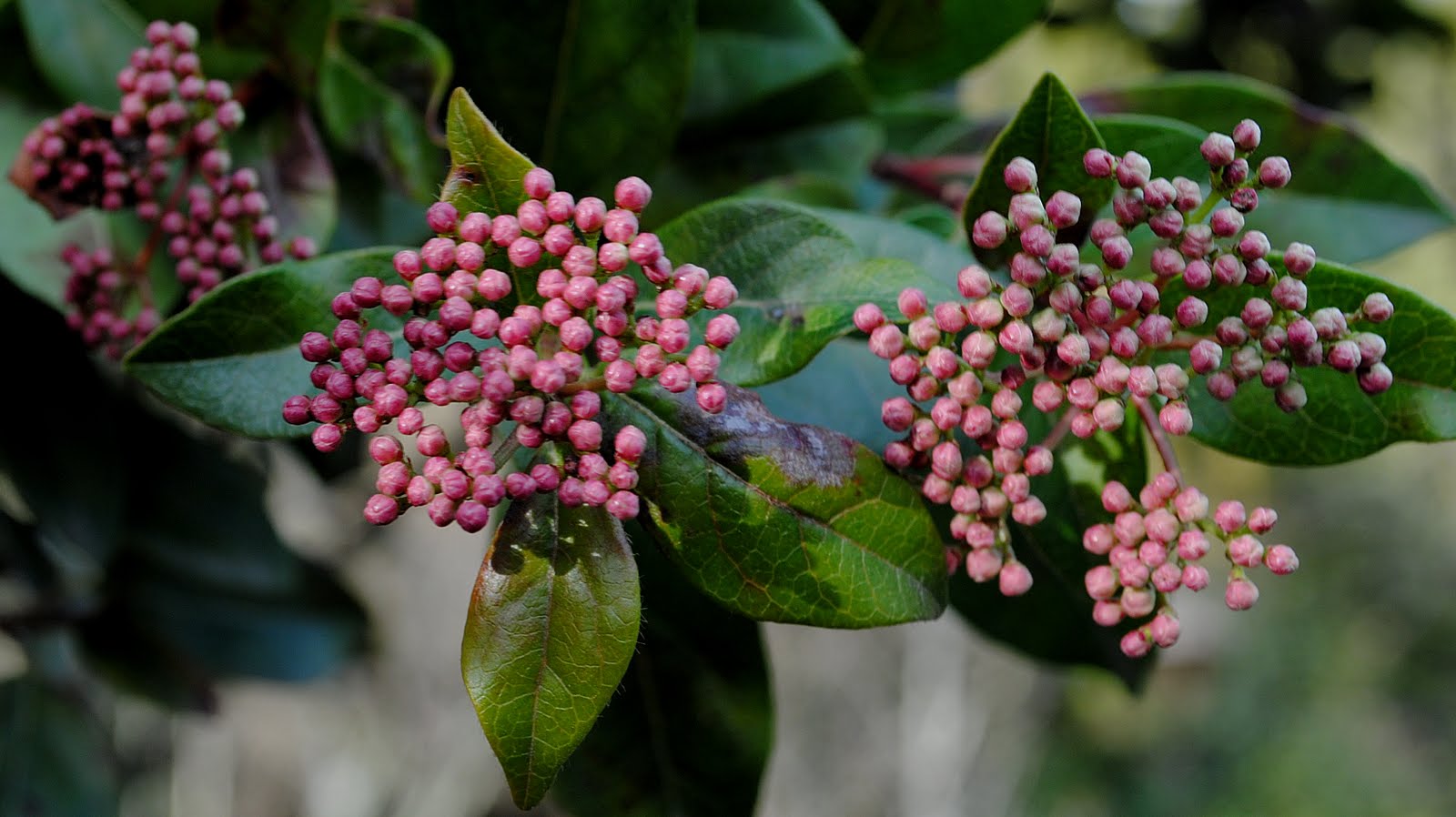
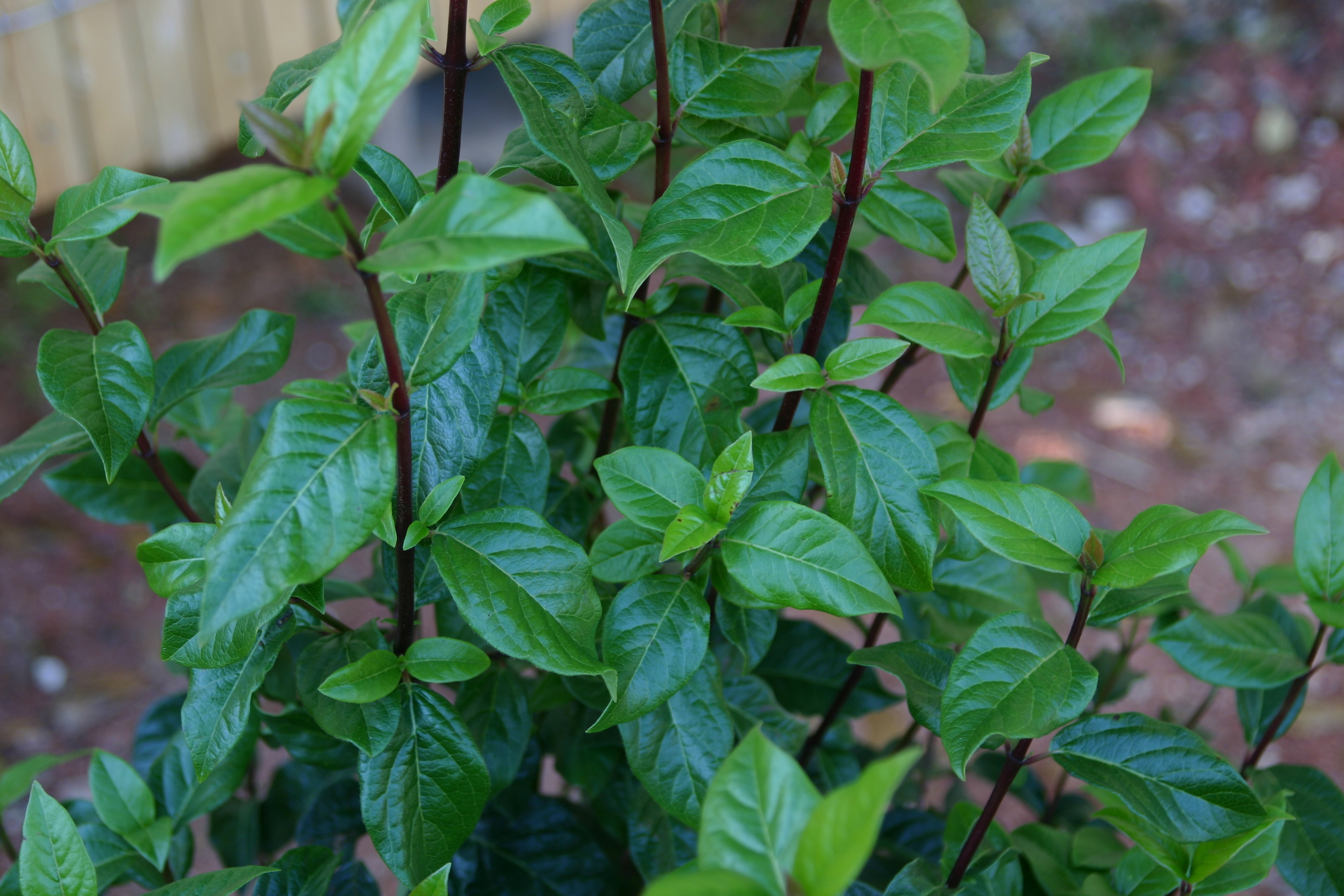
In my garden, the foil is a hedge of evergreen perennials:  Viburnum tinus ‘Compactum’ [Spring Bouquet Laurustinus].  
These are my “foundation plants,” placed in front of the foundation of my brick home.  However, I  staggered the young plants, to avoid the look of “little soldiers.”  Also, I planted them with plenty of space away from the foundation.  The open area between the brick and the staggered hedge of viburnum allows for “breathing space” and provides an allee:  a walkway for gardeners and a hiding place for children.

An Allee
[Photo Credit:  “through the hedge,” from the blog: “morning sun rae”]
View the photos and read the description below, to appreciate the four-season  interest of the Spring Bouquet Viburnum:   

  Spring Bouquet Viburnum:  Winter
 Spring Bouquet Viburnum: Early Spring
 Spring Bouquet Viburnum:  Spring
 Spring Bouquet Viburnum: Summer
Spring Bouquet Viburnum is an evergreen shrub with small, leathery, dark, green leaves. The new stems flush wine-red then fade to green. Viburnum tinus ‘Compactum’ has dense fragrant white to light pink flowers in the spring. The fruit is a blue black berry in the fall. This Viburnum has a round compact upright growth habit and can get 5-6′ tall by 5-6′ wide making it perfect for small hedges or screens. [magnoliagardensnursery]

Hardiness: USDA Zones 7-11
Plant Use: Shrub
Exposure: Full Sun
Water Requirements: Medium

In front of the hedge, I have planted contrasting textures of Story or Level One evergreen perennials.  
I will cover Story or Level One in How My Garden Grows:  Part Six.

Leave a comment

Filed under Enchantment, Gardens

Portraits and Murals

Dear Readers,

Today’s Guest Author is my husband, Stephen, describing portraits and murals:

“Over the last 10 years I have made the following transition:

I view my earlier understanding of Christianity as a large portrait of me.  It was about my salvation and what Christ could do for my family and me.   This was not all wrong and there is still some truth in it.  However, over the past 10 years, my portrait has become smaller and smaller and it has been inserted into a large mural.  The mural is God’s big plan of both Creation and Redemption. 

Each year, my portrait becomes smaller and smaller,  to the point that it is now hard to distinguish it within God’s Redemption plan.  It is less about me and more about being part of Christ’s Bride.  I still strive to understand God’s Love and the Redemption he has provided; however,  I now understand that I am part of a great mystery that is completely beyond my understanding.

Stephen Payne

July 2012

2 Comments

Filed under theology and doxology

The Egg and I: The Promised Land

Dear Readers,

Since I have high cholesterol, I have been comparing Low-Glycemic vs. Low Carbohydrate vs. Low-Fat diets.  I  have listed the three diet categories in descending order of effectiveness, according to new scientific studies.

And I have this to say about the new findings:  “Well, duuuhhh!”   I have known this for decades!  The evidence is clear and incontrovertible:  Low-fat diets are evil and they are not ordained by our Creator God.

I will begin my case:

The ancient Hebrews spoke about the Promised Land and described it as a land “flowing with milk and honey.”   

The point was, of course, that the Promised Land would offer not only the basic irreducible minimum  sources necessary to support life [bread and water] but also that the land would yield rich produce:

These rich foods would offer not only nutrition but also delight and pleasure.  Milk and honey represented gifts from the rich and generous bounty of the Creator, designed for human flourishing.

You can be sure that the cows and goats offering milk in the Promised Land were contented domestic creatures:  free-range, vegetarian, and grain-fed, with no need of steroids, antibiotics, and hormones.  The grass on which they grazed was untouched by herbicides and fungicides.  The air which they breathed and the water they drank was unpolluted, clear, and pure.  Doubtless, each small farm owner knew his/her cows and goats by name and treated each creature with respect.

The Promised Land dairy farmers skimmed off the cream from the top of the milk bucket, to make rich butter.  They converted full-fat milk into rich cheese, Kefir, and yogurt.

However, I doubt that any self-respecting Promised Land dairy farmer would have dreamed of offering his neighbors the travesty of “skim milk.”  That would have been a sacrilege.  When the dairy farmer brought his stone jars to the market place, I imagine there were only two choices of liquid milk:  “cream” and “milk,” according to the original design of the Creator.

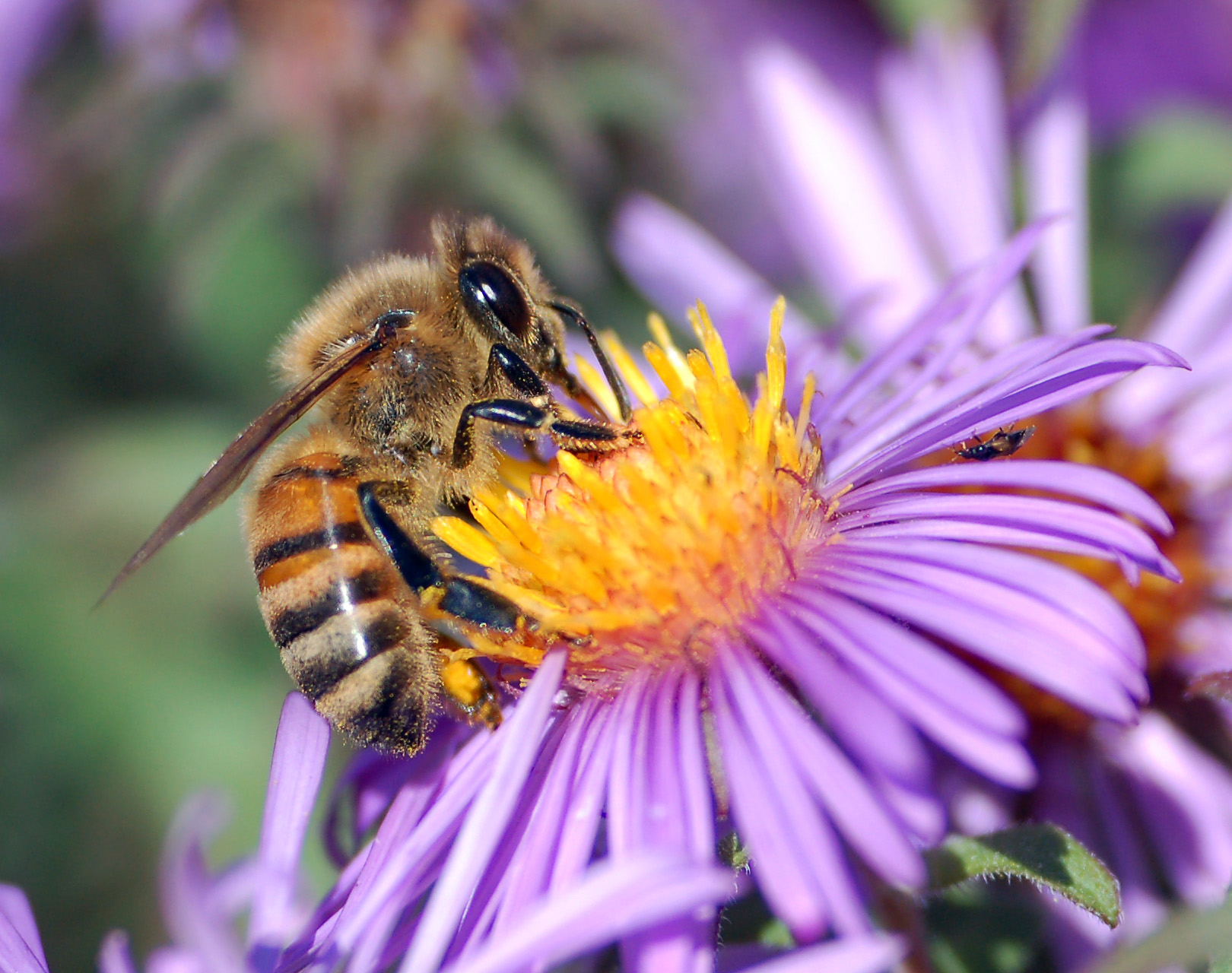
The Promised Land honey bees were  healthy, and prolific, busily visiting organic wild flower meadows and producing organic honey.  The  environment and ecosystem of the bees were untouched by chemicals, toxins, and pollutants.

The Promised Land honey bees yielded pure honey, which would not only sweeten foods and beverages but would also be a healing balm for skin, a soothing balm for sore throats, and a source of rich nutrients, including anti-allergy benefits.

All of the Promised Land produce was Certified Kosher yet there was no need for Organic Certification.  In the Promised Land, “organic” milk and honey was the standard.  “Organic” was all that existed; therefore rendering a label superfluous.

Now, behold the egg:  The perfect shape — containing the perfect nutrition.  The Promised Land hens were range-free vegetarians, happily scratching around for insects.  The hens enjoyed pure air, water, grass, and grain and their eggs yielded higher protein and nutrients and yet offered lower levels of cholesterol, compared to those of today’s “conventional” eggs.

 The Promised Land farmers enjoyed the benefits of a protected ecosystem.  They respected the symbiotic working partnership between the land-owner, the earth, the animals, fowl, insects, bees, grass, flowers,  water, and air.

Now, what has transpired since then, to spoil the design of the original Creation?  

Who thought that it was a good idea to:

Divide the yolk from the egg?  

Extract all the fat from the milk?

Ignore honey, in favor of artificial sweeteners?

Have you ever taken delight or pleasure in these travesties:

An egg white?

A glass of skim milk?

An artificially-sweetened food or beverage?

I rest my case.

You can learn more about these topics with these resources:   

Barbara Kingsolver and her family.

Have you ever wondered why so many of us are Wheat-Free and Gluten-Free?   This book will answer that question.

Books [novels, poems, and essays] by Wendell Berry

 Books by Michael Pollan


Fresh, by Ana Sofia Joanes

http://www.FRESHthemovie.com

http://www.videoproject.com

Order this curriculum and form a discussion group:  

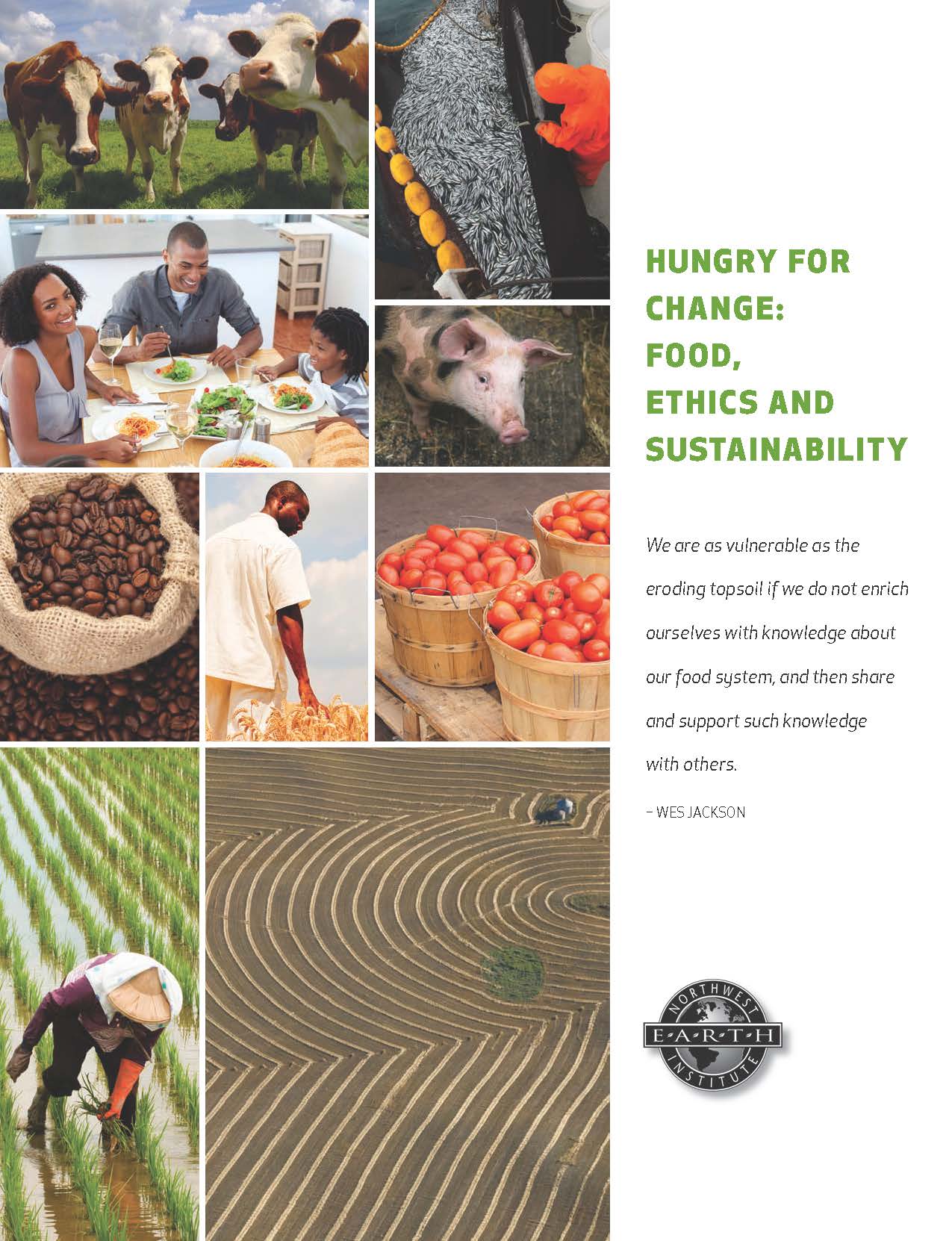
Hungry For Change:  Food, Ethics, and Sustainability 

http://www.nwei.org

Northwest Earth Institute NWEI

107 SE Washington, Suite 235

Portland, OR  97214

503.227.2807

503.227.2917 [fax]

contact@nwei.org

Coram Deo,

Margot

[With many thanks to my sister, Susan Blair Hollister, for recommendations on many of these resources.]

2 Comments

Filed under Nutrition

Magnolia Blossoms, Canopy Roads, and Spanish Moss: Part 2

Dear Readers,

Click here to read the previous post about Southernisms:  Magnolia Blossoms, Canopy Roads, and Spanish Moss.

Here are some additional colloquialisms that I found:

Exclamation: Oh, ye gods and little fishes!

Response to impudence:  Well, Mr. High and Mighty!

Relishing something — usually, enthusiasm about a food item:   Like there’s no tomorrow! OR  Like it’s going out of style!

Working, with a great energy or resolve:  Going great guns! or Loaded for bear!

I am pleased for you:   Well, I’m proud!

Endearment:   “I call Baby Lucy ‘Spoon-Full-of-Sugar,’ because she’s so sweet!’   [Benjamin Daniel Stewart, 3 & 1/2]

Around here, we refer to some duties as “Being in the Briar Patch:”

Haley might ask Stephen, “Will you hold Lucy?”  

And he will respond, “No, no! Do not throw me in that Briar Patch!”  

The reference is from the Uncle Remus stories, which my grandmother read to us, over 55 years ago.

I am not sure if this phrase is uniquely Southern but I recorded a recent conversation between Grandaddy Stephen and Grandson Benjamin, 3 & 1/2:

Grandaddy:  Well, this picnic table has certainly “seen better days!”

Benjamin:  What is “seen better days?”

Grandaddy:  Well, do you see how the wood is old?  It has sat out in the sun so long that the wood has become rough and split and is falling apart in places?  

Benjamin:  Yes.  [Pause.]  UmmGrandaddy?

Grandaddy:  Yes, Benjamin?

Benjamin:  You have “seen better days!”

1 Comment

Filed under Southern Colloquialisms

“Between Heaven and Hell”

Dear Readers,

In my previous entry, I mentioned the date, 11.22.1963:  the exact day of death for three significant historical figures:

C. S. Lewis

John F. Kennedy

Aldous Huxley

I highly recommend the excellent book, “Between Heaven and Hell,” by Peter Kreeft, which envisions a conversation and intellectual debate between the three men.  The book artfully highlights the worldview of each of the three men, as C. S. Lewis engages Kennedy and Huxley in Socratic Dialog.

Who will win the debate?  Find out the answer, by reading this fascinating book:  it will sharpen your intellect and skill in the art of reason, persuasive argument, and logic.

Coram Deo,

Margot

Between Heaven and Hell: A Dialog Somewhere Beyond Death with John F. Kennedy, C. S. Lewis, & Aldous Huxley: 

is a novel by Peter Kreeft about U.S. President John F. Kennedy and authors C. S. Lewis (The Chronicles of Narnia) and Aldous Huxley (Brave New World), meeting in Purgatory and engaging in a philosophical discussion on faith. It was inspired by the odd coincidence that all three men died on the same day:  November 22, 1963. We see from the three points of view:  Kennedy’s “Modern Christian” view, Lewis’s “conservative Christian” or “Mere Christian” view, and Huxley’s “Orientalized Christian” view.  The book progresses as Lewis and Kennedy discuss Jesus‘ being God Incarnate, to Lewis and Huxley discussing whether or not Jesus was a deity or “just a good person.” [Wikipedia]

Peter John Kreeft 

(born 1937) is a professor of philosophy at Boston College and The King’s College.  He is the author of numerous books, as well as a popular writer of Christian philosophytheology and apologetics.  He also formulated, together with Ronald K. Tacelli, SJ, “Twenty Arguments for the Existence of God”.[1] 

Leave a comment

Filed under Worldview

A Gift for an Alert Reader!

Dear Readers,

Congratulations to Debbie Trostle!  She is the Alert Reader who guessed the correct Three Events, which matched the Three Dates I listed on a recent blog post.  Click here to review the post and to see her comment:  Milestones.

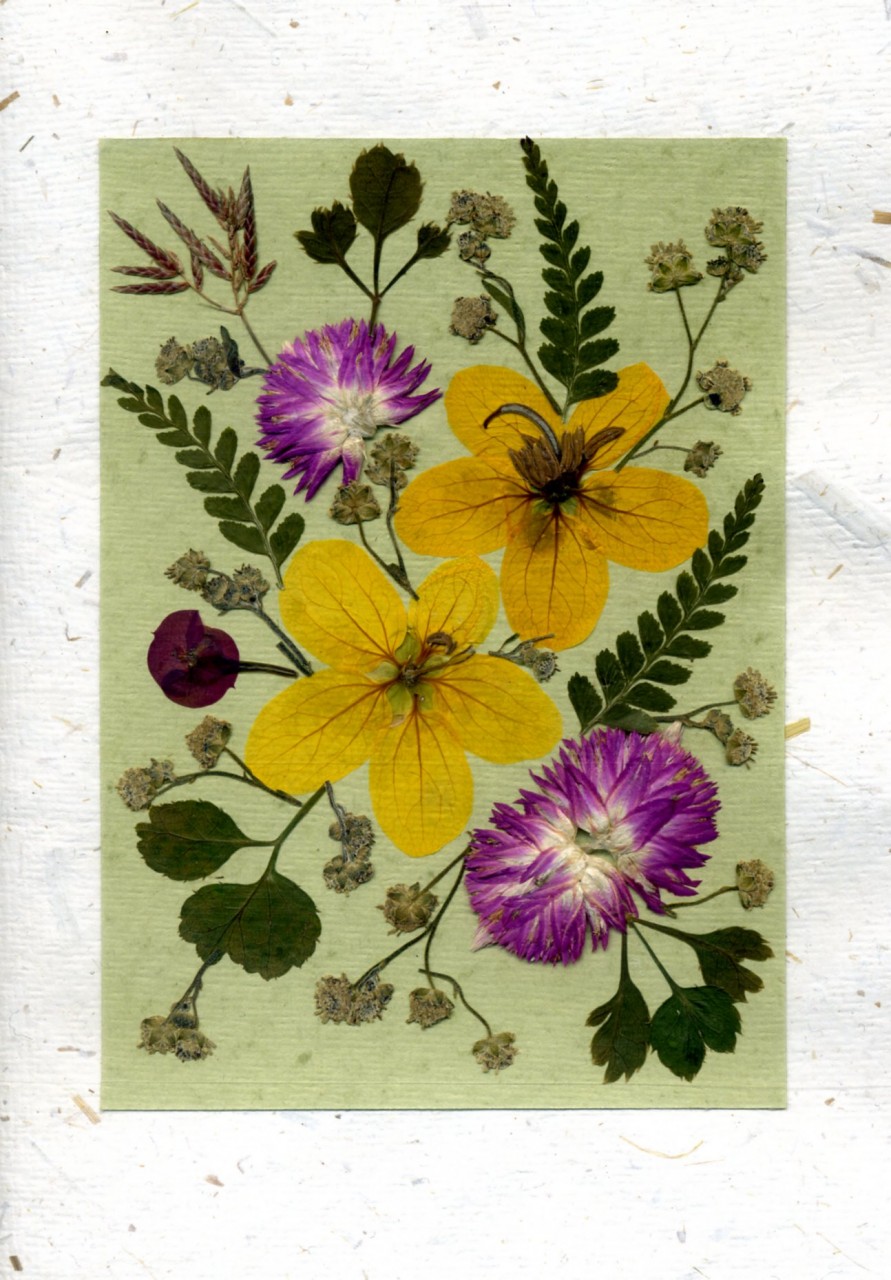
Since Debbie is proficient in her memory for dates, I am snail-mailing her a handmade paper botanical greeting card, which includes a gift bookmark.  She will, most likely, snail-mail the card as a birthday greeting.

The card is similar to the one above and is made by Petunia’s Botanicals in Asheville, NC.

The Three Date Clues were:

October 31, 1517:

December 7, 1941:

November 22, 1963:

Debbie guessed each date correctly but I will “enhance” the description of each event:

10.31.1517:  On the day of the Eve of All Saints in that year, Martin Luther posted his 95 theses on the door of the Wittenberg Church.    The date is now referred to as “Reformation Day” but most people mark it merely as “Halloween” [All Hallow’s Eve].

12.07.1941:  The Japanese airborne military bombed the US military Pearl Harbor, in Hawaii.

11.22.1963:  The assassination and death of the US President, John F. Kennedy.  Two other significant persons died on this exact date:   C. S. Lewis and Aldous Huxley.

In my next post, I will recommend a book based on the above fact.

Congratulations, Debbie!

Gentle Readers, you never know when I might decide to bestow a gift!

Coram Deo,

Margot


2 Comments

Filed under Alert Reader