Tag Archives: C. S. Lewis

Worldview Lens: The Grand Canyon

Dear Readers,

[This is a revision of an earlier post.]

It happened fifty years ago, as our family of six traveled and camped overnight near the Grand Canyon:

In the darkness of early morning, my father roused us from sleep.

We piled into the car and huddled under blankets, as my dad drove us the short distance to the canyon.

Torn away from my warm sleeping bag, I was hungry, for we left before breakfast.

We parked and hiked to the safety railing of the canyon.

I stood, shivering and yawning, waiting for the sun to rise.

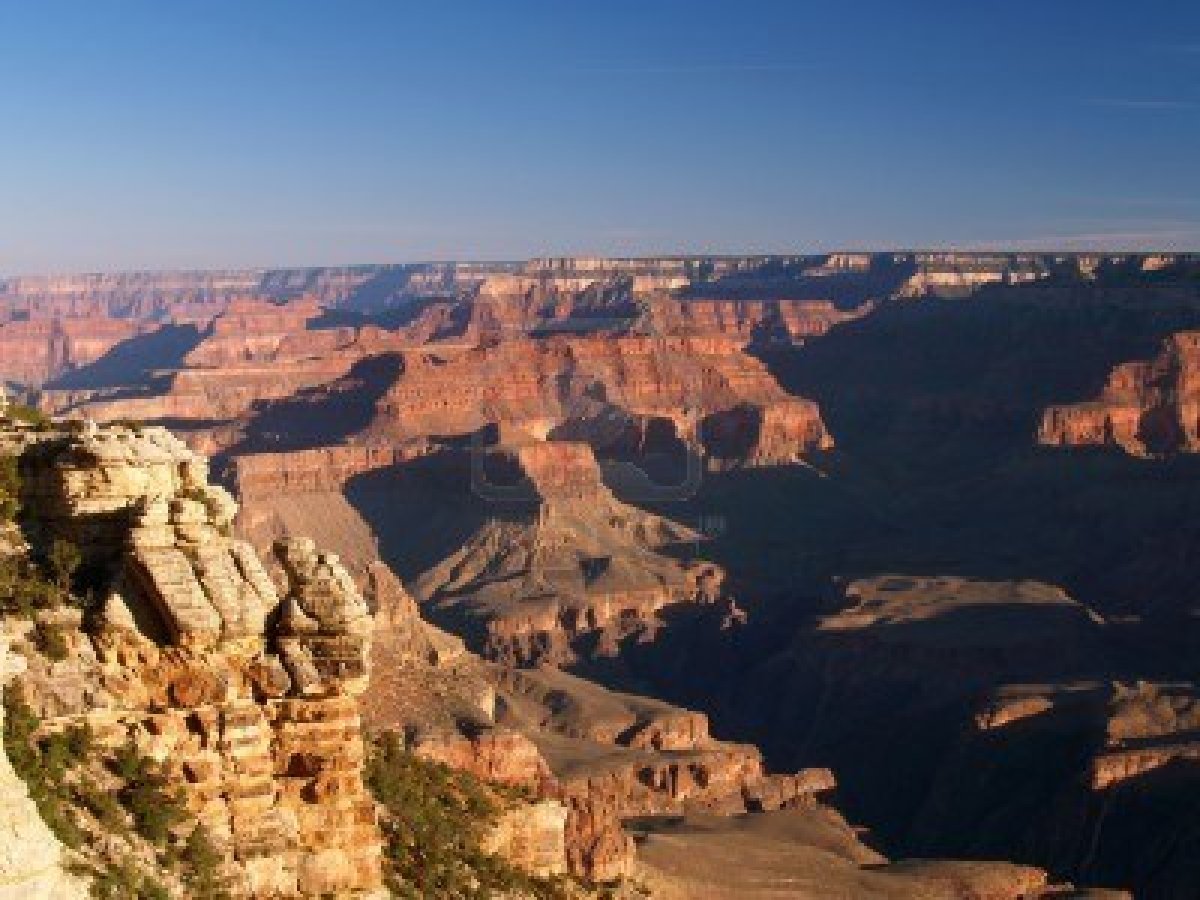
The first rays of sunlight exposed only the rim of the canyon.

Very gradually, the sunlight unveiled the upper walls of the canyon, layer upon stratified layer.

Finally, after a long wait, the sunlight  searched out the lower walls of the canyon and, finally, chased away the shadows from the darkest corners of the canyon bed.

We watched in silence, as the sunlight revealed the grandeur, glory, and majesty of the canyon’s colors, textures, and patterns.

I spied the thin ribbon of river, at the bottom of the canyon, a mile below us.

Compared to the giant scale of the canyon, the ribbon seemed insignificant.

Yet, my father told me, it was this same river, a mile deep in ancient times, that thundered and roared through the landscape, to carve out the contours of the canyon.

Incredulous, I surveyed the riverbed and then slowly scanned my eyes up the walls of the canyon, wondering how many centuries elapsed during this process.

I thought to myself,  “What force of nature could be so fearsome and powerful as to carve a canyon a mile high?”

I remember that morning as one of the best gifts that I have ever received:  A once-in-a-lifetime experience.

And I think about that morning every time I read these words:

“I believe in Christianity as I believe that the sun has risen:  not only because I see it, but because by it I see everything else.”  

~~~C. S. Lewis, from The Weight of Glory

Coram Deo,

Margot

Leave a comment

Filed under Childhood Memories, theology and doxology, Worldview

How My Garden Grows: Five

Dear Readers,

[After you read this entry, click: How My Garden Grows: Six.]

This is Part Five of a series on Margot’s Get-Real Guide to Gardening in North West Florida.   

THE VERTICAL SPACES OF YOUR GARDEN: [Continued]

I said previously, “When designing your gardens, think of a lofty and enchanting dwelling space, containing five stories or levels.”

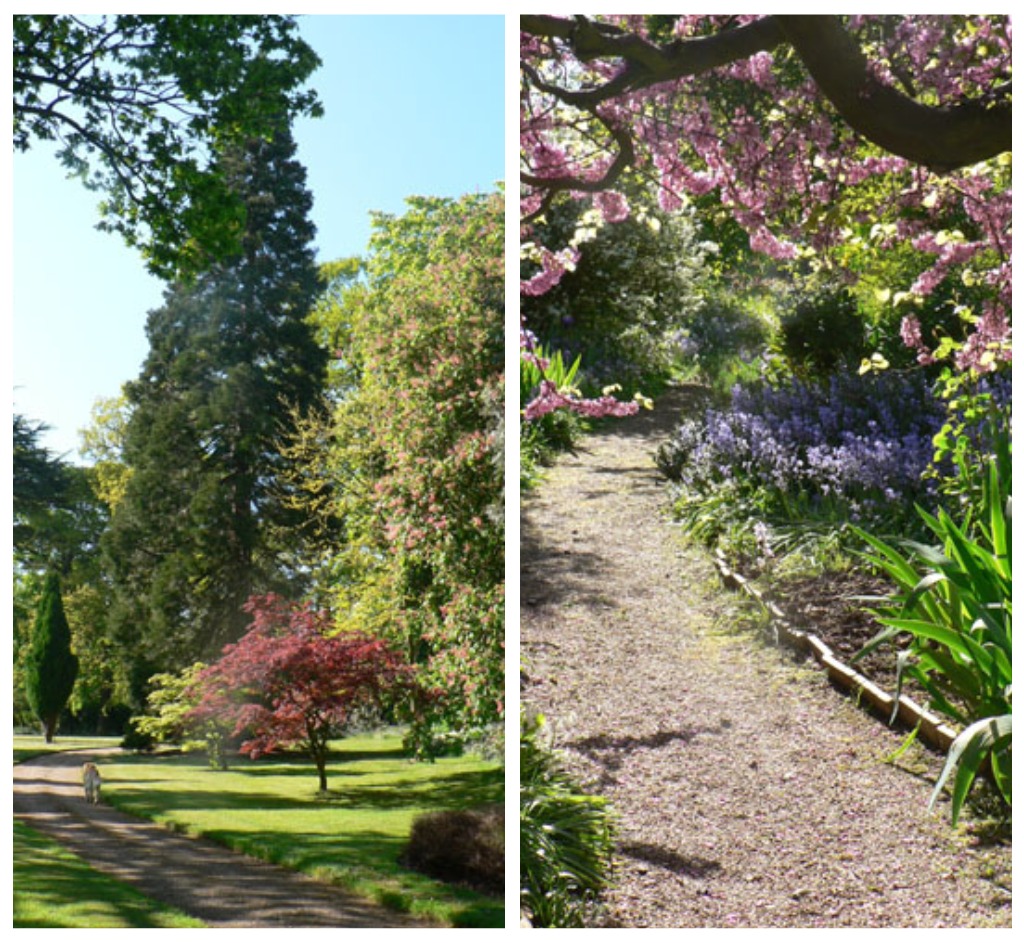
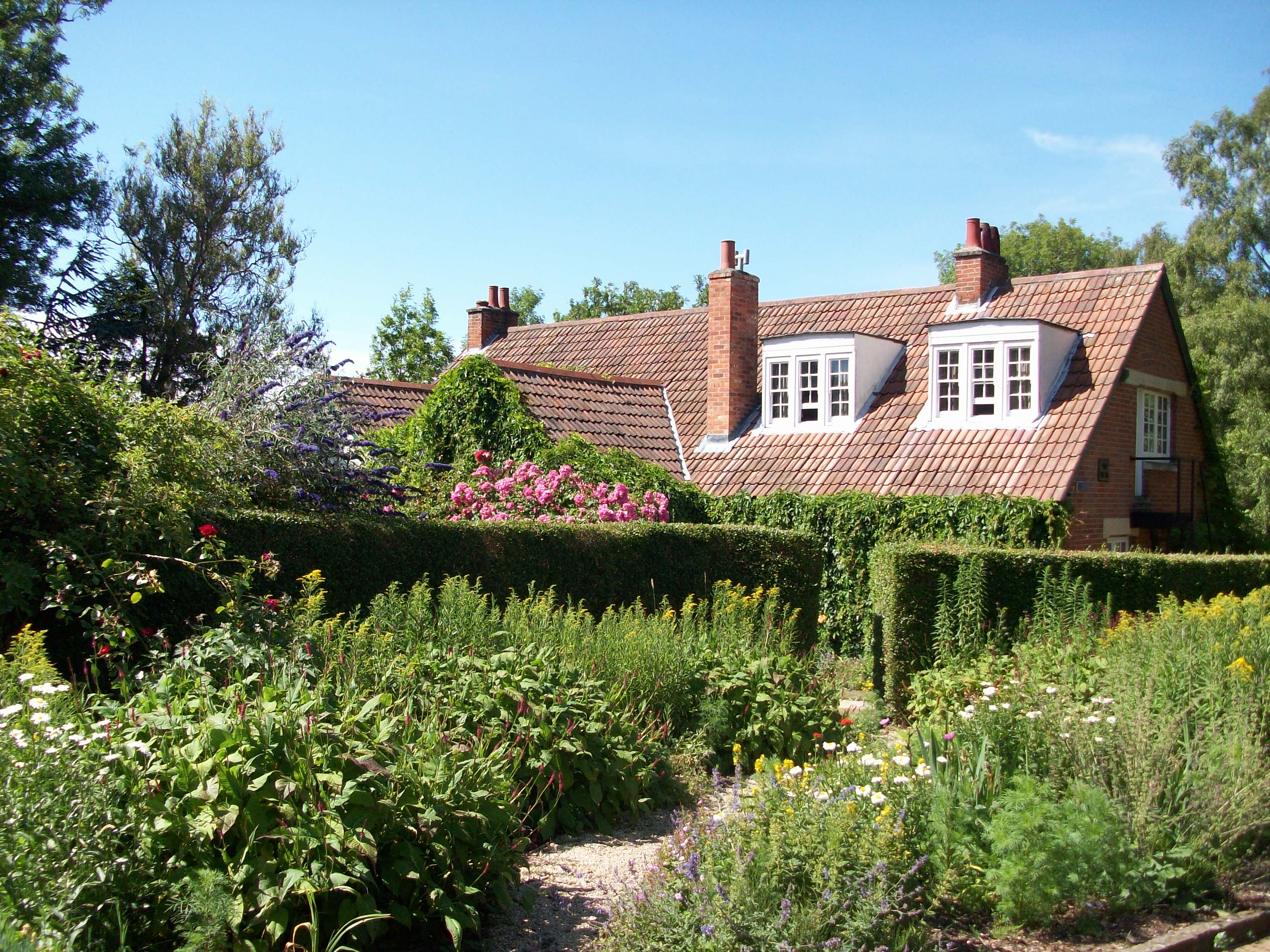
Notice the enchantment of the visually captivating assortment of vertical levels or stories of the gardens, in the photos above and below.

I draw inspiration from enchanting English country gardens, especially the gardens of British authors of classic literature:
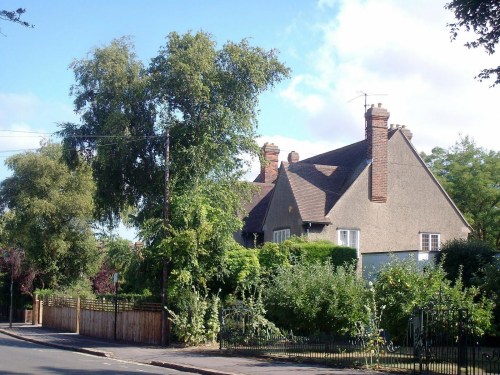
Northmoor Road:  Home of J. R. R. Tolkien, Oxford.
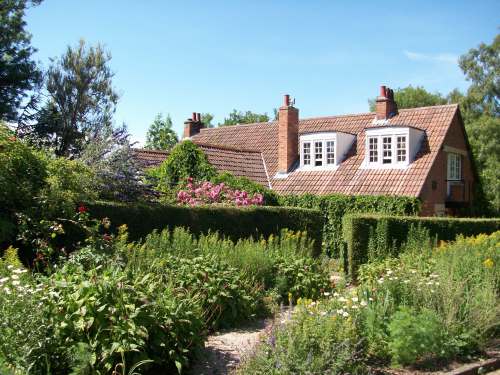
The Kilns:  Home and Garden of C. S. Lewis, Oxford

Hilltop Farm:  Home of Beatrix Potter

However, before you get “carried away,” by English Gardens, please remember:  this is Garden Design in North West Florida!

Previously, I described Stories or Levels Five through Three, in descending order.

Today, we begin with Story or Level Two.

However, first, I will offer some Terms & Definitions:

Annuals bloom for only one season.  You must re-plant them every year.

Perennials re-emerge, every spring, after lying dormant all winter.

Tender perennials may not re-emerge, after a hard frost during the winter.

Each perennial has its own life-cycle:  Usually, they  thrive for three to fifteen years, after which you may have to re-plant.

Evergreens: the foliage stays green all year.

Perennial Evergreens:  the foliage stays green all year AND it provides seasonal blooms and interest.

A Note on Evergreens and Evergreen Perennials:

To me, there is nothing more depressing than walking out to my garden, in the winter, to view vast blank spaces where plants hide dormant.

So, I plant plenty of evergreens and evergreen perennials:  They provide the “canvas” upon which I “paint,” when I add the color of annuals and perennials.

 The Second Story:  THE FOIL
In literature, the foil is:
“One that by contrast underscores or enhances the distinctive characteristics of another:  ‘I am resolved my husband shall not be a rival, but a foil to me’ (Charlotte Brontë).
“. . . a character that has traits which are opposite from one of the main characters, in order to highlight various features of that main character’s personality.”  [wiki answers]

Every garden needs a FOIL:
These plants, usually a hedge, form a “backdrop” for the plants in front of the foil.   These foil plants, attractive in their own right, contrast with those plants placed in front of the foil.  The contrast  is very visually pleasing.
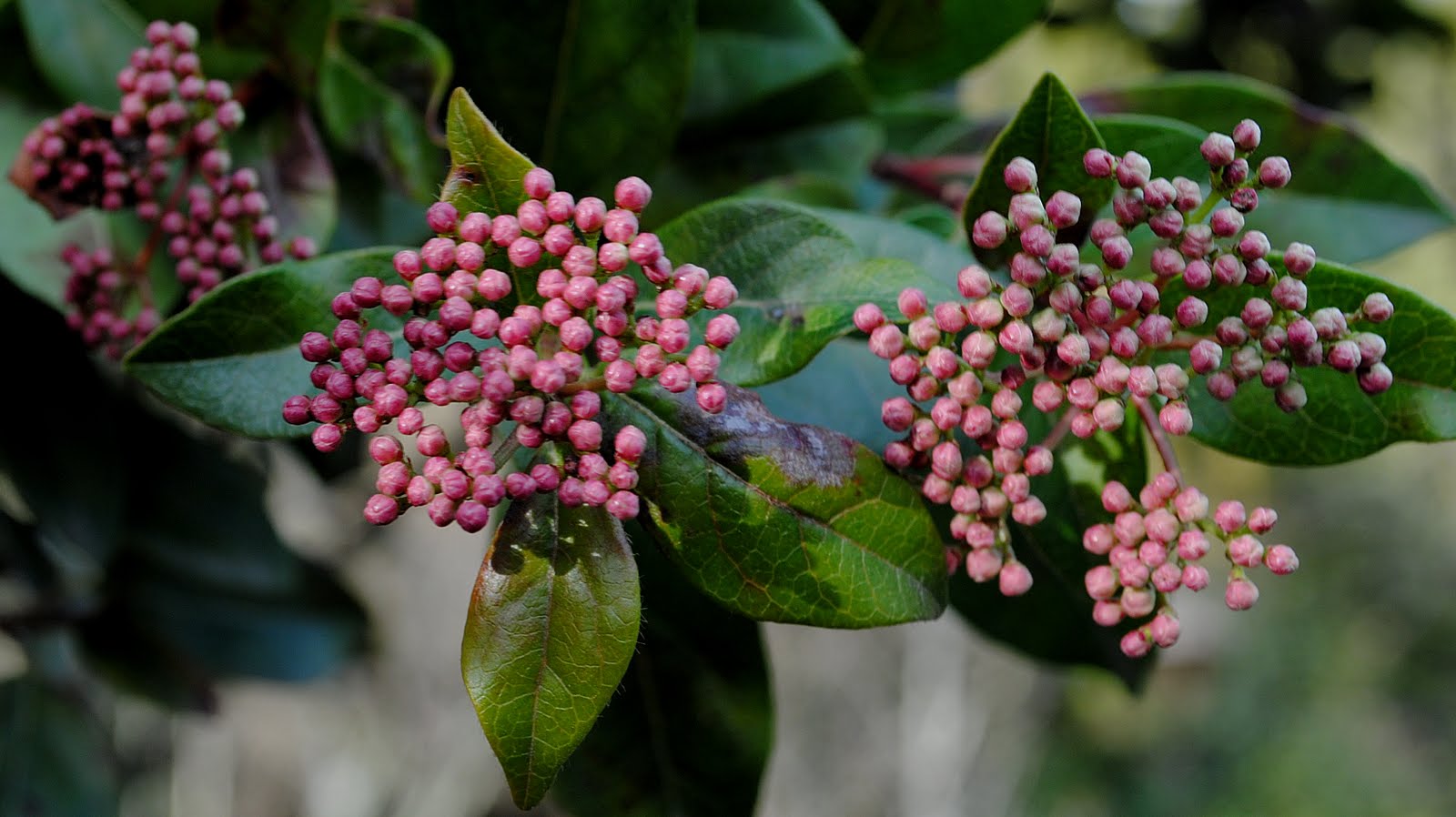
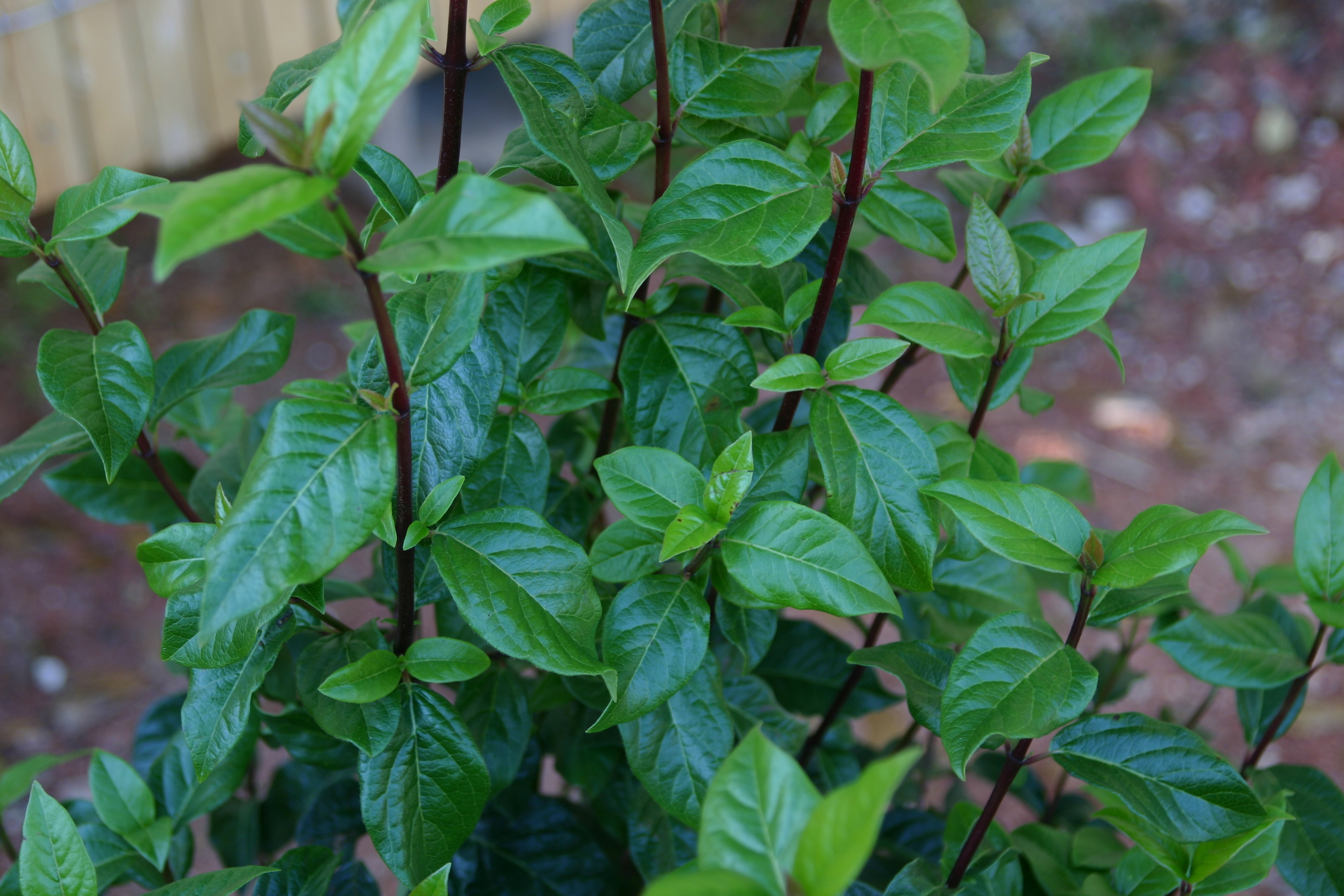
In my garden, the foil is a hedge of evergreen perennials:  Viburnum tinus ‘Compactum’ [Spring Bouquet Laurustinus].  
These are my “foundation plants,” placed in front of the foundation of my brick home.  However, I  staggered the young plants, to avoid the look of “little soldiers.”  Also, I planted them with plenty of space away from the foundation.  The open area between the brick and the staggered hedge of viburnum allows for “breathing space” and provides an allee:  a walkway for gardeners and a hiding place for children.
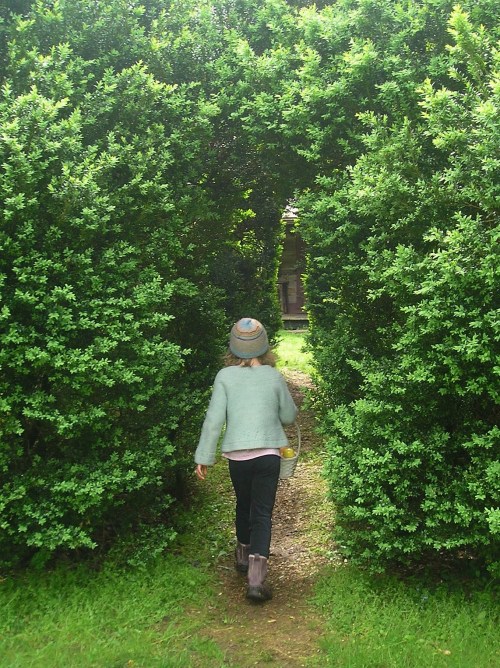
An Allee
[Photo Credit:  “through the hedge,” from the blog: “morning sun rae”]
View the photos and read the description below, to appreciate the four-season  interest of the Spring Bouquet Viburnum:   

  Spring Bouquet Viburnum:  Winter
 Spring Bouquet Viburnum: Early Spring
 Spring Bouquet Viburnum:  Spring
 Spring Bouquet Viburnum: Summer
Spring Bouquet Viburnum is an evergreen shrub with small, leathery, dark, green leaves. The new stems flush wine-red then fade to green. Viburnum tinus ‘Compactum’ has dense fragrant white to light pink flowers in the spring. The fruit is a blue black berry in the fall. This Viburnum has a round compact upright growth habit and can get 5-6′ tall by 5-6′ wide making it perfect for small hedges or screens. [magnoliagardensnursery]

Hardiness: USDA Zones 7-11
Plant Use: Shrub
Exposure: Full Sun
Water Requirements: Medium

In front of the hedge, I have planted contrasting textures of Story or Level One evergreen perennials.  
I will cover Story or Level One in How My Garden Grows:  Part Six.

Leave a comment

Filed under Enchantment, Gardens

“Between Heaven and Hell”

Dear Readers,

In my previous entry, I mentioned the date, 11.22.1963:  the exact day of death for three significant historical figures:

C. S. Lewis

John F. Kennedy

Aldous Huxley

I highly recommend the excellent book, “Between Heaven and Hell,” by Peter Kreeft, which envisions a conversation and intellectual debate between the three men.  The book artfully highlights the worldview of each of the three men, as C. S. Lewis engages Kennedy and Huxley in Socratic Dialog.

Who will win the debate?  Find out the answer, by reading this fascinating book:  it will sharpen your intellect and skill in the art of reason, persuasive argument, and logic.

Coram Deo,

Margot

Between Heaven and Hell: A Dialog Somewhere Beyond Death with John F. Kennedy, C. S. Lewis, & Aldous Huxley: 

is a novel by Peter Kreeft about U.S. President John F. Kennedy and authors C. S. Lewis (The Chronicles of Narnia) and Aldous Huxley (Brave New World), meeting in Purgatory and engaging in a philosophical discussion on faith. It was inspired by the odd coincidence that all three men died on the same day:  November 22, 1963. We see from the three points of view:  Kennedy’s “Modern Christian” view, Lewis’s “conservative Christian” or “Mere Christian” view, and Huxley’s “Orientalized Christian” view.  The book progresses as Lewis and Kennedy discuss Jesus‘ being God Incarnate, to Lewis and Huxley discussing whether or not Jesus was a deity or “just a good person.” [Wikipedia]

Peter John Kreeft 

(born 1937) is a professor of philosophy at Boston College and The King’s College.  He is the author of numerous books, as well as a popular writer of Christian philosophytheology and apologetics.  He also formulated, together with Ronald K. Tacelli, SJ, “Twenty Arguments for the Existence of God”.[1] 

Leave a comment

Filed under Worldview

The Grand Canyon


Dear Readers,

It happened fifty years ago, as our family of six traveled and camped overnight near the Grand Canyon.  In the darkness of early morning, my father roused us from sleep.  We piled into the car and huddled under blankets, as my dad drove us the short distance to the canyon.  Torn away from my warm sleeping bag, I was hungry, for we left before breakfast.  We parked and hiked to the safety railing of the canyon.  I stood, shivering and yawning, waiting for the sun to rise.

The first rays of sunlight exposed only the rim of the canyon.  But very gradually, the sunlight unveiled the upper walls of the canyon, layer upon stratified layer.  Finally, after a long wait, the sunlight  searched out the lower walls of the canyon and, finally, chased away the shadows from the darkest corners of the canyon bed.   We watched in silence, as the sunlight revealed the glory and majesty of the canyon’s colors, textures, and patterns.

I spied the thin ribbon river, so insignificant, at the bottom of the canyon, a mile below us.  It was this same river, my father told me, that in ancient times was mighty and deep and roared through the landscape to carve out the contours of the canyon.  Incredulous, I surveyed the river and then scanned the walls of the canyon, up to the rim.  What force of nature could be so fearsome and powerful as to carve a canyon a mile high?

I remember that day as one of the best gifts that I have ever received:  A once-in-a-lifetime experience.

And I think about that morning every time I read these words:

“I believe in Christianity as I believe that the sun has risen: not only because I see it, but because by it I see everything else.”  

~~~C. S. Lewis, from The Weight of Glory

Coram Deo,

Margot

1 Comment

Filed under Worldview

Worldviews: All Kinds of Lenses!

Dear Readers,

Behold! All kinds of lenses!  

A pair of binoculars:  to bring far-away objects [like birds] closer to the viewer.

A magnifying glass:  to make fine print appear larger to the reader.

A photographer’s loupe:  to magnify and examine film negatives.

A prism: to separate light into a spectrum of color.

A domed glass lens: to magnify and display the details of a rare stamp or coin.

A pair of prescription spectacles:  to correct the sight of the wearer.

Each of us has her/his own preferred lens, through which we view the world:  A “worldview.”

In the near future, I will expand this topic.  In the meantime, here is a quote to think upon:

“I believe in Christianity as I believe that the sun has risen: not only because I see it, but because by it I see everything else.”  

~~~C. S. Lewis, from The Weight of Glory

Coram Deo,

Margot


Leave a comment

Filed under Worldview

A Valentine from “Jack”

What if Hallmark commissioned famous British authors to write the “sentiment” inside Valentine’s Day greeting cards?


We will start with this quote, from Clive Staples Lewis, called “Jack” by his friends and family:

“To love at all is to be vulnerable.

Love anything and your heart will be wrung and possibly broken.  

If you want to make sure of keeping it intact you must give it to no one, not even an animal.

Wrap it carefully ’round with hobbies and little luxuries; avoid all entanglements.

Lock it up safe in the casket or coffin of your selfishness.

But in that casket, safe, dark, motionless, airless, it will change.

It will not be broken; it will become unbreakable, impenetrable, irredeemable.

To love is to be vulnerable.” 

~~C. S. Lewis, The Four Loves

Leave a comment

Filed under Valentine's Day

On Christmas Eve: Opening the Ancient Door


On Christmas Eve 1960

It was a childhood discovery, more than 50 years ago, within the 1920’s home of my grandmother,  in North Carolina:

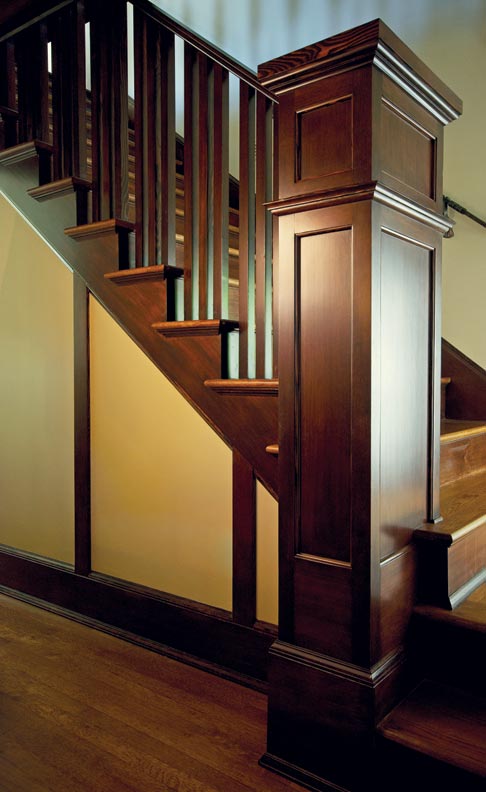
In the center of the house was a fully enclosed, square hall.

Four doors, located north, south, east, and west, opened up from the hall, into various rooms.

The hall contained the stairway to the second floor.

I climbed the stairs and located two doors, one on either side of the landing.

I opened one of the doors, which revealed a guest room.

Inside the room, I opened an interior door, which led to a clothes-closet or “wardrobe.”

I stepped inside:  It was small, dark, musty, and crowded with hanging clothes.

I pushed aside the hanging clothes and discovered that – lo and behold!  A secret door was hidden at the back of the wardrobe!

I opened this concealed door and stepped into a cavernous attic room, filled with sunlight.

I squinted my eyes, to adjust to the brightness.

I positioned a chair underneath a large window.  I climbed up and opened the window latch.


I stood on tip-toes to scan the wide, clear sky and to breathe in the crisp, cold air.

” . . . ‘Mere’ Christianity is like a hall out of which doors open to several rooms . . . it is in the rooms, not in the hall, that there are fires and chairs and meals.   

The hall is a place to wait in, a place from which to try the various doors, not a place to live in.”

~~~C. S. Lewis, “Mere Christianity,”  1952

[Note: The complete excerpt is below.]

On Christmas Eve 2000

“Not all who wander are lost.”  [J. R. R. Tolkein]  

No; I was not lost — but I was a wanderer for 25 years, within the “hall” of contemporary evangelical churches, which endeavored to be inter-denominational or non-denominational.

I began to yearn for a more permanent residence:  one that embraced Community and Creed, Doxology and Theology, Faith and Reason.

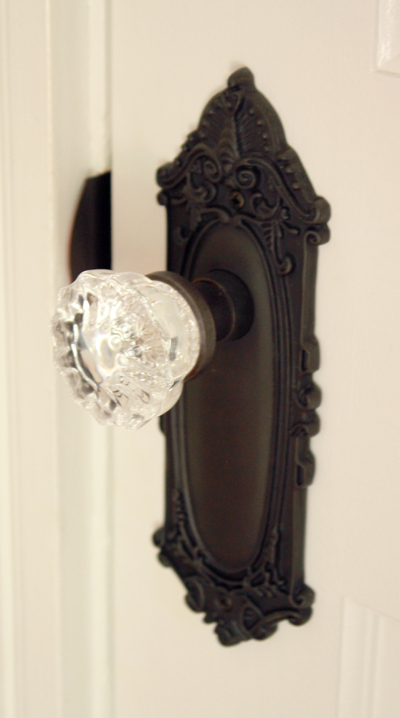
Within this “hall,” on Christmas Eve 2000, I found a heavy, solid, ancient door and opened it:

Inside, I found a spacious room with fires and chairs and meals:

Fires: Here was the warmth of community with believers, not merely contemporary and local, but also historical and global.


Chairs:  Here was the sturdy foundation of Doctrine, based upon the Authority of Holy Scripture, assisted now by Faith, Reason, and Tradition.

Meals:  Here also was nourishment, not only from the reading and preaching of the Word, but also from the real and living Presence of Christ, in the Holy Eucharist.

Opening the heavy, solid, ancient door revealed yet another door:  a portal to the Creeds, Prayers, and Hymns of Ancient and Historic Christian Faith.

My wandering search had returned me full circle:

As a child, I attended Liturgical Worship Services, which shaped me in ways that were subtle, yet strong and sure, for as N. T. Wright reminds us:

The Liturgy is a means of grace; it is God ministering to us.”

The Language of Liturgy slowly unveils to us the meaning of its metaphors.

The Words of Worship strengthen and sustain us; they form and transform us.

The Language and Words, vast and ageless, are filled with Light and Life.

~~~Margot Blair Payne, Advent 2007; Revised Advent 2012

From the Introduction to “Mere Christianity:”

“I hope no reader will suppose that ‘mere’ Christianity is here put forward as an alternative to the creeds of the existing communions – as if a man could adopt it in preference to Congregationalism or Greek Orthodoxy or anything else.  It is more like a hall out of which doors open to several rooms.  If I can bring anyone into that hall I shall have done what I attempted.  But it is in the rooms, not in the hall, that there are fires and chairs and meals.  The hall is a place to wait in, a place from which to try the various doors, not a place to live in.  For that purpose the worst of the rooms [whichever that may be] is, I think, preferable.  It is true that some people may find they have to wait in the hall for a considerable time, while others feel certain almost at once which door they must knock at.  I do not know why there is this difference, but I am sure God keeps no one waiting unless He sees that is good for him to wait.  When you do get into your room you will find that the long wait has done you some kind of good, which you would not have had otherwise.  But you must regard it as waiting, not as camping.  You must keep on praying for light:  and, of course, even in the hall, you must begin trying to obey the rules which are common to the whole house.  And above all, you must be asking which door is the true one, not which pleases you best by its paint and paneling.  In plain language, the question should never be, ‘Do I like that kind of service?’ but ‘Are these doctrines true:  Is holiness here?  Does my conscience move me toward this?  Is my reluctance to knock at this door due to my pride, or my mere taste, or my personal dislike of this particular door-keeper?’

When you have reached your own room, be kind to those who have chosen different doors and to those who are still in the hall.  If they are wrong they need your prayers all the more; and if they are your enemies, then you are under orders to pray for them.  That is one of the rules common to the whole house.”

~C. S. Lewis, excerpt from the book, Mere Christianity, 1952, Macmillan Publishing.

1 Comment

Filed under Advent, Christmas Eve

Interiors

The Second Sunday of Pentecost

Dear Faithful Family & Friends,

First, an update:  I am doing very well!  Herceptin infusions continue, once every three weeks, without any noticeable side effects. I am going strong with swimming and water aerobics.  I have worked back up to swimming one mile per session [about 2-3 times per week].

On May 10, Daniel & Haley & Benjamin moved here from Waco, TX.  They lived with us for three weeks and are now settling into their first home, which is only six houses away from Garrett’s home [and only minutes away from our home]!

Second, family and friends often ask me, “Why/when did you become Anglican?” I wrote “Interiors” a couple of years ago, in order to provide a brief answer to that question.  I begin with a quote by C. S. Lewis.

Interiors

“I hope no reader will suppose that ‘mere’ Christianity is here put forward as an alternative to the creeds of the existing communions – as if a man could adopt it in preference to Congregationalism or Greek Orthodoxy or anything else.  It is more like a hall out of which doors open to several rooms.  If I can bring anyone into that hall I shall have done what I attempted.  But it is in the rooms, not in the hall, that there are fires and chairs and meals.  The hall is a place to wait in, a place from which to try the various doors, not a place to live in.  For that purpose the worst of the rooms [whichever that may be] is, I think, preferable.  It is true that some people may find they have to wait in the hall for a considerable time, while others feel certain almost at once which door they must knock at.  I do not know why there is this difference, but I am sure God keeps no one waiting unless He sees that is good for him to wait.  When you do get into your room you will find that the long wait has done you some kind of good which you would not have had otherwise.  But you must regard it as waiting, not as camping.  You must keep on praying for light:  and, of course, even in the hall, you must begin trying to obey the rules which are common to the whole house.  And above all, you must be asking which door is the true one, not which pleases you best by its paint and paneling.  In plain language, the question should never be, ‘Do I like that kind of service?’ but ‘Are these doctrines true:  Is holiness here?  Does my conscience move me toward this?  Is my reluctance to knock at this door due to my pride, or my mere taste, or my personal dislike of this particular door-keeper?’

When you have reached your own room, be kind to those who have chosen different doors and to those who are still in the hall.  If they are wrong they need your prayers all the more; and if they are your enemies, then you are under orders to pray for them.  That is one of the rules common to the whole house.”

~C. S. Lewis, excerpt from the book, Mere Christianity, 1952, Macmillan Publishing.


The above imagery by Lewis reminds me of my childhood discovery on a wintry day at the 1920 home of my grandmother:

In the center of the house was a fully-enclosed, dark, square hall.  Four doors, located north, south, east, and west, opened up from the hall into various rooms.  Also, the central stairway was located inside the hall.  I climbed the stairs and located two doors, one to either side of the landing.  I opened one of the doors, which revealed a guest room.  Inside the room, I opened an interior door, which led to a dark, small, musty clothes-closet.  I pushed aside the hanging clothes and discovered that – lo and behold!  A secret door was hidden at the back of the clothes-closet!  I opened this concealed door and stepped into a cavernous attic room, filled with sunlight.  I squinted my eyes, to adjust to the brightness.  I positioned a chair underneath a large window.  I climbed up and opened the window latch.  I stood on tip-toes to scan the wide, clear sky and to breathe the crisp, cold air.

“Not all who wander are lost.” [Tolkein] I was not lost but I was a wanderer for 25 years within the “hall” of contemporary evangelical churches, which endeavored to be inter-denominational or non-denominational.  I began to yearn for a more permanent residence:  one that embraced Community and Creed, Doxology and Theology, Faith and Reason.

One Christmas Eve, 2000, I tried the door leading to Anglicanism, where I found fires, chairs and meals:  Here was the warmth of community with believers, not merely contemporary and local, but also historical and global.  Here was the sturdy foundation of doctrine, based upon the Authority of Holy Scripture, assisted now by Faith, Reason and Tradition.  Here also was nourishment, not only from the reading and preaching of the Word, but also from the real and living Presence of Christ, in the Holy Eucharist.

Opening the door to Anglicanism revealed yet another door:  a portal to the creeds, prayers, and hymns of ancient and historic Christian faith.  My search had brought me full circle:  As a child, I attended liturgical worship services, which shaped me in ways that were subtle, yet strong and sure, for as N. T. Wright reminds us, “The Liturgy is a means of grace; it is God ministering to us.”

The Language of Liturgy slowly unveils to us the meaning of its metaphors.  The Words of Worship strengthen and sustain us; they form and transform us.  The Language and Words, vast and ageless, are filled with light and life.

~~~Margot Blair Payne, Advent 2007

2 Comments

Filed under Christmas Eve