Tag Archives: hymns

Hymnody: “Let All Mortal Flesh Keep Silence”


Dear Readers, 

The study of Theology always begins and ends with Doxology.  And a Hymn is Theology, set to music.

Study, memorize, and sing hymns that are rich in Theology:  hymns that are solid, historic, orthodox,  ancient, classical, and Trinitarian.

This is a delightful way to engage in both Theology and Doxology.

Below I have provided two versions of a theologically-rich hymn, “Let All Mortal Flesh Keep Silence.”


Let All Mortal Flesh Keep Silence

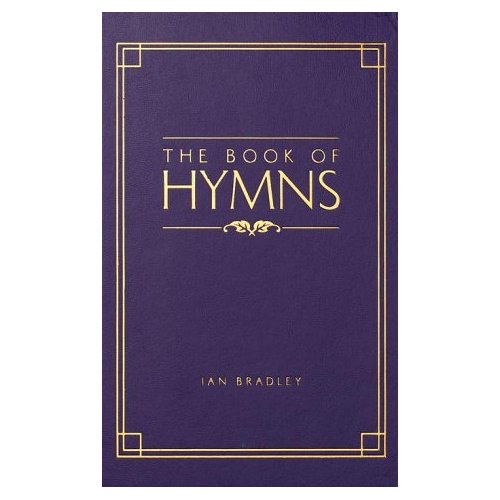
“This powerful Eucharistic hymn, so full of awe and mystery, is taken from one of the early liturgies of the Greek Orthodox Church.  The verses are based on a part of the Liturgy of St. James, which dates from the fourth century and is found in both Greek and Syriac .

The whole liturgy was first translated into English, by J. M. Neale and R. F. Littledale, and published in their Primitive Liturgies [1868-9].  Shortly after the books’ publication, the Reverend Gerard Moultrie [1829-85] versified a section entitled Prayer of the Cherubic Hymn, to form this hymn.  Moultrie was successively Chaplain of Shrewsbury School, Vicar of South Leigh, and Warden of St. James’ College, also in South Leigh.  He was responsible for several translations of hymns, as well as a number of his own compositions.

It is Moutlrie’s translation which appears [above] and which is found in most Roman Catholic, Anglican, and Presbyterian hymnals.”

~~~From The Book of Hymns, Ian Bradley
 

Let All Mortal Flesh Keep Silence:  Version One

French Carol Melody, Picardy; Liturgy of St. James, Translated by G. Moutlrie

Let all mortal flesh keep silence,

And with fear and trembling stand;

Ponder nothing earthly-minded,

For with blessing in His hand,

Christ our God to earth descendeth,

Our full homage to demand.


King of kings, yet born of Mary,

As of old on earth He stood,

Lord of Lords, in human vesture –

In the Body and the Blood –

He will give to all the faithful

His own Self for heavenly food.


Rank on rank, the host of heaven

Spreads its vanguard on the way,

As the Light of Light descendeth,

From the realms of endless day,

That the powers of hell may vanish,

As the darkness clears away.


At His feet, the six-winged Seraph;

Cherubim with sleepless eye,

Veil their faces to the Presence,

As with ceaseless voice they cry,

“Alleluia!  Alleluia! Alleluia!  Lord most high!”


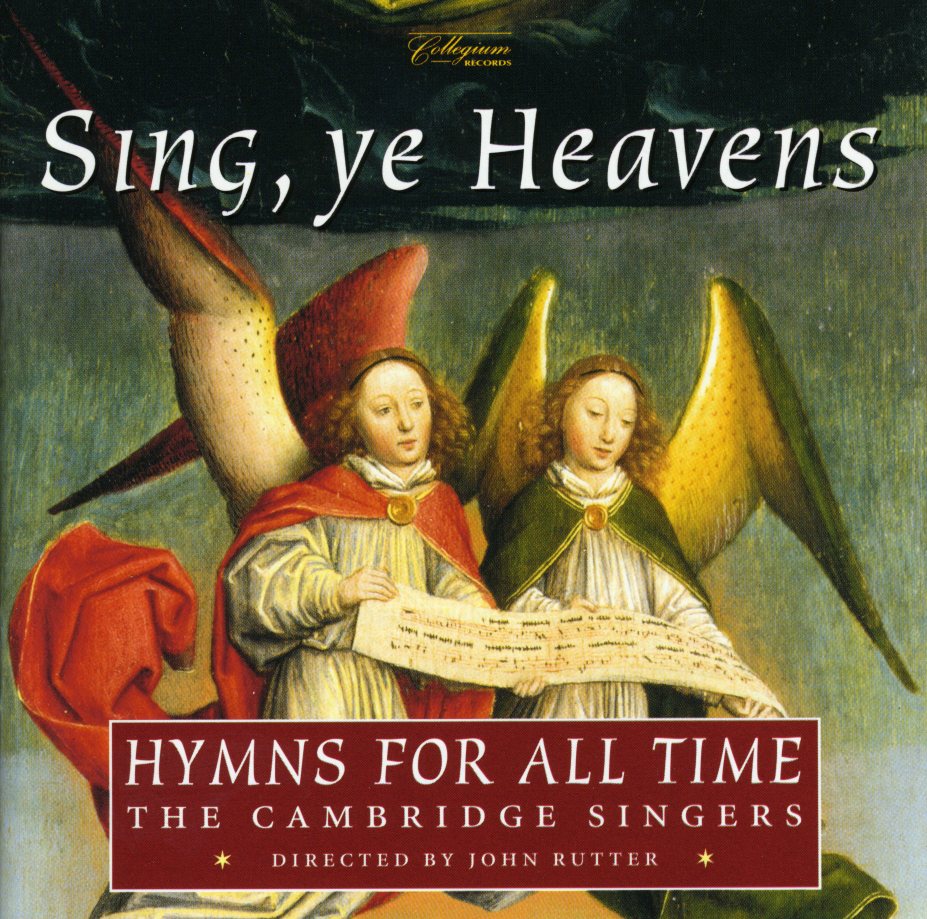
“The text of Let All Mortal Flesh Keep Silence is . . . taken from the fourth-century Orthodox Liturgy of St. James of Jerusalem; Gerard Moultrie’s verse translation was published in 1864, when there was renewed interest in early Christian rites, awakened, doubtless, by the Oxford Movement.  Vaughn Williams included it in The English Hymnal, set to the French carol melody Jésus Christ s’habille en pauvre, an unlikely, but inspired, union.”

~~~From CD and Notes:  Sing, Ye HeavensHymns for All Time:  The Cambridge Singers, Directed by John Rutter, Collegium Records


You can listen to the hymn here: Hymnody: “Let All Mortal Flesh Keep Silence”
 

Let All Mortal Flesh Keep Silence:  Version Two

Let all mortal flesh keep silence and stand with fear and trembling, and lift itself above all earthly thought.

For the King of kings and Lord of lords, Christ our God, cometh forth to be our oblation and to be given for Food to the faithful.

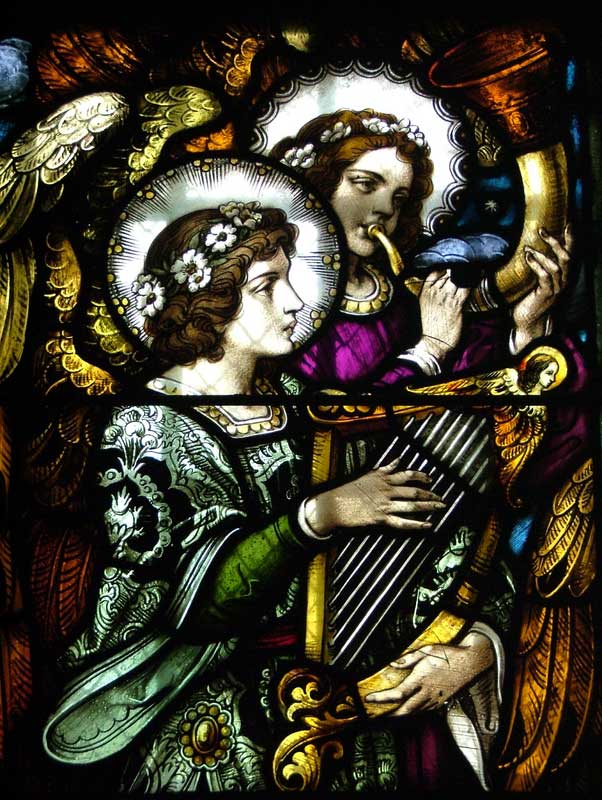
Before him come the choirs of angels with every principality and power; the Cherubim with many eyes, and winged Seraphim, who veil their faces as they shout exultingly the hymn:  Alleluia. 

From the Liturgy of St. James

~~~E. C. Bairstow, [1874-1946]

“Outwardly, Sir Edward Bairstow typified the English organist-composer of the early twentieth century:  conservative, craftsman-like, gifted with a natural feeling for choral writing, and discriminating in his choice of texts.  From 1913, until his death, he was organist of York Minster, for the spacious acoustic of which building Let All Mortal Flesh Keep Silence was doubtless conceived. 

Yet this brief anthem, written in 1925, is filled with an awe-inspiring sense of mystery, majesty, and power that is anything but conventional, evoking the solemn liturgical music of Russia, rather than the aura of the English organ loft.  One wonders what Bairstow might have achieved if he had been free to devote himself more fully to composition.”

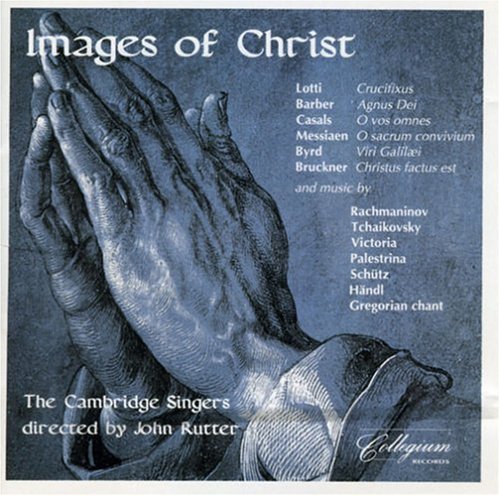
~~~From CD and Notes:  Images of Christ, The Cambridge Singers, Directed by John Rutter, Collegium Records
Coram Deo,

Margot
Leave a comment

Filed under Hymns

On Christmas Eve: Opening the Ancient Door


On Christmas Eve 1960

It was a childhood discovery, more than 50 years ago, within the 1920’s home of my grandmother,  in North Carolina:

In the center of the house was a fully enclosed, square hall.

Four doors, located north, south, east, and west, opened up from the hall, into various rooms.

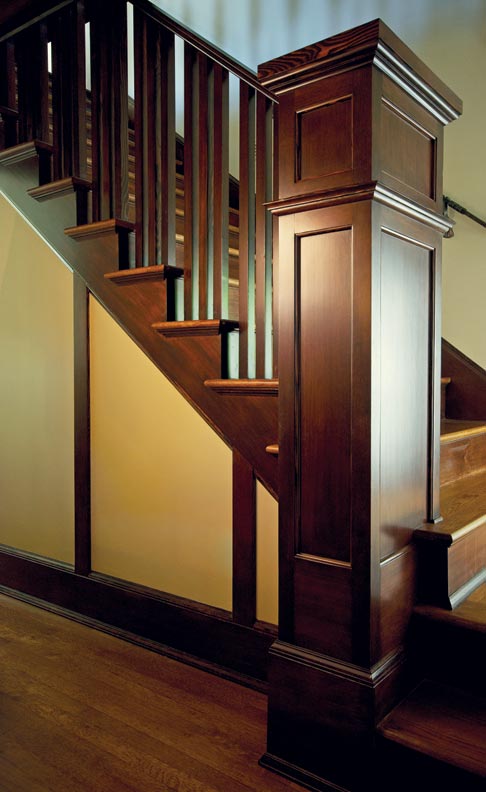
The hall contained the stairway to the second floor.

I climbed the stairs and located two doors, one on either side of the landing.

I opened one of the doors, which revealed a guest room.

Inside the room, I opened an interior door, which led to a clothes-closet or “wardrobe.”

I stepped inside:  It was small, dark, musty, and crowded with hanging clothes.

I pushed aside the hanging clothes and discovered that – lo and behold!  A secret door was hidden at the back of the wardrobe!

I opened this concealed door and stepped into a cavernous attic room, filled with sunlight.

I squinted my eyes, to adjust to the brightness.

I positioned a chair underneath a large window.  I climbed up and opened the window latch.


I stood on tip-toes to scan the wide, clear sky and to breathe in the crisp, cold air.

” . . . ‘Mere’ Christianity is like a hall out of which doors open to several rooms . . . it is in the rooms, not in the hall, that there are fires and chairs and meals.   

The hall is a place to wait in, a place from which to try the various doors, not a place to live in.”

~~~C. S. Lewis, “Mere Christianity,”  1952

[Note: The complete excerpt is below.]

On Christmas Eve 2000

“Not all who wander are lost.”  [J. R. R. Tolkein]  

No; I was not lost — but I was a wanderer for 25 years, within the “hall” of contemporary evangelical churches, which endeavored to be inter-denominational or non-denominational.

I began to yearn for a more permanent residence:  one that embraced Community and Creed, Doxology and Theology, Faith and Reason.

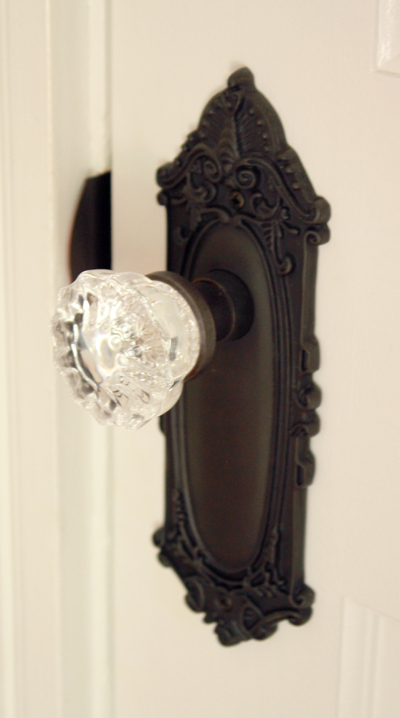
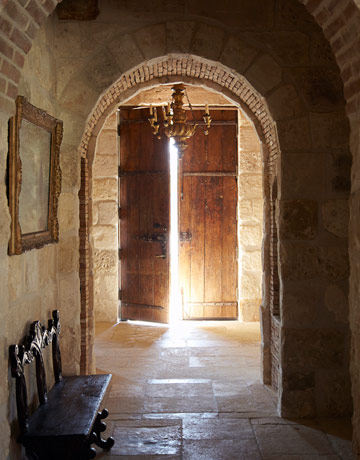
Within this “hall,” on Christmas Eve 2000, I found a heavy, solid, ancient door and opened it:

Inside, I found a spacious room with fires and chairs and meals:

Fires: Here was the warmth of community with believers, not merely contemporary and local, but also historical and global.


Chairs:  Here was the sturdy foundation of Doctrine, based upon the Authority of Holy Scripture, assisted now by Faith, Reason, and Tradition.

Meals:  Here also was nourishment, not only from the reading and preaching of the Word, but also from the real and living Presence of Christ, in the Holy Eucharist.

Opening the heavy, solid, ancient door revealed yet another door:  a portal to the Creeds, Prayers, and Hymns of Ancient and Historic Christian Faith.

My wandering search had returned me full circle:

As a child, I attended Liturgical Worship Services, which shaped me in ways that were subtle, yet strong and sure, for as N. T. Wright reminds us:

The Liturgy is a means of grace; it is God ministering to us.”

The Language of Liturgy slowly unveils to us the meaning of its metaphors.

The Words of Worship strengthen and sustain us; they form and transform us.

The Language and Words, vast and ageless, are filled with Light and Life.

~~~Margot Blair Payne, Advent 2007; Revised Advent 2012

From the Introduction to “Mere Christianity:”

“I hope no reader will suppose that ‘mere’ Christianity is here put forward as an alternative to the creeds of the existing communions – as if a man could adopt it in preference to Congregationalism or Greek Orthodoxy or anything else.  It is more like a hall out of which doors open to several rooms.  If I can bring anyone into that hall I shall have done what I attempted.  But it is in the rooms, not in the hall, that there are fires and chairs and meals.  The hall is a place to wait in, a place from which to try the various doors, not a place to live in.  For that purpose the worst of the rooms [whichever that may be] is, I think, preferable.  It is true that some people may find they have to wait in the hall for a considerable time, while others feel certain almost at once which door they must knock at.  I do not know why there is this difference, but I am sure God keeps no one waiting unless He sees that is good for him to wait.  When you do get into your room you will find that the long wait has done you some kind of good, which you would not have had otherwise.  But you must regard it as waiting, not as camping.  You must keep on praying for light:  and, of course, even in the hall, you must begin trying to obey the rules which are common to the whole house.  And above all, you must be asking which door is the true one, not which pleases you best by its paint and paneling.  In plain language, the question should never be, ‘Do I like that kind of service?’ but ‘Are these doctrines true:  Is holiness here?  Does my conscience move me toward this?  Is my reluctance to knock at this door due to my pride, or my mere taste, or my personal dislike of this particular door-keeper?’

When you have reached your own room, be kind to those who have chosen different doors and to those who are still in the hall.  If they are wrong they need your prayers all the more; and if they are your enemies, then you are under orders to pray for them.  That is one of the rules common to the whole house.”

~C. S. Lewis, excerpt from the book, Mere Christianity, 1952, Macmillan Publishing.

1 Comment

Filed under Advent, Christmas Eve

Interiors

The Second Sunday of Pentecost

Dear Faithful Family & Friends,

First, an update:  I am doing very well!  Herceptin infusions continue, once every three weeks, without any noticeable side effects. I am going strong with swimming and water aerobics.  I have worked back up to swimming one mile per session [about 2-3 times per week].

On May 10, Daniel & Haley & Benjamin moved here from Waco, TX.  They lived with us for three weeks and are now settling into their first home, which is only six houses away from Garrett’s home [and only minutes away from our home]!

Second, family and friends often ask me, “Why/when did you become Anglican?” I wrote “Interiors” a couple of years ago, in order to provide a brief answer to that question.  I begin with a quote by C. S. Lewis.

Interiors

“I hope no reader will suppose that ‘mere’ Christianity is here put forward as an alternative to the creeds of the existing communions – as if a man could adopt it in preference to Congregationalism or Greek Orthodoxy or anything else.  It is more like a hall out of which doors open to several rooms.  If I can bring anyone into that hall I shall have done what I attempted.  But it is in the rooms, not in the hall, that there are fires and chairs and meals.  The hall is a place to wait in, a place from which to try the various doors, not a place to live in.  For that purpose the worst of the rooms [whichever that may be] is, I think, preferable.  It is true that some people may find they have to wait in the hall for a considerable time, while others feel certain almost at once which door they must knock at.  I do not know why there is this difference, but I am sure God keeps no one waiting unless He sees that is good for him to wait.  When you do get into your room you will find that the long wait has done you some kind of good which you would not have had otherwise.  But you must regard it as waiting, not as camping.  You must keep on praying for light:  and, of course, even in the hall, you must begin trying to obey the rules which are common to the whole house.  And above all, you must be asking which door is the true one, not which pleases you best by its paint and paneling.  In plain language, the question should never be, ‘Do I like that kind of service?’ but ‘Are these doctrines true:  Is holiness here?  Does my conscience move me toward this?  Is my reluctance to knock at this door due to my pride, or my mere taste, or my personal dislike of this particular door-keeper?’

When you have reached your own room, be kind to those who have chosen different doors and to those who are still in the hall.  If they are wrong they need your prayers all the more; and if they are your enemies, then you are under orders to pray for them.  That is one of the rules common to the whole house.”

~C. S. Lewis, excerpt from the book, Mere Christianity, 1952, Macmillan Publishing.


The above imagery by Lewis reminds me of my childhood discovery on a wintry day at the 1920 home of my grandmother:

In the center of the house was a fully-enclosed, dark, square hall.  Four doors, located north, south, east, and west, opened up from the hall into various rooms.  Also, the central stairway was located inside the hall.  I climbed the stairs and located two doors, one to either side of the landing.  I opened one of the doors, which revealed a guest room.  Inside the room, I opened an interior door, which led to a dark, small, musty clothes-closet.  I pushed aside the hanging clothes and discovered that – lo and behold!  A secret door was hidden at the back of the clothes-closet!  I opened this concealed door and stepped into a cavernous attic room, filled with sunlight.  I squinted my eyes, to adjust to the brightness.  I positioned a chair underneath a large window.  I climbed up and opened the window latch.  I stood on tip-toes to scan the wide, clear sky and to breathe the crisp, cold air.

“Not all who wander are lost.” [Tolkein] I was not lost but I was a wanderer for 25 years within the “hall” of contemporary evangelical churches, which endeavored to be inter-denominational or non-denominational.  I began to yearn for a more permanent residence:  one that embraced Community and Creed, Doxology and Theology, Faith and Reason.

One Christmas Eve, 2000, I tried the door leading to Anglicanism, where I found fires, chairs and meals:  Here was the warmth of community with believers, not merely contemporary and local, but also historical and global.  Here was the sturdy foundation of doctrine, based upon the Authority of Holy Scripture, assisted now by Faith, Reason and Tradition.  Here also was nourishment, not only from the reading and preaching of the Word, but also from the real and living Presence of Christ, in the Holy Eucharist.

Opening the door to Anglicanism revealed yet another door:  a portal to the creeds, prayers, and hymns of ancient and historic Christian faith.  My search had brought me full circle:  As a child, I attended liturgical worship services, which shaped me in ways that were subtle, yet strong and sure, for as N. T. Wright reminds us, “The Liturgy is a means of grace; it is God ministering to us.”

The Language of Liturgy slowly unveils to us the meaning of its metaphors.  The Words of Worship strengthen and sustain us; they form and transform us.  The Language and Words, vast and ageless, are filled with light and life.

~~~Margot Blair Payne, Advent 2007

2 Comments

Filed under Christmas Eve