Worldview Lens: “On the Shoulders of Giants”

The South Rose Window of the Cathedral Notre-Dame de Paris:  [www.notredamedeparis.fr]

La claire-voie de la Rose Sud:  [www.notredamedeparis.fr]

“Under the rosette, the heavenly court is represented by the sixteen prophets, portrayed under the large windows of the bay, which were painted in the 19th century by Alfred Gérente, under Viollet-le-Duc’s supervision.

The architect drew inspiration from Chartres Cathedral, placing the four great prophets (Isaiah, Jeremiah, Ezekiel and Daniel) carrying the four evangelists (Matthew, Mark, Luke and John) on their shoulders, at the centre.

This window echoes the reflections of Bertrand, Bishop of Chartres in the 13th century, on the connection between the Old and New Testaments:

‘We are all dwarves standing on the shoulders of giants.

We see more than they do, not because our vision is clearer there or because we are taller, but because we are lifted up, due to their giant scale.’ ”   

[www.notredamedeparis.fr]

Dear Readers,

[This is a revision from an earlier post.]

Each of us uses his/her own lenses in order to view the world.  This is called a “worldview.”

Since it is impossible to view the world without lenses, it is imperative that we wisely choose the lens that offers us the most clear view of history.

We contemporaries, who are committed to Christian formation, have received a priceless unopened gift — an inheritance!

Receiving this inheritance is like opening the gift of a high-powered, finely engineered telescope, allowing us to peer into the heavens, through a telescope dome:

~~~~~

“Wise Christians should always be historians in one sense.  They sit higher and can see further, more panoramically, if they enrich themselves from the past.

John of Salisbury [1115-1180] a medieval scholar, spoke of the jewels, the riches, the prestige of antiquity.  He was right.  

The past has bequeathed to us its gems.  Note his wise words:

‘Our own generation enjoys the legacy bequeathed to it by that which preceded it.  

We frequently know more, not because we have moved ahead by our own natural ability, but because we are supported by the [mental] strength of others, and possess riches that we have inherited from our forefathers.  

Bernard of Chartres used to compare us to [puny] dwarves perched on the shoulders of giants.  

He pointed out that we see more and farther than our predecessors, not because we have keener vision or greater height, but because we are lifted up and borne aloft on their gigantic stature.’

Our brothers and sisters from the past, indwelt by the same Spirit who indwells us, have left us a rich inheritance.  

It’s locked away inside a treasure chest.  It’s layered in cobwebs.  It’s rusty and in some ways not very appealing.


But inside is the wealth John of Salisbury told us about:  diamonds, emeralds, gold sovereigns, and chains of Spanish silver.  

If you have ever wanted to go on a treasure hunt, you’ve come to the right place.  We’ve already found the chest.  

The hard, laborious work is done.  All we need do is dip our hands inside and let the riches run through our fingers.  

Come along, and you’ll be sitting higher and further.”

[Resource:  Pocket History of the Church, D. Jeffrey Bingham, InterVarsity Press, 2002.]

Coram Deo,

Margot


1 Comment

Filed under discipleship, theology and doxology, Uncategorized, Worldview

Worldview Lens: The Grand Canyon

Dear Readers,

[This is a revision of an earlier post.]

It happened fifty years ago, as our family of six traveled and camped overnight near the Grand Canyon:

In the darkness of early morning, my father roused us from sleep.

We piled into the car and huddled under blankets, as my dad drove us the short distance to the canyon.

Torn away from my warm sleeping bag, I was hungry, for we left before breakfast.

We parked and hiked to the safety railing of the canyon.

I stood, shivering and yawning, waiting for the sun to rise.

The first rays of sunlight exposed only the rim of the canyon.

Very gradually, the sunlight unveiled the upper walls of the canyon, layer upon stratified layer.

Finally, after a long wait, the sunlight  searched out the lower walls of the canyon and, finally, chased away the shadows from the darkest corners of the canyon bed.

We watched in silence, as the sunlight revealed the grandeur, glory, and majesty of the canyon’s colors, textures, and patterns.

I spied the thin ribbon of river, at the bottom of the canyon, a mile below us.

Compared to the giant scale of the canyon, the ribbon seemed insignificant.

Yet, my father told me, it was this same river, a mile deep in ancient times, that thundered and roared through the landscape, to carve out the contours of the canyon.

Incredulous, I surveyed the riverbed and then slowly scanned my eyes up the walls of the canyon, wondering how many centuries elapsed during this process.

I thought to myself,  “What force of nature could be so fearsome and powerful as to carve a canyon a mile high?”

I remember that morning as one of the best gifts that I have ever received:  A once-in-a-lifetime experience.

And I think about that morning every time I read these words:

“I believe in Christianity as I believe that the sun has risen:  not only because I see it, but because by it I see everything else.”  

~~~C. S. Lewis, from The Weight of Glory

Coram Deo,

Margot

Leave a comment

Filed under Childhood Memories, theology and doxology, Worldview

Worldview Lens: Interpreting Scripture

Dear Readers,

Today’s entry continues the Worldview Lens Series:  The entry is long but includes section breaks:   It might be helpful to read one section at a time.

Read this entry slowly and carefully.  It is an excellent introduction to the Art of Interpreting Scripture.

For emphasis, I have included italics, boldface, and underlining.  I have included “Terms and Definitions.”

Written Down to Instruct Us:  Interpreting Scripture

by The Rev. Dr. Michael Petty, St. Peter’s Anglican Church

Introduction

In I Corinthians 10:1-5, Paul makes reference to Israel’s crossing of the Red Sea, the fact that Israel was sustained by miraculous water in the wilderness, and the fact that, while in the wilderness, most of Israel was not faithful to God.  The result of this was that “they were struck down in the wilderness” [I Corinthians 10:5].  Paul presents this whole narrative to the Corinthians church as a warning against taking God’s grace and mercies lightly.  He makes this clear, when he says that these events “were written down to instruct us.” [I Corinthians 10:11]  The significant point made here is absolutely crucial:  Scripture speaks to God’s people, across time.

[There are] two cardinal points with respect to the interpretation of Scripture:

First, we do not begin to truly interpret Scripture, until we allow Scripture to interpret us.  If we are asking all the questions, we are not really interpreting it.

Second, in reading Scripture, we are not simply reading ancient religious literature but God is addressing us.

Interpreting Scripture:  Modern Prejudices

  1. The common perception that the business of biblical interpretation is essentially a war between “fundamentalists” and “liberals” is a mistaken one.  This view is too simplistic.  The real conflict, which takes place as several different [conflicts] simultaneously, is between those who believe that the witness of Scripture is irreplaceable, unsurpassable, and contains the soul of the Christian faith, and those who see Scripture as simply a historically conditioned, human document, which may be set aside at will . . .
  2. The popular view, held by those unfamiliar with the history of biblical interpretation, that the Bible can be interpreted to mean whatever an interpreter wants it to mean, is manifestly false.  If Scripture can be interpreted to mean anything, the consequence is that the Christian faith collapses into meaninglessness.
  3. The view that “modern people” [by which we usually mean ourselves] are so much better equipped to interpret Scripture than [were] past generations of Christians is simply a conceit.  It is quite clear that our scientific and technical education has not brought us to a depth of scriptural understanding which surpasses all previous generations.  One need only look at the quality of modern preaching to see this:  The sermons of St. Augustine, in the fifth century, and the sermons of John Wesley, in the eighteenth, which were all preached to ordinary Christians, reflect deeply on scriptural texts, in ways that are often beyond the average Christian today.  Yet, St. Augustine and Wesley were popular preachers.
  4. With respect to the interpretation of Scripture, [many denominations/churches] suffer from a defect, one that is potentially fatal:  On the one hand, we profess that Scripture is our ultimate authority.  [Article 6 of the Thirty-Nine Articles of Religion says that “Holy Scripture containeth all things necessary to salvation.”]  On the other hand, we have no commonly-recognized way for adjudicating among differing interpretations of Scripture or any real way of articulating normative interpretations.  This means that our claim about Scripture being our ultimate authority is a largely formal one, which has little actual application to our life as a church.

Interpreting Scripture:  Some Historical Perspective

When considering the practice of biblical interpretation, it is important to have some historical perspective.  In particular, we need to mention four points:

1.     It is important to remember that the Christian faith began with the interpretation of Scripture.  For early Christians like Paul, whose letters are the earliest New Testament documents, the Old Testament was not old but simply Scripture [as in 2 Timothy 3:16].  For Paul, the Old Testament is not simply a collection of stories or moral rules but contains God’s designs and promises for his people [Romans 1:1-2], all of which are fulfilled in Jesus Christ [2 Corinthians 1:20].  It is not simply that the Old Testament serves as a good introduction to the New Testament:  Rather, without the Old Testament, the New Testament would not exist.

An example might be helpful:  The first Christians labored to understand the nature and meaning of Jesus’ death on the cross.  Of course, they looked at the cross in the light of the resurrection but they understood both by interpreting the Old Testament.  In Romans 3:23-25, Paul is doing just this.  He describes Jesus as the one “whom God put forward as an expiation of his blood.”  The word translated as expiation or atonement is the Greek work, hilastrion.  Paul is clearly referring to Leviticus 16:2 and the Day of Atonement liturgy, in which the high priest makes atonement or expiation for the sins of Israel, by sprinkling sacrificial blood on the hilastrion or “mercy seat,” the gold lid on the Ark of the CovenantPaul understands that the Day of Atonement finds its fulfillment in Jesus Christ.  The same line of thinking is present in Hebrews 9-10.  The Old Testament provides the matrix, in which Jesus is interpreted.

2.    The fact that the early Christians accepted the Old Testament as Scripture meant that, from the beginning, the so-called “lost gospels,” or Gnostic gospels, could never be accepted as Christian scripture, since these so-called “gospels” were composed by heretical Christian groups, which completely rejected the Old Testament.  The acceptance of the Old Testament as Scripture ruled out, from the beginning, all the Gnostic gospels.  As a matter of fact, no writings produced after 150 AD were even considered for inclusion into the canon of Scripture.

3.    It is important to remember that the Church has been interpreting Scripture for some 2000 years and, in this time, has learned something.  One of the central problems of the modern Church is that, through ignorance and intellectual sloth, we have cut ourselves off from what has been learned.  The Church, as from the beginning, applied two cardinal principles to the interpretation of Scripture.

a.  We must always interpret particular passages of Scripture in the light of the whole Scripture.  What this has meant is that the Old Testament has been interpreted in the light of the New Testament.  The whole of Scripture – Old Testament and New Testament – constitutes a two-testament witness to the one God.  The strength of any interpretation lies in its ability to make sense of Scripture as a unified whole.

b.  We must always interpret passages of Scripture in the light of the Church’s rule of faith, expressed in the ecumenical creeds [The Apostle’s and Nicene Creeds].  We do not read Scripture as we would an encyclopedia [as a neutral source of information] nor do we read Scripture as something whose meaning is determined by the reader.  We read Scripture in the context of the faith, articulated by the Church.

4.  What is now called fundamentalism is a relatively new phenomenon, being essentially a product of the nineteenth century.  It emerged out of the modern context, in which truth was equated with factual information.  Fundamentalism adopted a flattening approach to Scripture, which was really quite new and this resulted in interpretations, which were, surprising though this may sound, rationalistic in nature.  Fundamentalism is a product of the modern world and was one of the many signs that the modern Church had lost touch with its past with respect to the interpretation of Scripture.  The other product of the modern world, Christian liberalism, was equally flawed.  It adopted a way of interpreting Scripture, which was just as flattening as that of fundamentalism, though it was seen as being more congenial to people who considered themselves enlightened.  Both fundamentalism and liberalism are failed methods of biblical interpretation because both decide, in advance, what Scripture can and cannot say.

Christian interpretation of Scripture has always, until recently, recognized that the Bible has many senses and that the art of reading Scripture consists in allowing it to speak from the depth of its riches.

 Traditionally understood, Scripture has been seen as having four senses:

a.  The literal sense:  The plain sense of what the text actually says, as discerned by sound methods of interpretation.  St. Thomas Aquinas thought that this sense was the most important.  To talk about the literal sense of Scripture meant that it had a meaning, which was not simply dependent on the reader.

b.  The allegorical sense:  Some things in Scripture are signs and types of realities in other parts of Scripture.  Scripture contains some truths, which must be understood allegorically.  Example:  Romans 5:12-21.

c.  The moral sense:  Some passages of Scripture must/can be read as offering guidance in holy living.  Example:  1 Corinthians 10.

d.  The anagogical sense:  Some passages of Scripture hold before us our eternal destiny, which is absolutely necessary to our earthly pilgrimage.  Example:  Hebrews 12:18-29.

It is important to note that, for the best Christian interpreters of Scripture, the allegorical, moral, and anagogical sense of Scripture never existed apart from or in conflict with the literal sense.  The four senses of Scripture remind us that the goal of Christian interpretation has been to plumb the depths of Scripture and to present the meaning of Scripture in its entire splendor.  This [approach] contrasts markedly with much of modern interpretation, especially the interpretation in liberal Protestantism, which seems to focus on getting as little out of Scripture as possible or, even, inoculating us against it.  Something is clearly very wrong.  As Pope Benedict XVI [then Cardinal Joseph Ratzinger] noted in his now famous 1988 Erasmus Lecture, the crisis in Biblical interpretation is really a crisis in the faith of the Church.

Interpreting Scripture:  Three Examples:

One of the most important methods of biblical interpretation is called intertextual interpretation.  This method involves paying attention to the ways in which one text of Scripture interprets another.  I want to offer three examples of intertextual interpretation and to show why each is significant.  I will focus on one theme, the New Testament interpretation of the most important event in the Old Testament, the Exodus.  The Exodus is a complex of three events–Passover, Red Sea crossing, and Sinai covenant—and these events constitute the soul of the Old Testament.

1.      “Our God is a consuming fire.”   [Hebrews 12:18-29]:  This text offers a Christian interpretation of Israel’s experience at Mt. Sinai, in Exodus 19:12-22; 20:18-21 [cf. Deuteronomy 4:11-12, 5:22-27].  The experience of Israel becomes the matrix, within which Christians can understand their own experience.  In Jesus Christ, Christians have not simply come to Mt. Sinai, awesome and important as it is.  No, in Jesus Christ, God’s new covenant people, defined no longer by circumcision and Passover, but by Baptism and Eucharist, have come to the city of God, “the heavenly Jerusalem” [12:22].  But note this:  While Christians have come to the heavenly Jerusalem, they have also come into the presence of the same God, Who met Israel on Mt. Sinai.  It is not that Mt. Sinai reveals a God Who is awesome, demanding, and who gives his law to his people to form them in holiness, while Jesus reveals a God who is friendly, undemanding, and who just wants us to be nice.  No, for indeed, our God is a consuming fire [12:29].  God revealed Himself on Mt. Sinai as a consuming fire and remains such, in Jesus Christ.  Those who trifle with God’s grace, who sit loose to His Word, who neglect His holiness, do so to their own eternal peril.  From Jerusalem to New Jerusalem, from Mt. Sinai to Golgotha, God is and remains a consuming fire.  Those who do not take God’s holiness seriously simply cannot understand Scripture.

2.  “Christ, our Passover lamb, has been sacrificed.”  [1 Corinthians 5:7]:  In response to widespread immorality in the Corinthian church, Paul writes, in 1 Corinthians, to make a fundamental point:  that the Corinthians have failed to understand what it means to be the church.  To make this point, Paul interprets the Old Testament, specifically Exodus 12:15-20, which gives instructions for the celebration of the Passover.  During the seven days of Passover, Israel was to eat unleavened bread and all leaven had to be removed from homes.  Anyone who ate leavened bread or whose home had leaven in it was disqualified from keeping Passover.  The removal of leaven was seen as a sign of purity and Leviticus 2:11-16 forbids Israel from offering to God anything with leaven in it.

Paul takes all of this and transposes it into a Christian context.  He reads leaven as moral impurity, Israel celebrating the Passover as the Church celebrating the Eucharist and the Passover Lamb as Christ.  For Paul, therefore, moral impurity is completely inappropriate to the Church, not because this violates a few rules but because it violates the very essence of what the Church is.  Paul uses the Old Testament to make it clear that Christian morality is not simply a matter of individual conduct but a matter of what is appropriate to God’s holy, covenant peopleTo fail to see that the Christian life is essentially about holiness in all dimensions of life is to fail to completely understand God, the Church, and Christ.

3.  “Be perfect, therefore, as your heavenly Father is perfect.” [Matthew 5:48]:  The Sermon on the Mount occupies Matthew 5-7.  It has often been misunderstood.  The most common misunderstanding of it today takes the form of supposing that Jesus came to replace all the hard demands of the Old Testament with easier ones.  Thus, we frequently hear that the essence of Jesus’ teaching is that we should be loving and non-judgmental.  But, listen to what Jesus Himself says:  “Do not think that I have come to abolish the law or the prophets; I have not come to abolish, but to fulfill . . . For I tell you, unless your righteousness exceeds that of the scribes and Pharisees, you will never enter the kingdom of heaven” [Matthew 5:17, 20]

After this, Jesus then reinterprets key commandments of the law.  The prohibition against murder in Exodus 20:13 becomes a prohibition against anger.  The prohibition against adultery in Exodus 20:14 becomes a general prohibition against lust.  The “an eye for an eye and a tooth for a tooth” of Exodus 21:23-24, intended to limit revenge, becomes a command to completely forswear revenge.  The thing to notice here is that, whenever Jesus interprets the Old Testament, he does not interpret it away but interprets it so as to make it more demanding, not less so.  Jesus has not come to free us from God’s demands or to lead us into the sunny uplands of either liberal Christianity or Christian America:  He has come to bring the holiness of God to bear upon every aspect of our lives.  Lest anyone fail to understand what Jesus is driving at, He states his message quite bluntly:

“Be perfect, therefore, as your heavenly Father is perfect.”  [Matthew 5:48]

I close with an analogy from John Henry Newman:  A church which is conformed to upper middle class American consumer culture, a church which is skeptical of Scripture but credulous about itself can no more make proper judgments about Scripture than can a blind person make judgments about shades of color.

 Terms & Definitions [from InterVarsity Press Handbook of Theological Terms, unless otherwise noted.]

[Note: Compiled by Margot Payne.]

Allegory:

Expression, by means of symbolic fictional figures and actions, of truths or generalizations about human existence; a symbolic representation. [Webster’s].

 A story in which the details correspond to or reveal a “hidden,” “higher,” or “deeper” meaning. 

Method of biblical interpretation [which] assumes that biblical stories should be interpreted by seeking the “spiritual” meaning to which the literal sense points.

 Anagog:

Greek:  a “climb” or “ascent” upward.  “Leading above” when by a visible act an invisible is declared.  A method of interpretation of literal statements or events, especially Scripture.  [Wikipedia]

Interpretation of a word, passage, or text, that finds beyond the literal, allegorical, and moral sense, a fourth and ultimate spiritual or mystic sense. [Webster’s]

Analogy of Faith:

 A principle of interpretation that suggests that clearer passages of Scripture should be used to interpret more obscure or difficult passages. 

 For Augustine, the analogy of faith requires that Scripture never be interpreted in such way that it violates the church’s summary of Christian faith [i.e., The Apostle’s Creed]. 

For Luther, Christ is the analogy of faith, so that Scripture needs always to be interpreted as testifying to Christ.

For Calvin, the analogy of faith assumes that, because the Spirit oversaw its writing, Scripture and the Spirit together interpret other parts of Scripture.

Exegesis, Eisegesis:

Literally, “drawing meaning out of” and “reading meaning into,” respectively. 

 Exegesis is the process of seeking to understand what a text means or communicates on its own. 

Eisegesis is generally a derogatory term, used to designate the practice of imposing a preconceived or foreign meaning onto a text, even if that meaning could not have been originally intended at the time of its writing.

Hermeneutics:

The discipline that studies the principles and theories of how texts ought to be interpreted, particularly Sacred texts, such as the Scriptures. 

Hermeneutics also concerns itself with understanding the unique roles and relationships between the author, the text, and the original or subsequent readers.

Literal or Historical:

A strict adherence to the exact word or meaning, either in interpretation or translation, of the Biblical text. 

Attempts to understand the author’s intent by pursuing the most plain, obvious meaning of the text, as judged by the interpreter. 

In translation, the attempt is made to convey with utmost accuracy, through the words of another language, the actual meaning of the biblical text.

 Moral or Ethical:

The area of philosophical and theological inquiry into what constitutes right and wrong, that is, morality, as well as what is the good and the good life.  Ethics seeks to provide insight, principles, or even a system or guidance in the quest of the good life or in acting rightly, in either general or specific situations of life. 

Broadly speaking, ethical systems are either deontological [seeking to guide behavior through establishment or discovery of what is intrinsically right and wrong] or teleological [seeking to guide behavior through an understanding of the outcomes or ends that ethical decisions and behavior bring about.]

 Spiritual:

An interest or concern for matters of the “spirit,” in contrast to the mere interest and focus on the material.  Christian spirituality, as expressed through participation in certain Christian practices, such as Bible study, prayer, worship, and so forth.

Typology:

Differing from a symbol or an allegory, a typology is a representation of an actual, historical reference.  According to Christian exegesis, biblical typology deals with the parallels between actual, historical [usually OT] figures or events in salvation history and their later, analogous fulfillment.  Often NT events and figures are typologically understood and interpreted according to an  OT pattern [e.g., Creation and New Creation, Adam and Christ, the Exodus and NT concepts of Salvation.]  On this basis, typology became one of the four prevalent ways [together with the literal, the analogical, and the spiritual] of interpreting Scripture in the Middle Ages.


1 Comment

Filed under discipleship, theology and doxology, Words & Language, Worldview

Worldview Lens: The Halo Effect

Dear Readers,

Before autumn begins, I have one more story of summer to share with you, from when I was ten [1962] and lived in Bossier City, Louisiana:

Almost every morning, I  hopped on my bicycle and rode across three subdivisions and a corn field.

Finally, I reached the gate of the Barksdale Air Force Base, where my father worked.  From there, I pedaled over to the Officer’s Club Pool, where I parked my bike and met my friends.

[Circa 1960]

All day long, my friends and I played “Marco Polo,” jumped off the diving board, splashed each other, did somersaults, and stood on our heads.  What I chiefly remember is the laughter and the care-free hours.

My friends and I never willingly left the pool water.  However, the lifeguard’s whistle blew every hour, which meant that all the children must exit the pool and “rest” for 10 minutes.

How we resented the sound of that whistle!  We were not tired in the least!

Sometimes we bolted to the concession stand and “nourished” ourselves with French fries and a Coke, while we endured the enforced wait.

After the break, we jumped back into the pool and played, until late afternoon.  Then, I hopped back onto my bike to return home, in time for supper.

Even more delightful than the sun-lit hours were the moon-lit evenings in the pool:  I loved the reflection of the light from the lamps, both above and below the pool.

One evening at the pool, I asked one of my childhood friends:

“Do you see how the lamp-light looks fuzzy, like the moon on a cloudy night?   I mean, you cannot see the lamp itself, right?  You just see a halo?”

For this is [kind of] what I saw:

Or, if I squinted, I might see this:

My young friend looked at me in amazement and silence.  Then, she assured me that she saw no “fuzzy moon” or “halo.”

She described to me how she viewed the lamplight:


I asked every one of my young friends to describe what they saw.  Sure enough, I was the only child in the pool who saw the “fuzzy moons” and the “halos.”

I remember that startling moment, when I realized that I could not trust my own sensory perception. 

I returned home, reported the evening to my parents, and they made an appointment for me to see a professional:  a Doctor of Optometry.

The optometrist determined that my vision was distorted.  Not only was I near-sighted, I also had astigmatism, and my night vision was compromised.

There was, fortunately, a corrective:  frames with prescription lens, which arrived the week following my appointment:

[Children’s eyeglasses, circa 1962]

When I slapped those frames on my face and looked out the lens for the first time, it was a revelation:

The colors, shapes, textures, words, and numbers were now in sharp focus.  Even from across the street, I could identify people and read road signs!

 It was as if I was seeing the world for the first time.  

~~~~~~~~~

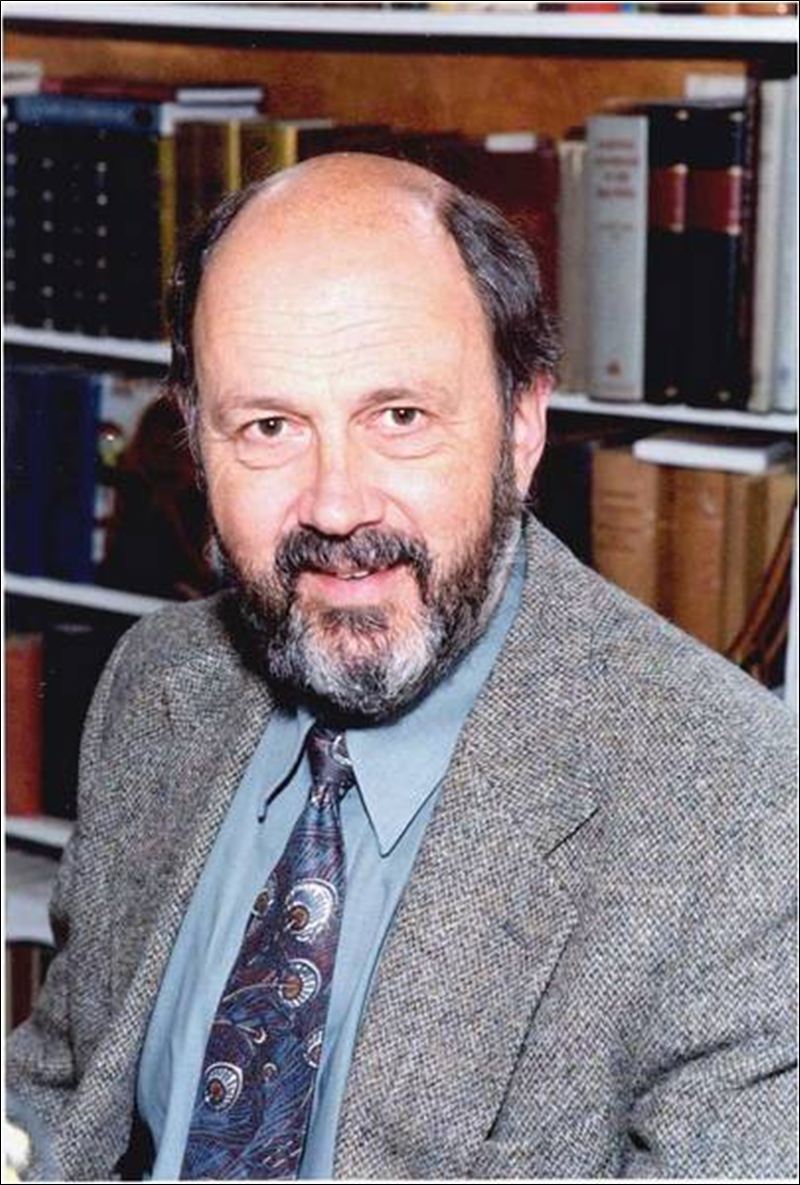
Almost 40 years later, in 1999, I had a similar revelation, when N. T. Wright delivered a series of four lectures in Chicago.

Stephen and I were in the audience, with over one thousand graduate students and faculty.  The national conference, entitled “Following Christ:  Shaping Our World” was sponsored by the InterVaristy Christian Fellowship Graduate and Faculty Ministry.

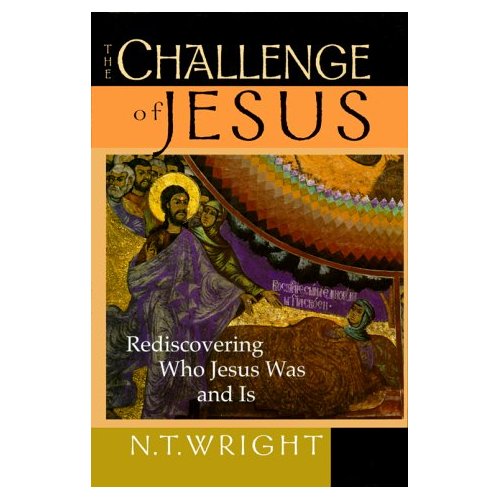
The four lectures formed the backbone of the this book:

Here is a quote from this book . . .

“Out of his own commitment to both historical scholarship and Christian ministry, Wright challenges us to roll up our sleeves and take seriously the study of the historical Jesus.”  [The Publisher]

. . . and a quote from N. T. Wright:

“Many Christians have been, frankly, sloppy in their thinking and talking about Jesus, and hence, sadly, in their praying and in their practice of discipleship.  

We cannot assume that by saying the word “Jesus,” still less the word “Christ,” we are automatically in touch with the real Jesus who walked and talked in first-century Palestine . . . 

. . . Only by hard, historical work can we move toward a fuller comprehension of what the Gospels themselves were trying to say.”

Here is a quote from a more recent book by N. T. Wright . . .

“Bible scholar, Anglican bishop, and bestselling author N. T. Wright summarizes a lifetime of study of Jesus and the New Testament, in order to present for a general audience who Jesus was and is.  

In Simply Jesus, we are invited to hear one of our leading scholars introduce the story of the carpenter’s son from Nazareth, as if he were hearing it for the first time.”  [The Publisher]

. . . and this quote from N. T. Wright:

“Jesus — the Jesus we might discover if we really looked, is larger, more disturbing, [and] more urgent than we had ever imagined.  

We have successfully managed to hide behind other questions and to avoid the huge, world-shaking challenge of Jesus’ central claim and achievement . . . . 

. . . We have reduced the kingdom of God to private piety; the victory of the cross to comfort the conscience; Easter itself to a happy, escapist ending after a sad, dark tale.

Piety, conscience, and ultimate happiness are important, but not nearly as important as Jesus himself.” 

~~~~~~

I will begin teaching a class tonight, at St. Peter’s Anglican Church.  Our text will be The Gospel of John and the commentary will be John for Everyone by N. T. Wright.

Click here for more details: The Pause That Refreshes!

For the objectives of the class, I am borrowing a quote from The Challenge of Jesus:

“The Challenge of Jesus poses a double-edged challenge:

–To grow in our understanding of the historical Jesus within the Palestinian world of the first century, and

–To follow Jesus more faithfully into the postmodern world of the twenty-first century.”  [The Publisher]

Coram Deo,

Margot

2 Comments

Filed under discipleship, The Gospel of John, theology and doxology, Worldview

Portrait of a Template

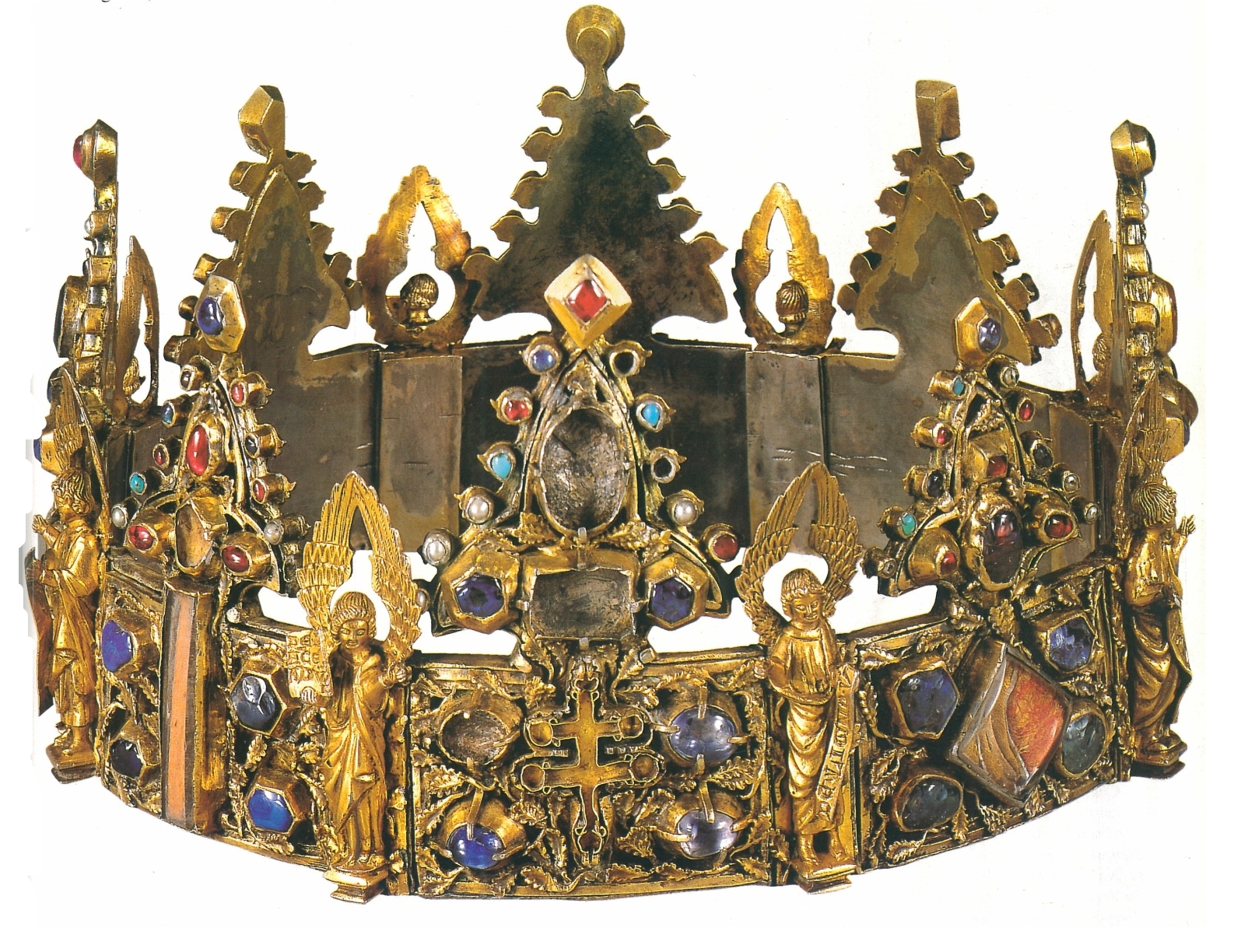
Gottfried Torboch – Jeweled Cruciform Watch with Rock Crystal Case – Walters 5827

Dear Readers,

For several years, I have pondered two great mysteries, abbreviated in two brief phrases:

We are in Christ.   AND    Christ is in us.

Below I have listed, in context, [merely] two of the Scripture passages, which reflect these two great mysteries:

Colossians 1:  24-29

“Now, I rejoice in my sufferings for your sake and, in my flesh, I do my share on behalf of His body, which is the church, in filling up what is lacking in Christ’s afflictions. 

Of this church I was made a minister, according to the stewardship from God bestowed on me for your benefit, so that I might fully carry out the preaching of the word of God, 

that is, the mystery which has been hidden from the past ages and generations, but has now been manifested to His saints, 

to whom God willed to make known what is the riches of the glory of this mystery among the Gentiles, which is Christ in you, the hope of glory. 

We proclaim Him, admonishing every man and teaching every man with all wisdom, so that we may present every man complete in Christ. 

For this purpose also I labor, striving according to His power, which mightily works within me.”

 Colossians 3:1-4  

“Therefore, if you were raised with Christ, look for the things that are above, where Christ is sitting at God’s right side. 

Think about the things above and not things on earth. 

You died, and your life is hidden with Christ in God. 

When Christ, who is your life, is revealed, then you also will be revealed with him in glory.”

~~~

How can two positional realities [Christ in us and We are in Christ] represent one essential truth?

The Crucifixion contains the answer:

“I have been crucified with Christ; and it is no longer I who live, but Christ lives in me; and the life which I now live in the flesh I live by faith in the Son of God, who loved me and gave Himself up for me.” [Galatians 2.20]

It is through the transforming power of the Cross that “we are in Christ” and also that “Christ is in us:”

“Or do you not know that your body is a temple of the Holy Spirit who is in you, whom you have from God, and that you are not your own?  For you have been bought with a price: therefore glorify God in your body.”  [1 Corinthians 6.19-20]

What is our response to the purchase of God, paid on our behalf?

What is our response to the ransom of God:  the payment which freed us from the tyranny of sin and death?

Recognizing that we are no longer “our own,” we are to lead Cruciform lives, in costly obedience.

The shape to which I am conforming must be the Cruciform Life and nothing less:

It is not merely a difficult life; it is an impossible life! [Quote from unknown source].

Yes, impossible, I say — save, that is, for the transforming power of the Resurrected Christ.

I must remain malleable, if I am to be formed, conformed, and transformed into the template of the Cruciform Life.

I must willingly offer myself up as “broken bread and poured-out wine:”  

I offer myself up to be placed within and poured within the shape, the mold, the template of the Cross.

This is the “thanksgiving,” the offering of myself, to the Holy Trinity:  It is “the glad surrender.”

How long does this process, this Cruciform transformation, require?

“My children, with whom I am again in labor, until Christ is formed in you.”  [Galatians 4:19]

“Complete in Christ.”  

“Until Christ is formed in you:”  

How long does this process require?   A lifetime, I think, of  “a long obedience in the same direction.”

Coram Deo,

Margot


dezeen Las Arenas by Rogers Stirk Harbour + Partners -18_1000

Leave a comment

Filed under The Cost of Discipleship, theology and doxology

A Letter from Japan, 1957

Dear Readers,

Please read Summers of Contentment: Part 4, before you read this entry:

Last month, when I visited the NC Blair Family Retreat, I brought home an archival box, labeled, “Japan: 1957.”  Inside the box, in chronological order, are the letters which my father sent back home to my mother in the U. S.  My father wrote frequent letters, during his one-year tour of duty, as the U. S. Air Force commander of a radar base, in the mountains of Hokkaido, Japan.

Yesterday, my husband read aloud to me from the letters this simple sentence, written to my mother:

“Your mention of singing songs in the car made me reminisce — what wonderful, but simple fun we had together riding nowhere in particular and singing out nothing but happiness.”

Read Places of Enchantment, my tribute to my father, which highlights the simple pleasures of family singing, camping, and campfire songs.

Coram Deo,

Margot

Leave a comment

Filed under Family Togetherness, Simple Pleasures

The Sacred and the Mundane

September 2, 1973 – September 2, 2012

Dear Readers,

Tomorrow, My Professor and I will celebrate thirty-nine years of marriage.  Every year, on our wedding anniversary, I share with my readers an essential quote or a story about Courtship, Engagement, Love, or Marriage.

Click here to read the most important quote you will ever read on Love and Marriage, representing the sacramental aspect of marriage.

My story, It Began With Roses, highlights the romance of love and courtship.

In Not a Word, I share with my readers the humor within a marriage.

Sometimes marriage is a serious, solemn commitment, which I describe in  Unsung Heroes.

Marriage is sacred but it is also mundane:

“For all its joys, any intense friendship or marriage has aspects that can seem burdensome.  

There is not only an investment of time, but an investment of self that is required for a relationship to exist and grow and flourish.  

Even more difficult than the physical accommodations are the accommodations of identity:  from the perspective of individual “freedom,” to be in a relationship of love will change us and cost us.  

It will require us to restructure our priorities.  

It may compromise our plans.  

It will demand sacrifice.  

It will alter the pattern of our thoughts and desires and may transform our vision of the world.  

It’s not just ‘your life’ or ‘my life’ anymore — it’s ‘ours.’  

Seen in this light, it can seem that staying at arm’s length and not engaging or investing would seem easier and safer — even if ultimately unhappier — than risking openness to love’s transforming power and answering its claims on us.

Sometimes marriage or other friendships feel euphoric and energizing:  other times, they are tedious, empty, wearying routines, or just plain work.  

The point is that being committed to any love relationship takes daily nurturing, daily effort, and daily practices that build it up.  

Neglecting these will slowly break the relationship down.  

Nurturing grudges or selfish claims instead will erode it and make us resentful of a relationship that now feels like a suffocating trap.  

Kathleen Norris once said that married love is “eternal, but it’s also daily, about as daily and unromantic as housekeeping.”  

It is through daily practices and disciplines, whether we feel like doing them or not, that the decision to love is renewed and refreshed, and the commitment of love is kept alive.”

[From the book, Glittering Vices: A New Look at the Seven Deadly Sins and Their Remedies, by Rebecca Konyndyk DeYoung, Brazos Press, 2009.]

The vocation of Marriage is both sacred and eternal.

But in practical terms, we live out our vocation of Marriage in the daily and mundane.

May we be faithful in living out the vocation of marriage:  “a long obedience in the same direction.”  

Coram Deo,

Margot

1 Comment

Filed under Marriage & Wedding

How My Garden Grows: Six

Ajuga [Bugleweed]

Dear Readers,

This is Part Six of “Margot’s Get-Real Guide to Gardening in North West Florida.”

I have previously described Stories or Levels in the vertical spaces of your garden.

In this entry, I will describe Story or Level One: Perennial Evergreen Ground-covers.  

The term “groundcover” applies to those plants that spread, clump, and creep, to form a dense covering over the ground, thereby crowding out weeds and preventing erosion.

Here are my favorite tall perennial evergreen ground-covers:  These plants are bulletproof, evergreen, blooming, and require no cutting [except for one].

These plants will help to form the “backbone” of your garden:  On a winter day, you will see lots of green in your garden!

More to come, in this series:  “The Big Picture of Garden Design.”

SHADE:

These three evergreen perennial ground-covers look fabulous together but you must plant them in shade.

Note: Be very sure about the sun exposure, before you plant these.  The deeper the shade, the better they will look.

Cyrtomium falcatum [Holly Fern]:

~part shade to full shade

~moisture:  regular

~looks great under a tree, in a mass

~soil:  does not require–yet likes–good soil

~do not plant too deeply


Aspidistra elatior [Cast Iron Plant]:

~part-shade to full shade: no bright, hot sun

~mositure:  moderate

~soil:  not required, but for best results:  amend the soil and fertilize regularly


Liriope muscari: dark green “Evergreen Giant”

~part shade to full shade

~water:  regular

~blooms once a year – not distinctive

~liriope [green] and [variegated] look great next to each other


SUN:  

Note: I have planted all of these in dappled sunlight.  They bloom quite well and the leaves do not appear stressed.

Rudbeckia nitida ‘herbstonne’ [“Autumn Sun”]

~grows to 6 feet tall and 2 feet wide

~profuse gold flowers in summer

~bluish-green leaves are very attractive

~trim this one, to control growth

~full sun to part shade

~blooms: yellow, summer to fall

~moisture: moderate

~attracts: butterflies

~grows 4-6’ tall

~plant 2-3’ off-center

Dietes [African iris]

~not an iris — but looks like one!

~requires moderate moisture

~grows 2-4′ tall and 2′ wide

~plant 1 foot off-center

~full sun or part shade


Iris Virginica ‘Blue Flag’

~likes acid, sandy soil

~requires high moisture:  I planted mine near a “fogger” or “mister” [to attract birds]

~grows 2-4′ tall

~plant 1-3′ off-center

~light: full sun or light shade

Agapanthus [Lily of the Nile]

~moisture: requires little water but can tolerate too much water, also~grows 4′ tall and 1′ wide

~large bloom on one slender stalk

~blooms:  colors from which to choose: white, lilac, indigo blue/purple

~blooms: distinctive blooms, on tall stems, various colors,  once a year

~requires full sun to part shade

~self-propagates

~easy to divide

~roots like to be crowded, in order to bloom

~choose the best variety for your area

~grows to 4 feet high; plant 1 feet off-center


1 Comment

Filed under Gardens

Summers of Contentment: Part 4

Dear Readers,

Click this link to read Part 3, before you read Part 4. Summers of Contentment: Part 3.

After a sit-down supper in a family restaurant, we climbed back into the car.

As the sun went down, my dad and mom led us in singing.  And this was the best part of the entire day . . .

. . . We were certainly not the Family Von Trapp — yet we were all good singers, by nature and nurture.

I have written previously about vocal music, “nature and nurture,” in this entry:  A Gift From My Parents.

My father could “write his own ticket” as a tenor in any church choir.  My mother had a fine alto singing voice and lent her talent to both church choir and community chorus.

Within the “bubble of our Buick,” our parents taught us how to follow a tune, sing the melody in unity,  harmonize, sing in “rounds,” or even “weave” counterpoint melodies.

My mother taught us songs that she learned from her childhood:  Every summer, she attended Baptist Church Youth Camp at Quaker Lake, North Carolina.  [The family of Mildred Mackie, my mother’s dear life-long friend, was Baptist.]

This bit of trivia explains why my mother, raised in a Quaker home, taught her children songs which were fervently evangelical:  “I’ve Got the Joy,”  “This Little Light of Mine,” “Into My Heart,” etc.

Quaker Lake, North Carolina

The Blair Family Singers enjoyed a wide repertoire, including nursery songs, lullabies, Sunday School songs, hymns, Campfire Songs, and folk songs.

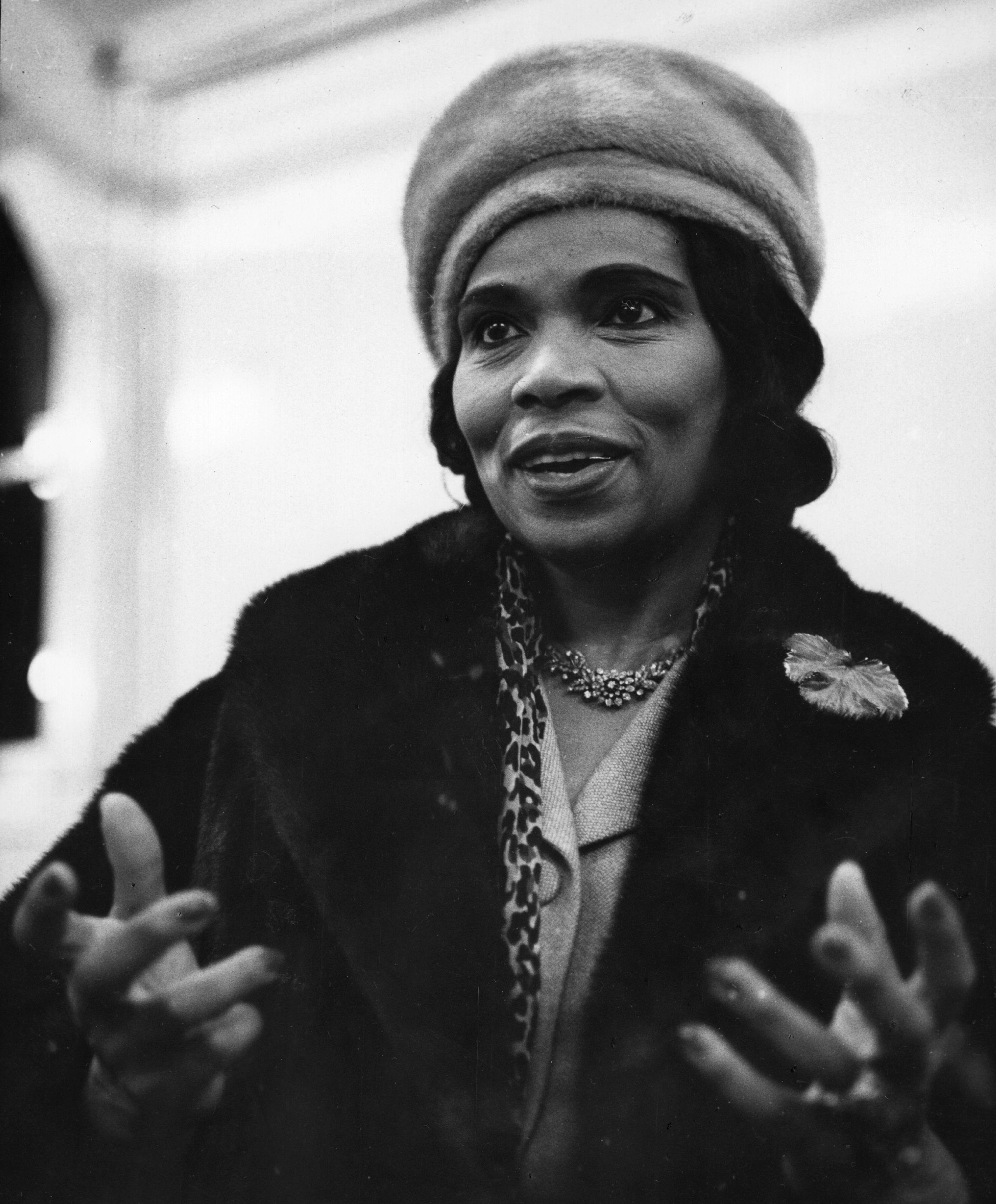
But my favorites were the plaintive Spirituals, especially those which my heroine,  Marian Anderson, immortalized, when she sang them so beautifully and bravely.

[You can listen to recordings of these songs, performed by Marian Anderson, on Spotify.]

~~~~~~

Were You There?

Were you there when they crucified my Lord?
Oh, oh, oh — sometimes it causes me to tremble, tremble, tremble.
Were you there when they crucified my Lord?
 
Were you there when they nailed him to the tree?
Oh, oh, oh — sometimes it causes me to tremble, tremble, tremble.
Were you there when they nailed him to the tree?
 
Were you there when they laid him in the tomb?
Oh, oh, oh — sometimes it causes me to tremble, tremble, tremble.
Were you there when they laid him in the tomb?
 
Were you there when God raised him from the tomb?
Oh, oh, oh — sometimes it causes me to tremble, tremble, tremble.
Were you there when God raised him from the tomb?
 
Deep River

Deep River,
My home is over Jordan.
Deep River, Lord.
I want to cross over into campground.

Deep River,
My home is over Jordan.
Deep River, Lord,
I want to cross over into campground.

Oh, don’t you want to go,
To the Gospel feast;
That Promised Land,
Where all is peace?

Oh, Deep River, Lord,
I want to cross over into campground.

My Lord, What a Morning!

My Lord, what a morning,
When the stars begin to fall.
 
You’ll hear the trumpet sound,
To wake the nations underground,
Look in my God’s right hand,
When the stars begin to fall,
When the stars begin to fall.
 
My Lord, what a morning,
When the stars begin to fall.
 
You’ll hear the Christians shout,
To wake the nations underground,
Look in my God’s right hand,
When the stars begin to fall,
When the stars begin to fall.
 
My Lord, what a morning,
When the stars begin to fall.
 
~~~~~~

My parents were not, by any stretch of the imagination, theologically-oriented nor were they evangelical.

Never, as a family at home, did we read and discuss Scriptures nor did we pray together.

But, thankfully, my parents were part of  “The Greatest Generation” [author: Tom Brokaw] and were deeply committed to the family.

And, thankfully, they took us to Sunday School and to Worship Services, every Sunday morning.

I think to myself now:  My parents would be surprised to know that I learned, through those Spirituals, “The Mystery of Faith:”

“We remember His death,

We proclaim His Resurrection,

We await His Coming in glory.”

~~~~

Within the “bubble” of the Blair Family Buick, we blended our voices and sang those Spirituals, with all of our “heart, soul, mind, and strength.”

Singing connected and strengthened us as a family.

Within our family sphere, we had no idea, at that time, of the future challenges that would threaten our family.

Yet, decade after decade, our family endured.  And those songs fortified and galvanized our family for the endurance against difficulties.

So, I praise God:  For my parents, who bequeathed to us a rich legacy of the Simple Pleasures of Family Togetherness.

And for my siblings, with whom I share these memories.

Fifty years later, I still remember those songs.

As I already told you:   I was lucky.

Coram Deo,

Margot


1 Comment

Filed under Family Togetherness, Simple Pleasures, Summer Vacations

The Pause That Refreshes

The Pause That Refreshes

Do you desperately need  “the pause that refreshes:”  a respite from our long, hot, humid season?

Please join me in a class that will be invigorating!    

Have you ever noticed the many references to refreshing WATER that the Gospel of John contains?

I invite you to join me to plumb the depths of this book!

St. Peter’s Anglican Church [SPAC] offers weekly Respite and Refreshment!

Below is a quick overview.  For details:  http://www.saint-peters.net.

Wednesday Evenings, beginning 09.12.12:

5.15 – 6.00 pm:  Catered Buffet Supper in the SPAC Fellowship Hall  [requires advance reservations]

6.15 – 7.30 pm:   Wednesday Evening Academy Adult Classes [requires advance reservation and fee for books]


About Margot’s Class:

“Coach Margot,” long-distance swimmer, invites you to join her Team, in a two-semester class:  John for Everyone:

We will cover Part One in the Fall Semester, 2012:  09.12.12 – 12.12.12

We will cover Part Two in the Spring Semester, beginning January 16, 2013.

The Rev. Doctor N. T. [Tom] Wright, Anglican bishop, theologian, and New Testament scholar, describes the Gospel of John as:

“. . . one of the great books in the literature of the world; and part of its greatness is the way it reveals its secrets not just to high-flown learning but to those who come to it with humility and hope.”

 Dr. N. T. “Tom” Wright

This is a class for everyone . . . . everyone, that is, who is ready to be a member of a “high-commitment”  Team!

Advance Requirements for the Team:

— Commit to diligence in homework “drills.

— Commit to faithful attendance and participation at the weekly “practice meets.”

— Register:  www.saint-peters.net or Reply below.

— Reserve your copy of the commentary:  www.saint-peters.net or Reply below.

Here is what the Team can expect, as we plunge into this invigorating study of the Gospel of John:

We will:
-Limber up our mental muscles, with “land-lubber” exercises . . .

-Learn how to sharpen our view of Scripture, through the “lens” of Faith, Reason, and Tradition . . .

-Gain confidence, stamina, and proficiency, in the shallow water and . . .

-Plunge into the deeper water.

Please join  The Team and  “go the distance!”  

Ready to “dive in?”  Questions?  Reply  below.

UPDATES:  Margot’s Class

Begins:   Wednesday, 09.12.12.

Location:  St. Peter’s Anglican Church, Tallahassee.

Open to:  Adult men and women.

Day & Time:  Wednesdays, 6.15 pm – 7.30 pm.  We will begin and end on time.

Source Text:  The Gospel of John, contained within the two books [the commentary].

Register:  Before 09.12.12:  Call  850.701.0664 or Reply below.

Fees:  There is no registration fee.

Books:  Fee for the two books is $28:  cash or check, payable to St. Peter’s Anglican Church.   You may purchase your books on 09.12.12.

Supper:  By the previous Monday, you must make or cancel your reservation for each Wednesday Supper:  Call  850.701.0664.  $6 for adults; $1 for college students.  Cash or check, made out to St. Peter’s Anglican Church.


1 Comment

Filed under The Gospel of John