Worldview Lens: Blueprints


Dear Readers,

Click Worldviews in a Nutshell: Two, to read the previous post, in this series on Worldviews.

Worldviews are the basic stuff of human existence,

the lens through which the world is seen,

the blueprint for how one should live in it and, above all,

the sense of identity and place which enables human beings to be what they are.”

“They are that through which, not at which, a society or an individual normally looks;  they form the grid according to which humans organise reality — not bits of reality that offer themselves for organisation.”

“In order to answer the question ‘Why?’ in relation to the pastwe must move from the ‘outside’ of the event to the ‘inside’; this involves reconstructing the worldviews of people other than ourselves.”

“To ignore worldviews, either our own or those of the culture we are studying, would result in extraordinary shallowness.”


[Image:  First Century Jerusalem]

Worldviews, as I said earlier, are like the foundations of a house: vital, but invisible.”

There are four components of a worldview:
  1. . . . “[they] provide stories through which human beings view reality.  Narrative is the most characteristic expression of worldview, going deeper than the isolated observation or fragmented remark.” 
  2.  . . . “from these stories one can, in principal, discover how to answer basic questions that determine human existence:  who we are, where are we, what is wrong , and what is the solution?”
  3. “Stories and the answers provided to the questions are expressed in cultural symbols.”

  4. “Worldviews include a praxis, a way-of-being-in-the-world.”

    All quotes are from the book, The New Testament and the People of God, by N. T. Wright, pages 121-125.

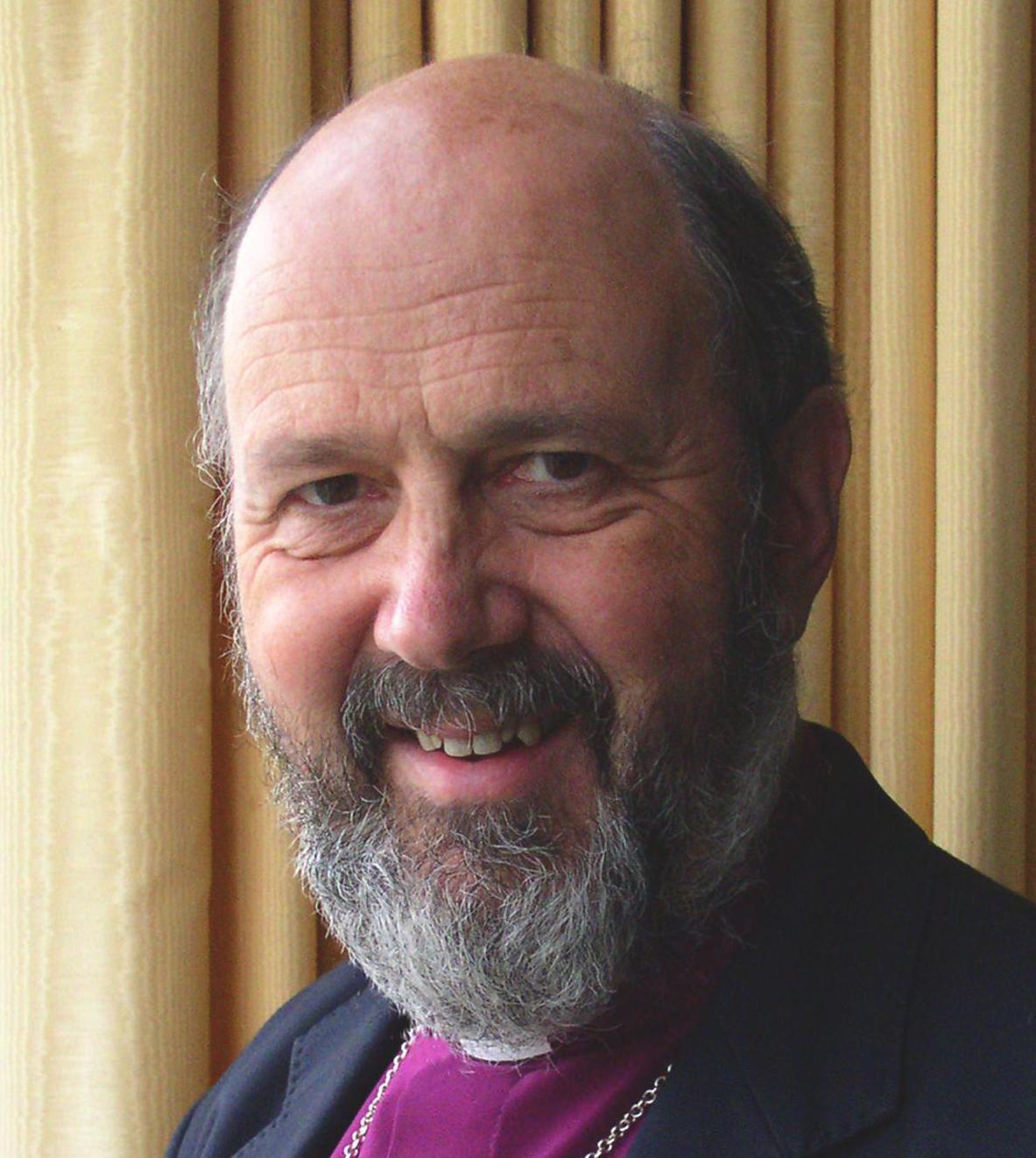
Nicholas Thomas Wright (born 1 December 1948)  is an Anglican bishop and a leading New Testament scholar.  He is published as N. T. Wright when writing academic work, or Tom Wright when writing for a more popular readership.  His books include What St Paul Really Said and Simply Christian.  Wright was the Bishop of Durham in the Church of England from 2003, until his retirement in 2010.  [Wikipedia]

Leave a comment

Filed under Worldview

Lent Made Easy!

The Third Week of Lent
Dear Family & Friends,

Click on this link:  Lent Made Easy [or read the news item, at the end of this entry.]

I read the news item and reflected upon some of my Lenten readings.  I asked myself, “How would Dietrich Bonhoeffer respond to this news item?”

Bonhoeffer’s words are as timely now as they were in 1937, the year he published his book, “The Cost of Discipleship.”  Here is an excerpt:

Costly Grace by Dietrich Bonhoeffer

Cheap grace is the deadly enemy of our Church. We are fighting today for costly grace. 

Cheap grace means grace sold on the market like cheapjack’s wares.  The sacraments, the forgiveness of sin, and the consolations of religion are thrown away at cut prices.   Grace is represented as the Church’s inexhaustible treasury, from which she showers blessings with generous hands, without asking questions or fixing limits.   Grace without price; grace without cost!   The essence of grace, we suppose, is that the account has been paid in advance; and, because it has been paid, everything can be had for nothing.   Since the cost was infinite, the possibilities of using and spending it are infinite.  What would grace be if it were not cheap? 

Cheap grace means grace as a doctrine, a principle, a system.   It means forgiveness of sins proclaimed as a general truth, the love of God taught as the Christian “conception” of God.   An intellectual assent to that idea is held to be of itself sufficient to secure remission of sins.   The Church which holds the correct doctrine of grace has, it is supposed, ipso facto a part in that grace.   In such a Church the world finds a cheap covering for its sins; no contrition is required, still less any real desire to be delivered from sin.   Cheap grace therefore amounts to a denial of the living Word of God, in fact, a denial of the Incarnation of the Word of God. 

Cheap grace means the justification of sin without the justification of the sinner.   Grace alone does everything, they say, and so everything can remain as it was before.  “All for sin could not atone.”   The world goes on in the same old way, and we are still sinners “even in the best life,” as Luther said.  Well, then let the Christian live like the rest of the world, let him model himself on the world’s standards in every sphere of life, and not presumptuously aspire to live a different life under grace from his old life under sin.  That is what we mean by cheap grace, the grace which amounts to the justification of sin without the justification of the repentant sinner who departs from sin and from whom sin departs.  Cheap grace is not the kind of forgiveness of sin which frees us from the toils of sin.  Cheap grace is the grace we bestow on ourselves. 

Cheap grace is the preaching of forgiveness without requiring repentance, baptism without church discipline, Communion without confession, absolution without personal confession.   Cheap grace is grace without discipleship, grace without the Cross, grace without Jesus Christ, living and incarnate. 

Costly grace is the treasure hidden in the field; for the sake of it a man will gladly go and sell all that he has.   It is the pearl of great price to buy which the merchant will sell all his goods.   It is the kingly rule of Christ, for whose sake a man will pluck out the eye which causes him to stumble, it is the call of Jesus Christ at which the disciple leaves his nets and follows Him. 

Costly grace is the Gospel which must be sought again and again, the gift which must be asked for, the door at which a man must knock. 

Such grace is costly because it calls us to follow, and it is grace because it calls us to follow Jesus Christ.   It is costly because it costs a man his life, and it is grace because it gives a man the only true life.   It is costly because it condemns sin, and grace because it justifies the sinner.   Above all, it is costly because it costs God the life of His Son: “ye were bought at a price,” and what has cost God much cannot be cheap for us.   Above all, it is grace because God did not reckon His Son too dear a price to pay for our life, but deliver Him up for us.   Costly grace is the Incarnation of God. 

Costly grace is the sanctuary of God; it has to be protected from the world, and not thrown to the dogs.   It is therefore the living word, the Word of God, which He speaks as it pleases Him.   Costly grace confronts us as a gracious call to follow Jesus, it comes as a word of forgiveness to the broken spirit and the contrite heart.   Grace is costly because it compels a man to submit to the yoke of Christ and follow Him; it is grace because Jesus says: “My yoke is easy and My burden light.” 

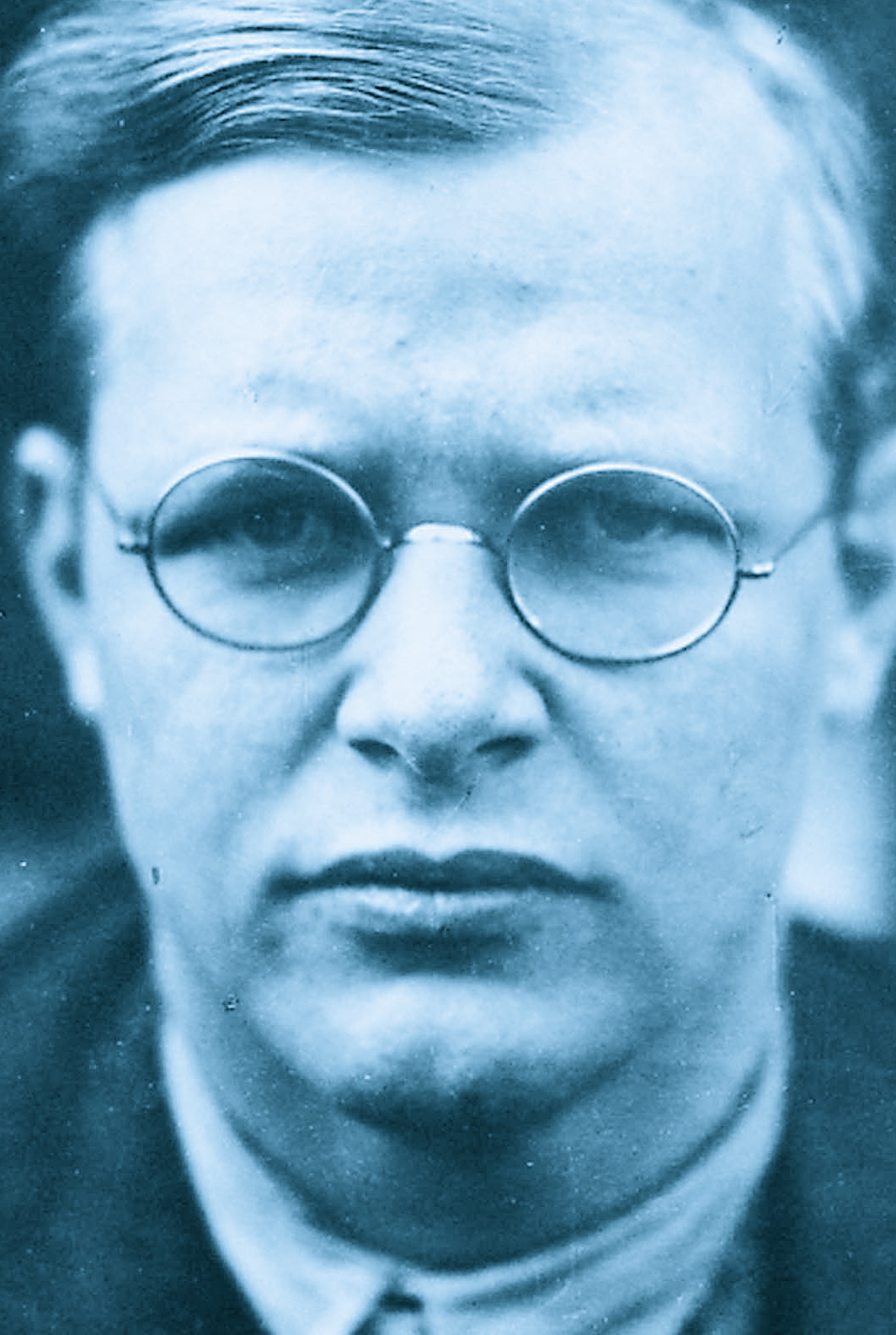
Dietrich Bonhoeffer, February 4, 1906 – April 9, 1945, was a German Lutheran pastor, theologian and martyr.   He was also a participant in the German resistance movement against Nazism and a founding member of the Confessing Church.   His involvement in plans by members of the Abwehr (the German Military Intelligence Office) to assassinate Adolf Hitler resulted in his arrest in April 1943 and his subsequent execution by hanging in April 1945, 23 days before the Nazis’ surrender.   His view of Christianity’s role in the secular world has become very influential.

***********

msnbc.com news services:  updated 2/22/2012 8:40:20 AM ET

In an effort to reach parishioners too busy to sit through an Ash Wednesday service, some ministers are bringing the ashes to them.

In Ohio, a church is offering a drive-thru Ash Wednesday blessing for parishioners.  The Rev. Patricia Anderson Cook of Mt. Healthy United Methodist Church in suburban Cincinnati plans to provide the service Wednesday evening in the church’s parking lot.

“Some people are very busy, and some people get a little intimidated walking into a church, this is for them,” Cook told the Cincinnati Inquirer.

In Montclair, N.J., two Episcopalian ministers offered “ashes to go” for commuters at a local train station.   That effort is part of a national campaign.

“More and more, people’s schedules keep them from attending church, especially those who commute into NYC, so we are taking the ashes to them,” Rev. Andrew Butler said.

Ash Wednesday marks the beginning of the Christian season of Lent, which concludes after 40 days with the celebration of Easter.

In addition to ashes, Cook, the suburban Cincinnati minister, will provide a church brochure and a Lenten booklet.

“It’s a drive-thru,” she said. “Not a drive-by.”

 Copyright 2012 The Associated Press. All rights reserved. This material may not be published, broadcast, rewritten or redistributed.



Leave a comment

Filed under Lent

Worldviews in a Nutshell: Two

Dear Readers, 

Click Worldviews in a Nutshell: One to read the previous entry in this Worldviews series.

Brace yourself because, in this post entry, I will employ two atypical devices:  sports metaphors and incorrect English.

[Baseball history photo September 3, 1859, at Elysian Fields, Hoboken, NJ.] 


In my most recent blog entry, I introduced the three major categories of worldviews and assigned each a one-sentence quote.

Today, I will expand the three worldviews a little further, by relating a baseball umpire analogy:


The philosophy of Umpire Number One [above] represents the Pre-Modern Worldview:

“I call ’em as they are!”


The philosophy of Umpire Number Two [above] represents the Modern Worldview:

“I call ’em as I see ’em!”


The philosophy of Umpire Number Three [above] represents the Post-Modern Worldview:

“They ain’t nothin’ till I call ’em!” 


And there you have it:  The irreducible minimum explanation for worldviews.  Painless, wasn’t it?

Master this sports analogy and share it with someone.  We will be using it as a foundation for future worldview discussions.

Coram Deo,

Margot

1 Comment

Filed under Worldview

Worldviews in a Nutshell: One

Dear Readers,

Click Worldviews: All Kinds of Lenses! to read my introduction to this series, on Worldviews.

The Pre-Modern Worldview:

“Truth is the conformity of the mind to reality.” [St. Thomas Aquinas]

The Modern Worldview:  

“Truth is the conformity of the mind to life.”  

The Post-Modern Worldview: 

“What is truth?” 

“The universe rearranges itself to conform to my worldview.”

Coram Deo,

Margot


Leave a comment

Filed under Worldview

The Grand Canyon


Dear Readers,

It happened fifty years ago, as our family of six traveled and camped overnight near the Grand Canyon.  In the darkness of early morning, my father roused us from sleep.  We piled into the car and huddled under blankets, as my dad drove us the short distance to the canyon.  Torn away from my warm sleeping bag, I was hungry, for we left before breakfast.  We parked and hiked to the safety railing of the canyon.  I stood, shivering and yawning, waiting for the sun to rise.

The first rays of sunlight exposed only the rim of the canyon.  But very gradually, the sunlight unveiled the upper walls of the canyon, layer upon stratified layer.  Finally, after a long wait, the sunlight  searched out the lower walls of the canyon and, finally, chased away the shadows from the darkest corners of the canyon bed.   We watched in silence, as the sunlight revealed the glory and majesty of the canyon’s colors, textures, and patterns.

I spied the thin ribbon river, so insignificant, at the bottom of the canyon, a mile below us.  It was this same river, my father told me, that in ancient times was mighty and deep and roared through the landscape to carve out the contours of the canyon.  Incredulous, I surveyed the river and then scanned the walls of the canyon, up to the rim.  What force of nature could be so fearsome and powerful as to carve a canyon a mile high?

I remember that day as one of the best gifts that I have ever received:  A once-in-a-lifetime experience.

And I think about that morning every time I read these words:

“I believe in Christianity as I believe that the sun has risen: not only because I see it, but because by it I see everything else.”  

~~~C. S. Lewis, from The Weight of Glory

Coram Deo,

Margot

1 Comment

Filed under Worldview

Silence

Nokia Ring Tone

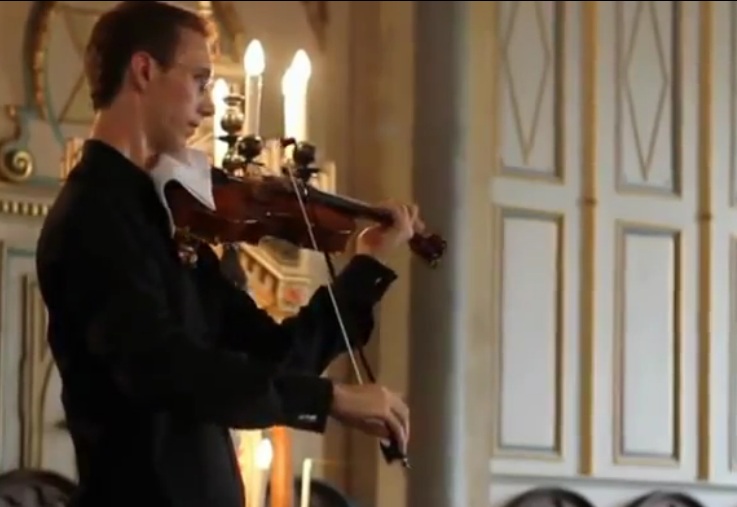
[Orthodox Jewish synagogue in Presov Slovakia – Lukáš Kmiť plays the viola – by Milan Ferencik/Greatmilan & Jakub Hasko/CTZ Films]

~~~~~

Dear Family & Friends, 

Try the link above or Google “Nokia Ring Tone” and you can find the link to Youtube.  Please view it, before you read any further:  It will require only one minute of your time!

The musician is most certainly a gentleman.  He extended grace to the person who created the interruption.  Mr. Kmit is brilliant, educated, cultured, and devoted to his art. He has invested decades of his life to the study and mastery of performing beautiful classical music.  Imagine how disappointed Mr. Kmit was, to hear the “ring-tone” disturb the beauty and grandeur of the silence, at the end of the musical offering.  And this was not merely a concert; the setting for the concert was an Orthodox Jewish Synagogue!

Stop and think for a moment:  Are you like the inconsiderate concert-goer?

Before, during, and after Worship, are you the “person-with-the-cell-phone-on,” the one who cannot disengage the culture for even one brief hour?

Are you the undisciplined one, who interrupts the silence of Worship in the Sacred Space, perhaps not with a “ring-tone,” but with ceaseless chatter, yakking, and whispering to his/her neighbor?

Or, do you “turn the cell-phone off” before you enter the Sacred Space?

Better yet, do you disengage from the culture (and technology) and leave the cell-phone and other distractions at home or in your vehicle?

Do you practice the discipline of silence, in order to worship the One True Living Holy Trinity?

The Hebrew Scriptures declare, “The Lord is in His holy temple: Let all keep silent before Him!”

Be awed into silence before his beauty and majesty.

Leave the culture behind, before you step into the Sacred Space.

Walk in slowly, reverently, and silently.  Dip your hand into the Baptismal Font and remember your Baptismal vow.

Bow as you face the Eucharistic Table and the Cross.

Sit in the pew, kneel, pray. Be silent, reverent, and respectful of this holy hour.

You are in the Presence of the King.  He calls us into His Presence, as the Body of Christ, to offer our corporate Worship.

The Holy Trinity calls us to worship, as the Body of Christ, as a people “set apart,” sanctified.

He calls us into the Sacred Space, where heaven and earth intersect.

He calls us to receive this one hour, which is sacred time, and to honor Him with that hour.

Let us practice the discipline of silence:

Come let us enter in silence, as we prepare for the Liturgy and The Mystery of Faith:

We remember his death

We proclaim his resurrection

We await his coming in glory.

Only in silence, will we hear the Music of the Spheres.

Only in awe and reverence, will we Sing with the Angels.

Coram Deo,

Margot

Leave a comment

Filed under Sanctuary

Worldviews: All Kinds of Lenses!

Dear Readers,

Behold! All kinds of lenses!  

A pair of binoculars:  to bring far-away objects [like birds] closer to the viewer.

A magnifying glass:  to make fine print appear larger to the reader.

A photographer’s loupe:  to magnify and examine film negatives.

A prism: to separate light into a spectrum of color.

A domed glass lens: to magnify and display the details of a rare stamp or coin.

A pair of prescription spectacles:  to correct the sight of the wearer.

Each of us has her/his own preferred lens, through which we view the world:  A “worldview.”

In the near future, I will expand this topic.  In the meantime, here is a quote to think upon:

“I believe in Christianity as I believe that the sun has risen: not only because I see it, but because by it I see everything else.”  

~~~C. S. Lewis, from The Weight of Glory

Coram Deo,

Margot


Leave a comment

Filed under Worldview

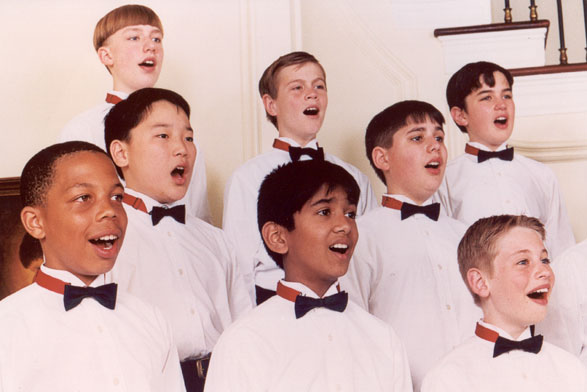
An Invitation to a Concert: The American Boy Choir

The American Boy Choir

Tuesday, February 28, 2012 at 7:00 p.m.


St. Peter’s Anglican Church

901 Thomasville Road – Tallahassee, FL 32303

For tickets, contact chris@saint-peters.net.

www.saint-peters.net

The American Boychoir is regarded as the United States’ premier concert boys’ choir.  Under the leadership of Fernando Malvar-Ruiz, the Litton-Lodal Music Director, The American Boychoir continues to dazzle audiences with its unique blend of musical sophistication, effervescent spirit, and ensemble virtuosity.  Boys in grades four through eight, reflecting the ethnic, religious, and cultural diversity of the United States, come from across the country and around the world, to pursue a rigorous musical and academic curriculum at the school.  The American Boychoir School, the only non-sectarian boys’ choir school in the nation, was founded in Columbus, Ohio, in 1937, and has been located in Princeton, New Jersey, since 1950.

Maintaining an active national and international touring schedule, the Boychoir performs with world-class ensembles, including the Boston Symphony Orchestra, the Philadelphia Orchestra, and the New York Philharmonic. The Boychoir regularly appears, as featured artists, with James Levine at the Tanglewood Music Festival and has performed with the internationally renowned soprano Jessye Norman, prominent jazz musician Wynton Marsalis, pop diva Beyoncé, and at Carnegie Hall with Sir Paul McCartney.

Often called upon for boy soloists, members of The American Boychoir have performed with the Baltimore Symphony Orchestra, the Berkshire Music Festival, and the Virginia Symphony Orchestra.

The American Boychoir has been extensively recorded on its own label, Albemarle Records, and broadcast on radio and television, with over forty-five commercial recordings.

The programs offered by The American Boychoir School are made possible, in part, through a grant by the New Jersey State Council on the Arts/Department of State, a partner agency of the National Endowment for the Arts.  Additional funding has been provided by the New Jersey Cultural Trust.

Leave a comment

Filed under Concert

A Valentine from “Currer”

On Love:

Love is not so much a matter of romance as it is a matter of anxious concern for the wellbeing of one’s companion.

If you don’t love another living soul, then you’ll never be disappointed.

On Life:

But life is a battle: may we all be enabled to fight it well!

I try to avoid looking forward or backward and try to keep looking upward.

Better to try all things and find all empty, than to try nothing and leave your life a blank.

On Happiness and Cheerfulness:

There is no happiness like that of being loved by your fellow creatures and feeling that your presence is an addition to their comfort.

Cheerfulness, it would appear, is a matter which depends fully as much on the state of things within, as on the state of things without and around us.

On Friendship:

If we would build on a sure foundation in friendship, we must love friends for their sake, rather than for our own.

Friendship, however, is a plant which cannot be forced — true friendship is not a gourd, springing up in a night and withering in a day.

On Forgiveness:

Life appears to me too short to be spent in nursing animosity or registering wrongs.

On Courage:

I remembered that the real world was wide and that a varied field of hopes and fears,

of sensations and excitements, 

awaited those who had the courage to go forth into its expanse,

to seek real knowledge of life, amidst its perils.

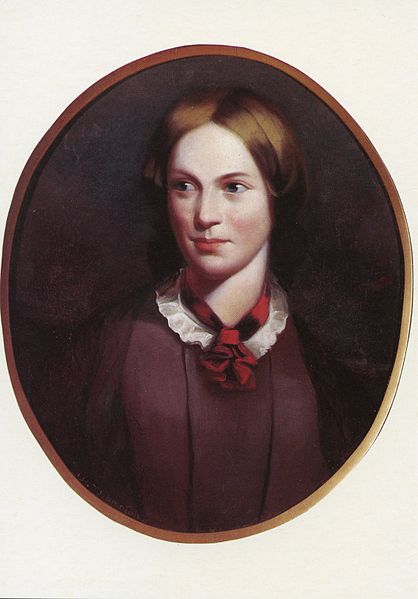
“Currer Bell” was the nom de plume — not the nickname — of the British author, Charlotte Bronte.  

Charlotte Brontë (21 April 1816 – 31 March 1855)

was an English novelist and poet, the eldest of the three Brontë sisters who survived into adulthood, whose novels are English literature standards.

Margot’s Commentary:

Charlotte Bronte was an extraordinary woman of her time:  She published her book, Jane Eyre, under the pen name of “Mr. Currer Bell,” because of prejudice against woman authors.  Her two sisters also adopted nom de plumes:  Ann was “Acton Bell” and Emily was “Ellis Bell.”

Here is a question for you:  How would you describe the heroine of the book, Jane Eyre, in twenty-five words or less?  Here is my attempt:

“Jane is bravely willing to suffer any loss in life, in order to retain her integrity, honor, self-respect and independent spirit.”

Jane is a unique woman of virtue, substance, depth, wisdom,  intelligence, honesty, dignity, and imagination.  She understands and demonstrates, through her life, one of those most essential and vital truths about authentic, solid, and everlasting love between a man and a woman:  With clarity and without sentiment, she understands that love must be built upon a foundation of  mutual respect and trust between two equals.

Read the book, Jane Eyre, and read a biography on the author.  Discover the points at which their lives intersect.  Discover why Jane Eyre is one of my favorite novels and why Charlotte Bronte is one of my favorite authors.

1 Comment

Filed under Valentine's Day

A Valentine from “Will”

For Sunday Morning:

It is rather busy around our home on Sunday morning so I am posting this “Valentine” on Saturday night . . .

It will be easy for you to guess the full name of this famous British author, whose family gave him the nickname of “Will.”   He wrote 154 Love Sonnets, each of which would be perfect as the “sentiment” inside of a Hallmark card.  However, I only chose one for today.  Below the sonnet, I have included some keys to interpretation.

If you saw the film, “Sense & Sensibility,” with Emma Thompson, this sonnet will be very familiar to you.   Before the film [1994] I had never heard the poem:  When I heard Marianne [Kate Winslet] recite the sonnet, at the word, “bark,” the image of a dog floated before my eyes.  I hope at least one of my readers will assure me that I am not alone in this . . .

Sonnet 116:

Let me not to the marriage of true minds


Admit impediments. Love is not love


Which alters when it alteration finds,

Or bends with the remover to remove.

O no, it is an ever-fixèd mark


That looks on tempests and is never shaken;

It is the star to every wand’ring bark,

Whose worth’s unknown, although his height be taken.

Love’s not Time’s fool, though rosy lips and cheeks


Within his bending sickle’s compass come.

Love alters not with his brief hours and weeks,

But bears it out ev’n to the edge of doom.

If this be error and upon me proved,

I never writ, nor no man ever loved.

~~~~~~~~~~~~

Here are some clues to the interpretation of this sonnet, from The Top 500 Poems, Edited by William Harmon, Columbia Anthology:

“Shakespeare’s Julius Caesar claims to be as ‘constant as the northern star’ – that is, the Pole Star that seems not to move, while all other stars revolve around it and which can still be used in informal navigation.  Ink has been spilt over the reading of Line 8, which probably refers to the star [whose elevation or celestial altitude can be known by instruments] but may refer to the bark [ship].”

William Shakespeare (baptized 26 April 1564; died 23 April 1616) was an English poet and playwright, widely regarded as the greatest writer in the English language and the world’s pre-eminent dramatist.  He is often called England’s national poet and the “Bard of Avon.”  His surviving works, including some collaborations, consist of about 38 plays, 154 sonnets, two long narrative poems, and several other poems. His plays have been translated into every major living language and are performed more often than those of any other playwright. [Wikipedia]


Leave a comment

Filed under Valentine's Day